
Antique Hanging Corner Cabinet
An antique hanging corner cabinet fits dead space in a room while holding cups, bottles or books off the floor.
The Form and Period
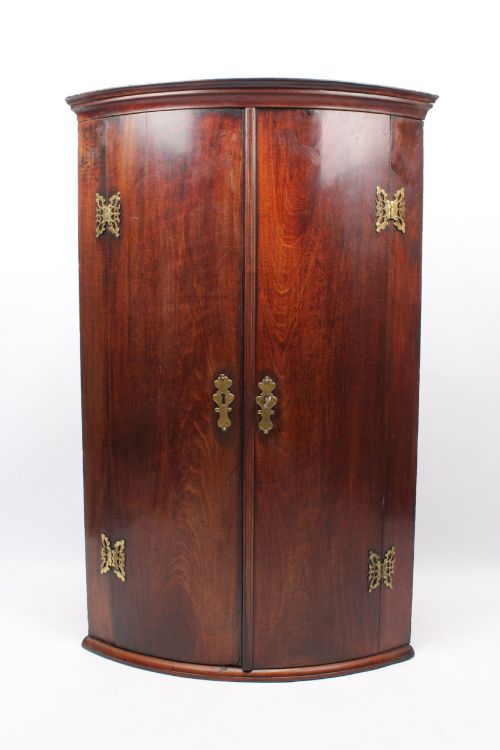
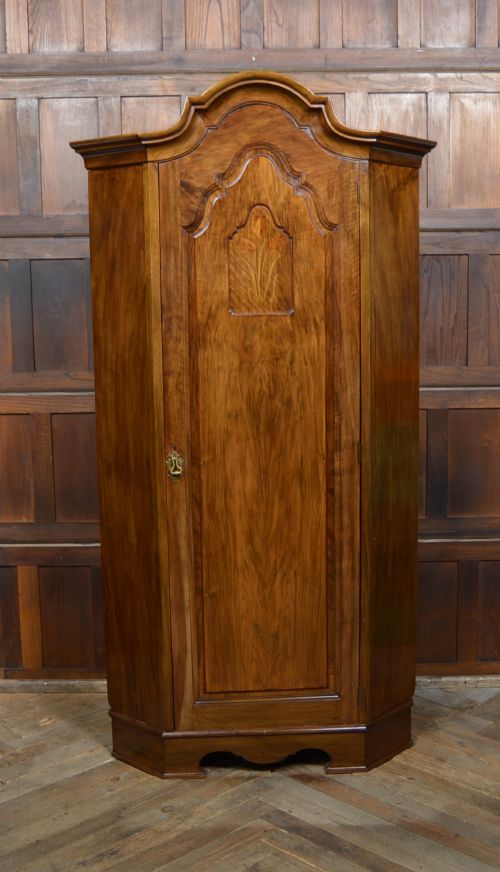
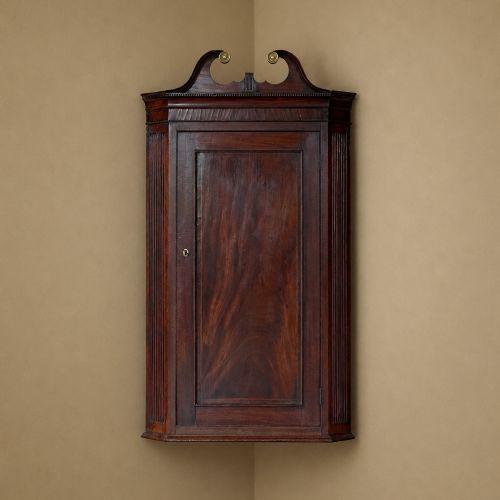
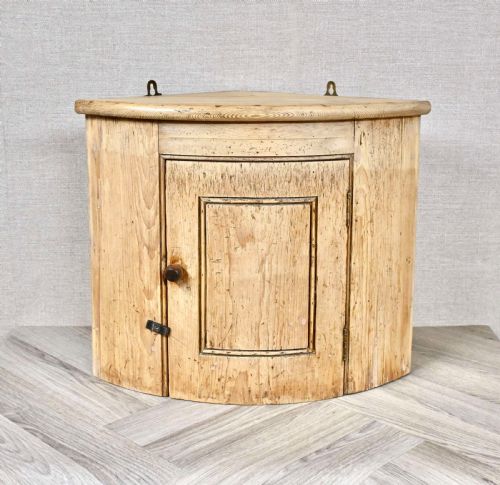
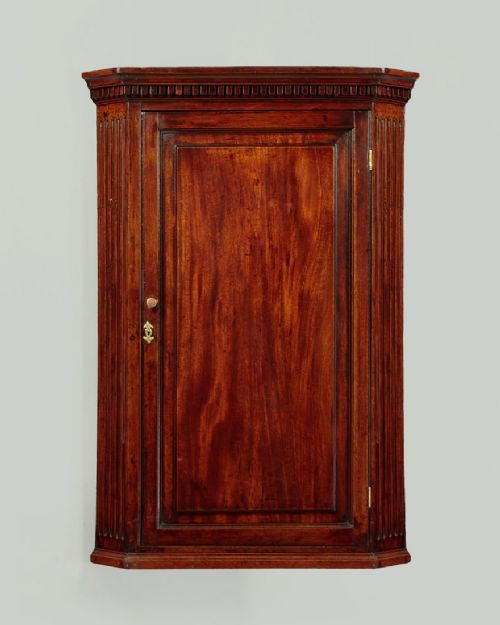
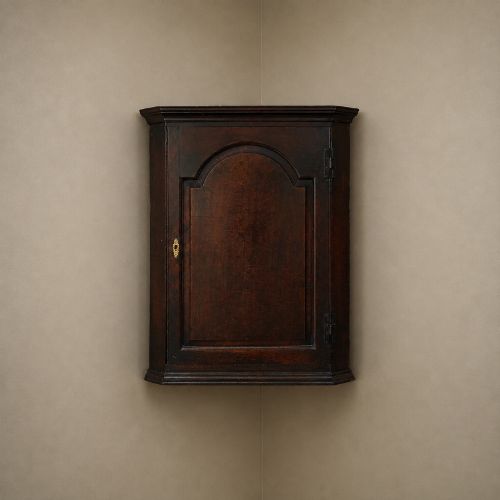
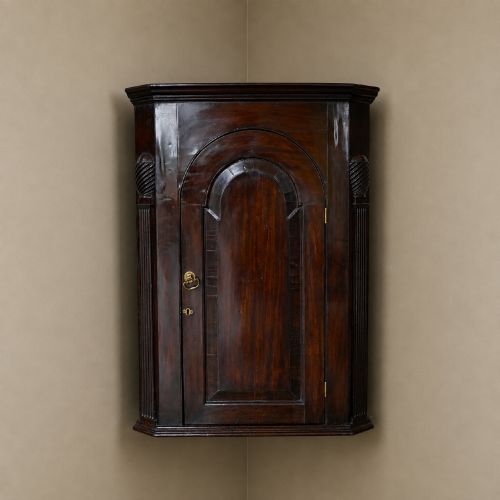
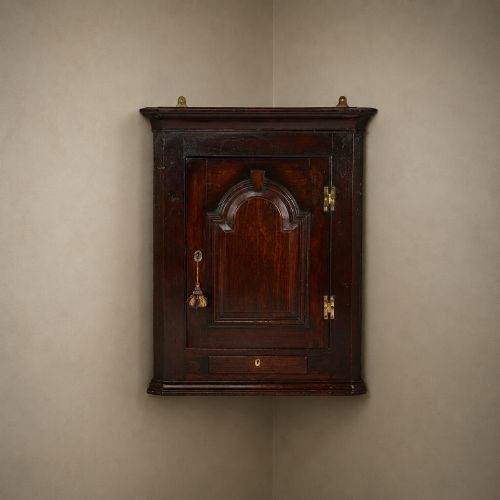
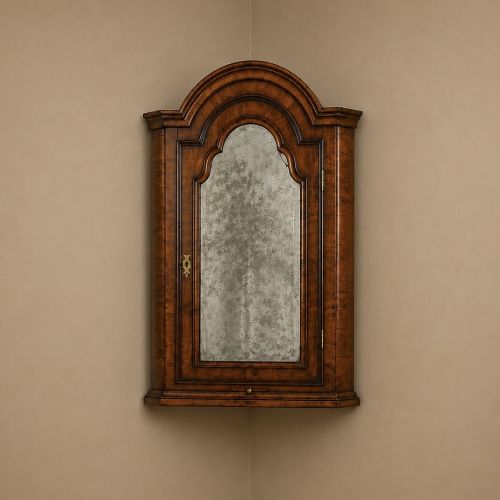
An antique hanging corner cabinet is a wall-mounted storage piece designed specifically to fit into the right-angled corner of a room. The selection here leans heavily towards Georgian pieces, with oak and mahogany dominating the available forms.
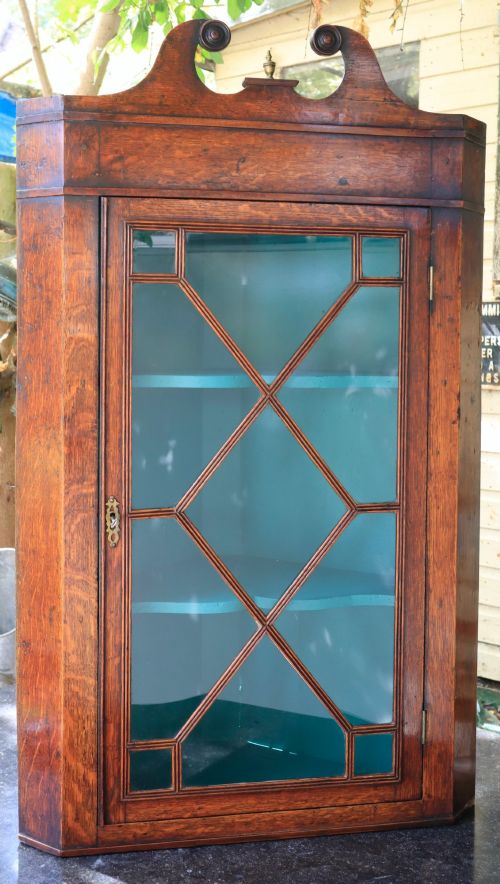
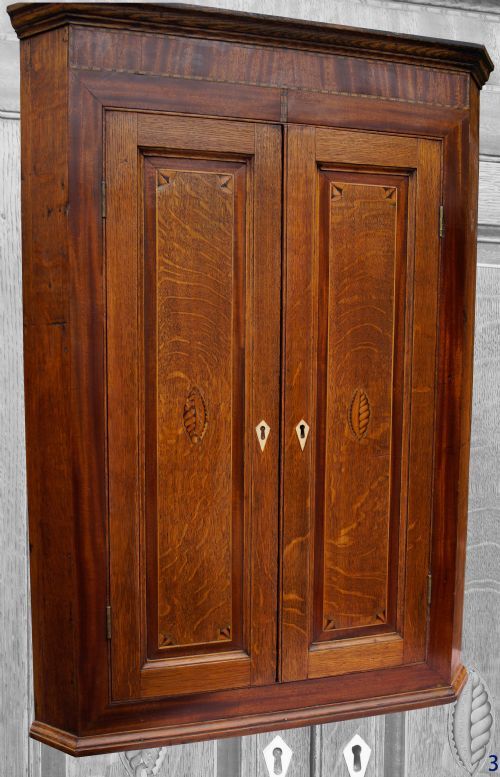
Buyers will most commonly meet Georgian oak and mahogany examples featuring single doors and internal shelving. These items utilise dead wall space efficiently while providing enclosed storage for small household goods.
Materials and Construction
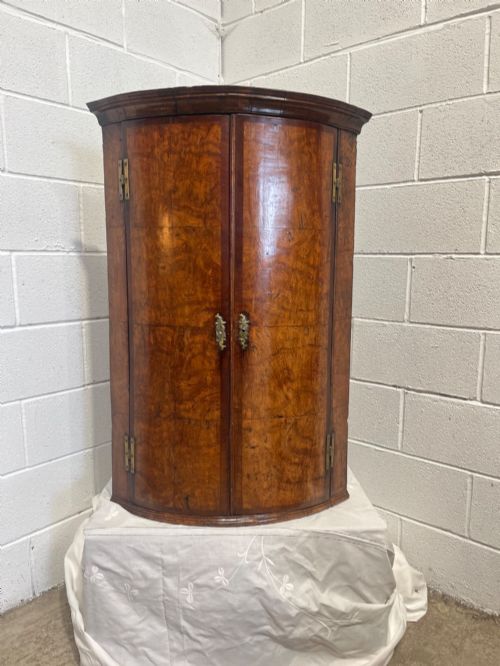
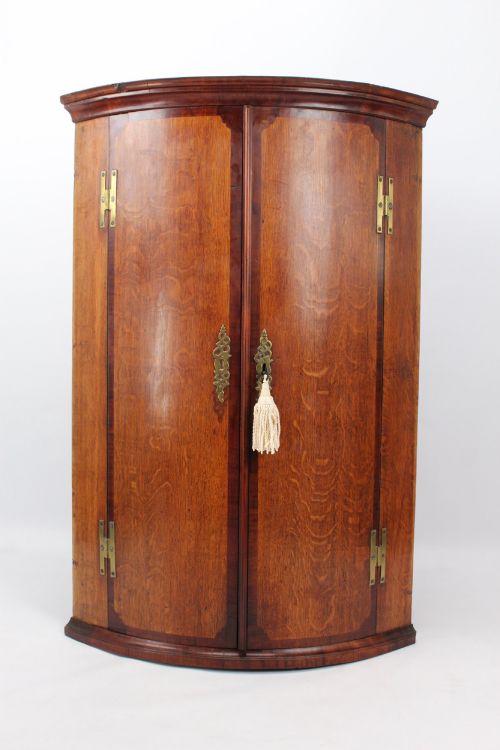
Joiners built these cabinets using solid timbers like oak and mahogany, often applying burr oak, flame mahogany or general veneer to the primary surfaces. Brass fixtures such as H-hinges and escutcheons secure the doors and provide closure.
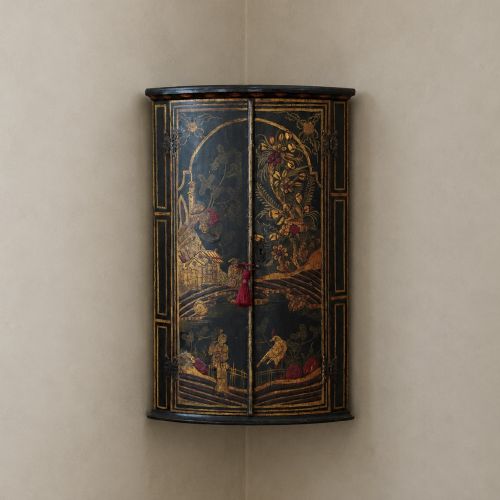
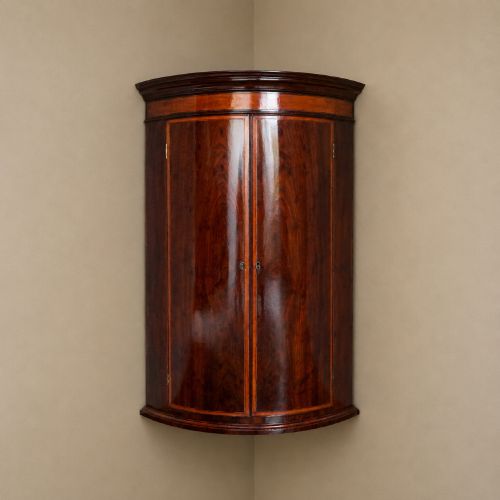
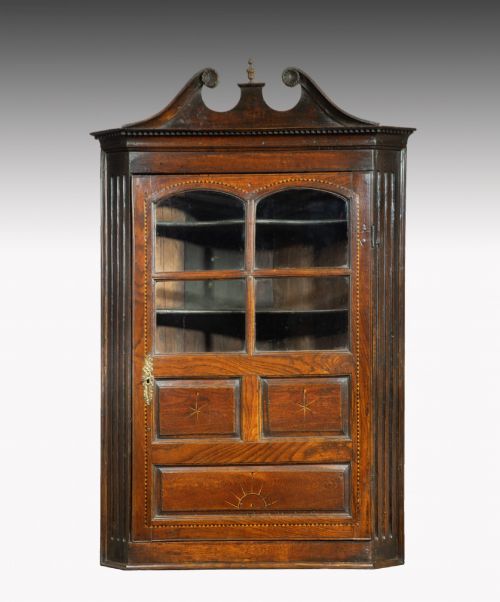
Constructors incorporated techniques including bow fronts and serpentine shaping to the door panels, whilst some variants feature glazed panels or internal shelves. Painted finishes and wax treatments appear across various pieces to seal the timber.
Retail Price Guide 2026
Typical UK retail prices for hanging corner cabinet, calculated from the Sellingantiques database of over a million retail prices indexed since 2003. This retail price guide relies exclusively on Sellingantiques data; no external sources or auction records are used, so the figures do not describe the wider market.
At least one small pine cabinet arrived carrying a production date of 1913, proving that simple workshop traditions persisted well into the twentieth century.
Judging Quality
Quality rests upon the choice of timber and the precision of the cabinet work, particularly where veneer or inlay meets solid wood. Superior pieces display carefully matched grain patterns on the door fronts, such as burr oak or flame mahogany.
The refinement of the mouldings, the crispness of any carving and the retention of original brass hardware separate standard utility cupboards from finer domestic furniture.
The Antique Hanging Corner Cabinet Glossary
- Bow front
- A convex curved cabinet front that projects outwards from the corner walls. This shape softens the hard angles of a room.
- Escutcheon
- A flat plate of brass surrounding the keyhole. It protects the surrounding wood from wear caused by the key.
- H-hinge
- A traditional hinge shaped like the letter H, surface-mounted to the door and frame. They are common on Georgian cupboards.
- Serpentine front
- A cabinet front featuring an undulating curve with a convex centre flanked by concave sides. This profile demands advanced woodworking skill.
Frequently Asked Questions
How do you hang a heavy antique corner cabinet?
These pieces require sturdy fixings screwed directly into wall studs or masonry using suitable brackets. The internal structure often includes hanging points or strong backboards designed to bear the weight.
Professional installation is wise given the combined weight of dense old timber and stored contents. Ensure the fixings match the wall type before mounting.
What rooms suit an antique hanging corner cabinet?
Dining rooms, hallways and studies provide practical spots for these compact storage items. They turn neglected corners into useful display areas for glassware or small books.
Kitchens also accommodate them well for storing jars or mugs without taking up floor space. The triangular footprint sits flush against adjacent walls.
How do I tell a Georgian corner cabinet from a later copy?
Examine the construction methods, timber types and secondary woods used on the interior backboards and drawer linings. Georgian pieces typically show hand-cut joinery and period-appropriate hardware.
Later reproductions often display modern machine marks, uniform timber planks or inconsistent ageing. Oak and mahogany items from the eighteenth century carry distinct patination built up over generations.
Did these cabinets hold drinks or porcelain?
Historical records and interior layouts show these cupboards held spirits, bottles, glasses and fine ceramics. Their enclosed shelving kept valuable tableware safe from dust and accidental knocks.
Some deeper variants served specifically as drinks cabinets near dining areas. The lockable doors kept household stores secure in busy domestic settings.