



Curved Front Corner Cupboard
A curved front corner cupboard makes clever use of awkward angles, turning dead space into display.

Identifying a curved front corner cupboard
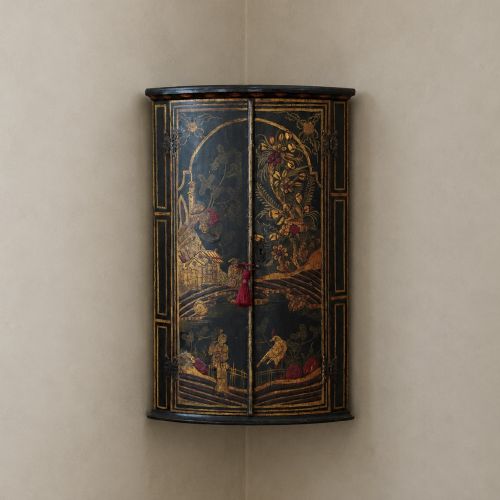
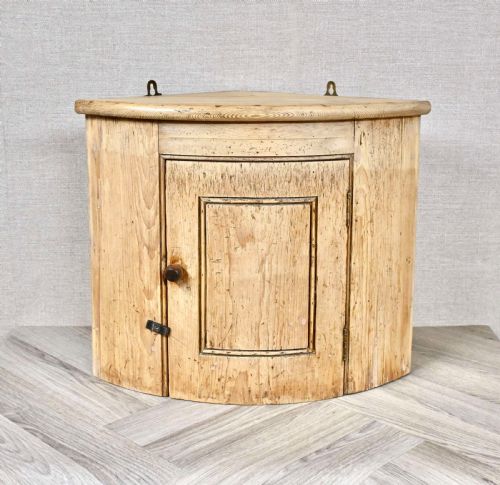
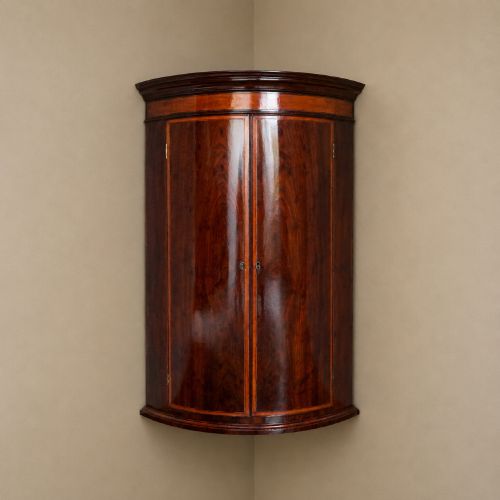
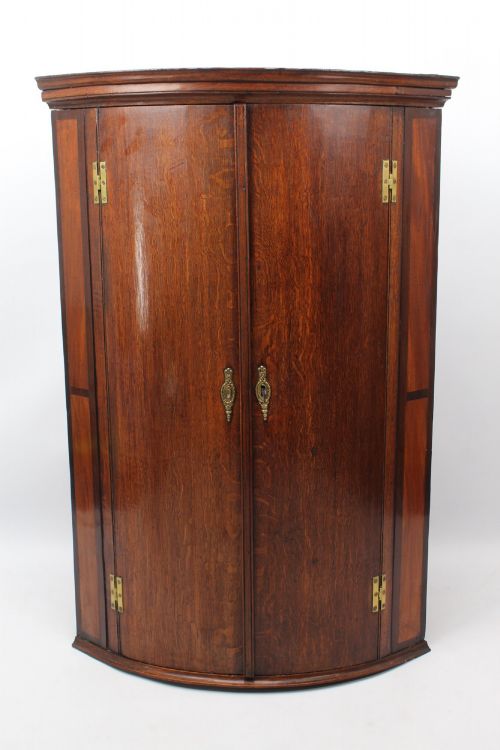
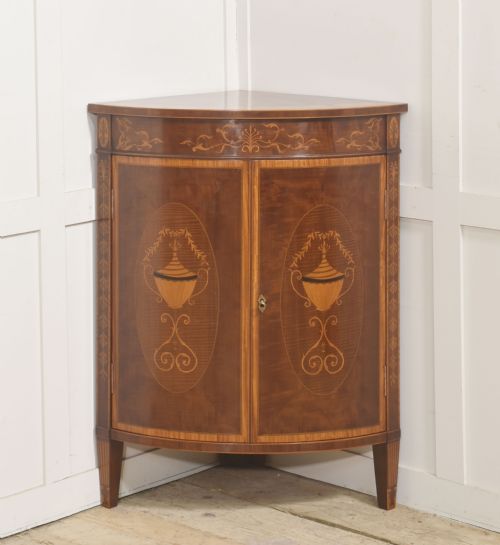
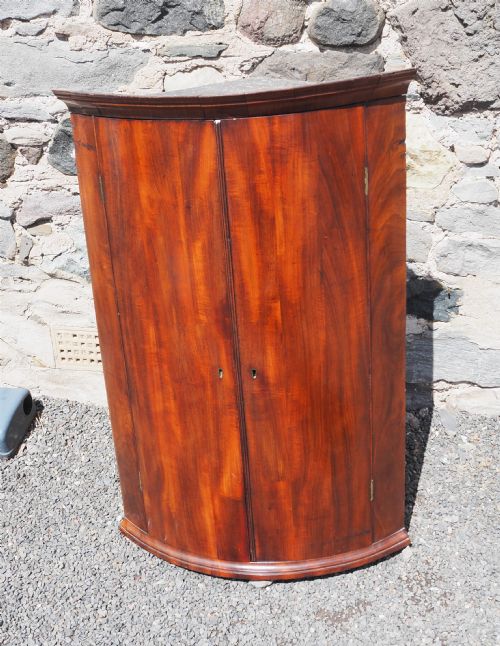
A curved front corner cupboard fits snugly into the angle of a room, softening the hard geometric lines of standard walls with a rounded or bow front. The pieces seen here span the eighteenth century and the Victorian era, taking the form of both hanging wall cupboards and floor-standing cabinets.
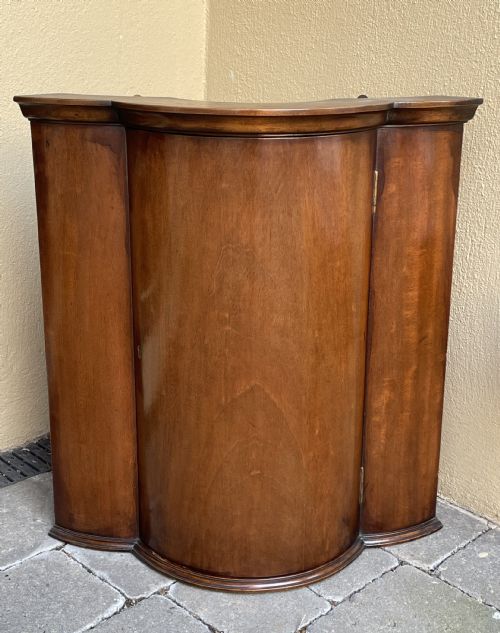
Most examples rely on traditional Georgian vernacular design, utilising rich timbers to make a distinct decorative statement in a dining room or parlour. The front profiles vary from gentle bows to more pronounced serpentine curves.
The surviving pieces demonstrate how cabinetmakers adapted standard storage to fit domestic corners without sacrificing floor space. They function primarily to display or conceal household possessions behind panelled or glazed doors.
Materials and construction
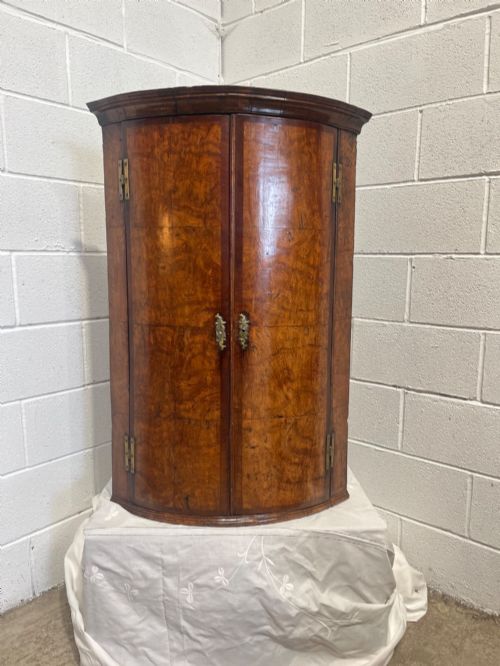
Makers built these cabinets using solid and veneered timbers including mahogany, oak, burr oak, and plum pudding mahogany, often selecting highly figured wood for the principal surfaces. The curved doors required skilled woodworking techniques to shape the timber without splitting.
Brass hardware such as hinges, escutcheons, and working locks appear regularly across the surviving pieces to secure the doors and mount the cabinets to walls. Glazed sections incorporate individual glass panes held by slender wooden glazing bars.
Retail Price Guide 2026
Typical UK retail prices for curved front corner cupboard, calculated from the Sellingantiques database of over a million retail prices indexed since 2003. This retail price guide relies exclusively on Sellingantiques data; no external sources or auction records are used, so the figures do not describe the wider market.
Plum pudding mahogany gets its name because the swirling wood grain resembles the dark dried fruits baked into traditional festive desserts.
Assessing quality
Quality rests in the choice of timber and the precision of the curved joinery, where finely figured burr oak or plum pudding mahogany elevates an ordinary storage piece into a showcase of cabinetmaking skill. The grain matching across the curved door fronts and panels reveals the maker's intent.
Subtleties in proportion and the execution of the mouldings separate standard utilitarian cupboards from finer examples designed for prominent reception rooms. Original brasswork and well-preserved timber patination contribute further to a piece's standing.
The Curved Front Corner Cupboard Glossary
- Bow front
- A convex, outwardly curved front profile that projects forward from the corners of the cabinet.
- Serpentine front
- A curved front featuring a central convex sweep flanked by concave curves, creating a wave-like shape.
- Burr oak
- Timber taken from tree growths containing distorted grain patterns, prized for its mottled and decorative appearance.
Frequently Asked Questions
Where should I hang my corner cupboard?
These cabinets suit dining rooms, hallways, or living spaces where floor area is limited and dead angles require functional furniture.
Ensure the wall structure can support the weight of the timber, particularly when dealing with dense hardwoods and glass doors.
How do I date a corner cupboard?
Dating relies on timber choices, construction methods, and hardware styles that align with documented eighteenth-century and Victorian periods.
Examining the secondary woods inside and the dovetail joints helps confirm the era of manufacture.
Are these cabinets difficult to install?
Hanging wall cupboards require secure fixings into wall studs or masonry to bear the load safely.
Floor-standing versions require little installation beyond levelling on uneven historic flooring.
What is the difference between a bow front and a serpentine front?
A bow front curves outward in a single continuous convex sweep from side to side.
A serpentine front uses multiple alternating curves to create a more complex, undulating profile.