
Mahogany Bow Front Cupboard
A mahogany bow front cupboard offers curved lines and warm timber tones, bringing practical storage and distinct period character to any room.
Mahogany Bow Front Cupboard
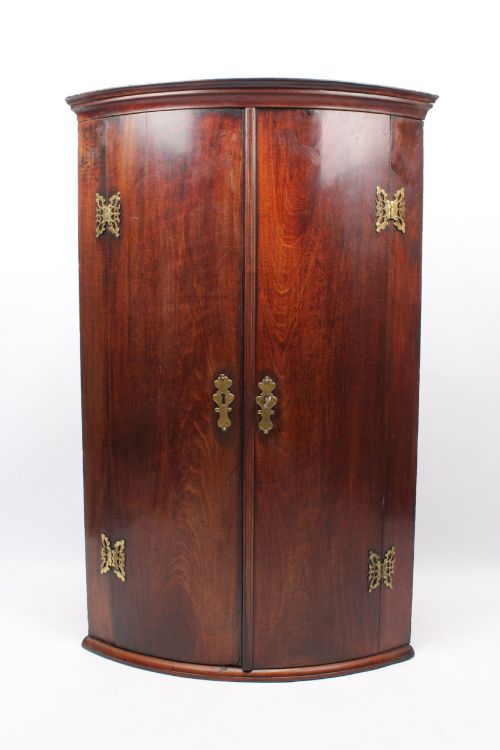
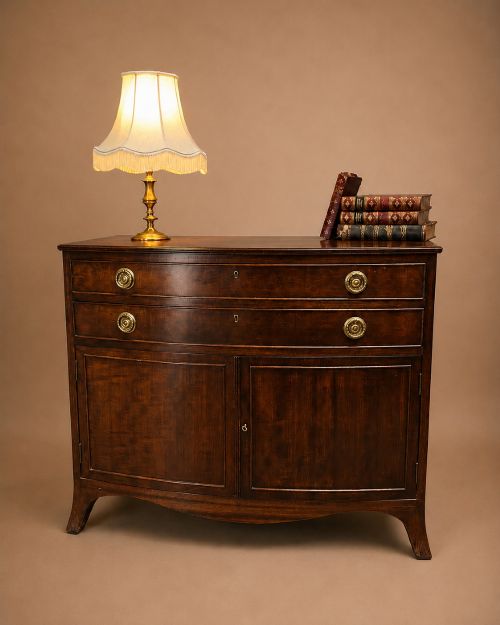
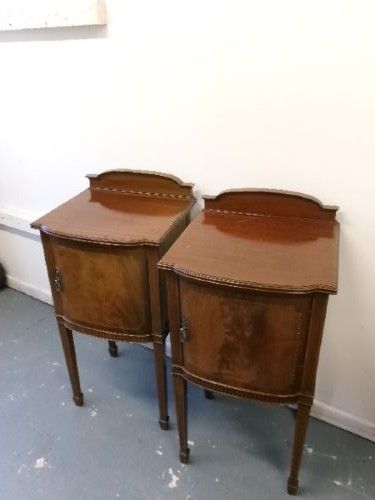
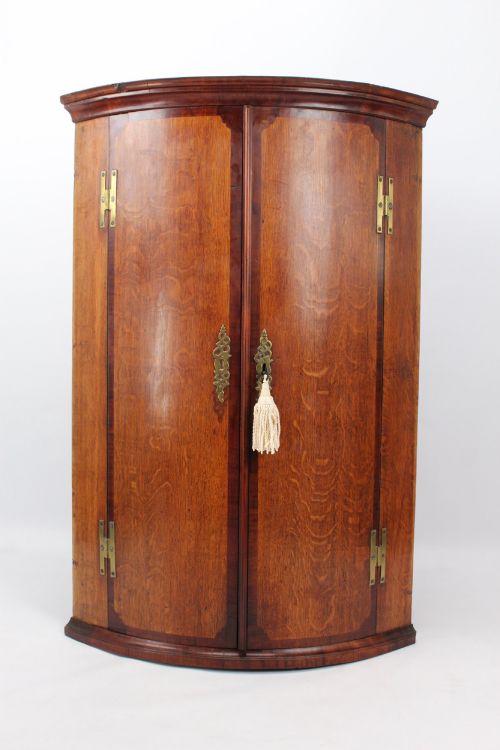
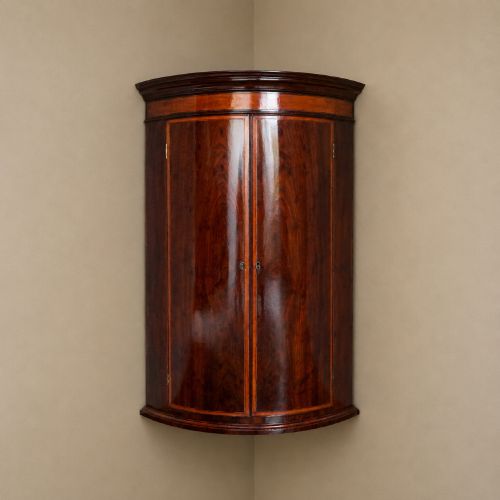
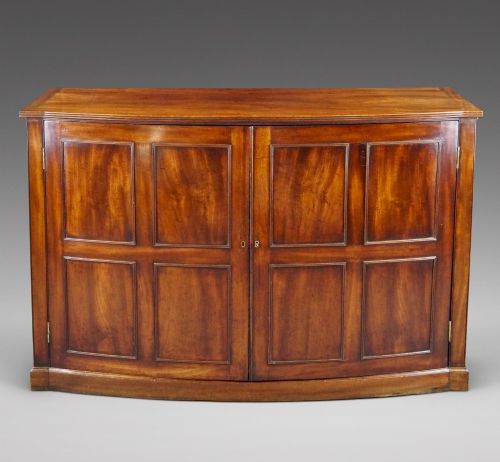
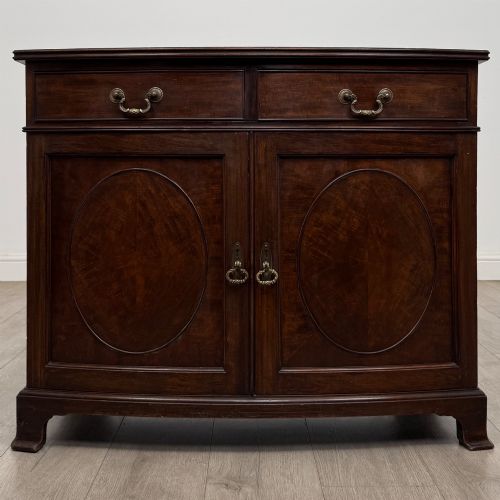
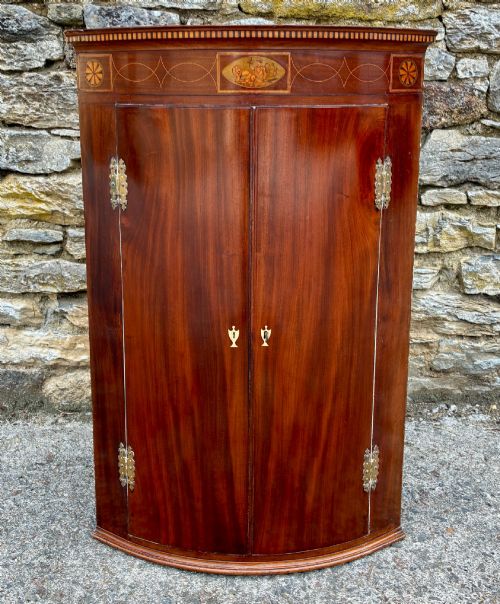
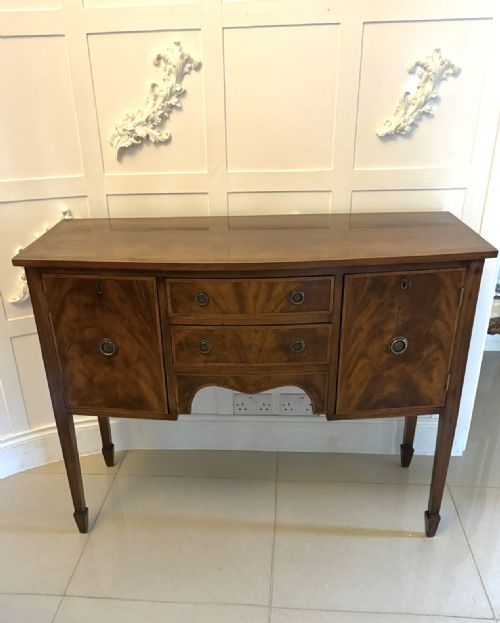
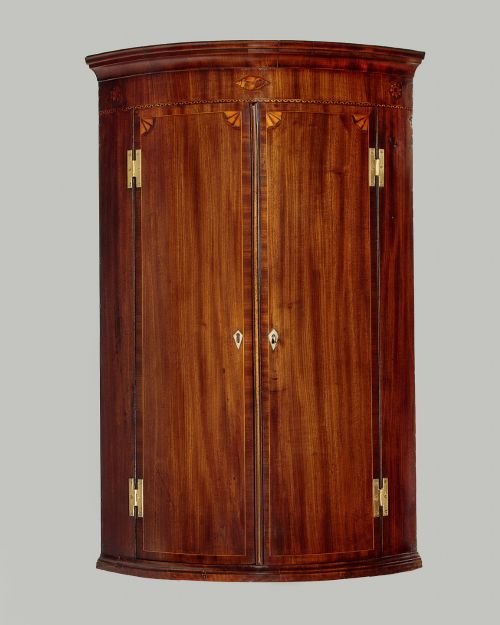
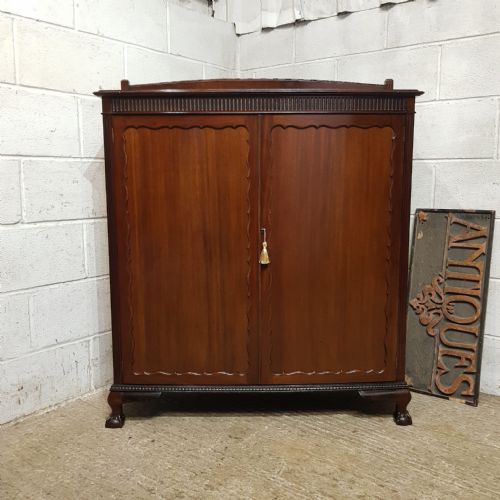
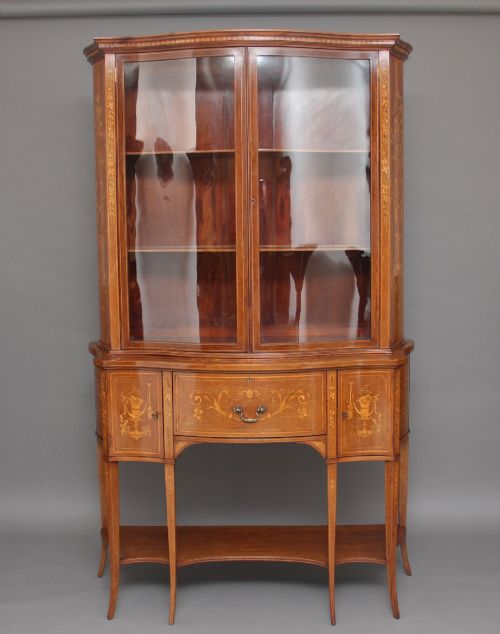
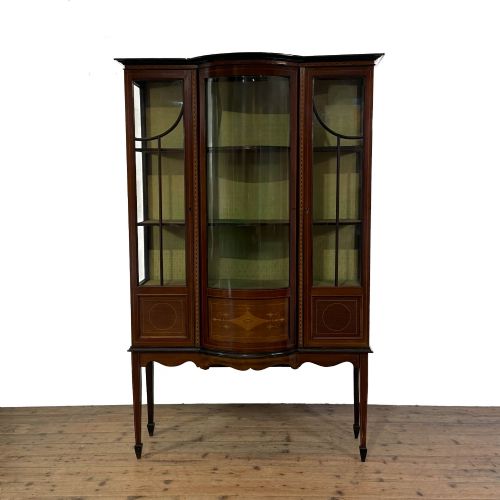
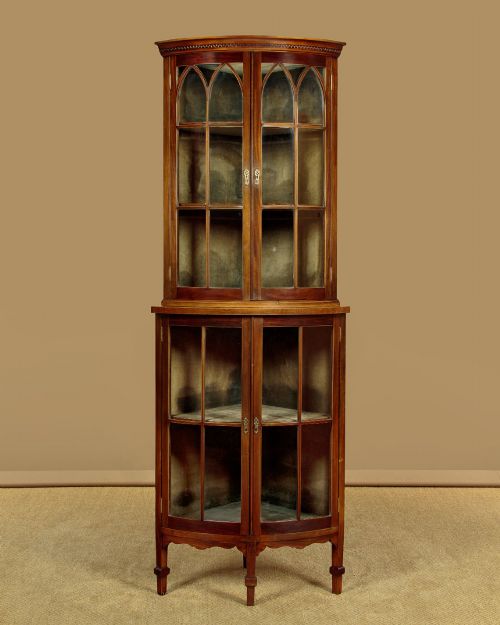
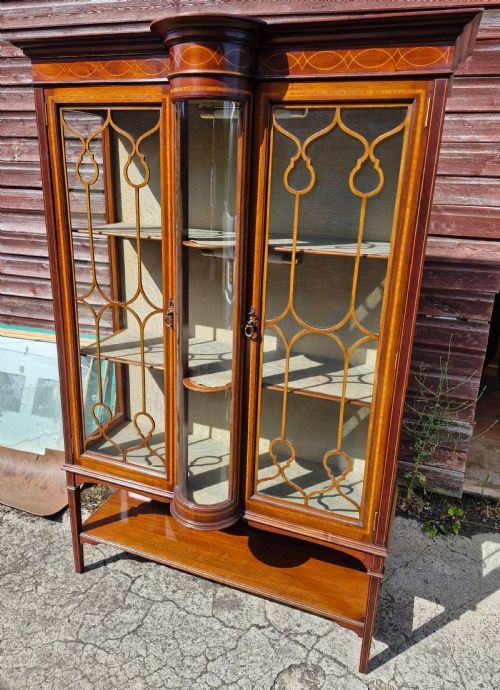
A mahogany bow front cupboard brings together curved timber fronts and enclosed storage, appearing frequently as Georgian hanging or floor-standing corner cabinets, bedside units, and larger sideboards.
Buyers seeking this phrase encounter numerous examples originating from the Georgian and Edwardian eras, alongside pieces spanning the nineteenth and early twentieth centuries.
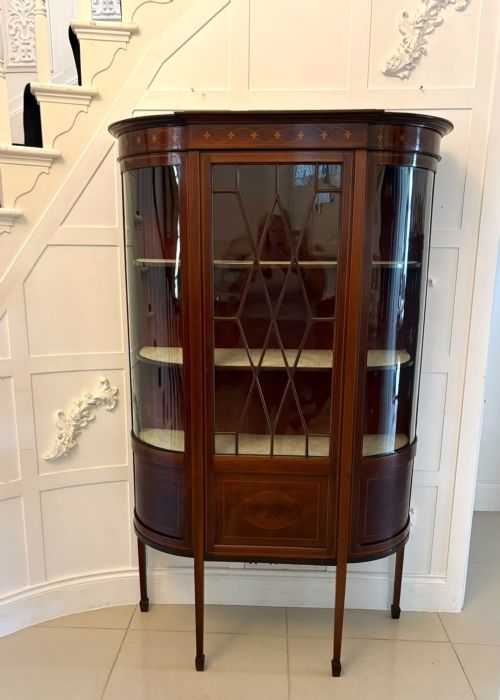
The selection ranges from compact wall-mounted corner cupboards with spice drawers to substantial linen presses and display cabinets fitted with bowed glass doors.
How they were made
Cabinet makers built these pieces using solid mahogany and oak carcasses, often selecting highly figured timber such as flame mahogany or plum pudding mahogany for the primary visible surfaces.
Decoration relied on contrasting natural materials, incorporating satinwood, boxwood, and delicate stringing alongside inlaid motifs to accent the curved doors and friezes.
Glazing techniques utilised bowed glass panes for display cabinets, while structural integrity was maintained through traditional joinery and fitted brass hardware.
Some Georgian corner cupboards hide tiny interior spice drawers behind their curved doors for secrets of a culinary sort.
What varies in quality
Quality rests upon the selection and matching of the wood grain across the curved facade, where continuous flame patterns indicate superior timber sourcing.
Refinement shows in the crispness of the inlaid stringing and the precision with which the bowed doors close within their frames.
The integration of secondary timbers, original brass fixtures, and interior details like spice drawers or fitted shelving separates standard utility pieces from finer cabinet work.
Maple And Co
The Mahogany Bow Front Cupboard Glossary
- Bow front
- A convex, curved front projection on a cabinet or chest that softens the rectangular profile of the furniture.
- Flame mahogany
- A veneer cut from the fork of the mahogany tree, creating a distinctive flickering flame pattern across the timber surface.
- Stringing
- Thin lines of contrasting wood inlay used to outline drawers, doors, and tabletops for decorative effect.
- Linen press
- A tall storage piece featuring upper cabinet doors enclosing sliding trays, originally designed for storing folded textiles.
- Corner cupboard
- A triangular cabinet specifically constructed to fit neatly into the corner of a room, saving floor space.
Mahogany Bow Front Cupboard: Frequently Asked Questions
Where were corner cupboards placed?
These cabinets were designed to fit directly into the internal corners of rooms, making efficient use of otherwise neglected architectural space.
In period homes, they hung on walls or stood on the floor in dining parlours, sitting rooms, and hallways to hold china and glassware.
What is a pot cupboard?
A pot cupboard is a small bedside cabinet historically used to house a chamber pot behind a single door.
These compact units often feature a small top surface with a raised gallery and sit low to the ground.
How do I date a mahogany cabinet?
Dating relies on examining the construction methods, secondary woods like oak, and the style of inlay work present on the piece.
Georgian examples tend to show hand-cut dovetails and simpler mahogany surfaces, whereas Edwardian revivals often incorporate satinwood banding and machine-cut elements.
How do I care for antique mahogany?
Antique mahogany benefits from being kept away from direct sunlight and sudden changes in room temperature to prevent the wood from drying out.
Regular dusting with a dry cloth and occasional application of traditional wax helps preserve the natural sheen of the timber.