
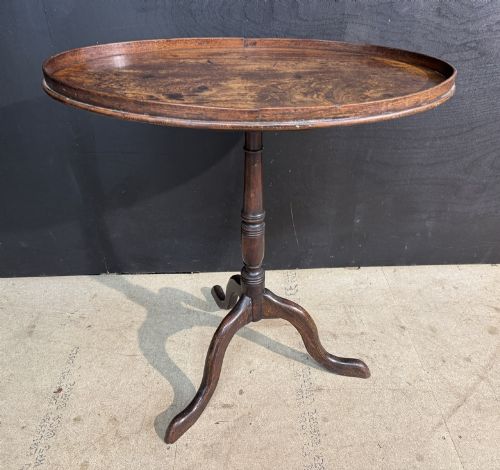
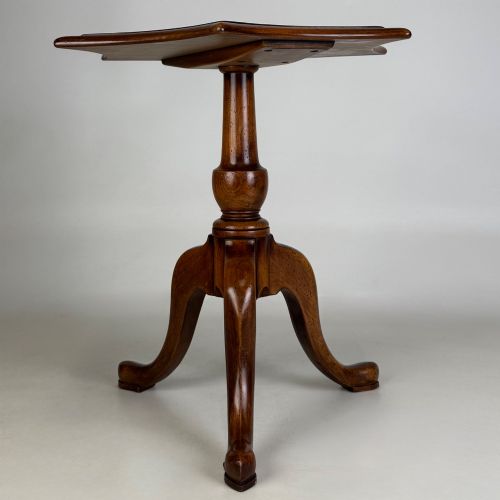
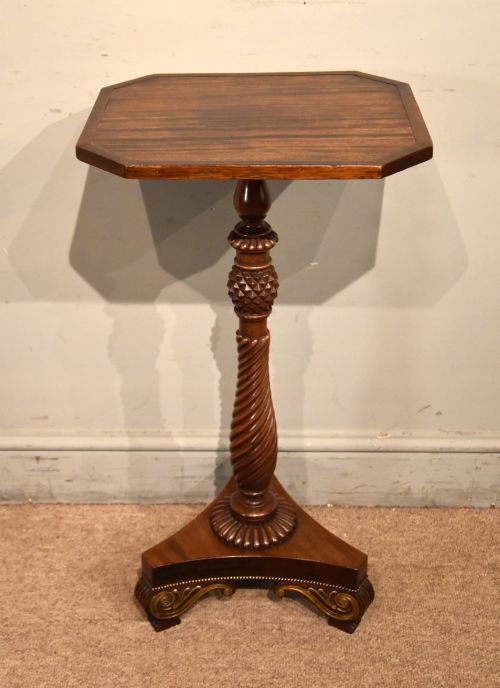
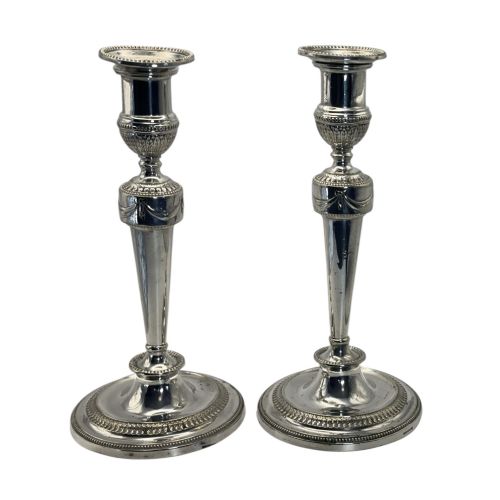
Georgian Candle Table
A georgian candle table offers compact surfaces and adjustable heights designed to hold lighting safely beside a chair or bed.
Georgian Candle Table
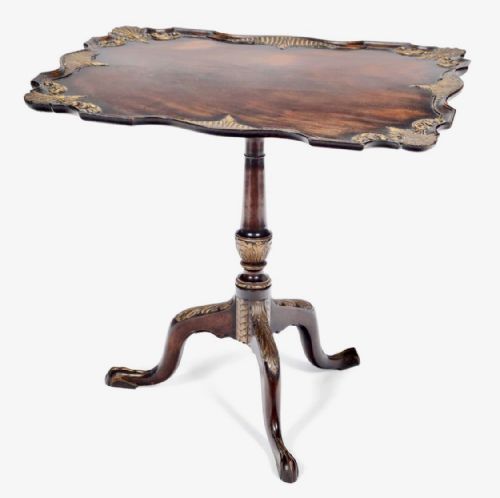
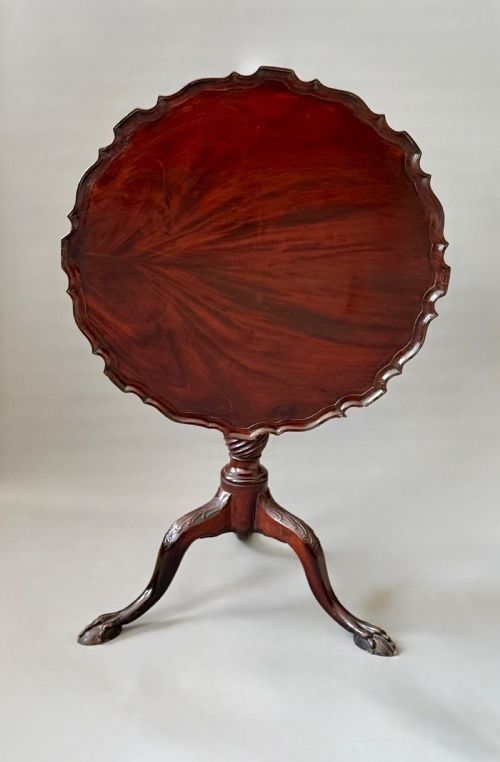
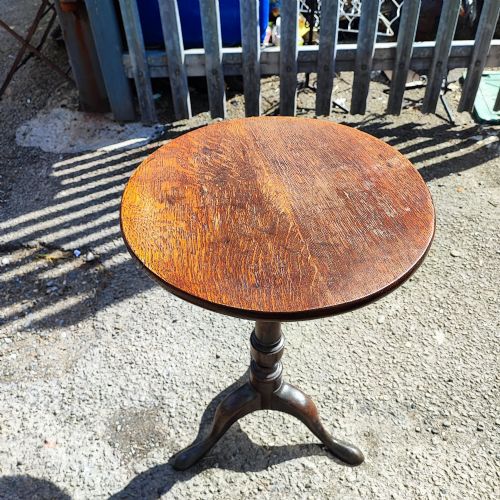
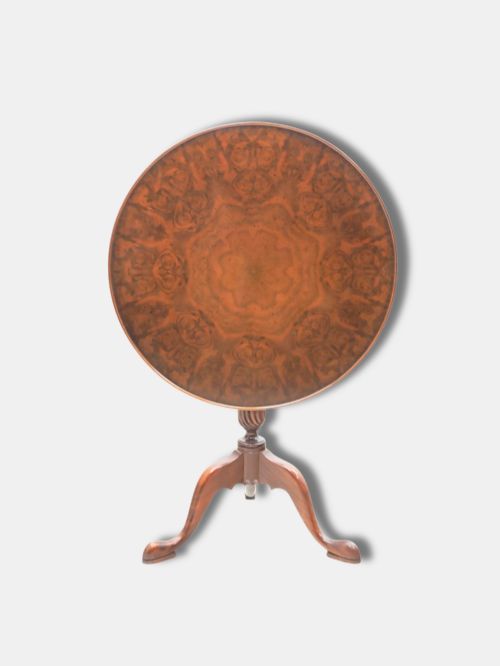
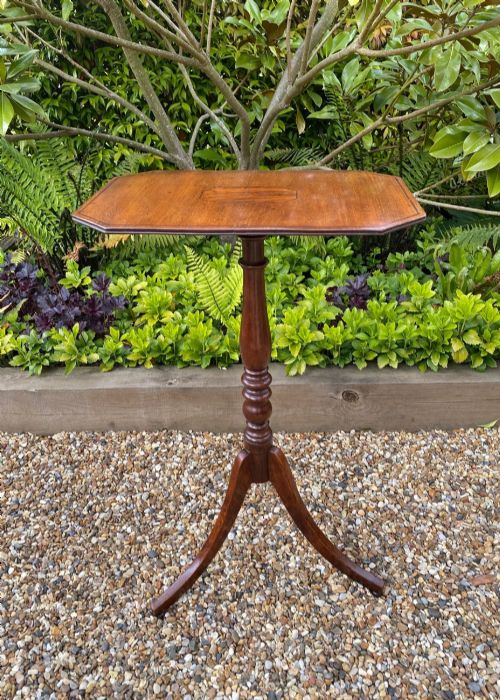
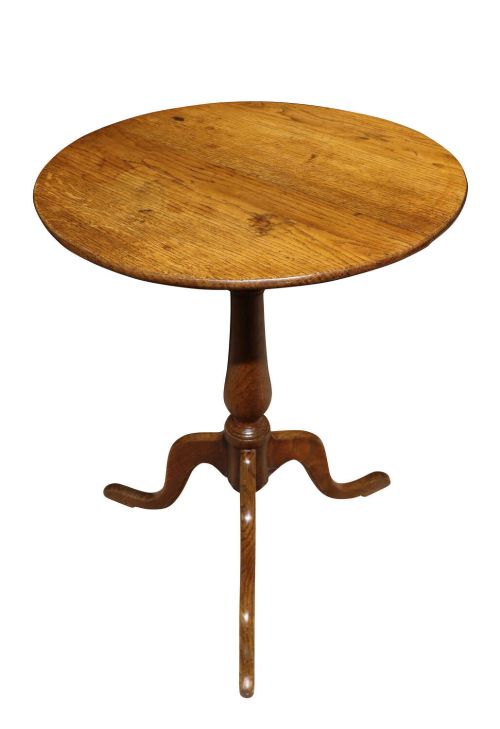
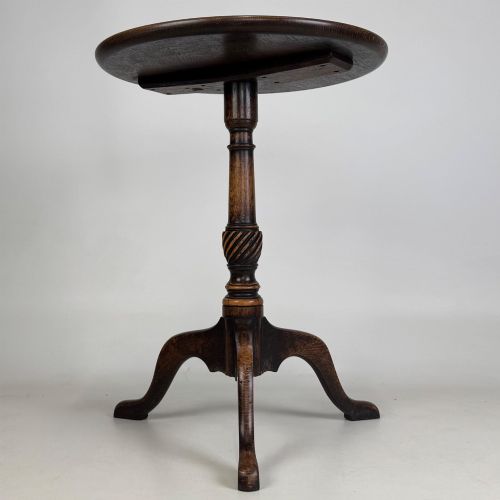
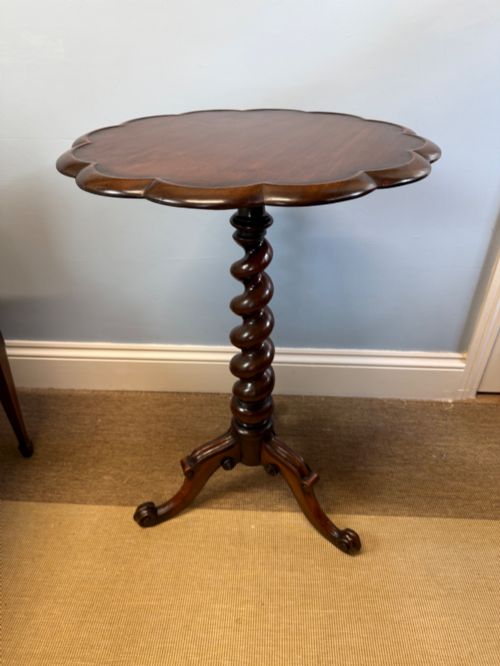
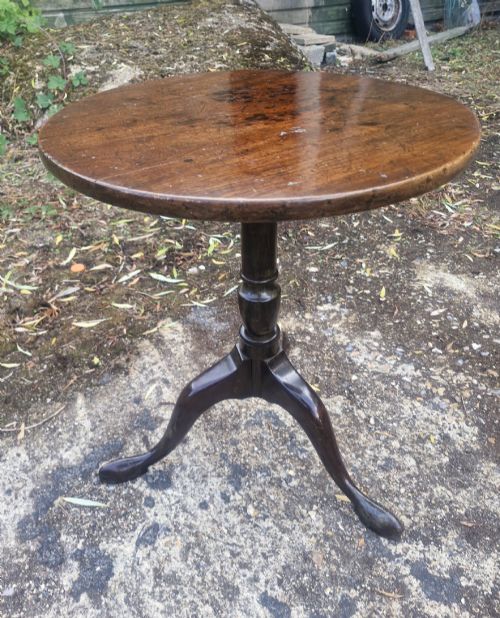
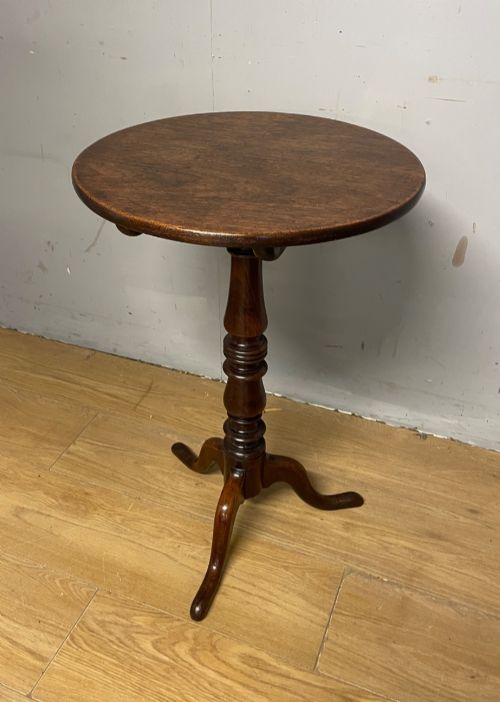
A georgian candle table appears most frequently as a small tripod stand with a round or shaped top designed for domestic use. These pieces emerge primarily from the eighteenth and early nineteenth centuries, spanning periods from George II through the Regency era.
Makers fashioned these supports as wine tables, tilt-top surfaces, or adjustable stands intended to hold illumination near seating areas. Oak and mahogany dominate the forms, supplemented by occasional examples in fruitwood, walnut, and yew wood.
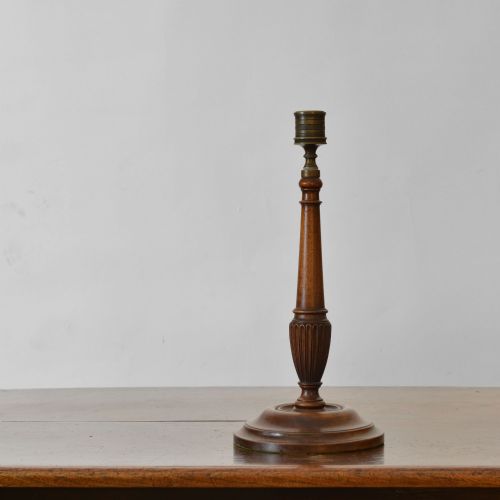
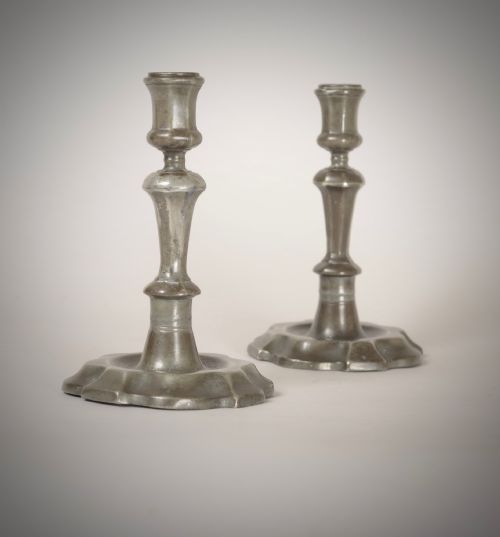
Buyers also encounter related lighting furniture such as brass candlesticks, wooden candlestands, and portable writing slopes with candle sconces. The selection ranges from country workshop pieces in solid oak to finely carved mahogany tripod tables made in metropolitan centres.
Materials and Technique
Cabinetmakers utilised dense timbers such as mahogany, oak, and walnut, turning central columns on lathes and sawing three legs for the characteristic tripod base. Tops were frequently joined with tilt mechanisms using brass catches or wooden pivots to save space when not in use.
Advanced examples incorporate carved pie-crust rims, parcel gilding, or finely turned candlestand stems designed for height adjustment. Secondary woods like fruitwood appear in country-made pieces, showing simple pegged joinery and hand-planed surfaces.
Georgian Candle Table Retail Price Guide 2026
Typical asking prices for georgian candle table among the pieces listed under this phrase on Sellingantiques today, from the lower quarter to the upper quarter. They describe what is for sale here now, not the wider market.
Listings feature mahogany, oak, walnut, and fruitwood tables spanning the Georgian, Regency, and Victorian eras.
Distinctions in Execution
The sophistication of the carving on the central pillar and the stability of the tripod base separate simpler utilitarian pieces from finer urban commissions. Timber selection dictates much of the character, with rich figured mahogany and dense early oak commanding greater regard than plain secondary woods.
Mechanical elements such as adjustable wooden screws, brass ratchets, and tilt latches reveal the original maker's skill and precision. Well-balanced proportions and crisp edge details on moulded or shaped table tops denote superior workshop standards.
Gillow
The Georgian Candle Table Glossary
- Tilt-top
- A table mechanism allowing the surface to rotate vertically and fold flat against the pedestal when stored. This clever design saved valuable floor space in smaller eighteenth-century parlours.
- Tripod base
- A three-legged support structure commonly utilised on small tables and candlestands to ensure stability on uneven floorboards. Each leg typically terminates in pad, snake, or claw feet.
- Pie crust rim
- A raised, decoratively carved edge shaped around the perimeter of a circular table top. It resembles pastry work and prevents items from sliding off the surface.
- Candlestand
- A tall, slender piece of furniture specifically built to elevate a single light source or candle. Many feature adjustable mechanisms to alter the height of the flame.
- Snap top
- An alternative term for a tilt-top table where a spring catch secures the horizontal surface in place. It prevents the top from tipping unexpectedly during use.
Georgian Candle Table: Frequently Asked Questions
What is a georgian candle table used for?
These small stands were originally positioned beside seating areas to hold a candle, providing targeted illumination for reading, sewing, or social gatherings.
Today, they function as versatile accent furniture suitable for holding drinks, small lamps, or decorative objects in compact spaces.
How do I identify a genuine period piece?
Examine the timber for appropriate age patination, hand tool marks, and traditional joinery methods such as pegged tenons or dovetails. Regional woods and construction styles often correspond to documented eighteenth and nineteenth-century workshop traditions.
Check the mechanism beneath the top for period-appropriate iron or brass fittings. Modern replacements or machine-cut components generally indicate later manufacture.
What is the difference between a wine table and a candle table?
While both share compact tripod frames and round wooden tops, candle tables frequently include height-adjustment mechanisms. Wine tables are typically fixed at standard chair height to serve beverages.
Terminology often overlaps in historic listings because owners used small portable stands for multiple domestic purposes interchangeably.
How should I care for an antique wooden table?
Keep wooden surfaces away from direct sunlight and extreme humidity fluctuations to prevent timber shrinkage or warping. Periodic application of quality wax preserves the finish and maintains the natural lustre of the grain.
Avoid placing damp items directly onto antique polish to prevent ring marks. Use protective coasters beneath glasses or potted plants.