
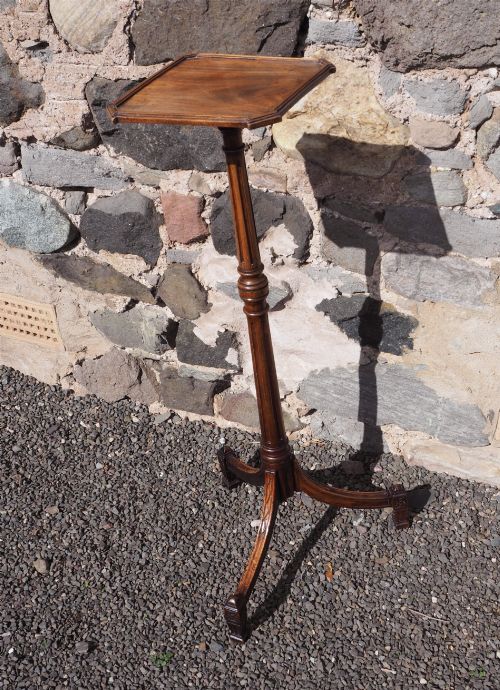
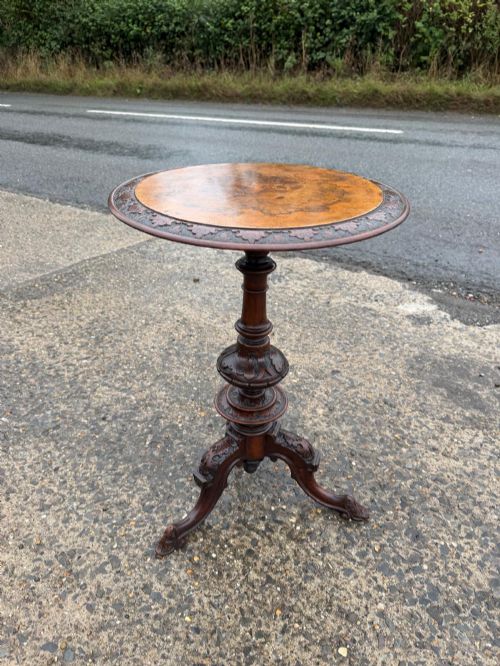
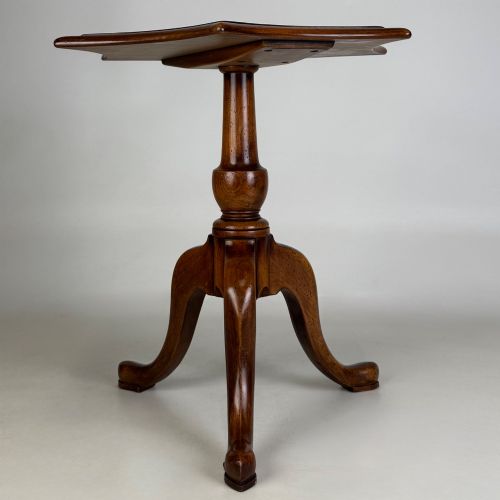
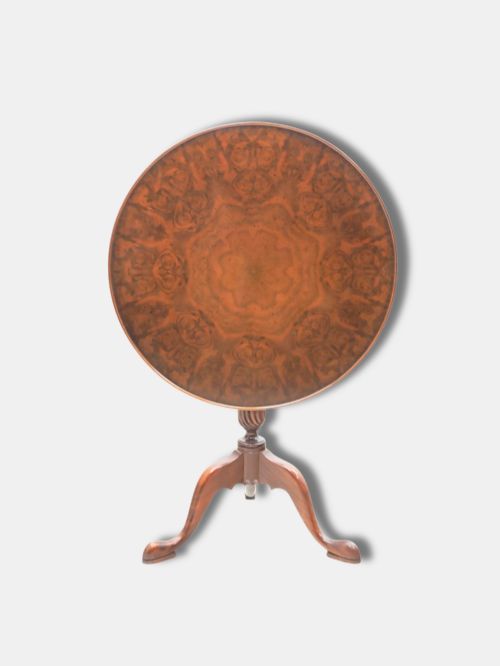



Walnut Candle Stand
These walnut candle stand examples offer elevated display surfaces, bringing rich dark timber and slender proportions into traditional interiors.
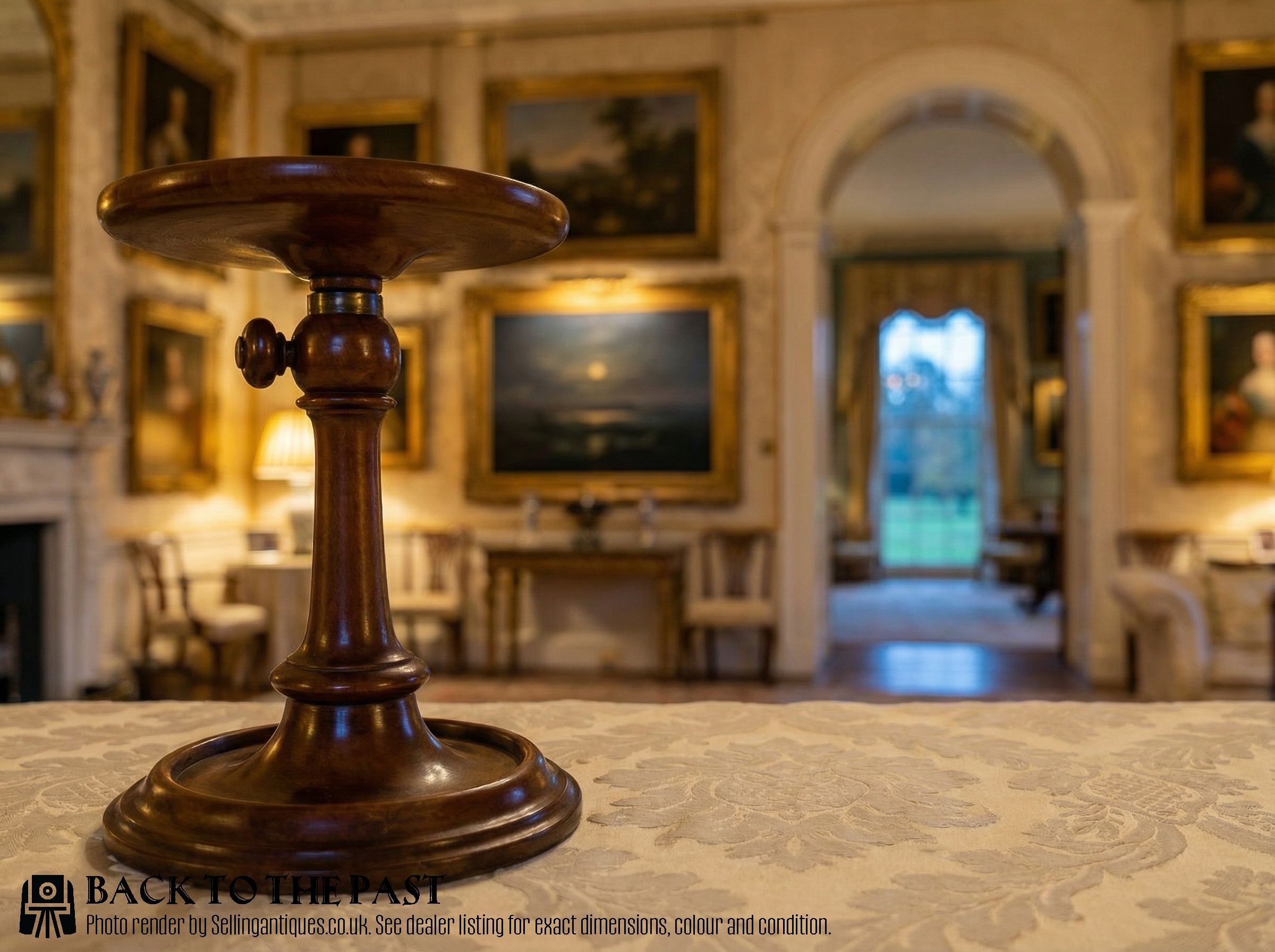
What a walnut candle stand is
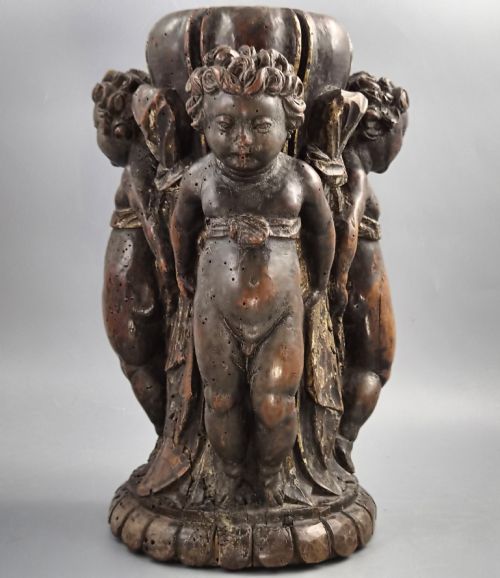
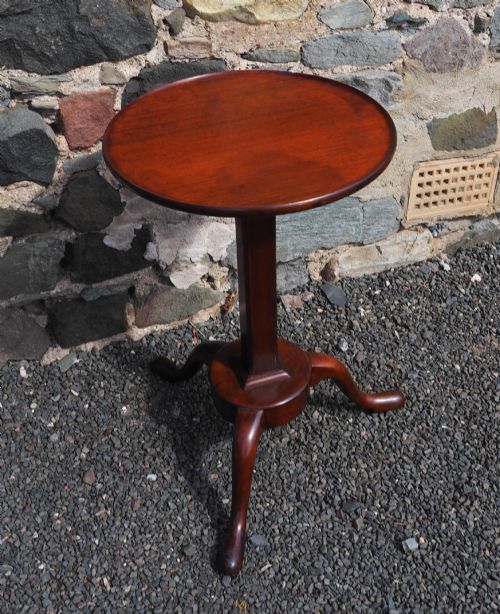
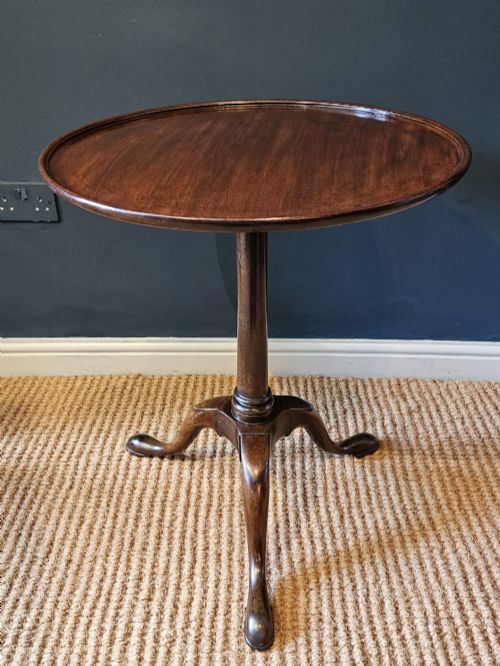
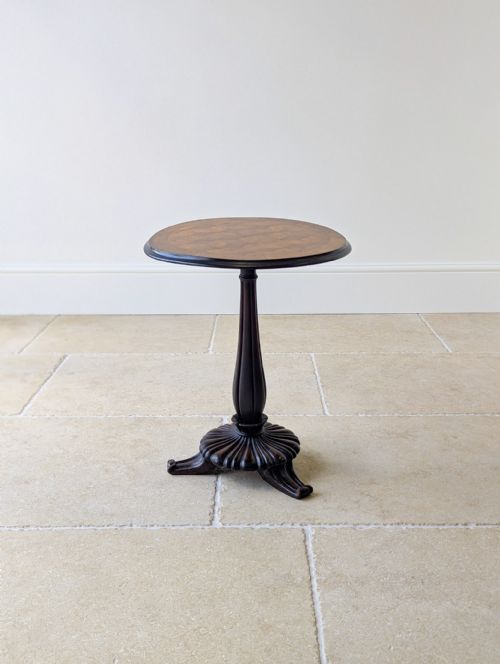
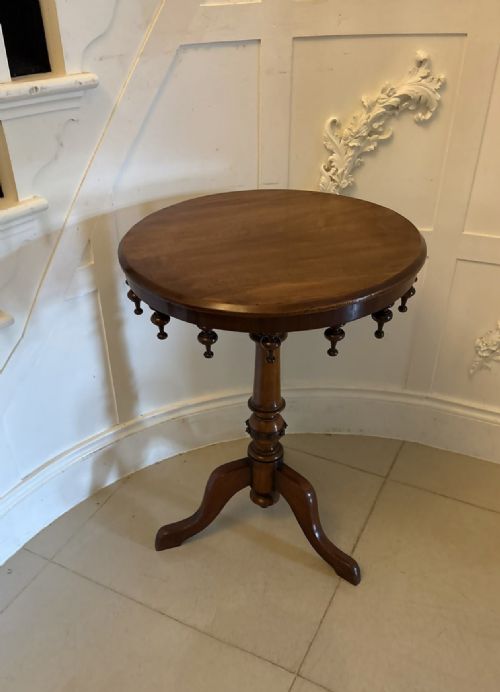
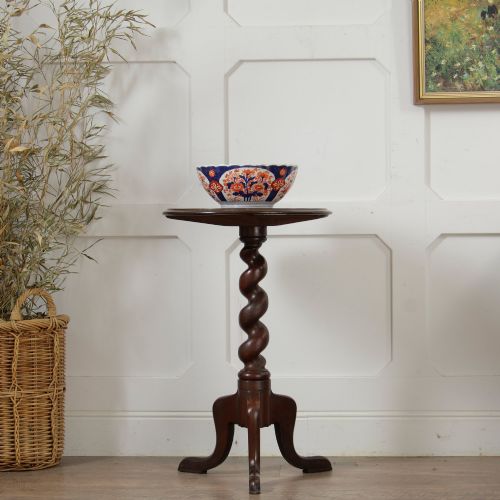
A walnut candle stand is a slender occasional table designed to elevate illumination or display objects within a room. The search phrase covers forms ranging from 17th-century tripod styles to Victorian and Edwardian iterations.
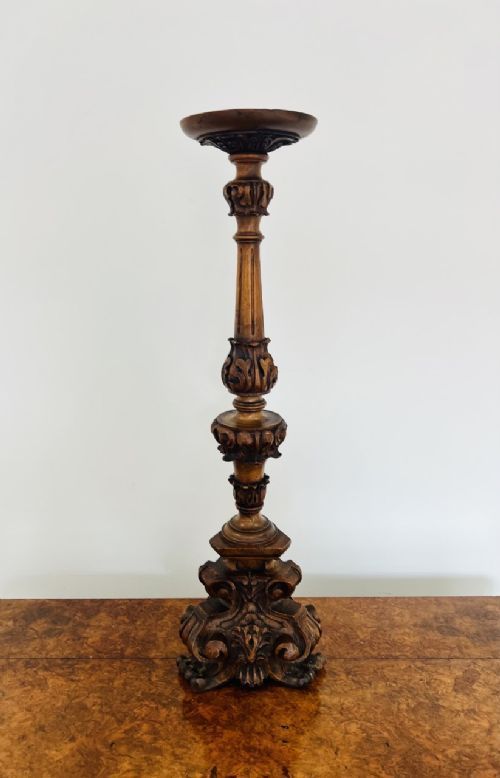
The versions most commonly met on this page span the Georgian period, the 19th century, and the Victorian era. These pieces frequently appear as torcheres, lamp tables, or small occasional tables.
Origin variations include English craftsmanship alongside 18th-century Dutch and Italian examples. Their diminutive footprint makes them adaptable pieces for corners and beside seating.
How they were made
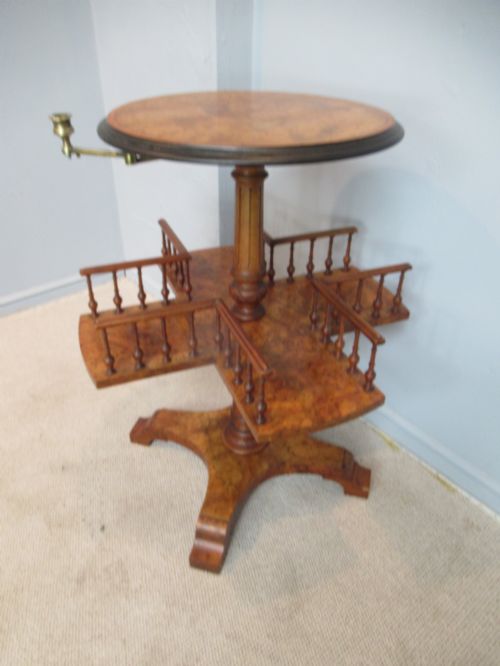
Makers utilised solid walnut and burr walnut veneers over secondary timbers, occasionally incorporating fruitwood marquetry for decorative floral inlay. Brass fittings appear on selected pieces to accent the timber construction.
Turning and carving define the structural supports, with slender pedestals rising from tripod bases. Surfaces range from plain circular or oval tops to heavily carved and inlaid tops.
Retail Price Guide 2026
Typical UK retail prices for walnut candle stand, calculated from the Sellingantiques database of over a million retail prices indexed since 2003. This retail price guide relies exclusively on Sellingantiques data; no external sources or auction records are used, so the figures do not describe the wider market.
Listings demonstrate forms ranging from William and Mary tripods to Edwardian side tables in walnut, burr walnut, and fruitwood marquetry.
What varies in quality
The distinction between standard and superior pieces rests in the selection of timber grain and the crispness of the carving. Burr walnut surfaces and complex floral marquetry inlay indicate higher workshop ambition.
Proportional balance between the top, the slender column, and the splayed legs governs the visual success of each stand. Refined turning on the stem and well-executed joinery separate provincial items from finer examples.
Charles Hindley and Sons London
The Walnut Candle Stand Glossary
- Torchere
- A tall, slender stand designed to support a candle or lamp. The term derives from French lighting supports.
- Marquetry
- Decorative patterns formed by fitting together thin veneers of wood and other materials. Floral motifs frequently decorate Georgian table tops.
- Tripod base
- A three-legged support structure common on candle stands and small tables. This arrangement provides stability on uneven historic floors.
- Burr walnut
- Timber taken from a tree growth featuring swirling, knotty grain patterns. This highly figured wood is prized for decorative veneer work.
- Occasional table
- A small, portable table intended for specific, intermittent use. These pieces move easily around a room as needed.
Frequently Asked Questions
What is a walnut candle stand?
A walnut candle stand is a tall, slender occasional table historically used to hold a single candle or lamp for illumination. These pieces feature a small top supported by a central pillar and a tripod base.
Over time, their primary function shifted from lighting support to general display surfaces for ornaments and small plants. Their compact footprint makes them versatile additions to traditional sitting rooms.
How do I date a walnut candle stand?
Dating relies on examining the construction methods, leg design, and timber characteristics. Eighteenth-century examples often feature simpler, elegant turning and dense native walnut, while Victorian versions may incorporate heavier carving or burr walnut veneers.
Secondary woods and hardware also offer clues to age. Comparing the joinery underneath the top to known period pieces helps confirm the era of manufacture.
Where should I place it?
These stands suit corners, empty wall spaces, or positions beside armchairs where a small surface is useful. Because of their slender proportions, they do not overwhelm tight spaces.
Avoid placing them in direct sunlight or near heat sources, as walnut and fragile veneers can dry out and crack over time. A stable floor prevents the tall, narrow structure from tipping.
Can I use it for modern lighting?
Yes, many collectors use them to support small table lamps or heavy candles. The solid construction of period stands safely bears the weight of modern electrical cords and bases.
Care should be taken to protect the timber surface from heat and wax or moisture drips. Using a discreet mat or coaster preserves the historic polish.