




Georgian Apprentice Furniture
Georgian apprentice furniture comprises small-scale cabinet pieces made to demonstrate a maker's skill, offering charming miniature versions of full-size household items.
Georgian Apprentice Furniture
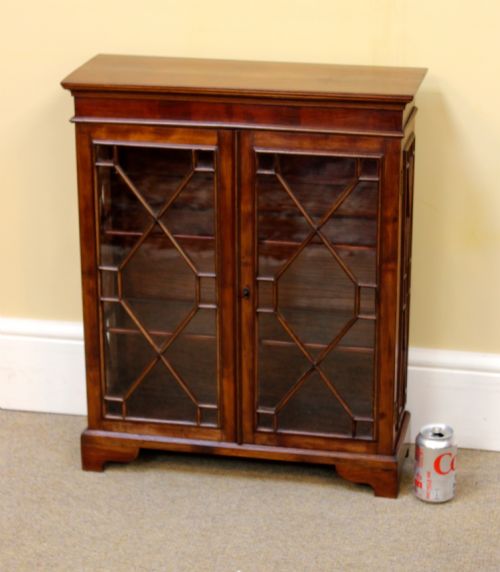
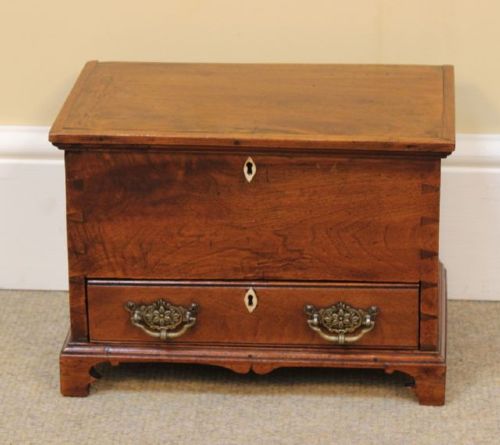
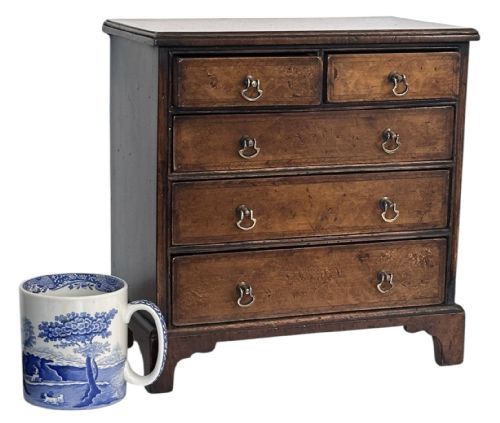
When you examine georgian apprentice furniture, you encounter miniature chests of drawers, small cabinets, desks, and tables created as demonstration pieces or household samples. These items range from compact bureau bookcases and mule chests to tripod tables and hall chairs.
The pieces on this page span the eighteenth and nineteenth centuries, alongside later revivals, reflecting the shifting tastes of cabinet makers over generations. Miniature chests of drawers in mahogany, oak, and walnut appear most frequently among these listings.
Makers constructed these small objects with the exact joinery and proportions of domestic furniture, adapting full-size designs to diminutive scales. Every surviving piece preserves a tangible record of historic woodworking standards.
How they were made
Craftsmen built georgian apprentice furniture using traditional cabinet timbers including mahogany, oak, walnut, burr yew, and pine, often accented with brass hardware and bone inlays. Artisans shaped these dense hardwoods using hand tools to achieve precise miniature dovetails and mortise-and-tenon joints.
Surfaces received careful preparation through French polishing, hand carving, or painting on pine and oak carcases. Timber selection dictated the finished visual texture, with figured veneers and burr oaks adding decorative depth to small drawer fronts.
Georgian Apprentice Furniture Retail Price Guide 2026
Typical asking prices for georgian apprentice furniture among the pieces listed under this phrase on Sellingantiques today, from the lower quarter to the upper quarter. They describe what is for sale here now, not the wider market.
Some miniature drawers are so tiny they could scarcely hold a thimble, yet their hidden dovetails remain as honest as a wardrobe.
What varies in quality
Quality in georgian apprentice furniture rests upon the fidelity of the proportions and the precision of the miniature joinery. Master cabinet makers applied the exact structural rigour found in large furniture to these small items, ensuring drawer linings and backboards matched full-scale work.
The choice of timber creates further distinction, separating standard pine or plain oak pieces from those utilising figured mahogany, burr yew, and amboyna. Refinement in hand carving and the retention of original brass fittings elevate the standing of individual pieces.
The Georgian Apprentice Furniture Glossary
- Apprentice piece
- An item created by a trainee woodworker to demonstrate mastery of cabinet making skills before joining a guild. These objects typically replicate full-size furniture on a reduced scale.
- Mule chest
- A storage chest fitted with one or two drawers in the base beneath a hinged lid compartment. They combine the storage of a coffer with the accessibility of a chest of drawers.
- Bureau bookcase
- A writing desk featuring a sloping fall-front flap that conceals internal pigeonholes and small drawers, surmounted by a glazed or panelled bookcase cabinet. They represent complex miniature joinery.
- Tripod table
- A small occasional table supported by a central pillar above three spreading legs. They appear frequently in miniature form as stands or tea tables.
- Kneehole desk
- A compact writing desk featuring a central recess for the user's legs flanked by pedestals of small drawers. Miniature examples retain the intricate internal configuration of the full-size originals.
Georgian Apprentice Furniture: Frequently Asked Questions
What is georgian apprentice furniture?
Georgian apprentice furniture consists of small-scale cabinets, chests, and tables made by trainees or journeymen to prove their woodworking proficiency to master craftsmen.
These objects served as working portfolios, demonstrating the maker's mastery of dovetailing, veneering, and carving on a miniature scale.
How were these miniature items used?
Makers used these items as portable samples to show prospective clients the quality of work they could produce for full-size domestic commissions.
Over time, households also utilised them on desktops or tabletops for storage, display, or ornamental purposes within formal rooms.
How do I style miniature furniture at home?
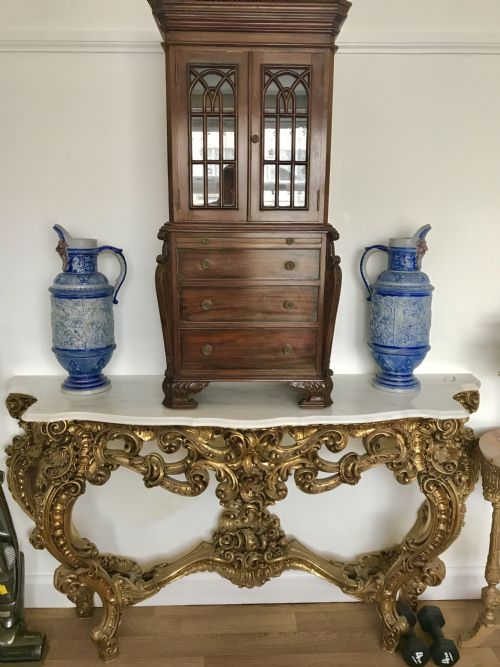
You can display miniature chests, cabinets, and desks on top of larger sideboards, tables, or chest tops where their fine timber grains and details remain visible.
Their compact proportions allow them to fit into constrained spaces while adding historical character and texture to a room.
How do I tell periods apart in these pieces?
Stylistic markers such as Chippendale carving, George II proportions, or Regency brass details help distinguish the manufacturing period of each miniature object.
Timber choices also offer clues, with eighteenth-century pieces favouring solid oak and mahogany while later nineteenth-century examples often introduce exotic veneers like amboyna or burr yew.