




George III Secretary Bookcase
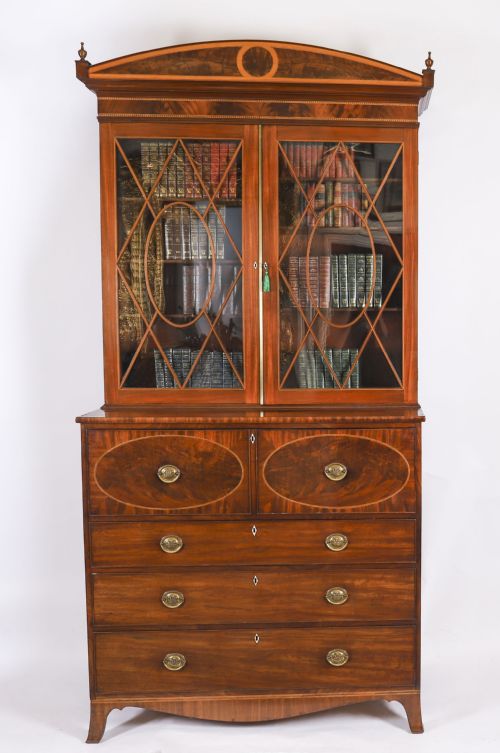
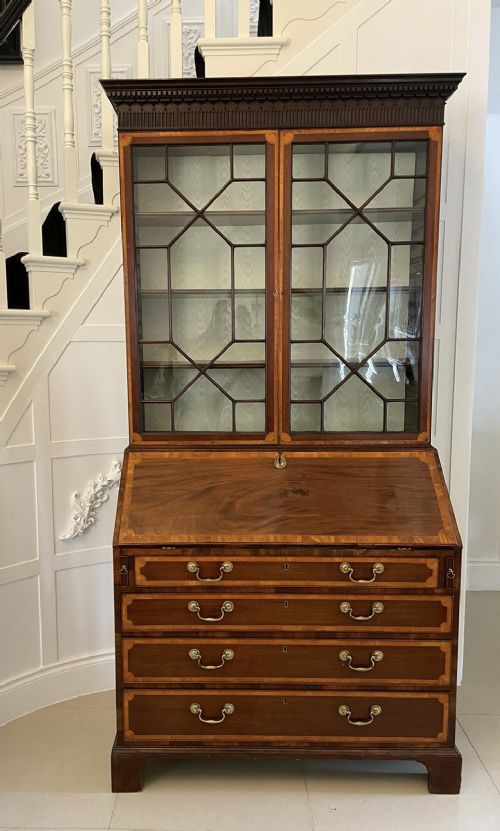
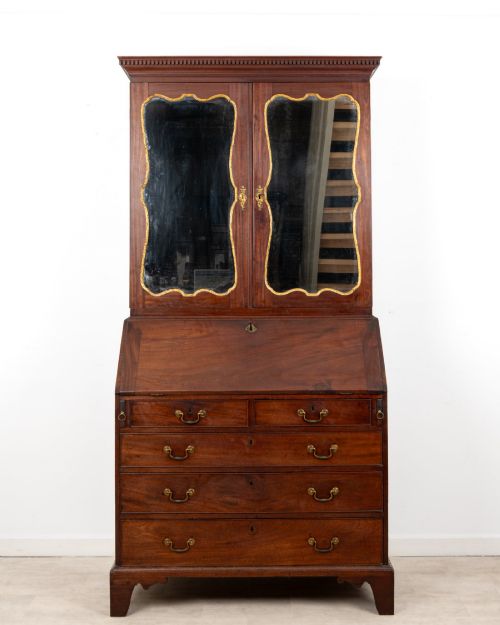
A george iii secretary bookcase brings together tall shelving and a drop-front desk in timber that has darkened over centuries of use.
George III Secretary Bookcase
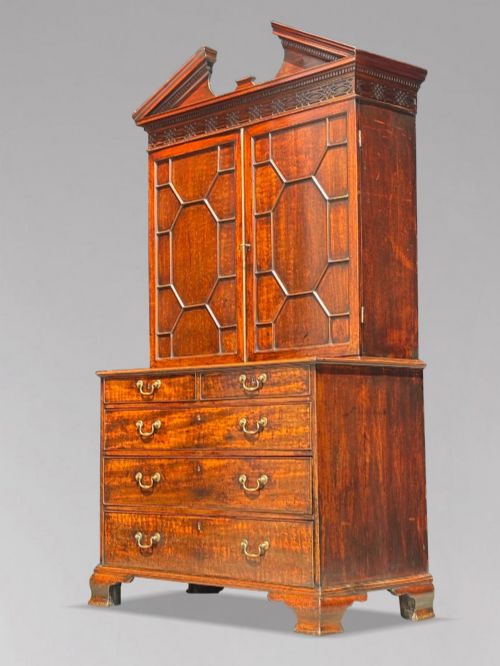
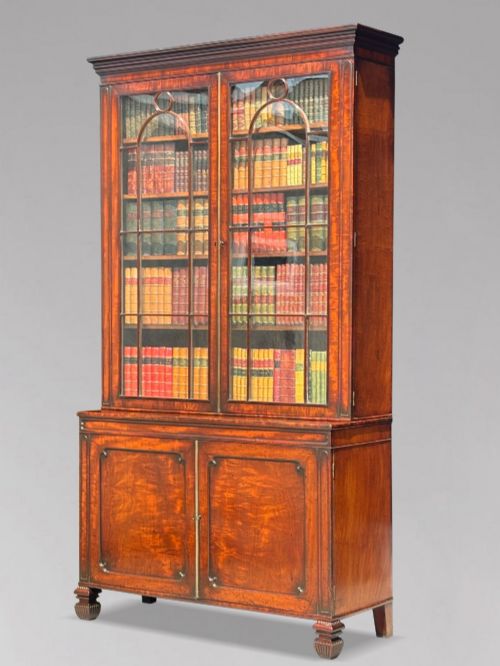
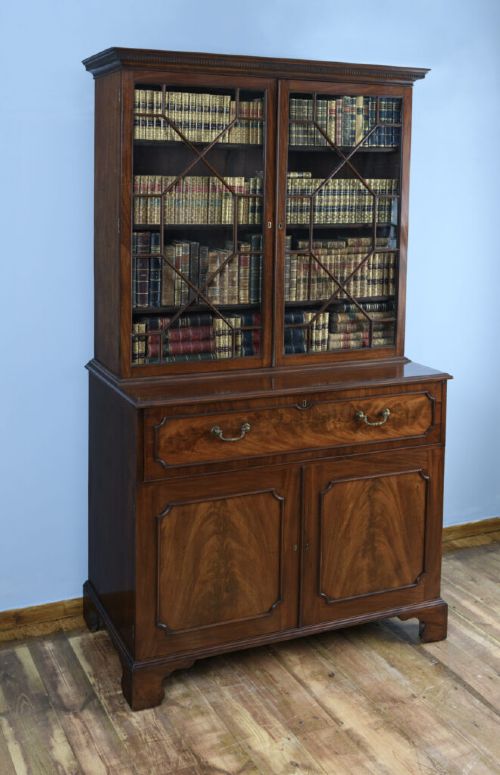
A george iii secretary bookcase combines a glazed upper cabinet for books with a fitted writing drawer and lower storage drawers. These large library pieces date primarily from the eighteenth century and the opening years of the nineteenth century.
Mahogany forms the principal timber across the selection, appearing alongside variations in flame mahogany veneer, oak, walnut, and satinwood. Cabinetmakers incorporated brass handles and glass doors to protect the volumes held within.
Materials and Construction
Cabinetmakers constructed these bookcases using solid mahogany and oak, often applying finely figured flame mahogany veneers to the main drawer fronts and writing surfaces. Satinwood stringing and brass hardware provided contrast against the dark timber.
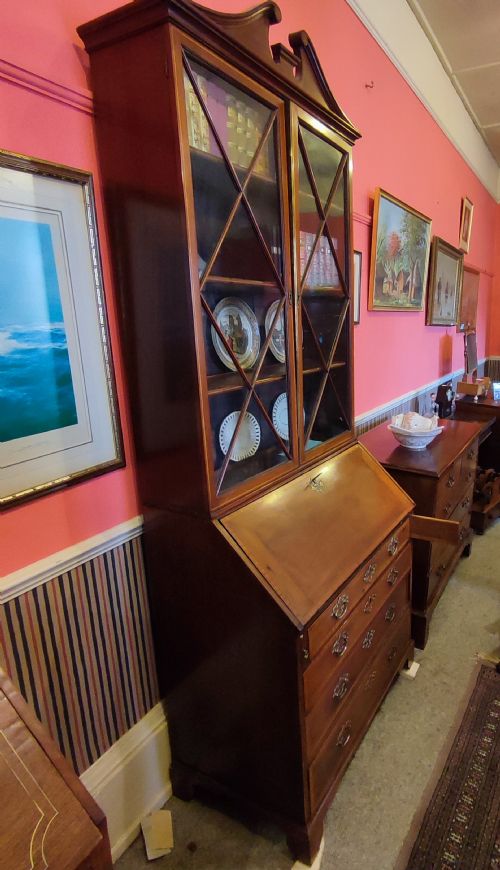
Glass panes within wooden framing secured the upper library section, whilst internal desk fittings relied on careful joinery for small drawers and pigeon holes. Traditional hand tools shaped the cornices, bracket feet, and swan neck pediments seen on the taller examples.
Many secretaire drawers conceal secret compartments behind miniature pigeon holes, designed for storing private correspondence.
Quality Variations
The depth of figure in the mahogany veneer dictates much of the visual weight, with strongly marked flame patterns sitting above plain timber surfaces. Finely executed inlay work in satinwood elevates the finish of specific cabinets.
Proportion and architectural detail separate standard examples from finer pieces, particularly where swan neck pediments, serpentine fronts, or well-carved glazing bars are present. The complexity of the internal desk fittings also defines the tier of the piece.
Thomas Chippendale·Gillows
The George III Secretary Bookcase Glossary
- Secretaire
- A writing drawer that drops forward on hinges to reveal a fitted interior of small drawers and pigeon holes. This feature defines the dual purpose of the cabinet.
- Flame mahogany
- A timber veneer sliced from the branching part of the mahogany tree to create a distinctive flickering flame pattern. Cabinetmakers reserved this decorative wood for prominent exterior surfaces.
- Pediment
- The decorative structure crowning the top of the bookcase. Common variations include architectural broken pediments and swan neck designs.
- Glazing bars
- The wooden strips that divide the glass in the upper cabinet doors into smaller panes. Finer examples feature intricate geometric or Gothic arch patterns.
- Stringing
- Thin lines of contrasting timber inlaid into the surface of the furniture. Satinwood was frequently used for this decorative banding.
George III Secretary Bookcase: Frequently Asked Questions
How do I use the drop-front desk?
The fall-front drawer pulls forward and drops down to rest on support arms, revealing a leather-lined writing surface and internal compartments.
Once lowered, the desk provides a stable platform for correspondence while concealing the internal pigeon holes.
Where were these bookcases placed in a home?
These tall cabinets stood in eighteenth-century libraries, studies, and formal drawing rooms to house leather-bound volumes and provide private writing space.
The upper glass doors allowed owners to display book collections while protecting them from dust.
How do I care for the mahogany timber?
Keep the wood away from direct sunlight and heat sources to prevent the mahogany veneer from drying out or splitting. Regular dusting with a dry cloth maintains the polished finish.
Apply traditional wax sparingly when the timber appears dry, buffing gently to preserve the surface sheen.