



Antique Mirror Door Bureau
An antique mirror door bureau offers fitted writing drawers behind a drop front beneath glazed doors, bringing depth and reflection to any room.
Antique Mirror Door Bureau
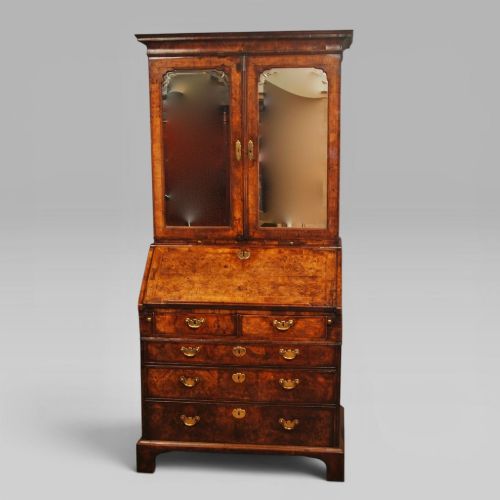
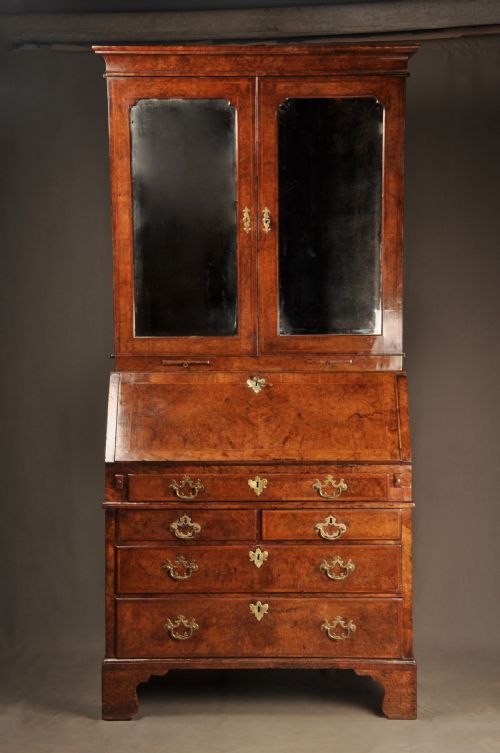
An antique mirror door bureau combines a sloping desk compartment with an upper bookcase enclosed by reflective glass panels, creating a commanding piece of furniture for storage and writing. The evidence on this page shows examples primarily from the early eighteenth century, spanning the reigns of William and Mary, Queen Anne, and George I, alongside a later nineteenth-century revival piece.
Most items appearing here take the form of substantial bureau bookcases constructed in rich timbers. These double-body forms house adjustable shelving behind the upper doors, while the lower section drops down to reveal pigeonholes and small drawers.
Makers and craftsmen of the period favoured sophisticated proportions, often incorporating double dome upper sections or arched mirror plates. Buyers encounter walnut and burr walnut most frequently, complemented by occasional red lacquer finishes and brass hardware.
How they were made
Cabinetmakers constructed these bureau bookcases using dense woods like walnut and burr walnut over sturdy oak carcases, applying decorative veneers to the primary surfaces. The grain patterns were carefully matched and balanced across the fall fronts and drawer facades.
Upper doors utilised bevelled mirror glass held within wooden frames, reflecting light into dark panelled rooms before modern sheet glass production techniques existed. Brass handles, escutcheons, and hinges secured the doors and drawers while adding metallic contrast to the timber.
Antique Mirror Door Bureau Retail Price Guide 2026
Typical asking prices for mirror door bureau among the pieces listed under this phrase on Sellingantiques today, from the lower quarter to the upper quarter. They describe what is for sale here now, not the wider market.
Early cabinetmakers placed mirrored doors on desks partly to check one's wig while writing correspondence in dimly lit panelled rooms.
What varies in quality
The sophistication of the timber grain selection dictates much of the visual hierarchy among these bureau bookcases. Highly figured burr walnut veneers demonstrate superior material cost and cabinetmaking ambition compared to plain straight-grained walnut.
The survival of original mirror glass and authentic brass hardware distinguishes pieces that retain their historical integrity from those altered over centuries. Structural complexity, such as double dome construction and intricate interior configuration, also separates standard workshop output from exceptional examples.
The Antique Mirror Door Bureau Glossary
- Bureau bookcase
- A dual-purpose furniture form featuring a sloping writing flap above drawers, topped by an enclosed set of shelving. This combination serves both study and library functions.
- Burr walnut
- Timber sliced from the warty growths on walnut trees, yielding intricate swirling grain patterns. Cabinetmakers prized this material for high-status decorative surfaces.
- Double dome
- An upper carcase roof shaped into two adjacent rounded arches. This architectural profile characterises sophisticated early eighteenth-century case furniture.
- Fall front
- The hinged writing flap of a bureau that pulls down to create a horizontal desk surface. It conceals internal compartments when closed upright.
- Lacquer
- A decorative resin finish applied in multiple layers and polished. It mimics Asian decorative arts popular during the seventeenth and eighteenth centuries.
Antique Mirror Door Bureau: Frequently Asked Questions
What is an antique mirror door bureau?
An antique mirror door bureau is a tall cabinet combining a sloping desk with an upper shelving section enclosed by mirrored doors. These pieces date primarily from the early eighteenth century.
They served as private writing desks and display spaces for valuable books in wealthy households. The mirrored glass added light and a sense of space to period interiors.
How do I date these bureau bookcases?
Dating relies on stylistic details, timber choices, and construction methods characteristic of specific reigns such as William and Mary, Queen Anne, and George I. Early pieces often feature walnut timbers and candle slides beneath the upper doors.
Changes in cornice shapes, foot styles, and brass hardware over the course of the eighteenth century provide further chronological markers. Revivals appeared later in the nineteenth century with distinct decorative treatments.
Where should I place one at home?
These tall case pieces require a sturdy wall with sufficient vertical clearance and floor space to accommodate the open writing flap. Placing them opposite windows maximises the reflective quality of the mirror doors.
Stable indoor humidity protects the antique walnut timbers and veneered surfaces from splitting. Adequate room around the bureau allows the drop front to open fully without obstruction.
Are the mirror doors original?
Examining the glass for thickness irregularities, edge bevels, and backing oxidation helps determine originality. Early mirror plates often display slight distortions and imperfections characteristic of historical manufacturing methods.
Replacement glass frequently appears cleaner and lacks the characteristic signs of age found on eighteenth-century plates. The surrounding wooden rebate should match the construction of the door frame.