

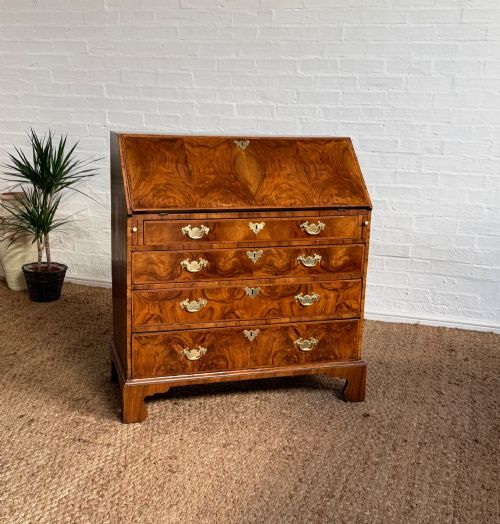
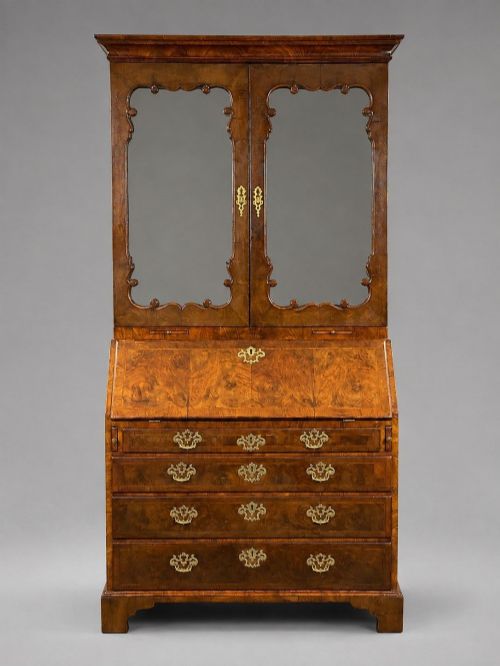
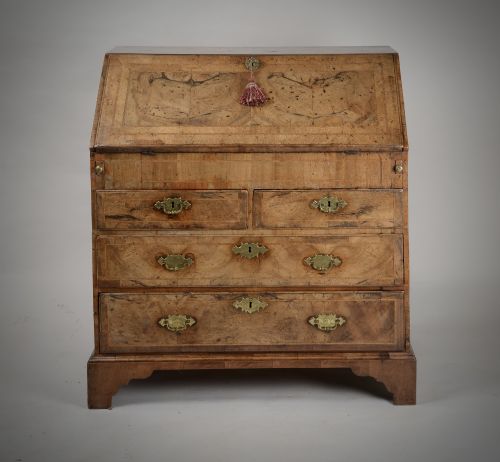
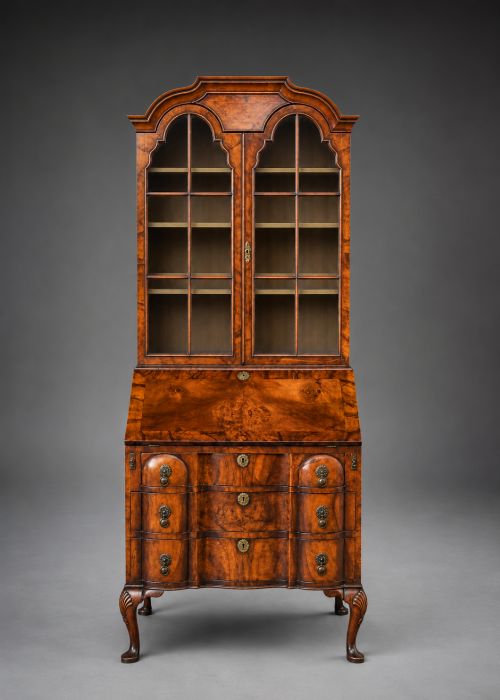
Walnut Secretary Cabinet
A walnut secretary cabinet brings together concealed writing surfaces and shelved storage in richly figured timbers spanning the seventeenth to twentieth centuries.

Walnut Secretary Cabinet
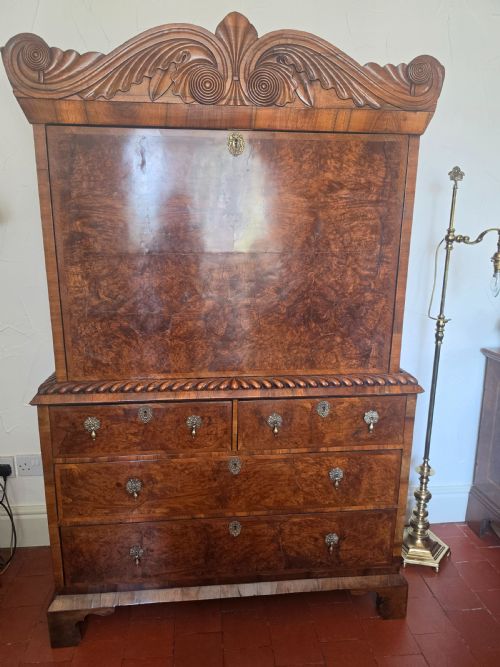
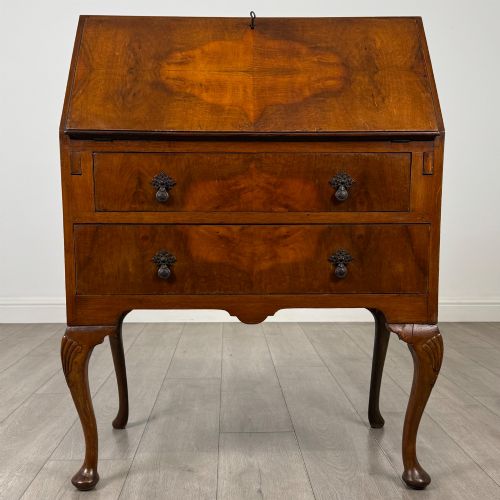
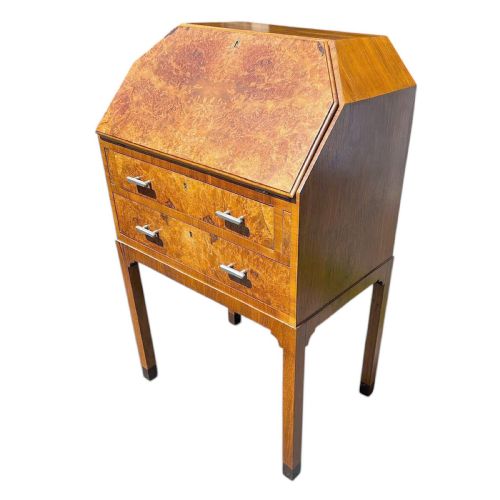
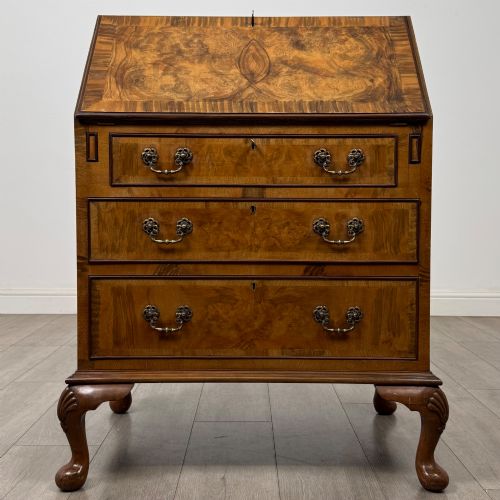
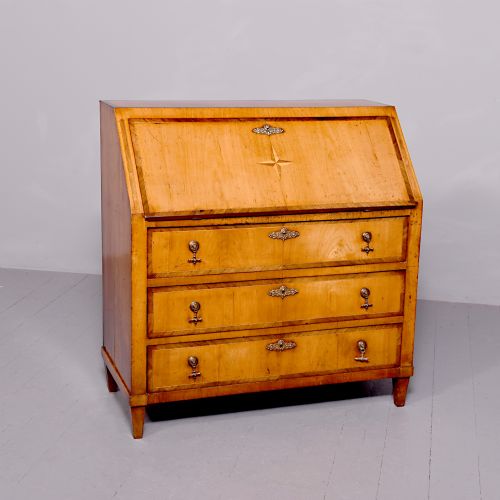
A walnut secretary cabinet combines a fall-front desk or writing drawer with shelving above or below, appearing across seventeenth, eighteenth, nineteenth, and twentieth-century eras. The evidence shows these pieces take the form of bureau bookcases, fall-front desks, escritoires, and bargueño cabinets produced across England, France, Italy, Holland, and Germany. Queen Anne, George I, and Georgian examples display bureau bookcase configurations, while later pieces extend into Victorian, Edwardian, and Art Deco iterations.
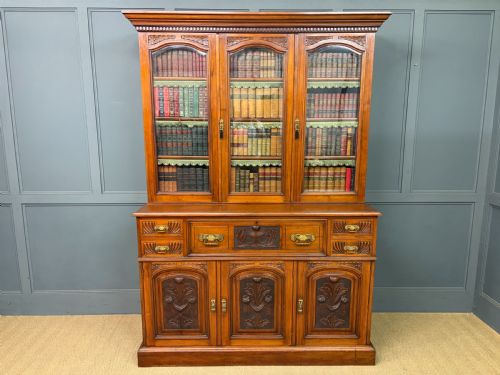
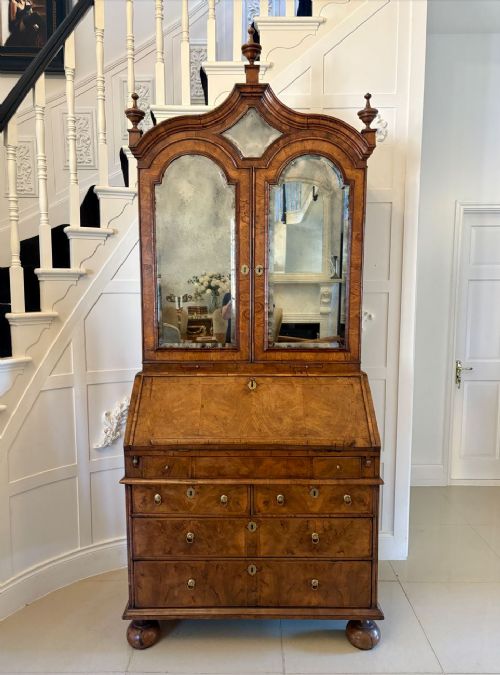
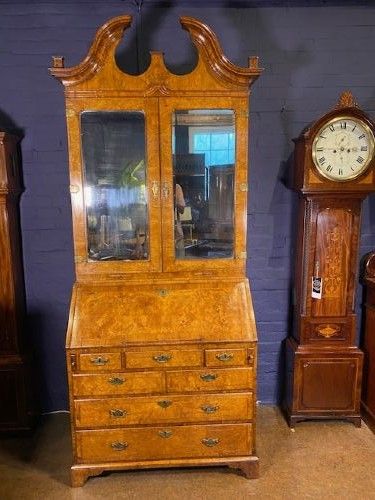
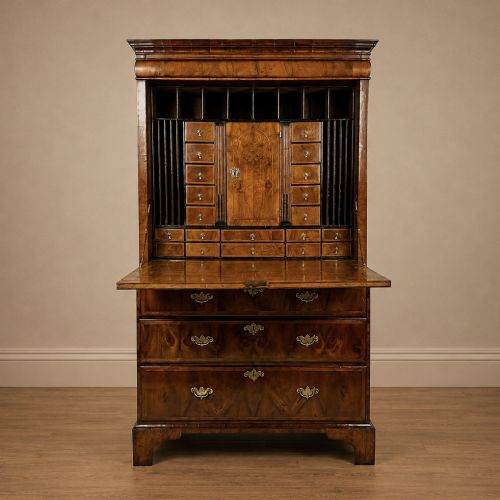
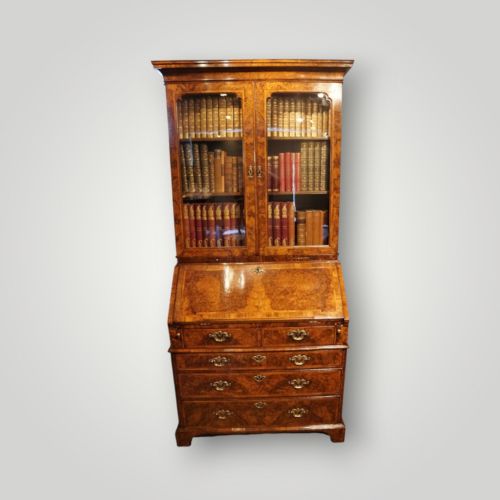
The version most commonly encountered on this page is the bureau bookcase, marrying a fitted interior with glazed or panelled upper doors. These tall formats frequently utilise burr walnut veneers, featherbanding, and marquetry inlay, supported by styles ranging from Dutch Baroque to English provincial and Continental traditions.
Materials and Construction
Makers built these pieces primarily using solid walnut and figured burr walnut veneers laid over secondary timbers, enriched with brass handles, keyplates, and sometimes glass, mirror glass, or marble tops. Marquetry and parquetry techniques integrate contrasting woods like tulipwood, alongside decorative details such as featherbanding and gilt bronze mounts.
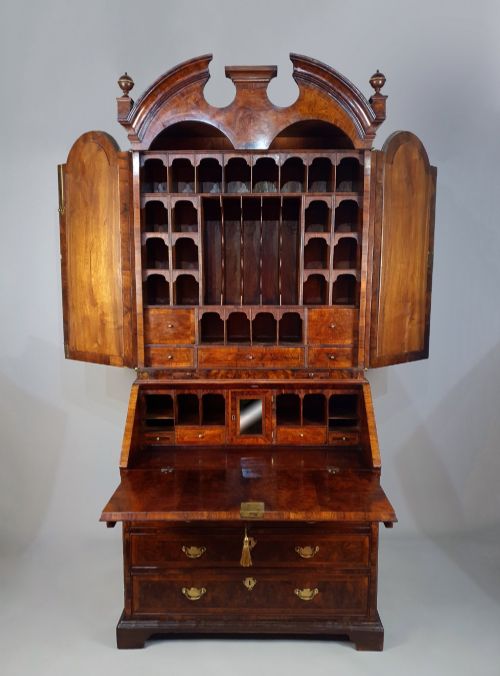
Interior compartments feature small drawers, pigeonholes, and occasionally sliding candle boards or leather-lined writing surfaces. Construction methods span multi-section bureau bookcases with glazed upper cabinets down to drop-front writing desks and freestanding writing cabinets.
Several examples include hidden pigeonhole compartments designed to keep private correspondence safe from wandering eyes.
Distinctions in Execution
The visual strength of a walnut secretary cabinet rests on the choice of timber, where tightly figured burr walnut or intricate marquetry patterns elevate the surface character. Grain matching across drawer fronts and fall-front panels indicates deliberate craftsmanship rather than standard production.
Structural integrity depends on the retention of original hardware, glass panes, and internal fittings such as secret compartments and pigeonhole banks. Continental and English pieces diverge in their decorative vocabulary, moving from geometric stringing to elaborate floral marquetry and sculptural bronze mounts.
F.H. Marshall & Co Glasgow
The Walnut Secretary Cabinet Glossary
- Bureau bookcase
- A combination furniture form featuring a sloping or fall-front writing desk below a tall shelving cabinet with doors. The upper section typically encloses books behind glass or wooden panels.
- Burr walnut
- Timber sliced from walnut tree growths, producing swirling, highly decorative grain patterns. Cabinetmakers applied this veneer to primary surfaces for visual impact.
- Escritoire
- A dedicated writing cabinet featuring a fall-front panel that opens to reveal drawers and pigeonholes. These pieces often stand on legs or support frames rather than massive chest bases.
- Featherbanding
- A type of decorative banding formed by diagonal veneer strips arranged in a herringbone V-shape. It frames drawer perimeters and fall-front edges on eighteenth-century pieces.
- Marquetry
- Inlaid patterns formed by fitting pieces of various coloured woods into a veneered background. Dutch and Continental examples frequently employ this technique to depict floral motifs.
Walnut Secretary Cabinet: Frequently Asked Questions
What is a walnut secretary cabinet?
A walnut secretary cabinet is a dual-purpose furniture piece combining a writing desk with enclosed shelving or storage compartments. These items integrate a fall-front writing flap or pull-out drawer with a fitted interior.
Built in various heights and proportions across multiple centuries, they served both administrative tasks and the display of valued books or objects.
How do I date a walnut secretary cabinet?
Dating relies on observing structural proportions, hardware types, timber choice, and decorative techniques like marquetry or featherbanding. Early eighteenth-century pieces often feature double-dome tops and fitted candle slides.
Later Victorian and Edwardian examples shift toward darker finishes, carved mouldings, and machine-cut veneers, while Art Deco items introduce streamlined geometry.
Where were these cabinets made?
These cabinets originate from workshops across England, France, Italy, Germany, and the Netherlands. Regional preferences dictated the decorative style, such as Dutch floral marquetry or Spanish bargueño frameworks.
English cabinetmakers favoured figured walnut veneers with understated brasses, whereas Continental makers utilised marble tops and gilt bronze mounts.
How do I care for a walnut surface?
Walnut furniture requires placement away from direct sunlight and steady indoor humidity to prevent veneer lifting or timber splitting. Regular dusting with a soft cloth preserves the polish without chemical buildup.
Wax polishing applied sparingly maintains the lustre of antique timber finishes over generations of use.