
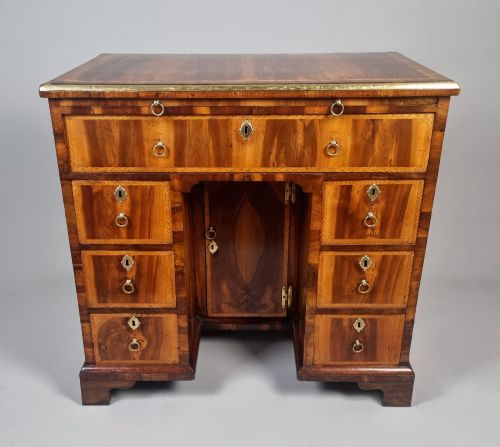
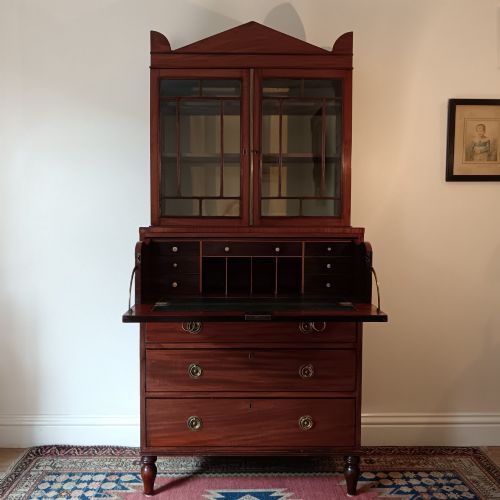
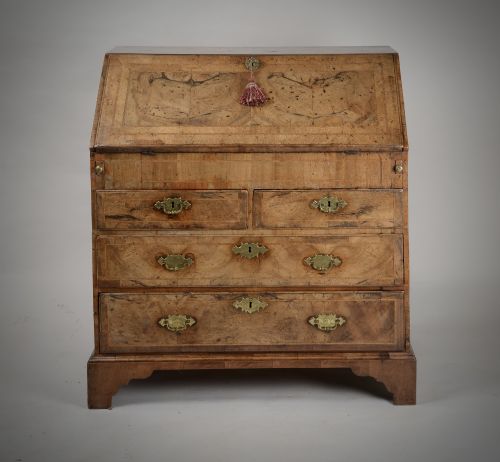
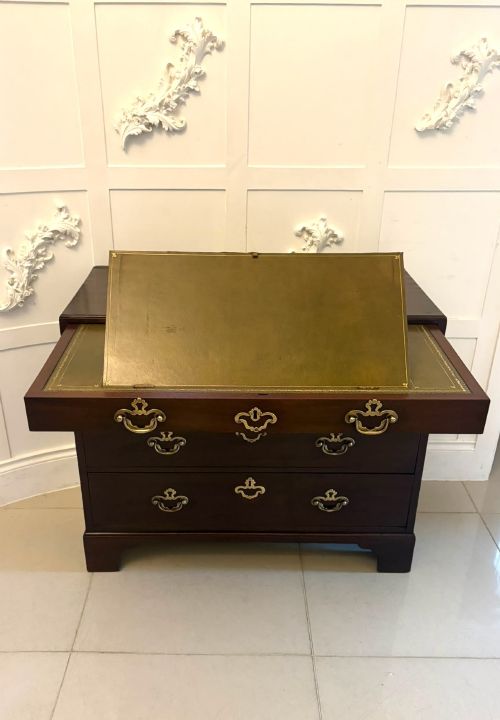


George I Writing Chest
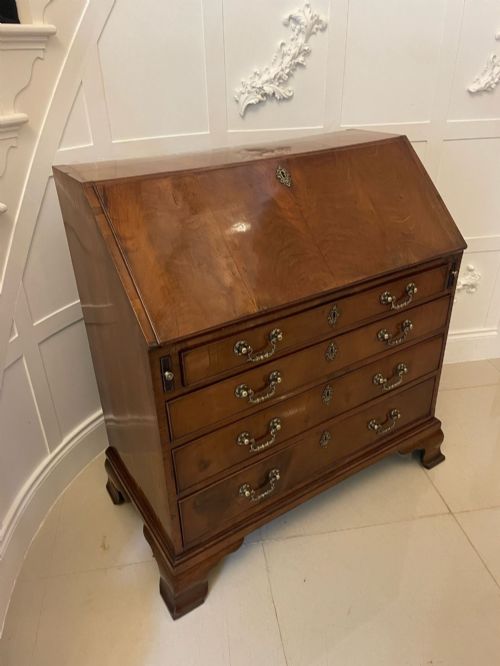
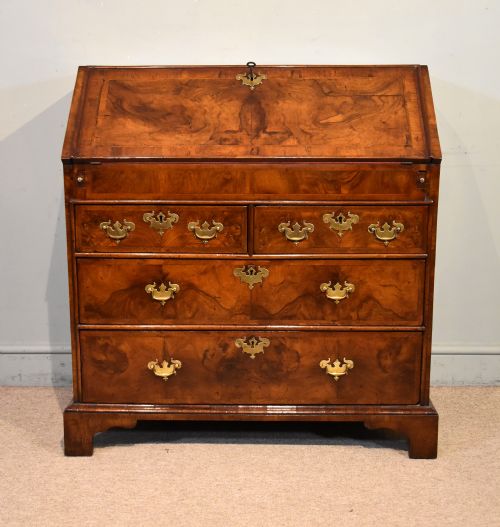
A george i writing chest is a fitted workspace in timber, offering a drop-down desk surface above drawers for serious correspondence.
George I Writing Chest
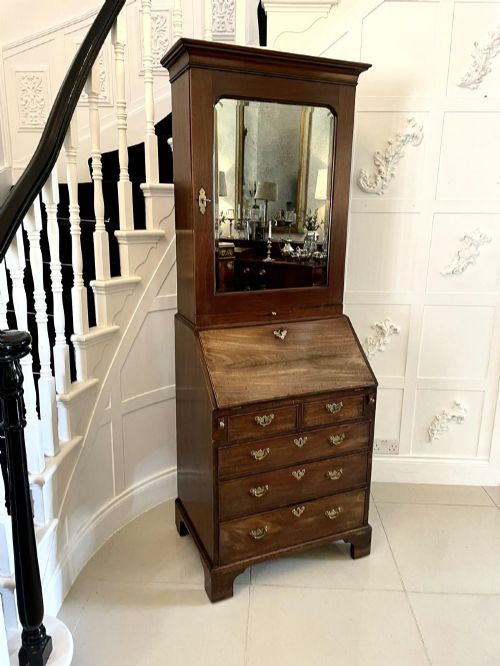
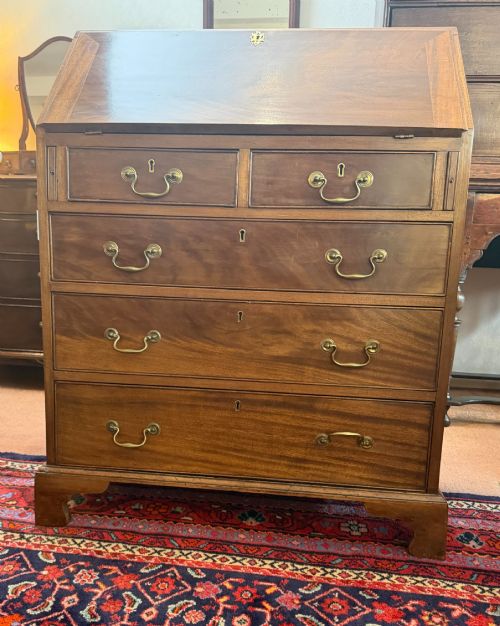
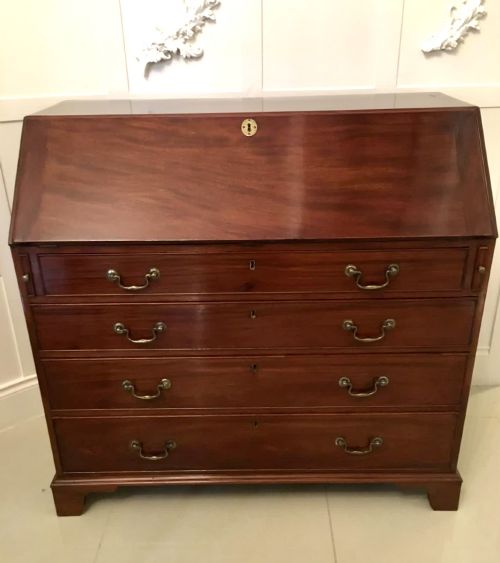
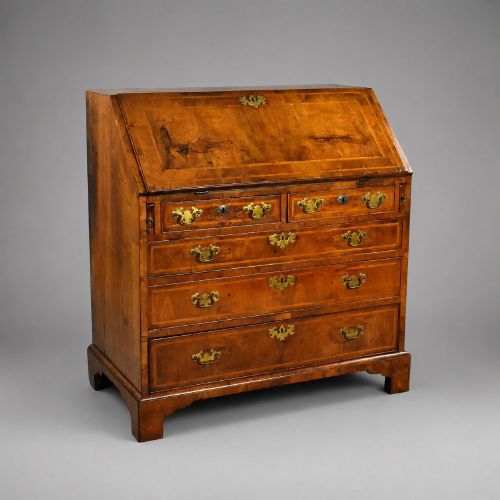
A george i writing chest combines a writing surface with drawer storage, appearing primarily in bureau and bureau bookcase forms from the Georgian period.
The walnut versions dominate the earliest surviving pieces, often featuring figured grain patterns and feather banding across the fall-front desk.
Buyers encounter these works alongside later George II and George III mahogany iterations that share the same practical architectural intent.
Materials and construction
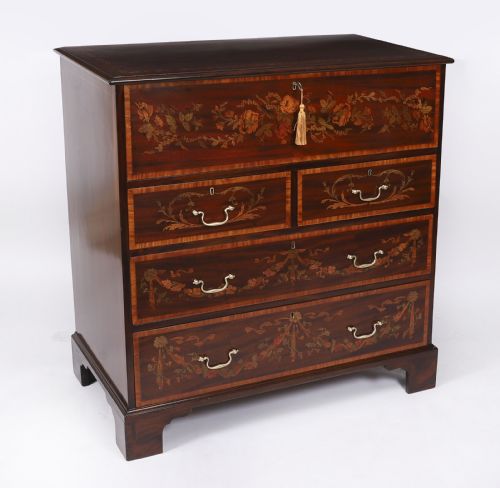
Cabinetmakers utilised walnut and mahogany veneers applied to secondary woods like oak, creating stable carcases with rich surface figures.
Brass hardware, including escutcheons and drop handles, secures the drawers and fall-fronts, complemented by leather inserts on writing surfaces.
Secret compartments inside concealed pigeonholes reward patient owners who search beneath the stationery drawers.
Assessing quality and craftsmanship
The choice of timber figure, such as burr walnut or well-figured mahogany, separates standard cabinet work from exceptional examples.
Interior complexity dictates standing within the range, where fitted pigeonholes, secret compartments and quality drawer construction elevate the piece.
George Oakley
The George I Writing Chest Glossary
- Bureau
- A desk with a sloping hinged lid that drops down to form a writing surface. It typically encloses a set of small drawers and pigeonholes.
- Secretaire
- A piece of furniture containing a drawer or compartment configured for writing. This often pulls out or drops down to reveal fitted stationery spaces.
- Feather banding
- A decorative inlay technique using veneer strips arranged in a herringbone pattern. It frames drawer fronts and panel borders.
- Kneehole desk
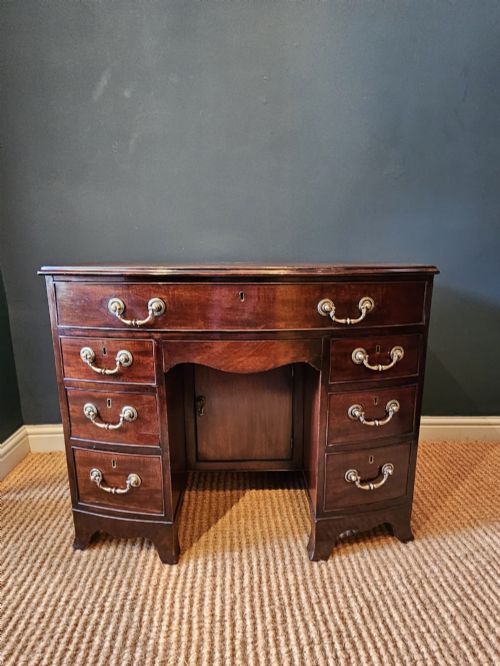
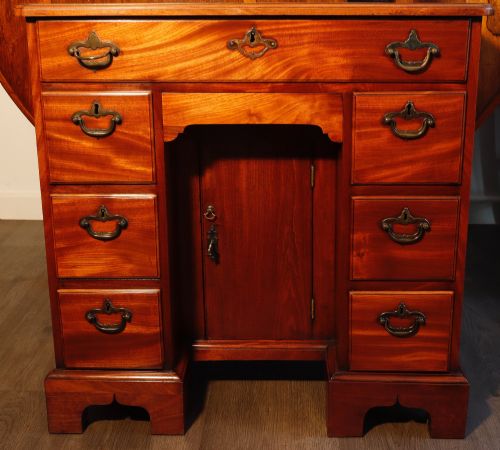
- A compact desk featuring a central recess for the sitter's legs with banks of drawers on each side.
- Fall-front
- A hinged panel that drops from a vertical position to a horizontal one to serve as a desk top.
George I Writing Chest: Frequently Asked Questions
What is a george i writing chest?
A george i writing chest is an 18th-century writing desk featuring a sloping fall-front that opens to reveal internal drawers, positioned above storage drawers.
These pieces belong to the early Georgian period and showcase the prominent use of walnut timbers before mahogany gained widespread favour.
How do I use a bureau daily?
Lower the hinged fall-front to access the internal compartments for writing letters or placing a laptop on the flat wooden surface.
Close the lid when finished to conceal correspondence and maintain a tidy room appearance while keeping your papers securely stored inside.
Are walnut and mahogany pieces different?
Walnut pieces date typically to the earlier 18th century, displaying rich figured grains, feather banding and warm brown tones.
Mahogany examples emerge more frequently from the mid-18th century onward, offering a denser reddish-brown timber capable of taking sharper carved details.
Where should I place this furniture?
Position the piece in a study, library or living room against a stable interior wall away from direct heat sources and sunlight.
Ensure adequate clearance in front of the chest so the fall-front can open fully without obstruction from other room furniture.