
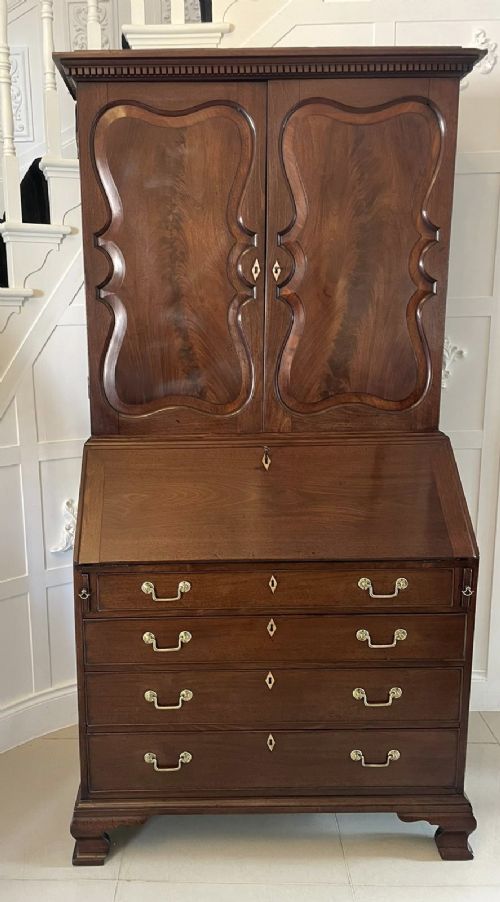
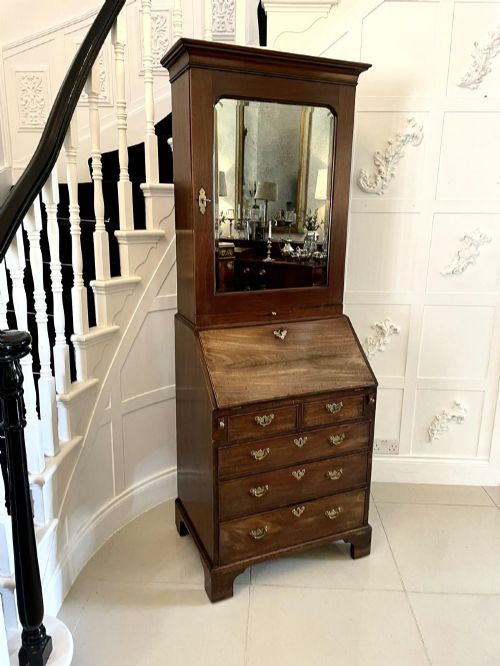
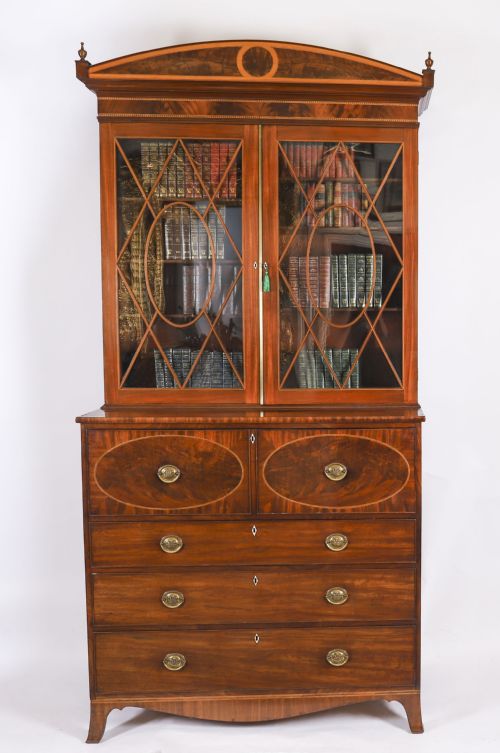
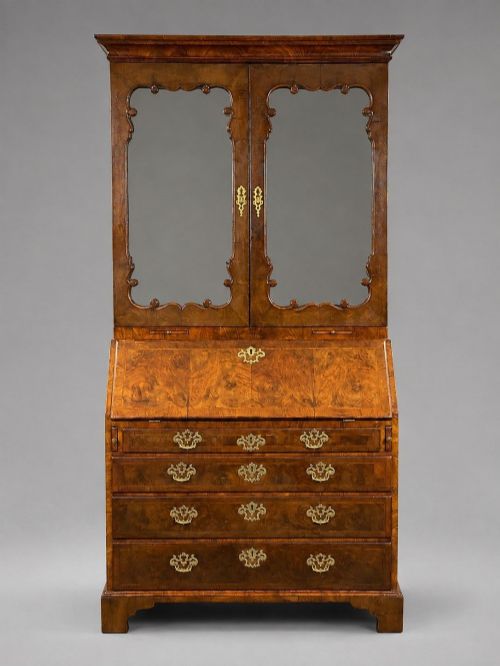
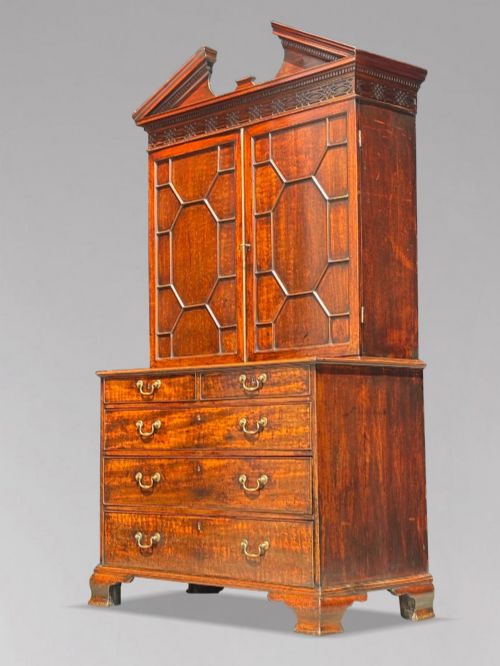
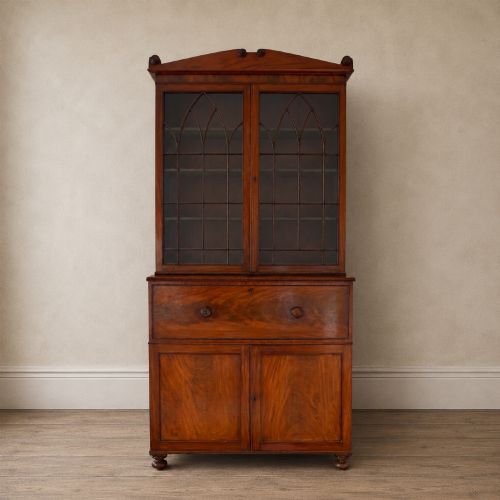
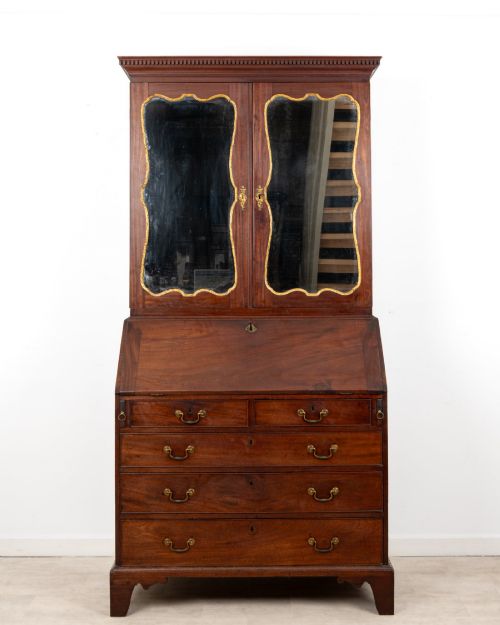
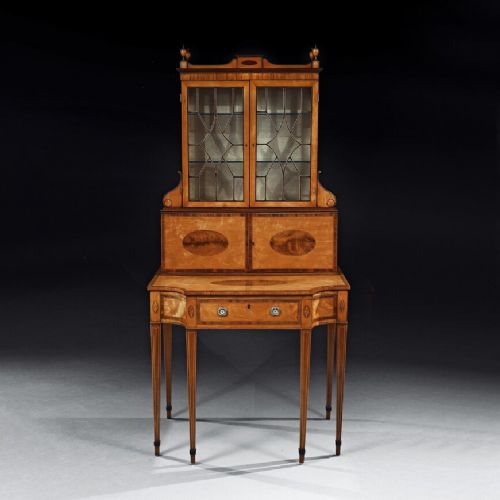
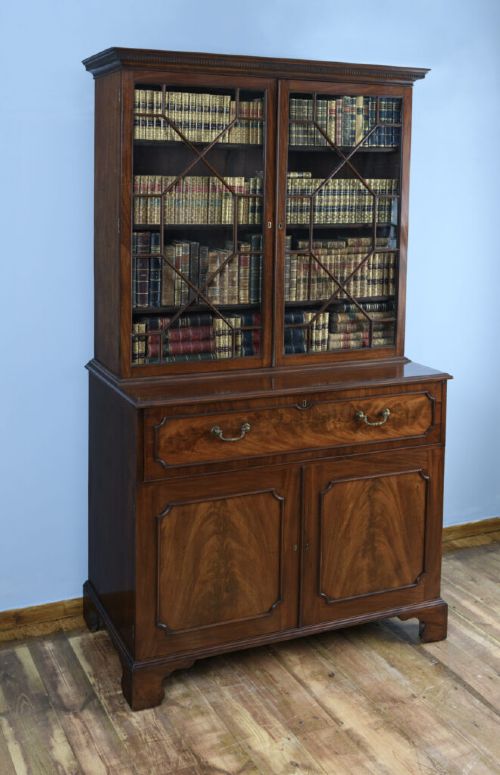
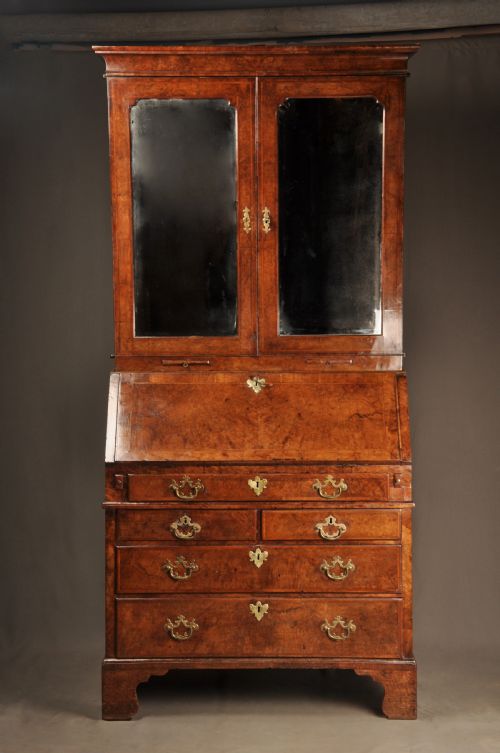

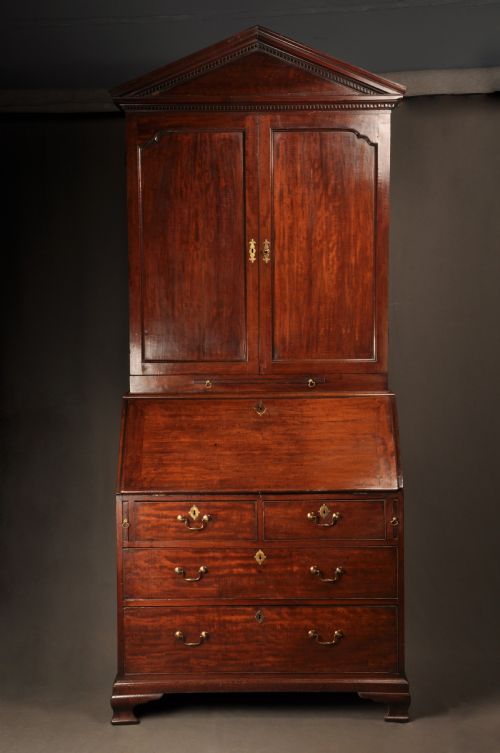
George I Bureau Bookcase
A george i bureau bookcase combines architectural presence with secret writing compartments, offering serious collectors monumental early eighteenth century cabinetry.
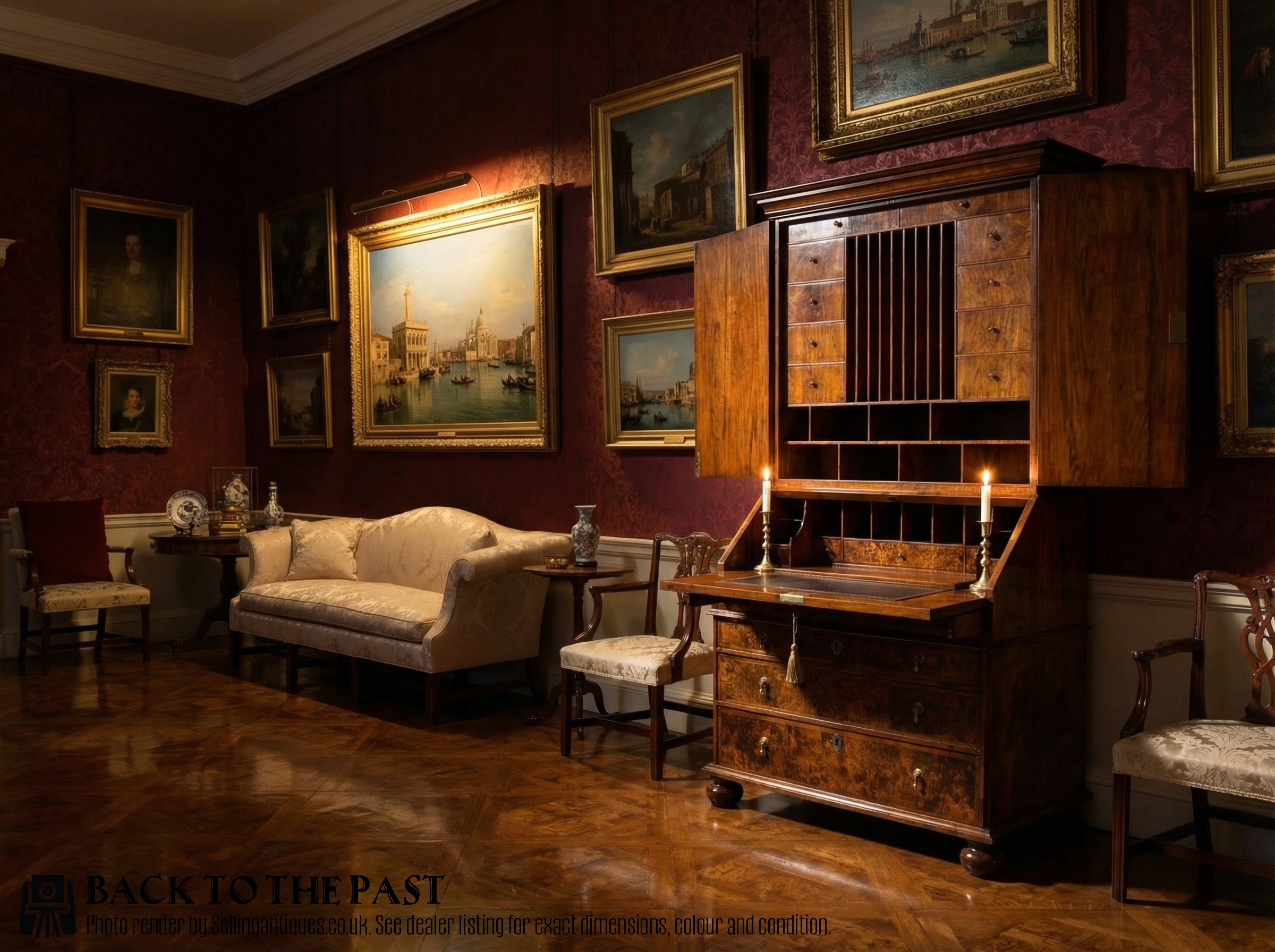
What george i bureau bookcase pieces are
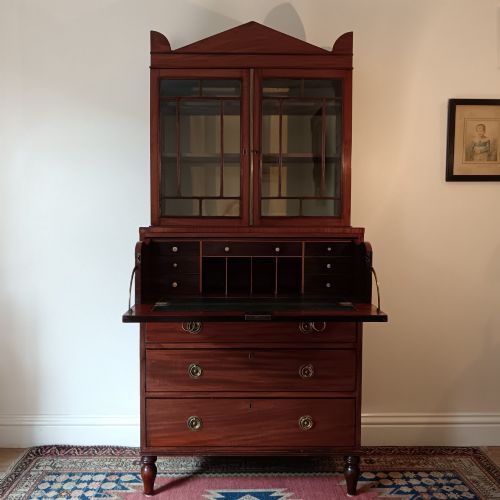
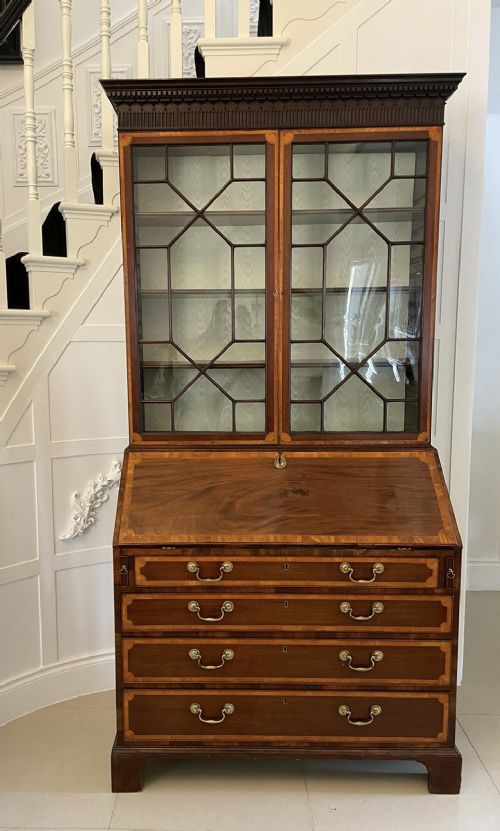
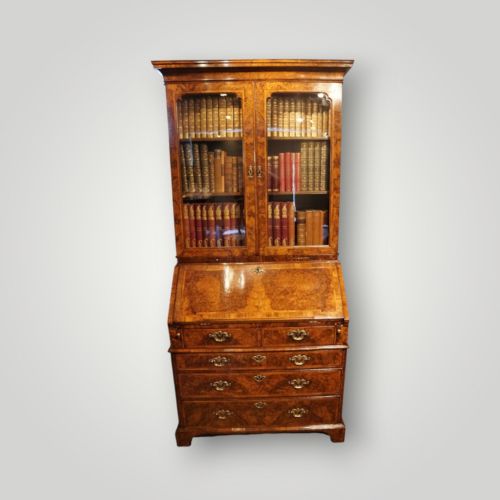
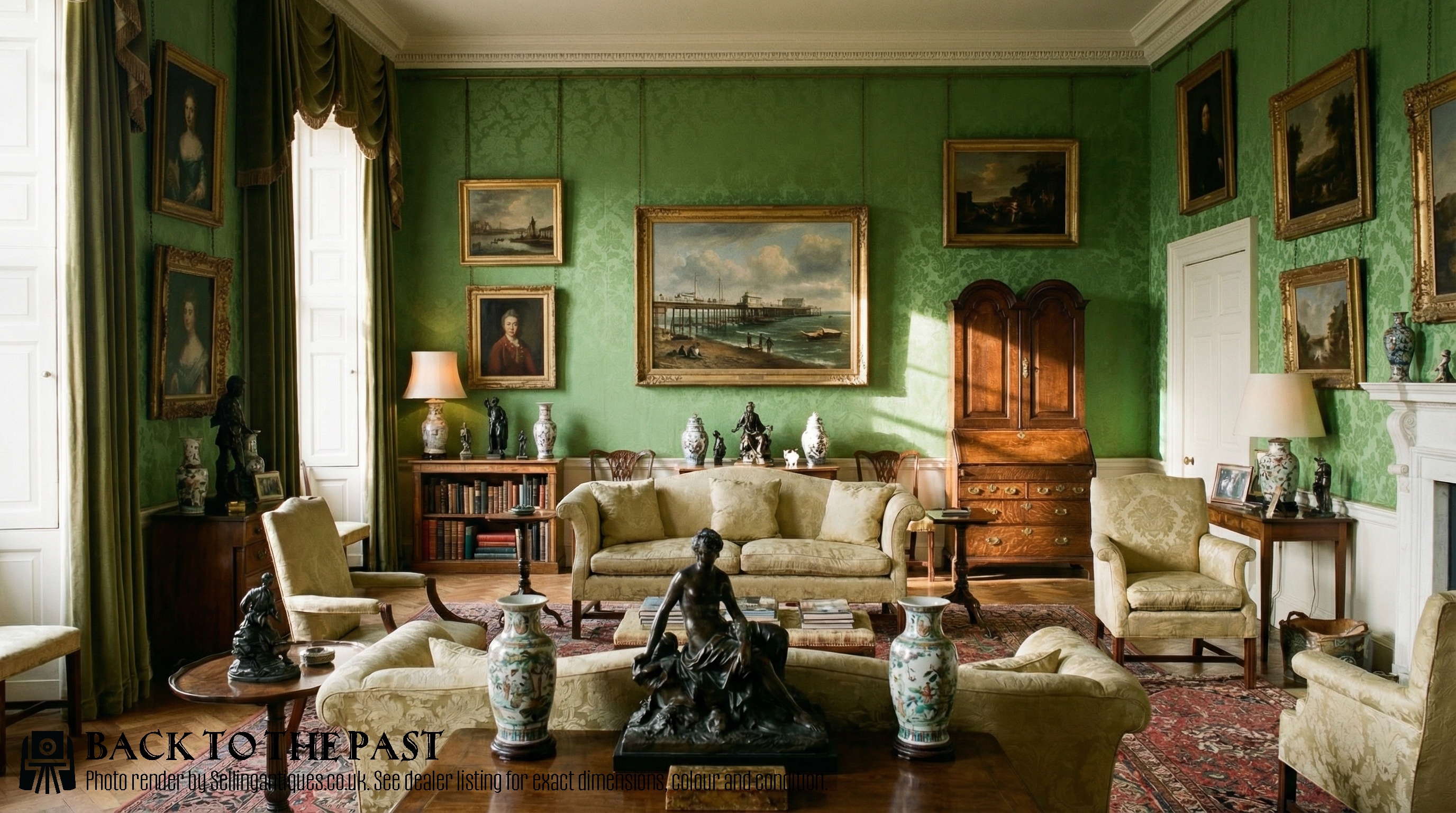
A george i bureau bookcase is a tall, two-part piece of furniture combining a fitted desk compartment below with a shelved upper cabinet for books. These pieces date principally from the early eighteenth century, with walnut and burr walnut dominating the surviving examples.
How they were made
Cabinetmakers constructed these pieces using solid and veneered timbers, applying highly figured burr walnut onto oak or pine carcases to create rich surface patterning. Crossbanding and stringing lines framed the drawer fronts and panel edges, demonstrating precise joinery techniques.
Fittings such as brass drop handles, escutcheons and hinges secured the operational doors and fall-fronts. Mirror glass plates were also utilised in upper cabinet doors on select examples, reflecting light into eighteenth-century rooms.
Retail Price Guide 2026
Typical UK retail prices for george i bureau bookcase, calculated from the Sellingantiques database of over a million retail prices indexed since 2003. This retail price guide relies exclusively on Sellingantiques data; no external sources or auction records are used, so the figures do not describe the wider market.
Some early walnut cabinets hide secret compartments behind miniature drawers, rewarding owners who know where to press.
What varies in quality
The sophistication of the timber veneer defines the upper tier of these pieces, particularly where symmetrical burr walnut or mulberry figures wrap across the fall-front and drawer surfaces. Grain selection and matching show the cabinetmaker's ambition and skill.
Proportion and architectural detailing set finer examples apart, visible in the sweep of a dome top, the crispness of mouldings, and the integration of the upper and lower sections into a cohesive whole.
The George I Bureau Bookcase Glossary
- Burr walnut
- A finely figured timber veneer harvested from walnut tree growths, prized for its swirling grain patterns on cabinet facades.
- Fall-front
- The hinged sloping panel of a bureau that lowers to serve as a writing surface.
- Double dome top
- An upper cabinet form featuring two arched or domed curves rising from the cornice.
- Escutcheon
- A protective brass plate surrounding a keyhole on a drawer or door.
- Crossbanding
- A narrow strip of veneer laid around the border of a panel with the grain running perpendicular to the centre.
Frequently Asked Questions
What is a george i bureau bookcase?
A george i bureau bookcase is a dual-purpose piece from the early eighteenth century comprising a sloping desk base and a shelved upper cabinet.
These pieces were designed for domestic administration and library storage in prominent homes.
How do I identify a george i bureau bookcase?
Look for walnut and burr walnut timbers, oak secondary woods, and architectural upper sections like double dome tops.
They reflect the cabinet-making styles characteristic of the early seventeen-hundreds.
Where were these pieces used?
They stood in private libraries, studies, and principal reception rooms of large houses for correspondence and book storage.
The upper shelves held leather-bound volumes while the fitted interior stored letters and documents.
What woods are used in these pieces?
Walnut, burr walnut, mulberry, and oak are the primary woods found in these early cabinets.
Brass hardware and mirror glass frequently complete the construction.