



Geometric Prayer Rug
These woven geometric prayer rug pieces bring centuries of tribal artistry into modern spaces, offering distinct linear patterns and rich regional character.
Geometric Prayer Rug
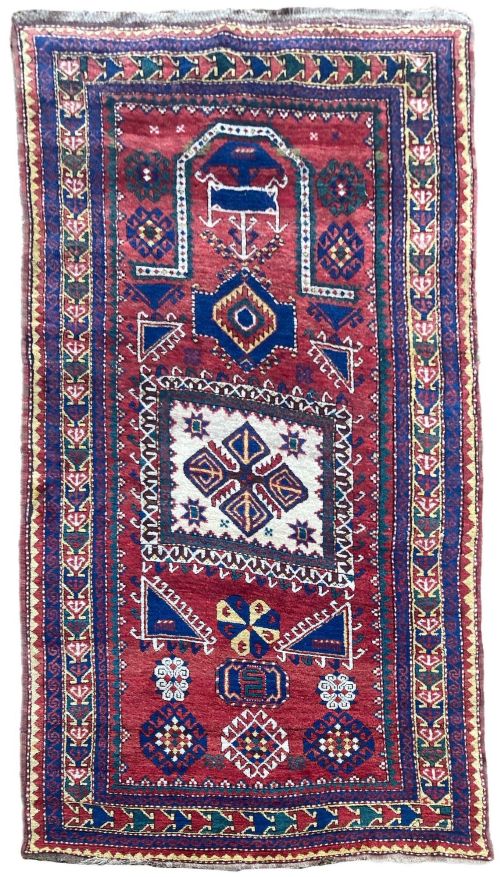
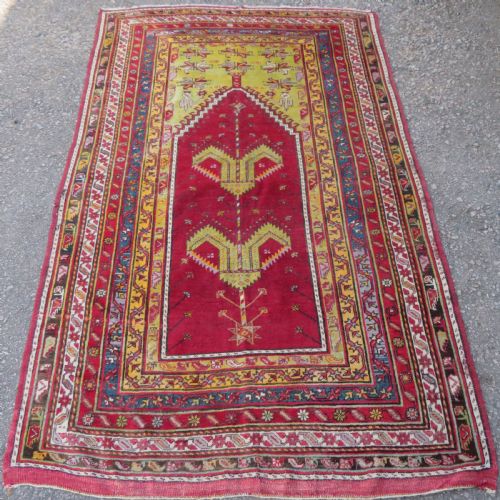
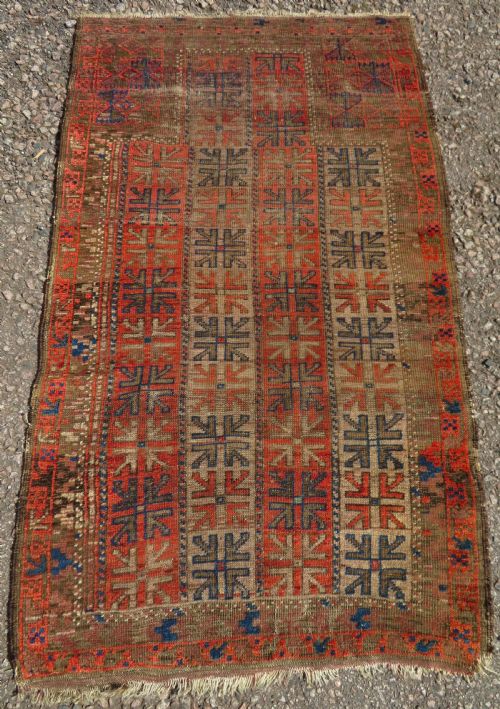
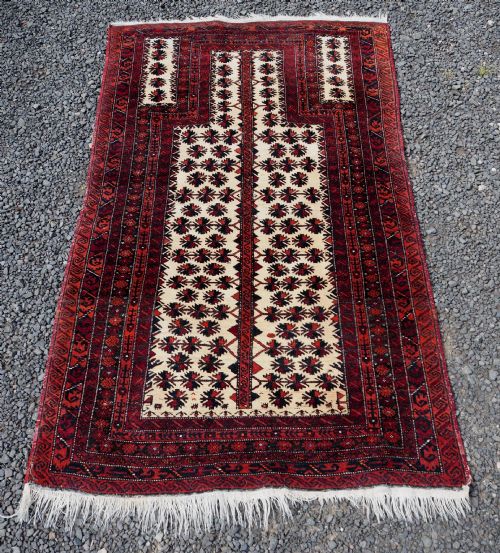
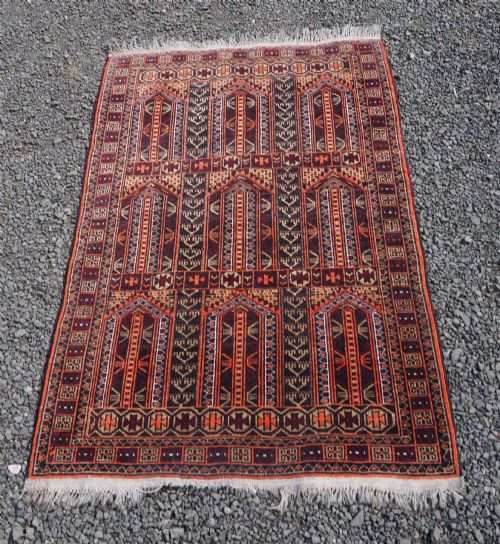
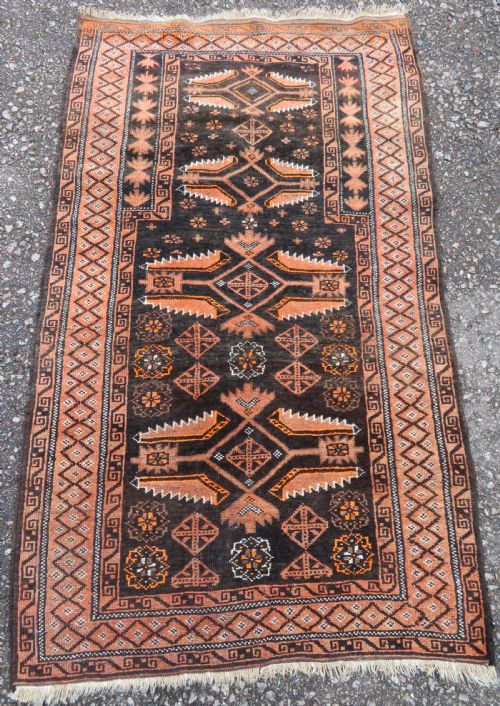
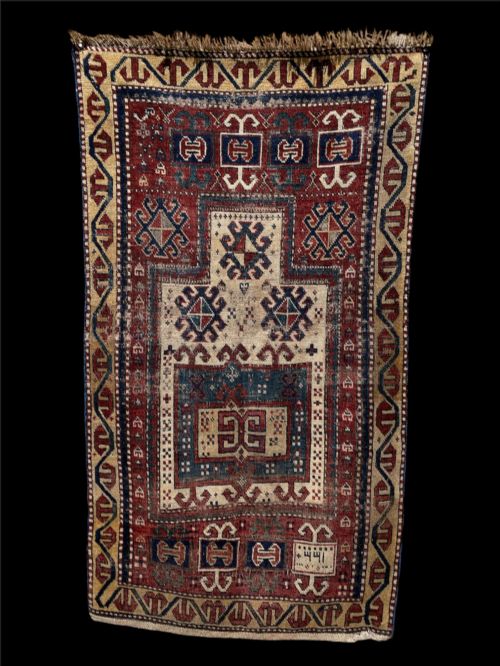
A geometric prayer rug centres on architectural arch motifs, known as mihrabs, rendered through linear angles rather than curves. These pieces originate from nineteenth- and early-twentieth-century tribal and village workshops across the Caucasus, Afghanistan, Persia and Anatolia. The most common examples met here combine nomadic wool foundations with angular medallions and characteristic prayer niches.
Makers shaped these textiles for personal devotion, designing specific architectural indicators to point toward Mecca during daily prayers. Village weavers in regions such as Kazak, Gendje and Baluch adapted traditional tribal motifs into distinct formats including double, triple and seh mihrab layouts. Buyers encounter diverse regional expressions, from Caucasian Kazak rugs to Afghan village pieces featuring rams horn symbols and long kilim ends.
Distinctions in quality
The precision of the knotting and the crispness of the linear design dictate the calibre of the piece. Finer weaves allow complex motifs like lotus leaves or multi-mihrab structures to remain sharp and legible across the field.
The vibrancy and depth of the natural dyes separate standard village pieces from exceptional works. Dyes that have aged with balanced patination provide harmonious colour transitions across the ivory or blue ground fields.
Listings feature pieces dated from the nineteenth century through the early 1930s, utilising natural dyes and hand-spun wool.
The Geometric Prayer Rug Glossary
- Mihrab
- The arched niche in a prayer rug that mimics the direction of the qibla in a mosque. It serves as the primary focal point of the design.
- Seh Mihrab
- A triple-arched prayer niche design frequently found in Afghan and tribal village rugs. This format incorporates three distinct pointed arches across the upper field.
- Warp
- The vertical threads stretched tightly on the loom before knotting begins. Foundation yarns like wool or cotton provide the structural skeleton of the textile.
- Weft
- The horizontal threads passed alternately over and under the warp threads after each row of knots. They pack down to secure the pile firmly in place.
- Kazak
- A style of traditionally bold, geometric rugs woven in the southern Caucasus. These pieces are celebrated for their strong primary colours and large-scale medallions.
Geometric Prayer Rug: Frequently Asked Questions
What is a geometric prayer rug?
A geometric prayer rug is a portable textile featuring a pointed arch or mihrab designed for daily worship. Village weavers from regions such as the Caucasus and Afghanistan constructed these pieces using straight-edged tribal motifs.
Unlike curvilinear court carpets, these floor coverings rely on angular medallions, stepped polygons, and distinct niche layouts. Each regional tradition adapted the architectural prayer arch through local symbols like rams horns and stars.
How do I identify a prayer rug?
The primary indicator of a prayer rug is the presence of a single or multiple mihrab arches at one end of the field. This architectural motif traditionally directed the worshipper toward Mecca.
Additionally, the field layout often remains unburdened by overall repeating patterns, focusing attention instead on the central niche. Many examples also incorporate protective amulets, comb motifs, or floral-derived geometric fillers within the arch.
Where were these rugs made?
These textiles originate from nomadic tribes and settled villages across the Caucasus, Persia, Afghanistan, and Anatolia. Local communities in areas like Kazak, Gendje, and Baluchistan produced distinctive regional variations.
Weavers utilised local materials, such as hand-spun sheep wool and camel hair, resulting in distinct tactile qualities. Each producing region maintained specific palette preferences, ranging from deep indigo blues to rich madder reds.
How do I care for an antique rug?
Protect antique wool textiles by placing them in low-traffic areas away from direct, harsh sunlight to preserve natural dye integrity. Regular, gentle vacuuming without a rotating power brush prevents dust accumulation in the pile foundation.
Using a breathable underlay prevents slipping and cushions the historic warp and weft threads against hard flooring. Professional specialist cleaning should be undertaken periodically rather than standard domestic washing.