


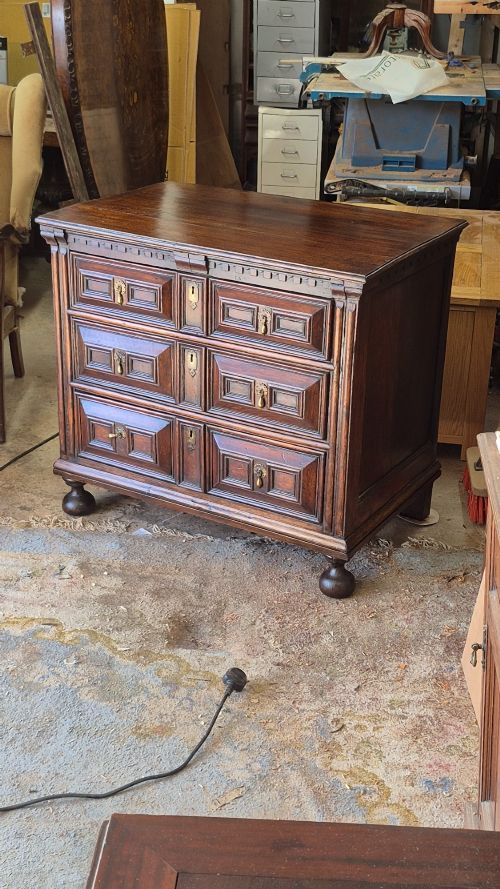
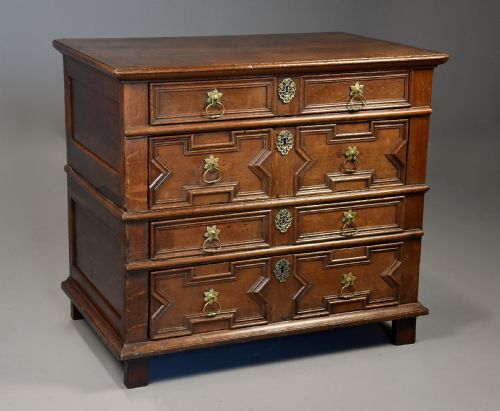
Geometric Moulded Oak Chest
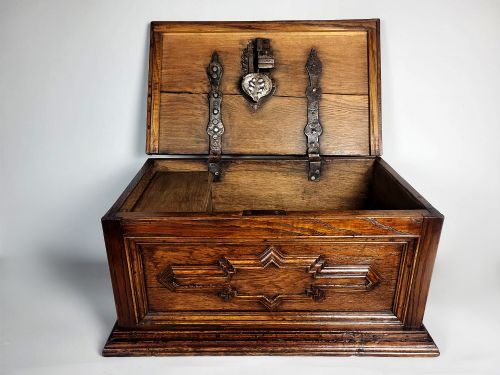
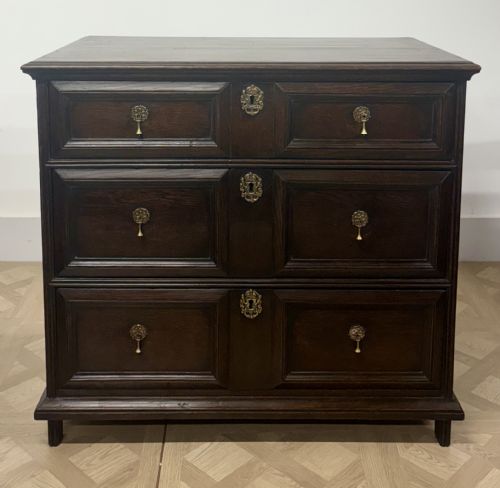
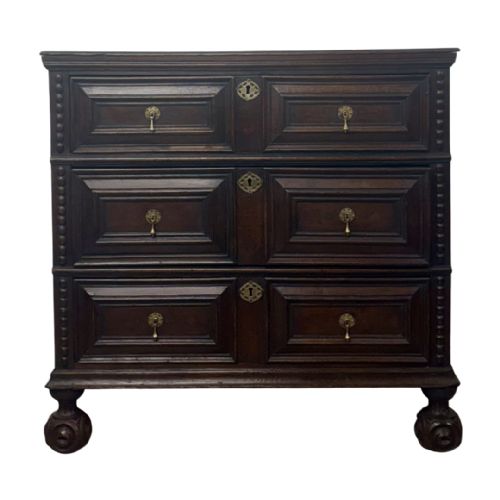
A geometric moulded oak chest brings tactile depth to a room through precise applied mouldings on timber drawer fronts.
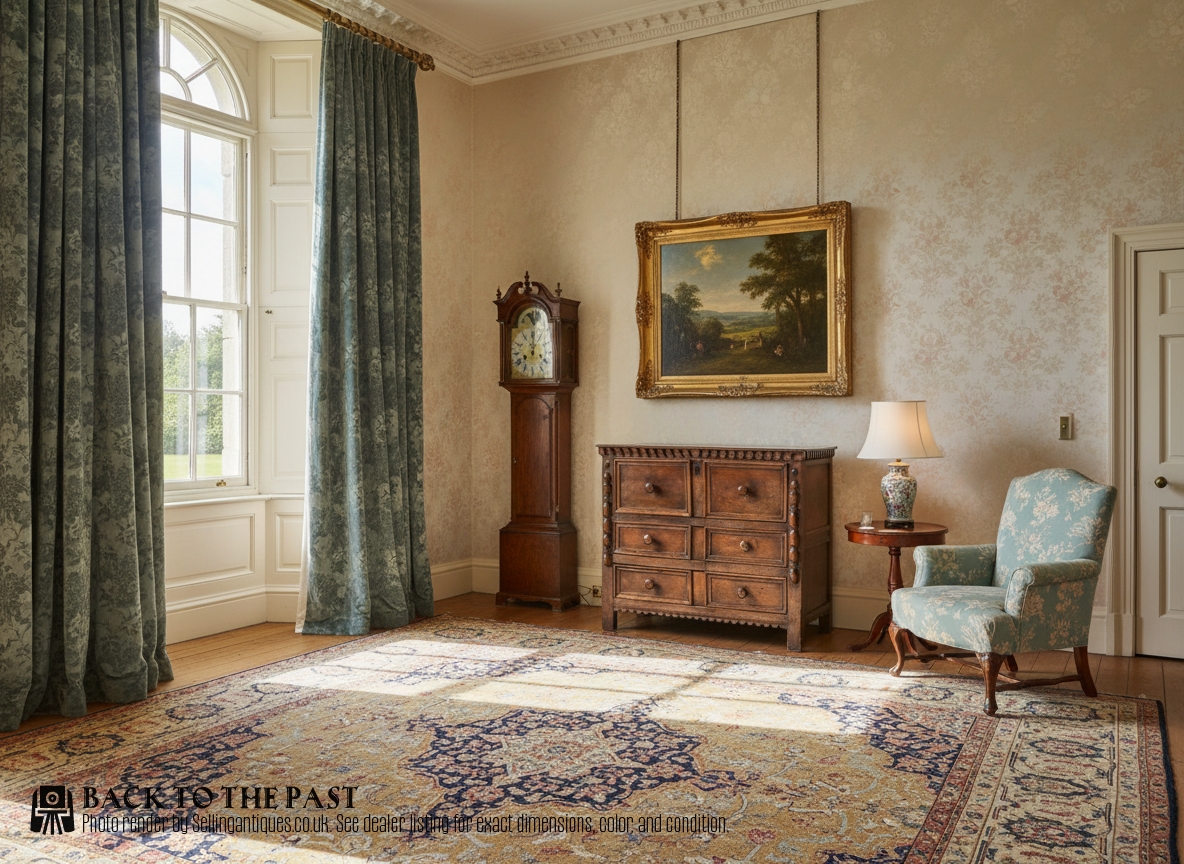
Geometric Moulded Oak Chest
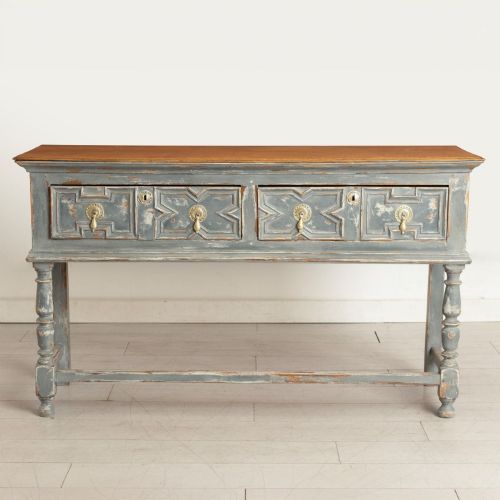
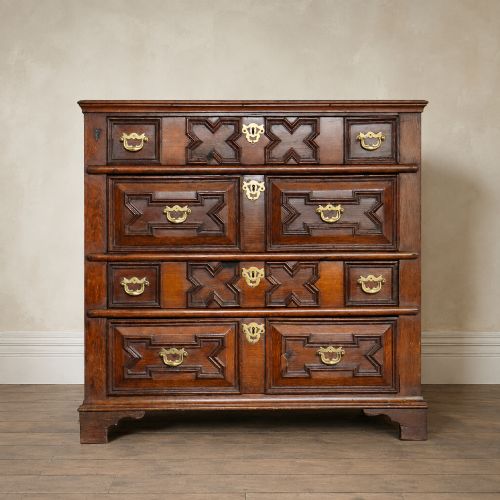
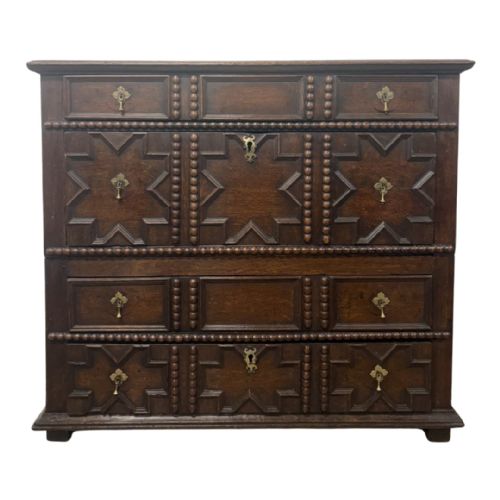
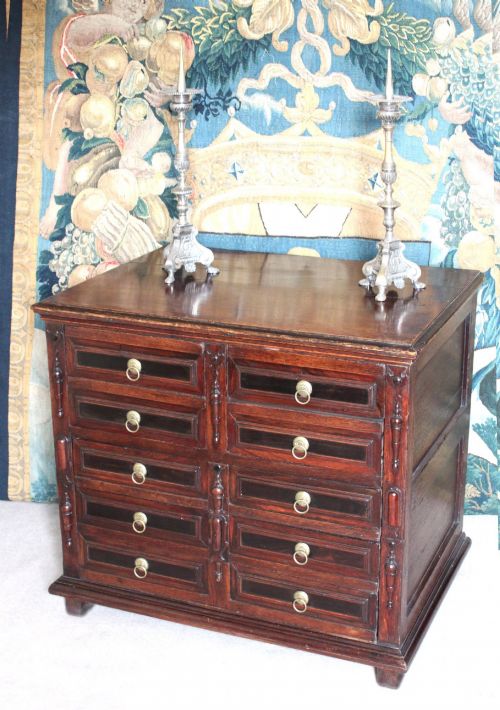
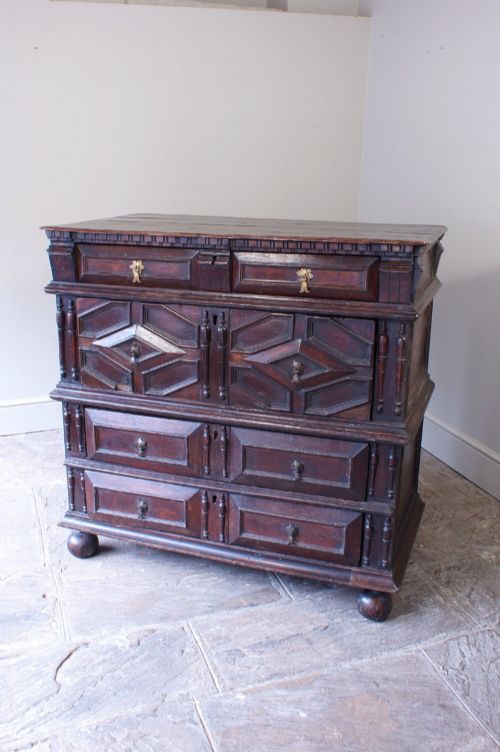
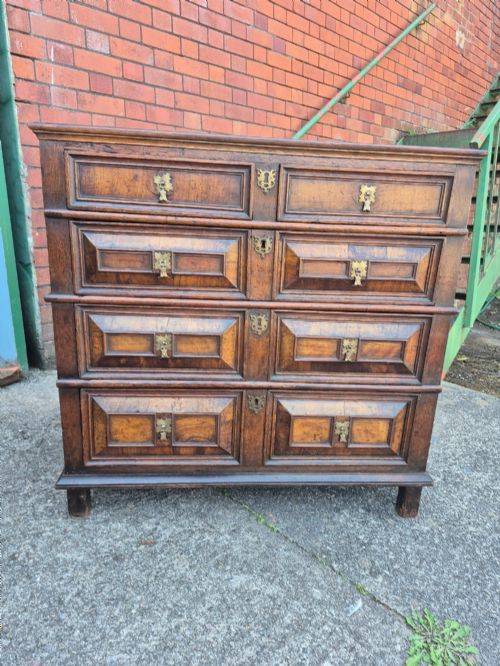
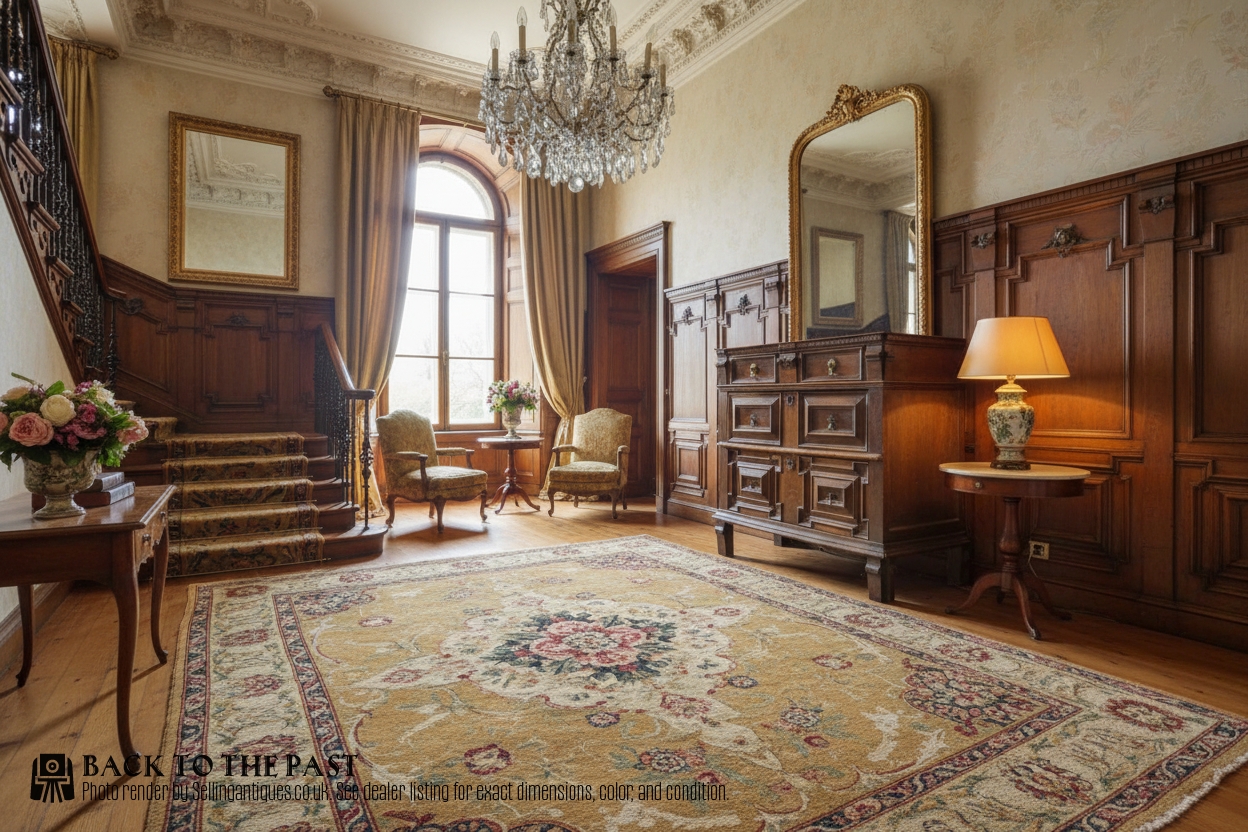
A geometric moulded oak chest is a storage piece defined by projecting wooden geometric patterns built onto the drawer fronts. When searching this phrase, a buyer encounters robust seventeenth-century examples, particularly from the Charles II and Jacobean periods, alongside later revivals from the nineteenth and twentieth centuries.
The form most frequently met on this page is the chest of drawers, often constructed in two distinct sections with applied mitred mouldings creating octagonal, rectangular, or lozenge shapes. These pieces combine utilitarian storage with the sculptural joinery characteristic of seventeenth-century English cabinet making.
How they were made
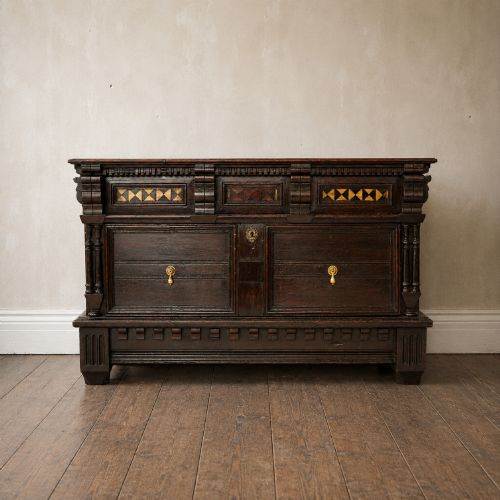
Craftsmen shaped solid oak using hand tools, frequently pairing the primary timber with walnut, fruitwood, or snakewood for contrasting decorative effect. Drawer fronts received intricate applied mouldings fixed with wooden pins and animal glue to form the signature geometric reliefs.
Hardware played an integral functional and aesthetic role, incorporating original brasses, drop handles, and complex steel locks. Surfaces relied on natural wax finishes and wood inlay rather than heavy pigments, allowing the grain of the oak and secondary woods to show through.
Geometric Moulded Oak Chest Retail Price Guide 2026
Typical asking prices for geometric moulded oak chest among the pieces listed under this phrase on Sellingantiques today, from the lower quarter to the upper quarter. They describe what is for sale here now, not the wider market.
Current listings span the seventeenth century, Georgian era, and the nineteen-hundreds, featuring oak, walnut, fruitwood, and brass.
What varies in quality
Quality rests upon the crispness of the mitred joints within the applied mouldings and the architectural harmony of the geometric patterns across the drawer fronts. Pieces retaining their original two-part structure, backboards, and substantial timber thickness represent the upper tier of the range.
The choice of secondary woods also marks distinction, where the integration of walnut, fruitwood, or oyster veneers elevates standard oak construction. The survival of original brass hardware and complex steel locks distinguishes untouched examples from those altered by later replacements.
The Geometric Moulded Oak Chest Glossary
- Geometric moulding
- Applied strips of wood arranged in repeating patterns such as octagons or lozenges onto drawer fronts. This technique created surface relief and visual depth on seventeenth-century furniture.
- Oyster veneer
- Thin slices cut horizontally across small branches or roots to reveal circular growth rings. This decorative wooden layer appeared on select seventeenth-century pieces.
- Two-part chest
- A cabinet constructed in upper and lower sections designed to ease transport. This format frequently occurs in seventeenth-century English case furniture.
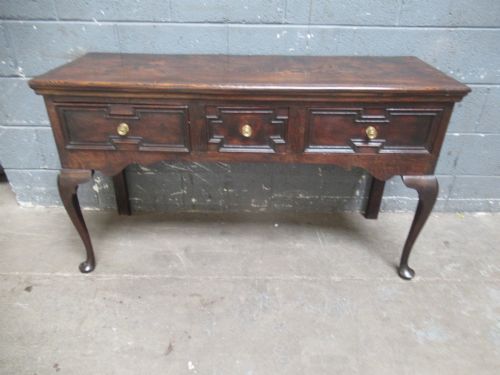
- Dresser base
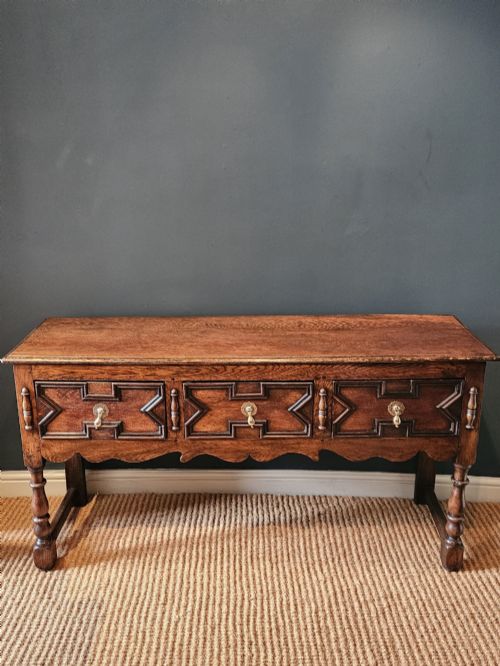
- A low side table featuring drawers and sometimes cupboards beneath a solid top. These items served functional storage roles in early domestic interiors.
- Jacobean
- The artistic style spanning the early seventeenth century under James I. Furniture from this era displays rigid symmetry and robust proportions.
Geometric Moulded Oak Chest: Frequently Asked Questions
How do I date a geometric moulded oak chest?
Dating relies on construction methods, timber selection, and the profile of the applied mouldings. Seventeenth-century examples typically show hand-riven oak boards, pegged joints, and vernacular tool marks.
Later revivals from the nineteenth and twentieth centuries often employ machine-sawn timber and standardised fixings. Comparing the drawer linings and backboards helps clarify the period of manufacture.
What rooms suit a geometric moulded oak chest?
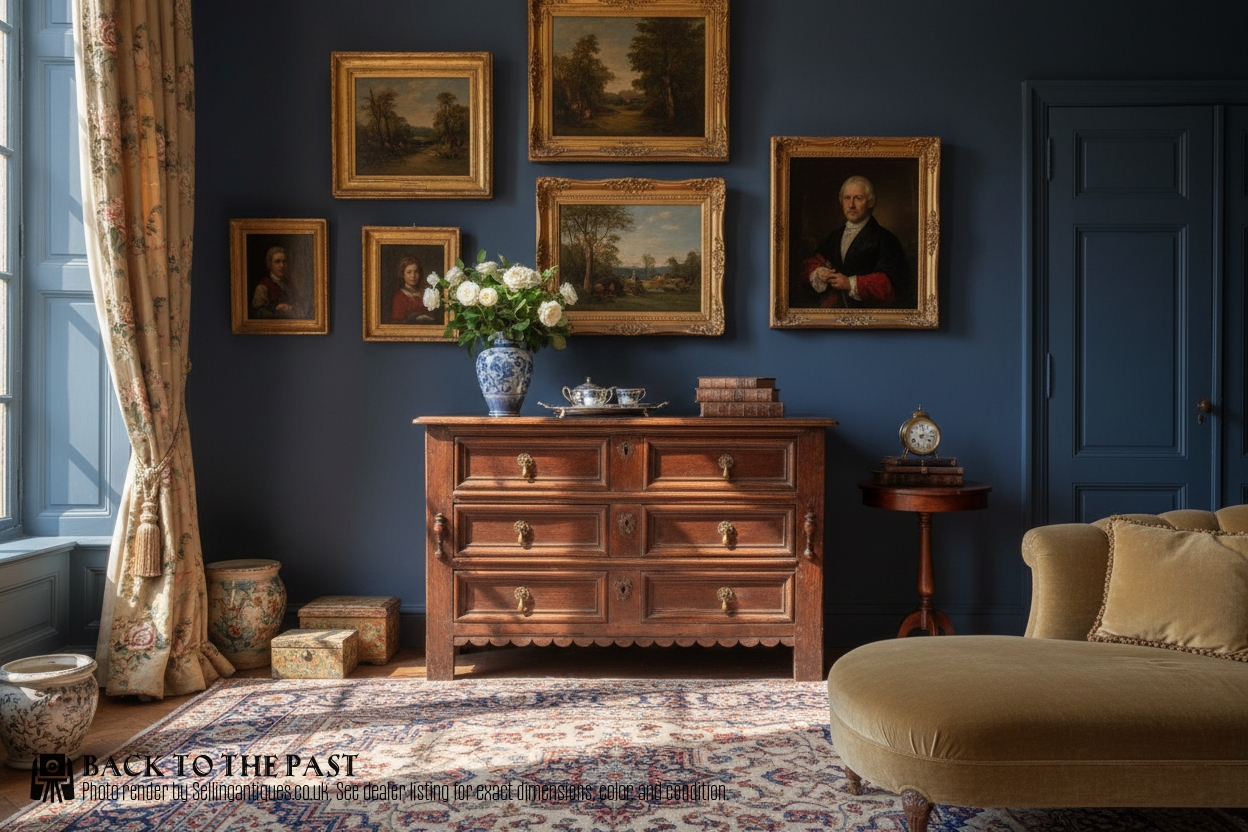
These chests anchor hallways, living spaces, and bedrooms due to their strong architectural presence and functional drawer space. Their dark timber tones and textured facades complement both traditional interiors and minimalist modern rooms.
Placing them away from direct heat sources protects the dry oak and delicate applied mouldings from warping.
Why do some chests use contrasting woods?
Cabinet makers integrated walnut, fruitwood, and snakewood alongside oak to create visual contrast within the geometric patterns. This technique highlighted specific components of the moulded facade and demonstrated the maker's skill.
Such decorative choices mark high-status pieces from the seventeenth century.
How should I care for the oak surface?
Maintaining the wood requires occasional applications of traditional beeswax to nourish the dry oak and preserve the natural patina. Avoid silicone polishes and keep the piece away from radiators to prevent timber shrinkage.
Gentle dusting with a soft, dry cloth keeps the deep recesses of the geometric mouldings clean.