
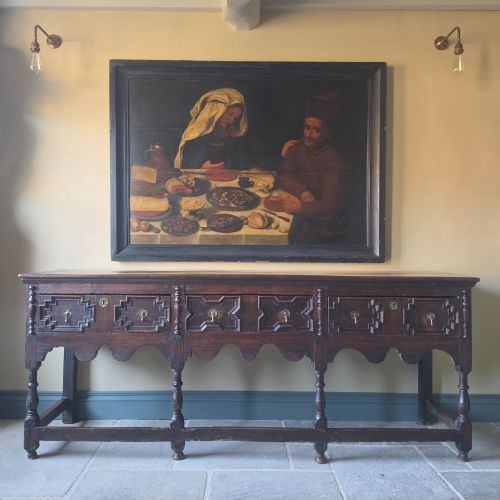
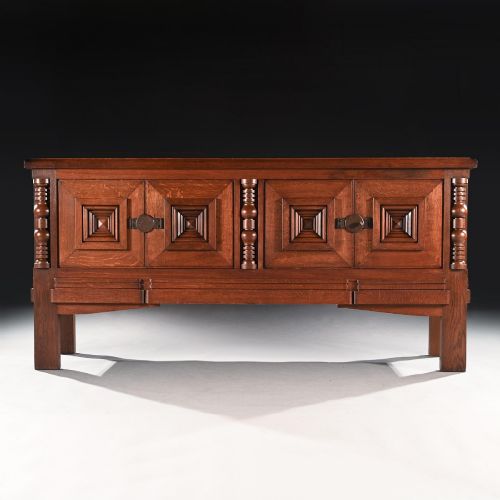
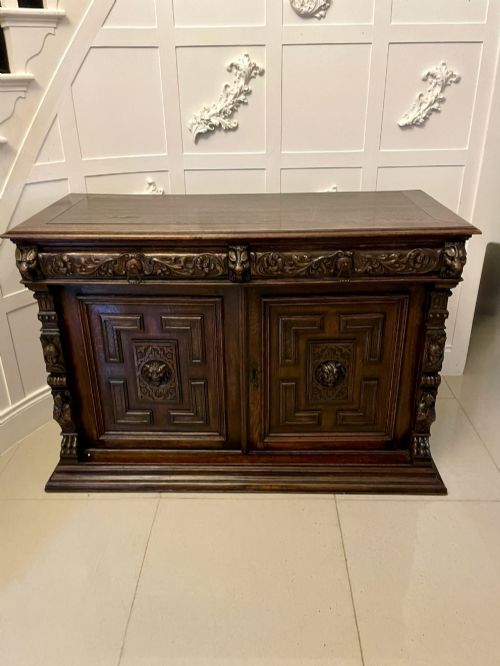
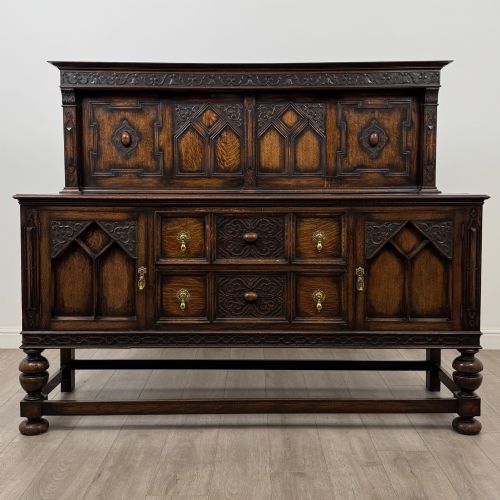
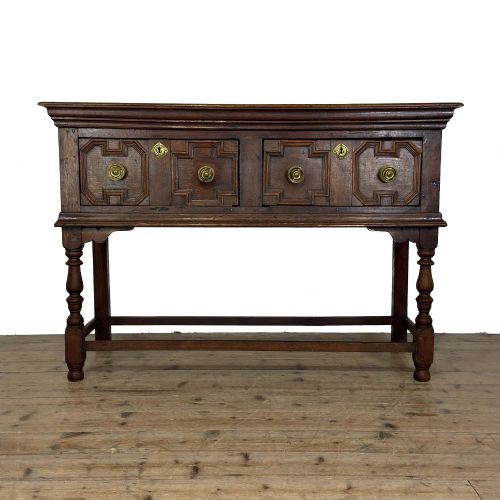
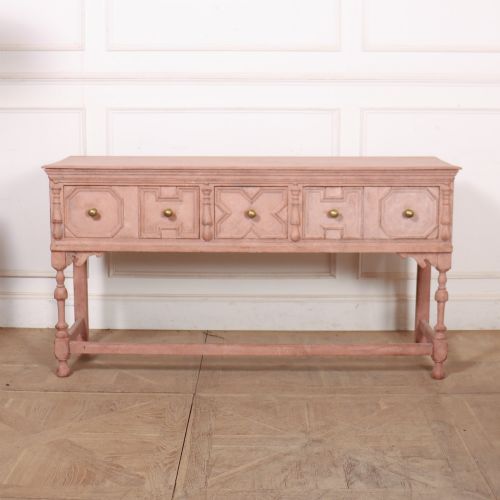
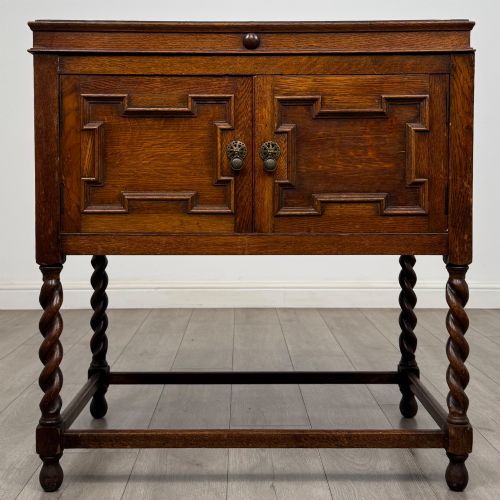
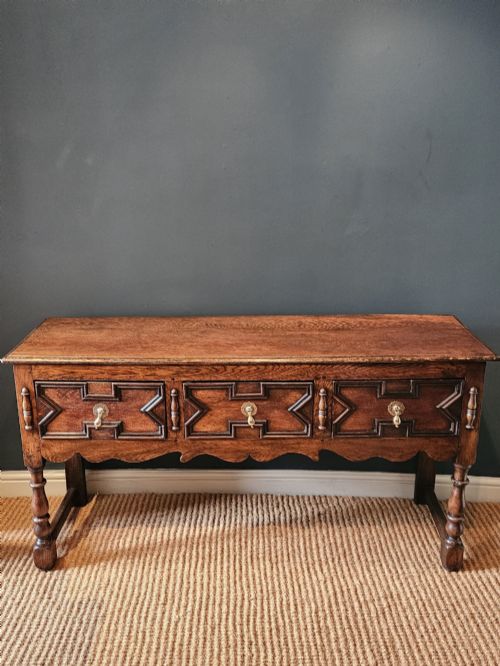



Geometric Carved Sideboard
A geometric carved sideboard brings heavy architectural line and deep timber texture into a room, offering robust storage rooted in centuries of cabinet-making tradition.
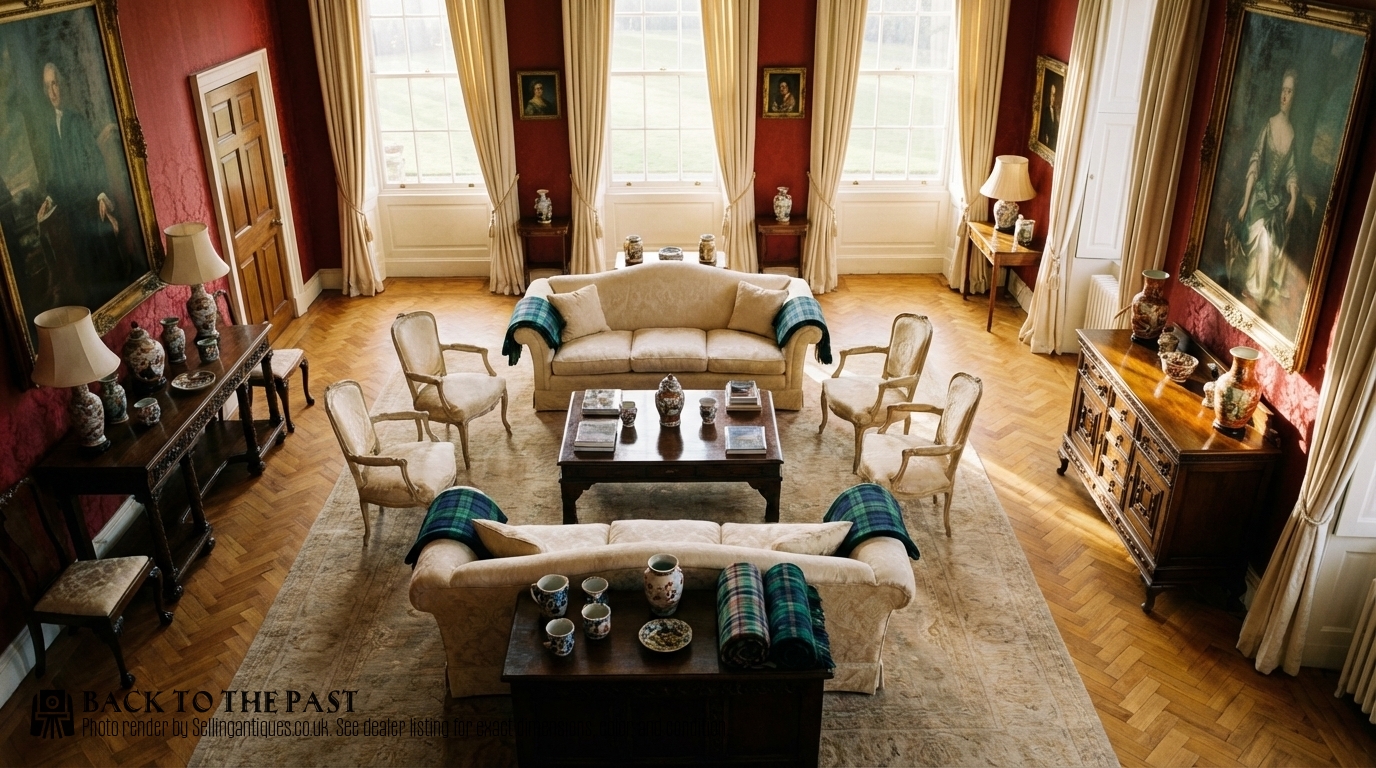
Geometric Carved Sideboard
A geometric carved sideboard spans several centuries of design, with examples appearing across the seventeenth, eighteenth, and nineteenth centuries alongside revival interpretations from the Edwardian era and the nineteen-thirties.
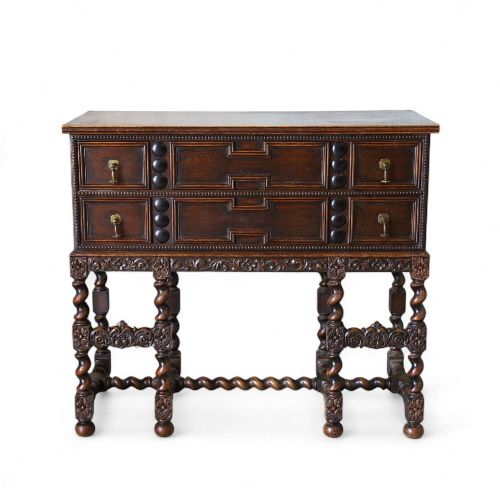
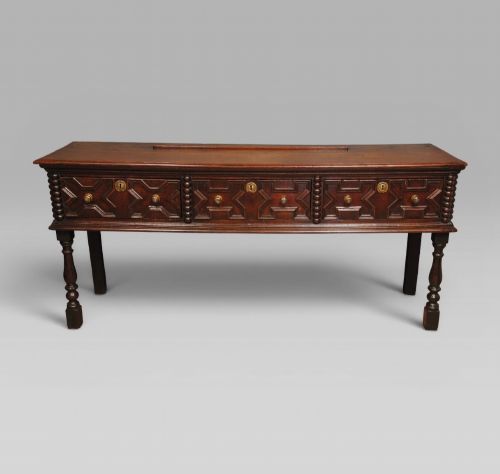
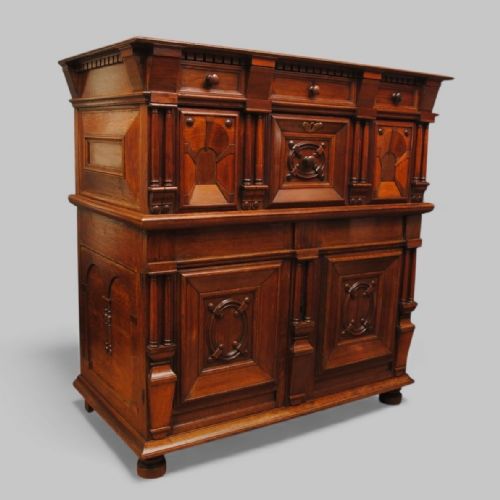
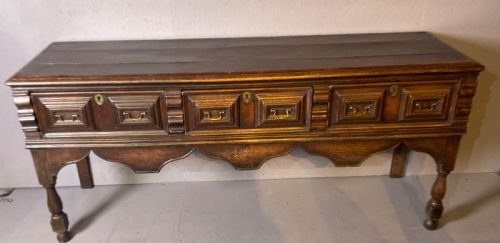
The pieces on this page primarily take the form of oak dresser bases, low servers, and cupboards, frequently displaying the panelled geometry associated with Jacobean and Carolean revivals.
Buyers will encounter genuine seventeenth-century block front and low dresser bases alongside later nineteenth-century revival iterations and mid-century French interpretations in oak and walnut.
Materials and construction methods
Oak dominates the construction of these pieces, appearing as solid timber and framing walnut, fruitwood, and applied mouldings.
Joinery relies on traditional frame and panel techniques, supporting heavy block fronts, geometric drawer mouldings, and structural turnings such as barley-twist supports.
Surface finishes include historic paint applications, glass door insertions, brass hardware, and iron fittings that anchor the heavy wooden framework.
The listings span from the seventeenth century through to mid-century French design, with oak and walnut appearing most frequently.
Assessing construction and historical integrity
The distinction between tiers rests upon the crispness of the timber moulding, the integrity of the original joints, and the depth of the hand-carved geometric decoration.
Pieces retaining their early drawer linings, original brass or iron hardware, and undisturbed surface patination command greater interest from collectors than heavily altered examples.
Charles Dudouyt·Étienne Kohlmann
The Geometric Carved Sideboard Glossary
- Block front
- A cabinet front divided vertically into three panels, where the central section recedes and the outer sections project forward. This treatment creates a strong play of light and shadow across the timber.
- Dresser base
- A low wooden storage unit featuring drawers or cupboards beneath a flat top surface. These function as heavy sideboards in contemporary domestic spaces.
- Jacobean style
- An English design movement from the early seventeenth century characterised by rigid symmetry, rectangular panelling, and geometric applied mouldings. Revivals of this style recurred frequently in Victorian and Edwardian furniture.
- Barley-twist
- A turned wooden furniture support shaped into a helical spiral. This technique appears frequently on seventeenth-century and revival table legs and sideboard supports.
Geometric Carved Sideboard: Frequently Asked Questions
What is a geometric carved sideboard?
A geometric carved sideboard is a heavy wooden storage piece featuring rectilinear patterns, panelled drawer fronts, and applied mouldings derived from seventeenth-century architectural motifs.
These items encompass low dresser bases, servers, and cupboards built primarily from solid oak and walnut across multiple revival periods.
How do I date a geometric carved sideboard?
Dating relies on examining construction methods, timber species, and tool marks visible on internal drawer linings and backboards. Seventeenth-century examples display hand-split boards and pegged mortise and tenon joints.
Revival pieces from the nineteenth and twentieth centuries often combine machine-cut elements with historic revival styles like Jacobean and Carolean.
Where should I place a sideboard?
These substantial wooden pieces suit dining rooms, hallways, or living spaces where their deep storage capacity and pronounced grain can anchor the room. Ensure the floor space accommodates the heavy footprint and projecting door swings.
Keep timber furniture away from direct heat sources and strong sunlight to protect the aged surface patination and prevent wood splitting.
Are these pieces made of solid wood?
The listings on this page are predominantly constructed from solid oak, walnut, and fruitwood. Natural timbers respond to indoor humidity changes by expanding and contracting over time.
Maintaining stable environmental conditions in the home helps preserve the structural integrity of historical panelled joints and applied mouldings.