
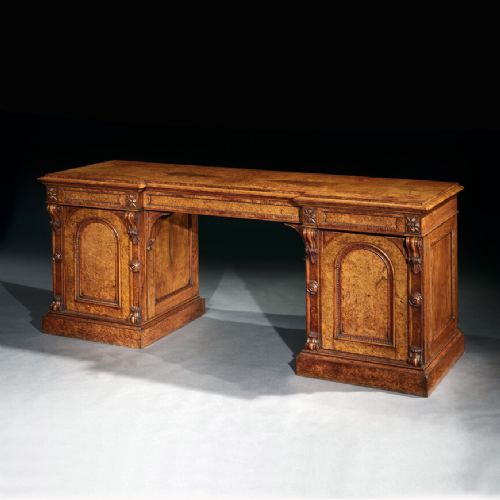
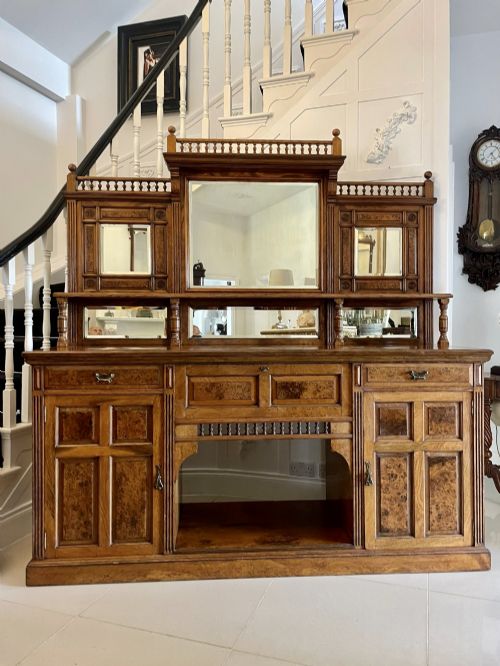
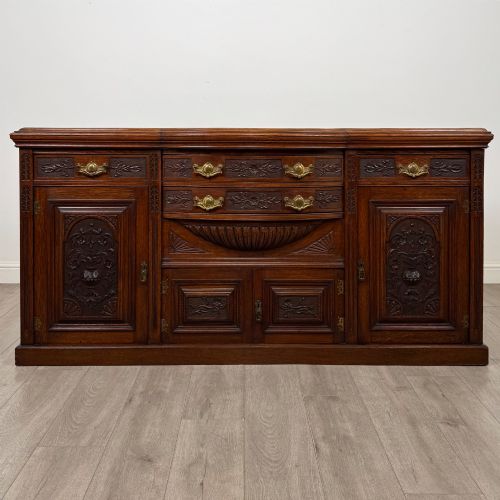
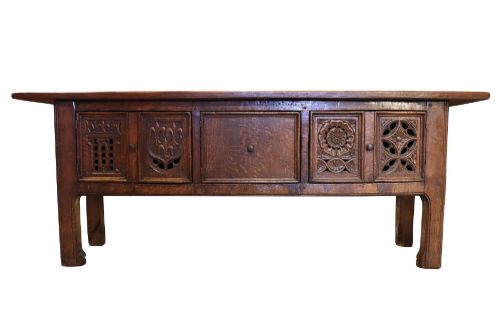
Victorian Carved Oak Server
A victorian carved oak server brings heavy timber, deep relief work, and functional dining storage straight into a modern interior.
Victorian Carved Oak Server
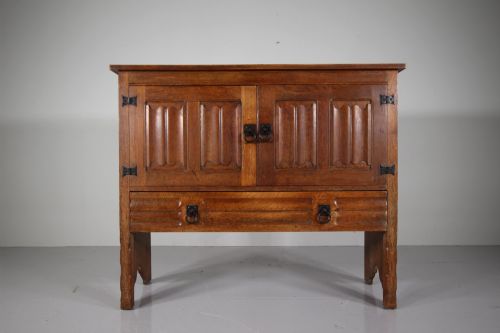
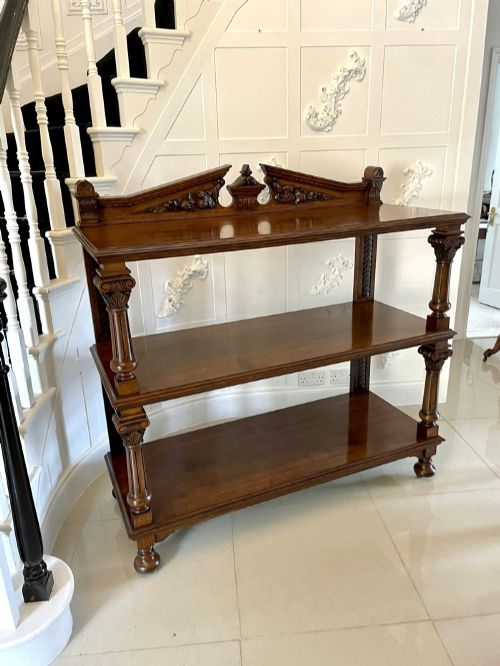
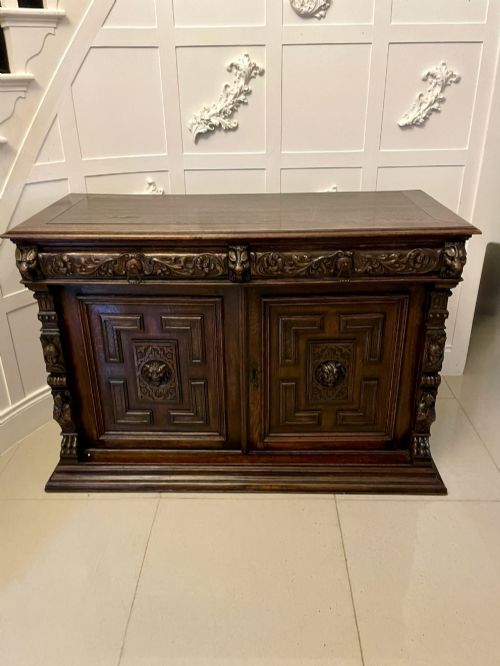
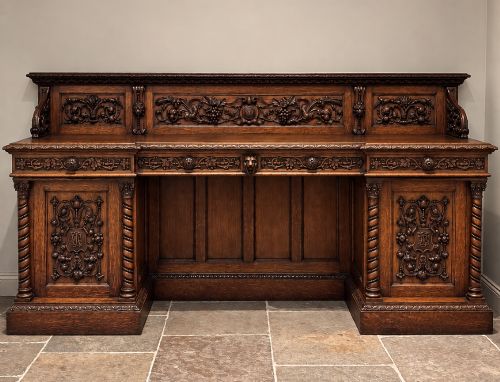
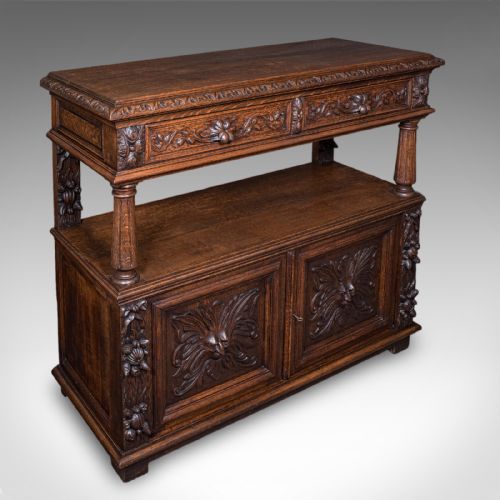
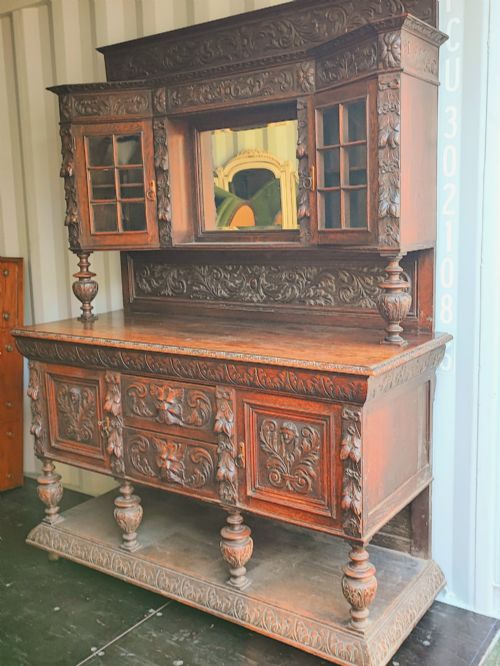
A victorian carved oak server is primarily encountered in the form of substantial sideboards, buffets, and serving tables produced during the nineteenth century. These pieces were designed for dining rooms and large halls to hold silver, linen, and serving dishes.
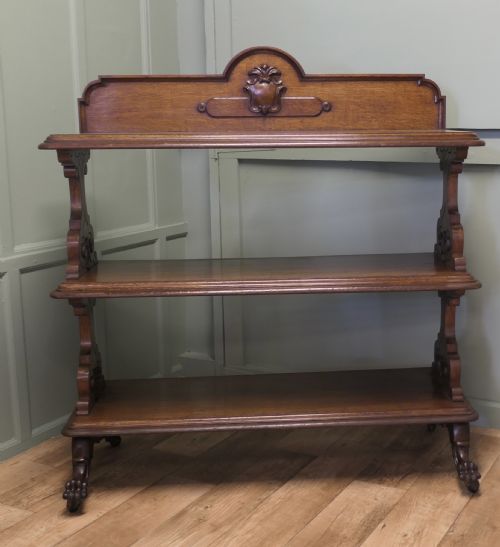
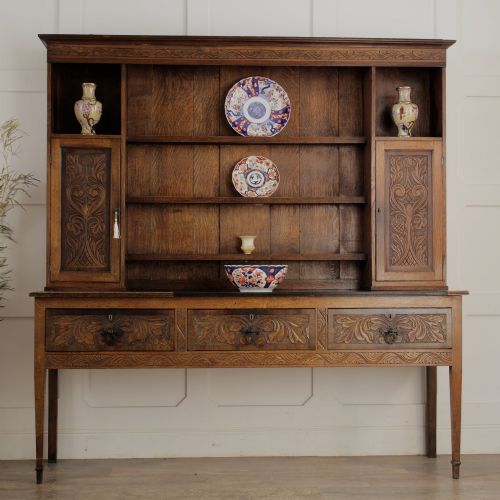
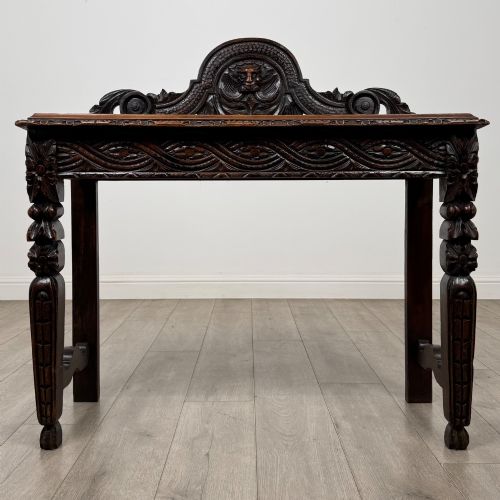
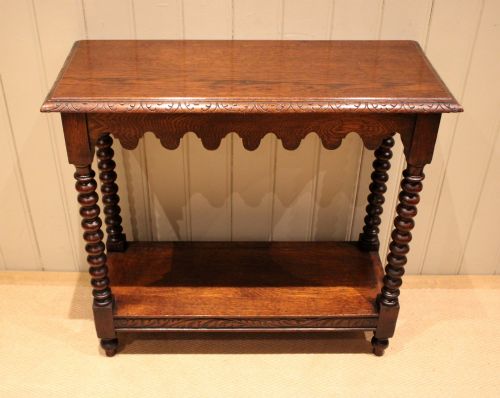
The evidence shows that these items frequently incorporate related forms such as console tables, dressers, and dumbwaiters. They serve today as commanding focal points in living spaces and hallways.
Originating largely from British and Scottish workshops, the pieces span the decades from the mid-nineteenth century through to the year nineteen hundred.
Materials and construction methods
Solid oak and pollard oak provide the heavy structural foundation for these servers, often complemented by brass handles, iron fittings, and mirrored backs. The timber is selected for its distinct grain pattern and durability.
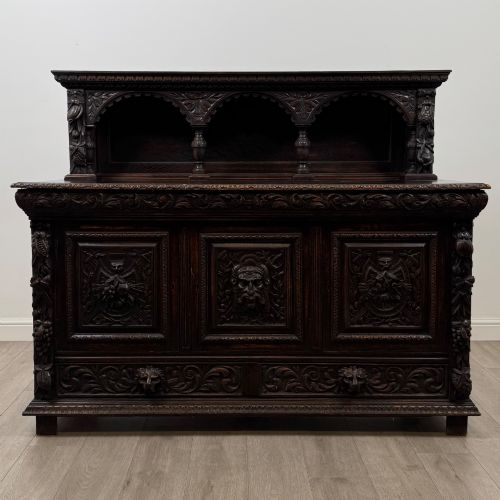
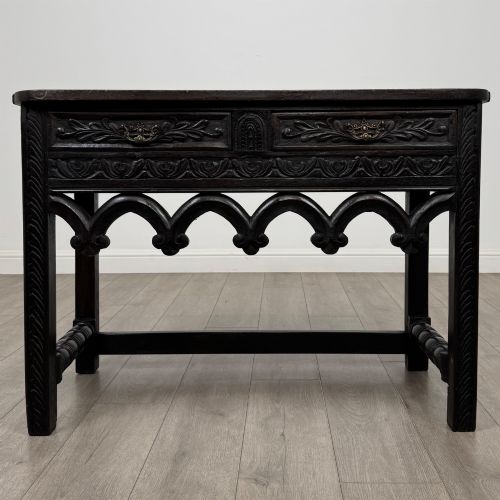
Carving techniques display deep relief work, frequently utilising motifs such as the Green Man, lions, and Gothic tracery. Cabinetmakers joined panels using traditional framing methods to support heavy sideboards and multi-tiered consoles.
The listings show a strong presence of Gothic Revival and Renaissance Revival styles alongside standard Victorian forms.
Judging quality and craftsmanship
Quality in a victorian carved oak server rests upon the crispness and depth of the timber carving. Pieces with hand-carved Green Man masks or intricate Gothic panels show superior artisanal skill compared to simpler moulded surfaces.
The selection of materials also dictates the tier of the piece, with figured pollard oak and heavy solid timbers indicating high-end commissions. Integrated mirrors, brass hardware, and secondary woods further separate standard utility pieces from exceptional examples.
The Victorian Carved Oak Server Glossary
- Pollard Oak
- Timber taken from trees that have been pollarded, producing a highly figured, mottled grain pattern. This decorative wood was favoured for high-end Victorian cabinet fronts.
- Green Man
- A sculptural motif depicting a human face emerging from or entwined with foliage. It appears frequently in nineteenth-century carved woodwork.
- Gothic Revival
- An architectural and decorative style drawing inspiration from medieval design. Pieces in this mode display pointed arches, tracery, and heavy proportions.
- Dumbwaiter
- A multi-tiered serving piece used for holding dishes and utensils near a dining table. Examples from this era often feature heavy turned supports.
- Console Table
- A table designed to be fixed against a wall, frequently supported by brackets or ornate legs. In Victorian hallways, these items provided a surface for hats and calling cards.
Victorian Carved Oak Server: Frequently Asked Questions
What is a victorian carved oak server used for?
These pieces function as heavy storage units and display surfaces for dining rooms, hallways, and living spaces. They accommodate tableware, linens, and decorative objects while anchoring a room with dark timber.
Historically, dining rooms relied on these items for service during large meals. Today, they serve equally well as sideboards or hall consoles.
How do I identify a Gothic Revival piece?
Gothic Revival furniture displays distinct medieval architectural motifs such as pointed arches, quatrefoils, and heavy linenfold panelling. The timber is typically dark oak with robust construction.
Carvings often include religious symbols, tracery, and grotesque masks. This style gained immense popularity during the middle and late nineteenth century.
What is pollard oak?
Pollard oak comes from trees cut back near the trunk to encourage dense branch growth, creating a swirling, highly textured timber grain. Cabinetmakers veneered or used solid pollard sections on prominent surfaces.
This material signals a finer grade of furniture. It contrasts sharply with straight-grained standard oak.
How do I care for antique oak furniture?
Maintain antique oak by keeping it away from direct heat sources and sudden humidity shifts to prevent the timber from splitting. Dust regularly with a dry cloth and apply occasional high-quality beeswax to nourish the grain.
Avoid silicone-based polishes that build up over time and dull the original surface. Gentle care preserves the rich patina developed over the centuries.
What distinguishes a sideboard from a server?
Sideboards generally feature extensive cupboard space, drawers, and sometimes upper mirror backs for storage and display. Servers tend to be slightly lighter in proportion, focusing on surface area for food and drink presentation.
In nineteenth-century usage, the terms occasionally overlap in contemporary cataloguing. Both forms share the same robust oak construction and carved detailing.