

French Urn Vases
These French urn vases bring classical proportion and rich materials to a room, ranging from grand Neoclassical bronze to delicate porcelain.
French Urn Vases
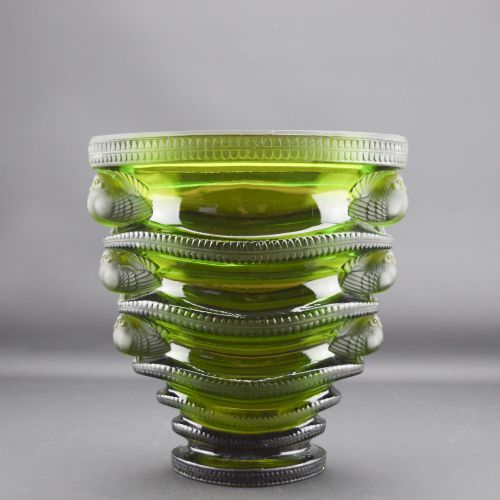
When you search for french urn vases, you encounter vessel forms that bridge decorative sculpture and functional display. The selection spans the nineteenth century up to the art deco period, drawing on classical antiquity and grand tour traditions.
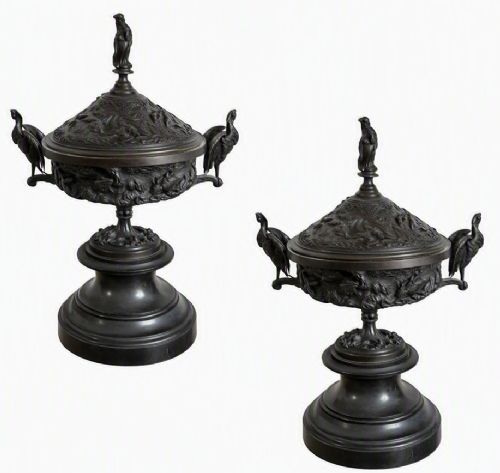
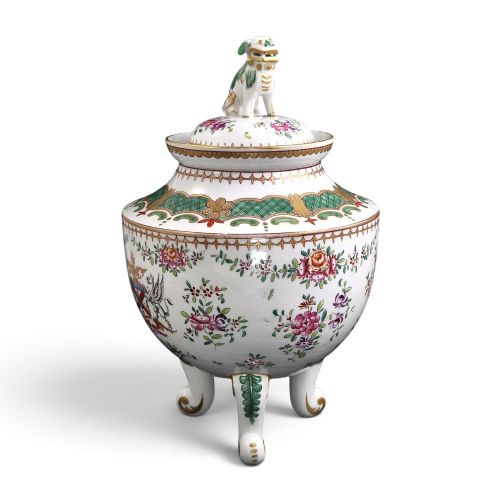
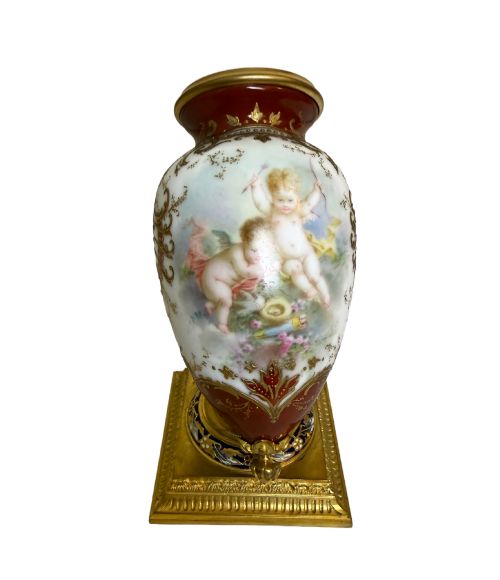
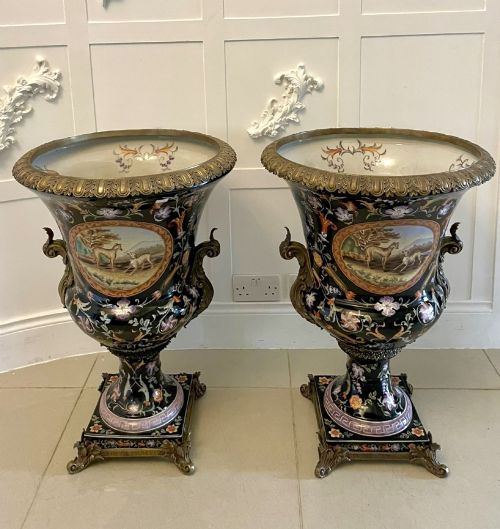
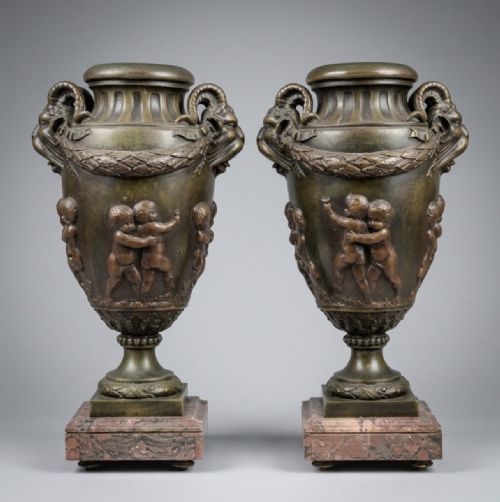
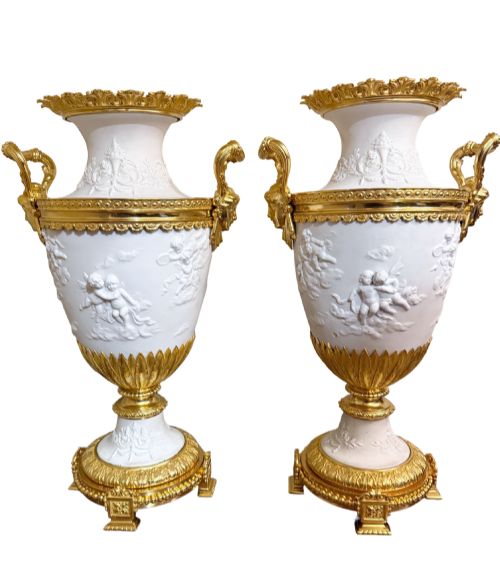
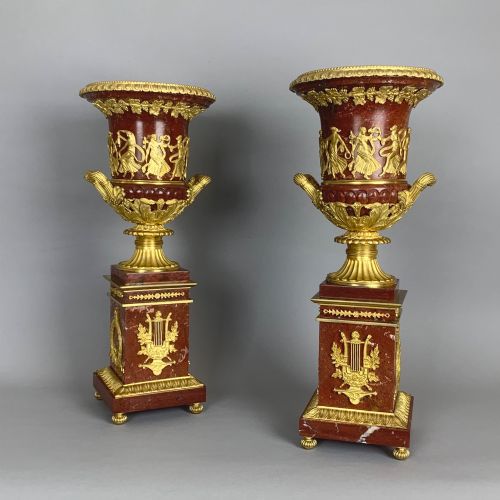
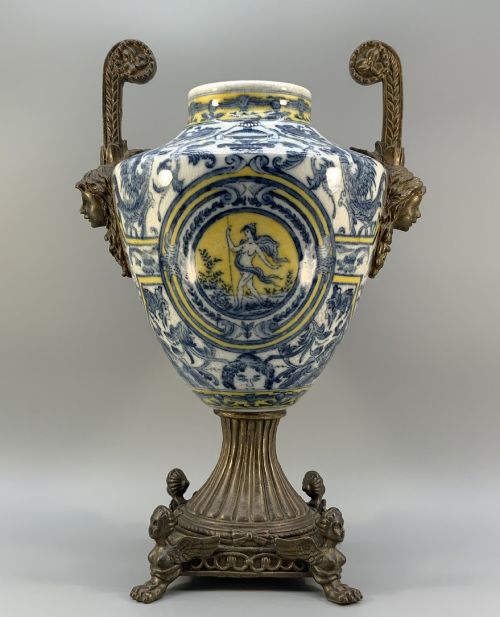
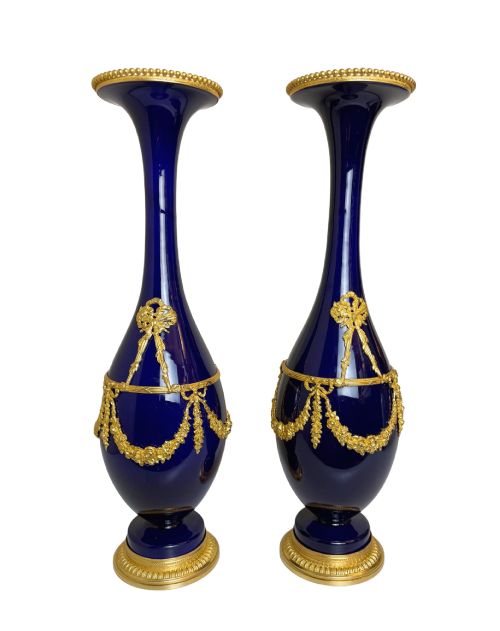
You are most likely to meet pairs of lidded or open vessels combining porcelain bodies with gilt bronze mounts. These take the shape of campana urns, classical ewers, and cassolettes designed for prominent placement on mantelpieces and pedestals.
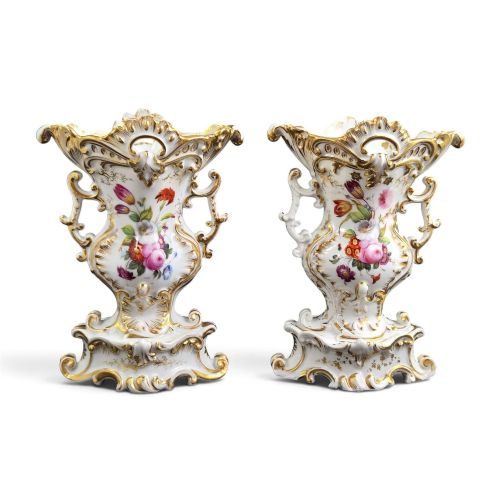
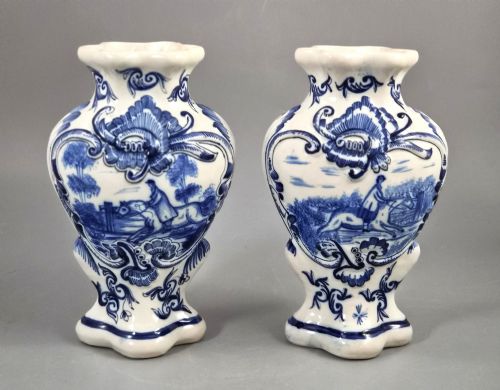
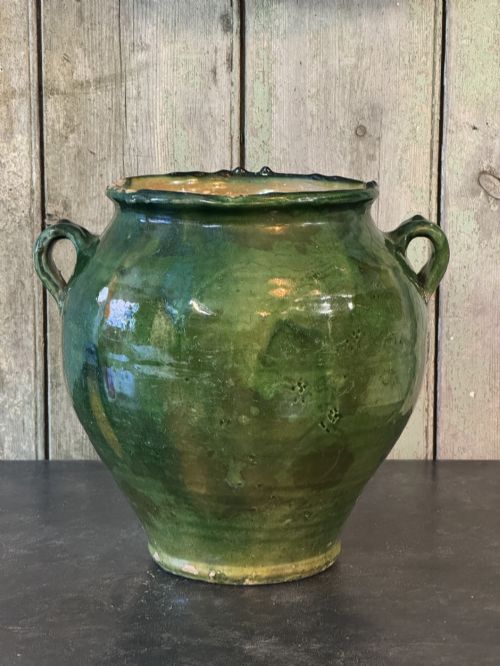
The objects take diverse forms including faience earthenware, glazed ceramic confit pots, and heavy spelter or bronze castings raised on marble bases. Makers and potteries adapted historical styles such as rococo revival, neoclassical, and chinoiserie to suit changing domestic interiors.
What varies in quality
Quality rests upon the crispness of the metal casting and the precision of the chasing on gilt bronze and ormolu mounts. Finer examples display sharp relief on decorative motifs like bacchic masks, cherubs, and acanthus leaves, whereas lesser pieces show soft edges and simpler finishing.
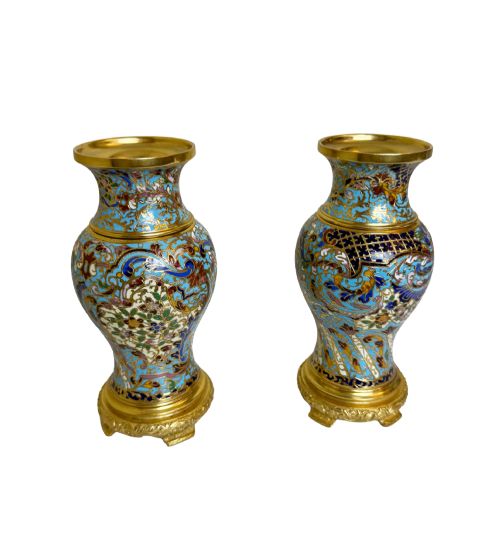
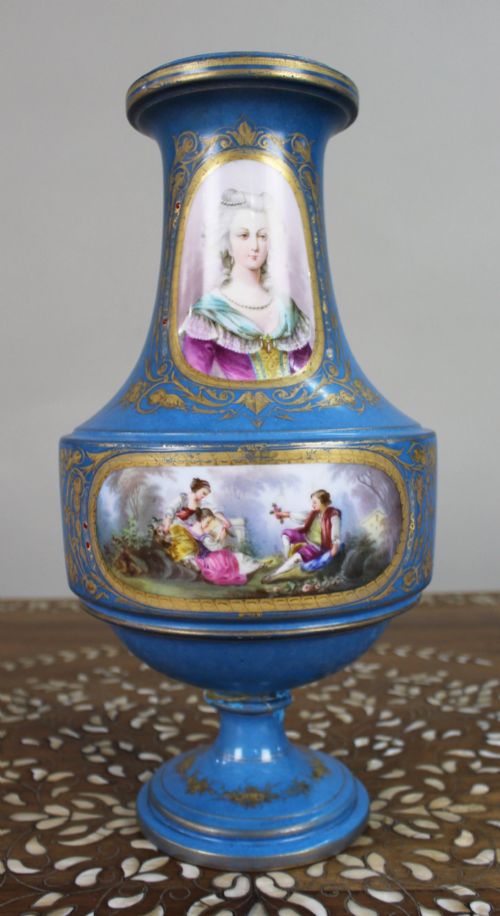
The hand-painted ceramic decoration creates another clear distinction across the range. Superior porcelain pieces exhibit finely controlled enamel work and rich gilding applied directly over finely potted bodies, distinguishing them from standard factory output.
Listings feature 19th Century, 1890, 1880, 1920, 1900, 1870, 1930, and 1860 periods alongside materials such as gilt bronze, porcelain, enamel, ormolu, bronze, gold leaf, earthenware, and marble.
Samson Paris·Sevres·Jacob Petit·Fourmaintraux-Courquin·Rene Lalique·Daum·Galle
The French Urn Vases Glossary
- Ormolu
- Gilt bronze mounted onto furniture, porcelain, or glass objects. This technique involves applying a gold amalgam to a bronze base before heating it to drive off the mercury.
- Campana urn
- A bell-shaped vessel with a flared rim and footed base. Originating in ancient Greece and Rome, this form frequently appears in nineteenth-century decorative metalwork.
- Cassolette
- A decorative vase or urn with a reversible lid that functions either as a closed vessel or as a perfume burner. These pieces often feature pierced metal mounts for releasing fragrance.
- Faience
- Tin-glazed earthenware produced across European potteries. The porous clay body receives an opaque white glaze which serves as a ground for painted enamel decoration.
- Grand Tour
- A cultural journey undertaken by wealthy young Europeans to study classical antiquities. Souvenirs brought back from these travels included bronze reductions of famous ancient vases and architectural marbles.
French Urn Vases: Frequently Asked Questions
What is a french urn vase?
These pieces are decorative vessels inspired by classical antiquity, designed primarily for display on mantelpieces, tables, and pedestals during the nineteenth and early twentieth centuries.
They combine sculptural metal mounts with ceramic, marble, or glass bodies, reflecting historical revival styles popular in French interiors.
How were they used historically?
Historically, these vessels served as architectural focal points in grand reception rooms, often displayed in symmetrical pairs on fireplaces or sideboards.
Some variants, such as cassolettes, functioned as burners for scented materials, while others held dried botanicals or simply displayed artistic craftsmanship.
How do I identify the period?
Dating relies on stylistic clues, manufacturing techniques, and material combinations characteristic of specific decades. Neoclassical and empire influences dominate the earlier nineteenth-century examples, while later pieces introduce art nouveau and art deco glass.
Maker marks, painted signatures, and foundry stamps found on the base or mounts provide further chronological evidence.
How should I clean them?
Dusting with a soft, dry brush preserves the delicate painted surfaces on porcelain and glass. Metal mounts require gentle care to avoid removing the remaining gilding or patina.
Harsh chemical polishes must be avoided entirely, particularly around glazed ceramic bodies and aged bronze surfaces.