


White Porcelain Urn Pair
White porcelain urn pair describes matched decorative vessels in ceramic, seen in pieces from the seventeenth to the twentieth century.
White Porcelain Urn Pair
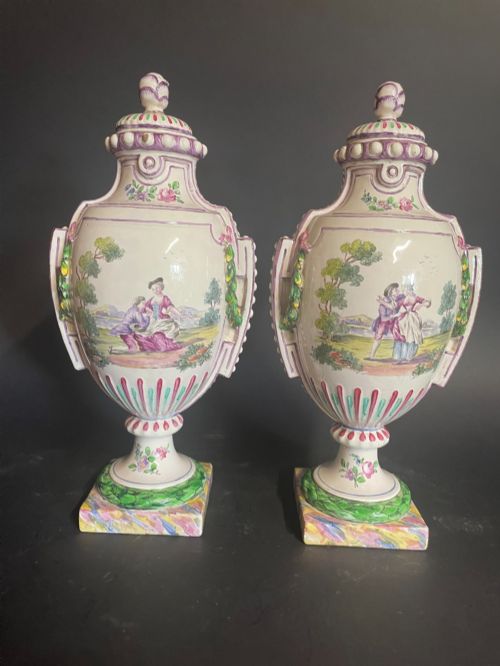
A white porcelain urn pair consists of matched dual vessels intended for display, drawing on forms like the Campana shape, baluster bodies, and lidded ginger jars. These items appear across periods such as the Regency era, the Victorian decades, and the late nineteenth century.
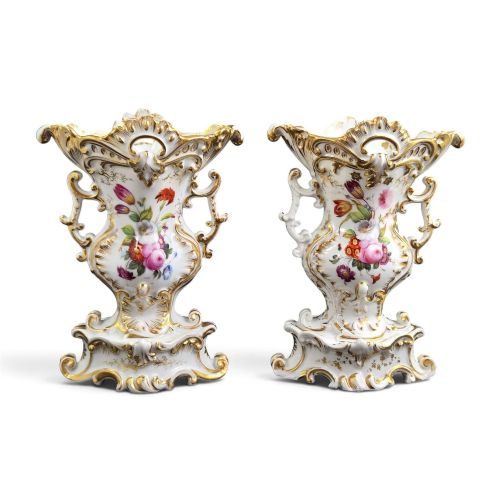
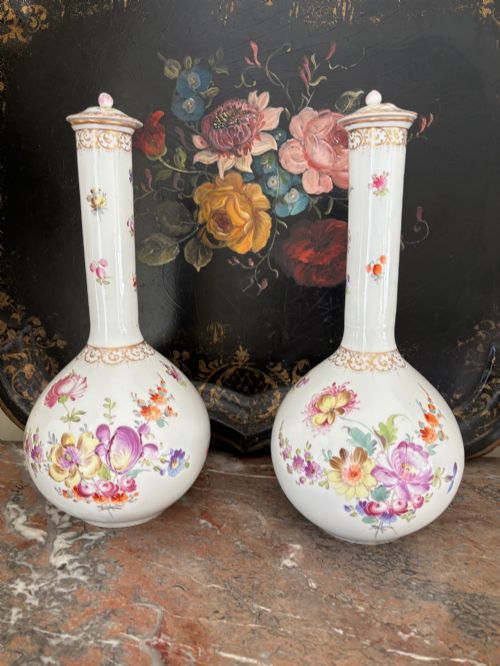
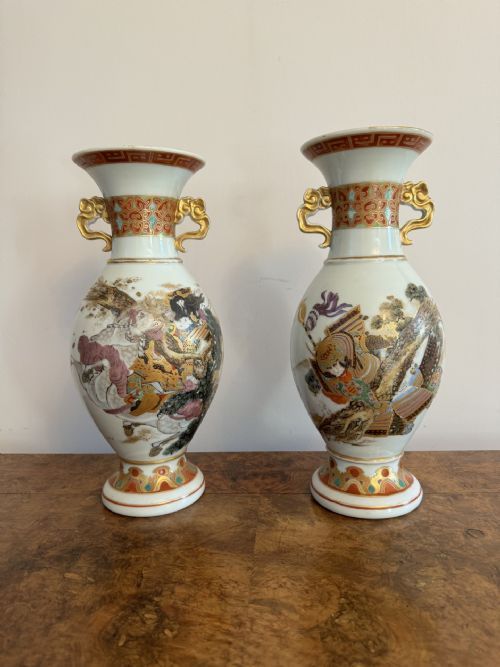
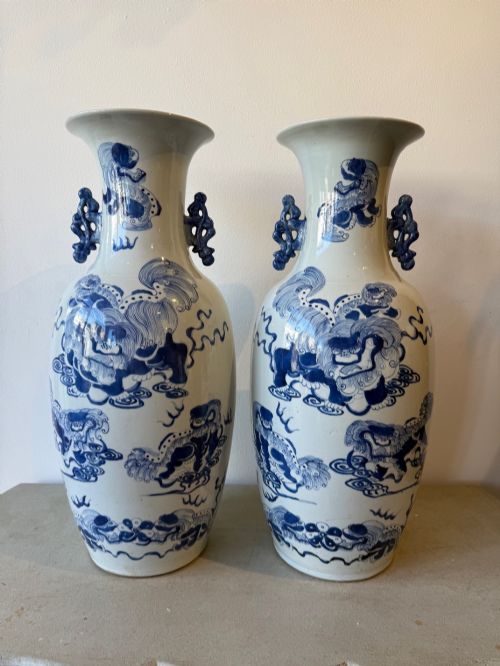
The selection includes European factories such as Paris, Sitzendorf, and Berlin alongside Asian traditions like Japanese Arita and Chinese Qing dynasty pieces. Many items combine white porcelain with hand-painted floral decoration, figural scenes, or raised enamel work.
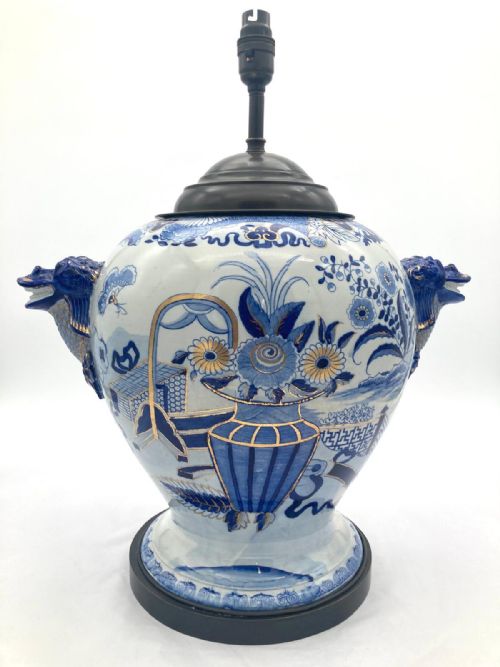
Buyers encounter variations ranging from classical Neoclassical shapes to robust ironstone and faience examples. Certain pairs have been converted into table lamps with added electrical fittings and custom shades.
How they were made
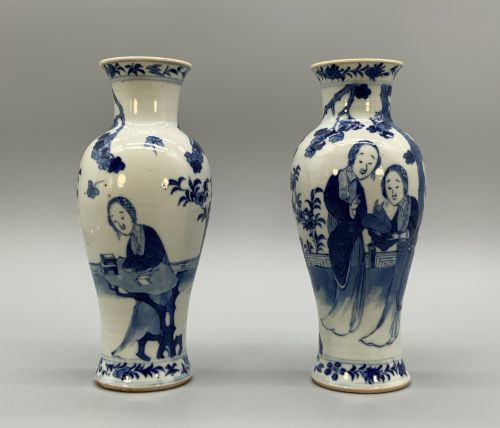
Maker operations utilised fired ceramic bodies, porcelain clay, and earthenware, often finished with a smooth white glaze. Artisans applied hand-painted motifs, cobalt blue underglaze, and detailed polychrome enamel designs directly to the surface.
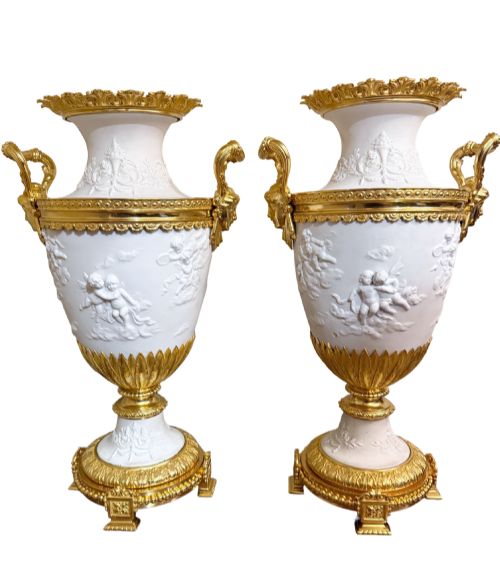
Many items incorporate gilt bronze mounts, brass elements, and accents of gold leaf or gilding applied to handles, rims, and pedestals. Raised white enamel and applied bas-reliefs add tactile depth to the bodies of the vessels.
The inventory records forms including ginger jars, Campana urns, baluster vases, and potpourri containers with covers.
What varies in quality
The refinement of the painted details and the precision of the hand-drawn floral or figural elements separate standard production from superior output. Crisp modelling in relief decoration and cleanly applied gilding indicate careful workshop execution.
The presence of factory marks, identifiable maker attributions, and intact original covers or matching pedestals contribute to the standing of an urn pair. Balance between the two vessels and the preservation of the glaze define the overall integrity of the set.
Jacob Petit·Sitzendorf·Hicks and Meigh·Flight Barr and Barr·Moorcroft Macintyre
The White Porcelain Urn Pair Glossary
- Campana urn
- A bell-shaped vessel with a flared rim and footed base, frequently utilised in classical European ceramics.
- Baluster
- A bottle-shaped ceramic form with a rounded body that tapers toward the neck, common in Chinese and European vases.
- Gilding
- The application of gold leaf or gold powder to ceramic surfaces, handles, and mounts for decorative accent.
- Faience
- Tin-glazed earthenware produced in European workshops, offering an opaque white ground for painted decoration.
- Bas-relief
- A sculptural technique where figures or motifs project slightly from the flat background of the porcelain body.
White Porcelain Urn Pair: Frequently Asked Questions
What is a white porcelain urn pair?
These items are matched decorative vessels created in ceramic and porcelain across various European and Asian workshops. They were designed primarily for mantelpieces, side tables, and formal display.
Pairs feature uniform shapes, coordinated painted scenes, and matching glazes intended to create symmetry in an interior scheme.
How were these urns used historically?
Vessels of this type functioned as interior ornaments, potpourri containers, or centrepieces in domestic rooms and formal reception spaces. Lidded versions held aromatic dried flowers and herbs to scent the air.
Over time, some examples were adapted into functional lighting by converting the bodies into table lamps.
How do you identify nineteenth-century pieces?
Nineteenth-century items often display characteristics of specific revivals, such as Rococo curves, Neoclassical forms, or Japanese Meiji motifs. Factory marks, ironstone bodies, and specific glaze colours help place the manufacture in this era.
Examining the hand-painted details and any gilt bronze mounts provides further clues regarding the date of creation.
Can converted lamp pairs be restored?
Many converted lamps retain their original drilled wiring paths or base modifications executed during past decades. Restorers can update electrical components while preserving the underlying porcelain body and original surface finish.
Careful handling ensures that any attached brass or gilt bronze elements remain secure during use.