
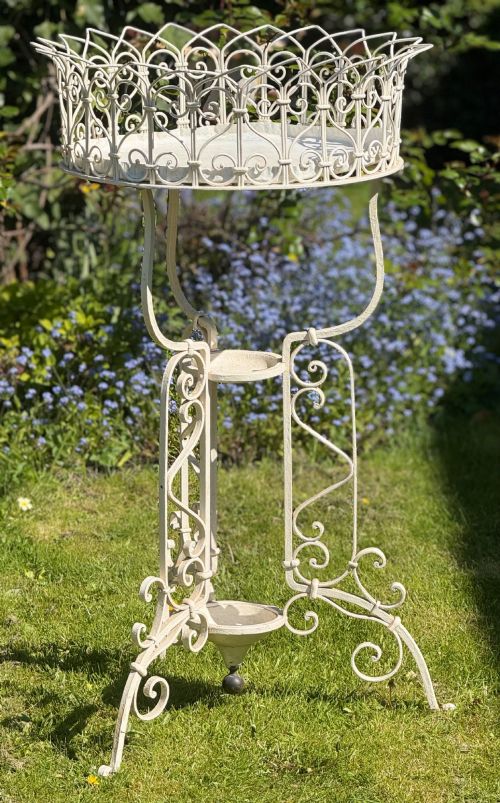


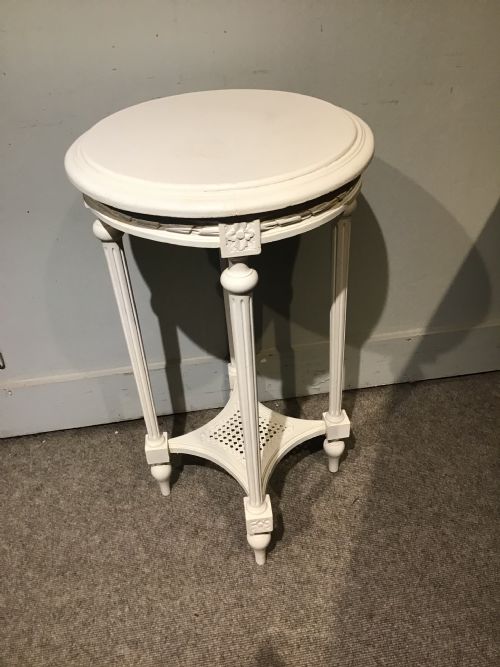

French Style Flower Stand
These French style flower stand pieces bring continental plant display indoors through classic nineteenth-century forms and decorative mounts.
French Style Flower Stand
A french style flower stand encompasses jardinieres, plant stands, and pedestals designed to hold plants and flowers within domestic spaces. Buyers searching this phrase will find pieces spanning the nineteenth and early twentieth centuries, reflecting Victorian and revival aesthetics.
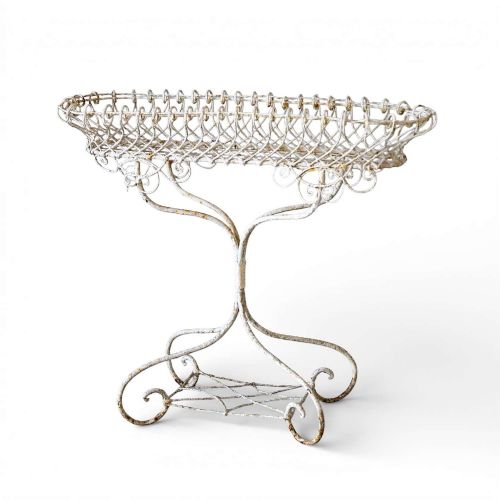
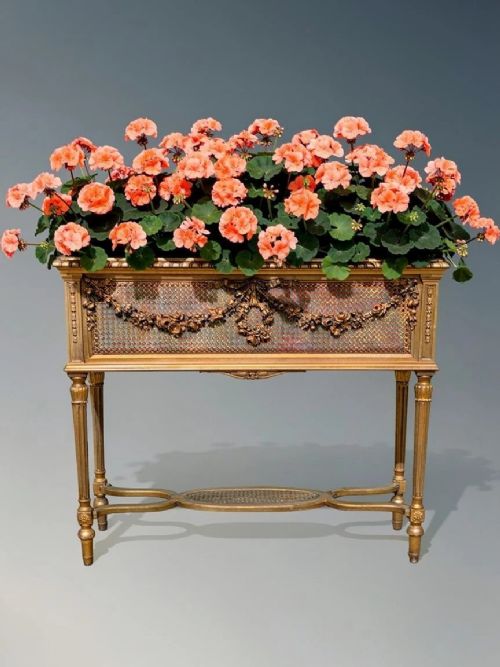
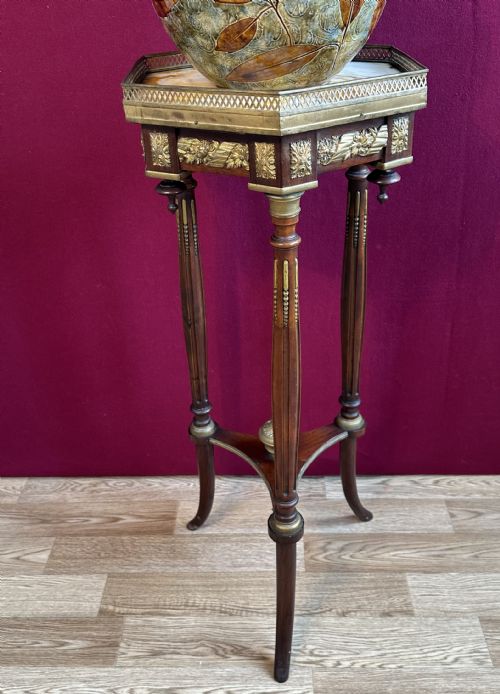
The most common forms on this page include marble-topped stands, wrought iron plant holders, and inlaid jardiniere planters. These items often feature ornate metalwork, painted finishes, or gilt mounts characteristic of French chateau and Louis periods.
Makers and manufacturers produced these stands to serve both decorative and practical functions in reception rooms and hallways. The surviving examples demonstrate a preference for raised display surfaces that elevate greenery above floor level.
Materials and Construction
Construction relies heavily on metals such as wrought iron, chiseled brass, and ormolu combined with natural stone like marble and onyx. Artisans shaped metal into scrollwork and lattice baskets, pairing them with heavy stone tops to provide stability for heavy plants.
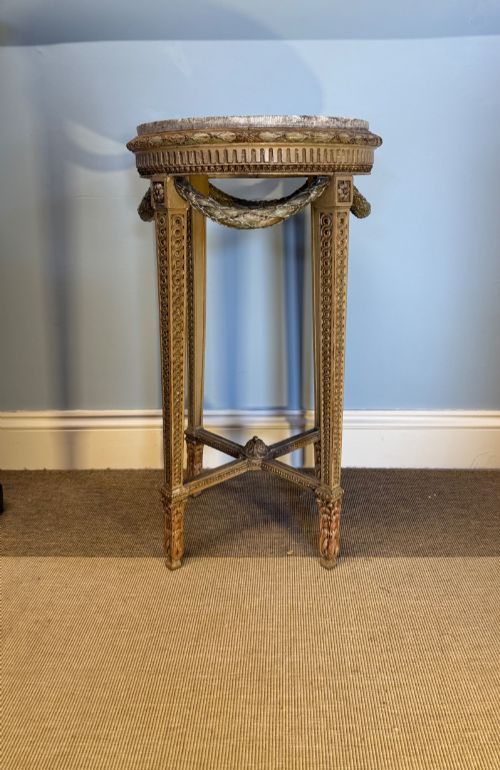
Woodwork utilises walnut, kingwood, and ebonised timber, frequently finished with marquetry inlay or giltwood details. Cane and painted surfaces also appear, showing how makers integrated diverse textures into a single plant holder or wine cooler.
Some versatile nineteenth-century stands doubled as wine coolers, keeping roots hydrated while bottles stayed chilled.
Judging Quality
Quality rests upon the precision of the metal mounts, the grade of the marble or onyx top, and the intricacy of the woodwork. Superior examples display finely chased brass, crisp ormolu details, and tight marquetry inlay rather than simple painted decoration.
The structural integrity of the frame and the weight of the materials distinguish finer stands from simpler utility pieces. Heavier wrought iron work and genuine stone indicate a higher standard of manufacture.
The French Style Flower Stand Glossary
- Jardiniere
- An ornamental pot or stand designed specifically for holding plants and flowers. They frequently appear in ceramic, metal, or wood during the nineteenth century.
- Ormolu
- Gilt bronze mounted onto furniture or decorative objects. This technique creates a rich gold finish that enhances nineteenth-century revival pieces.
- Onyx
- A banded variety of chalcedony used for tabletops and decorative columns. It provides a polished, stone surface that resists moisture from potted plants.
- Marquetry
- The art and craft of applying pieces of veneer to a structure to form decorative designs. It is commonly found on Victorian and French period planters.
- Scrollwork
- Ornamental work consisting of spirally wound scrolls. This metal or wooden motif appears frequently in nineteenth-century plant stand supports.
French Style Flower Stand: Frequently Asked Questions
What is a jardiniere?
A jardiniere is an ornamental receptacle designed to hold flowers or potted plants indoors. These containers elevated greenery to eye level within nineteenth-century reception rooms.
They appear in materials ranging from wrought iron to inlaid wood and marble-topped tables.
How do I clean marble tops?
Marble tabletops require gentle cleaning with mild soap and warm water to protect the polished surface. Avoid acidic cleaners that can etch the stone.
Dry the surface thoroughly after wiping to prevent water spots from forming on older stone.
Are these stands for outdoor use?
Most of these pieces were constructed for indoor domestic environments, particularly Victorian parlours and French salons. Wrought iron variants can tolerate sheltered outdoor spaces, but delicate wood and gilt mounts should remain inside.
Moisture management is essential to protect painted and ebonised finishes.
How do I date a plant stand?
Dating relies on examining the combination of materials, construction techniques, and stylistic revival motifs. Pieces from the nineteenth century often feature hand-chiseled brass, heavy marble, or distinct Victorian scrollwork.
Later twentieth-century examples shift towards simpler brass and onyx combinations.