


Brass Mounted Jardinieres
Brass mounted jardinieres bring botanical display indoors with heavy metalwork and timber, offering nineteenth-century craft for plant collectors.
Brass Mounted Jardinieres
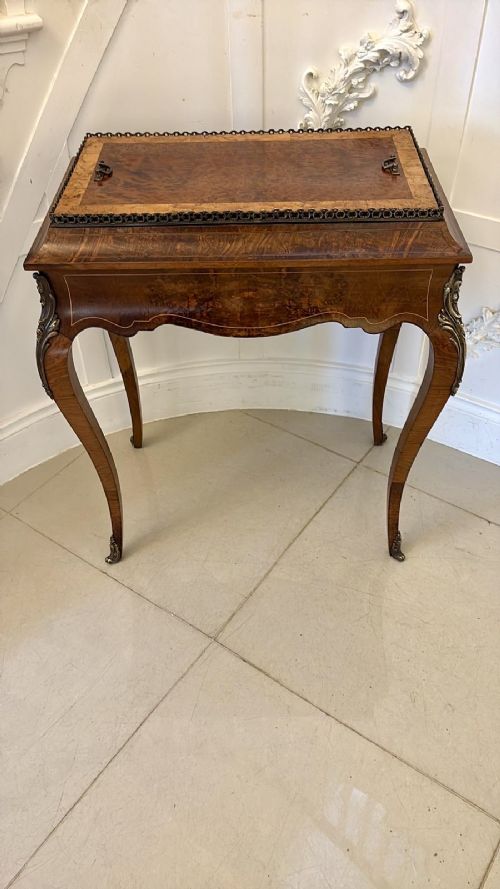
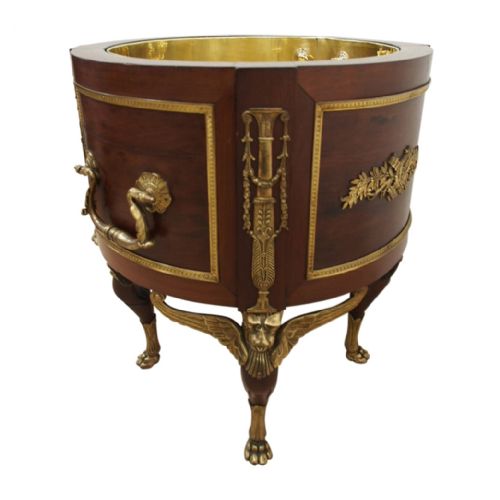
Brass mounted jardinieres take the form of table-height planters, urns, and vessels designed to hold indoor greenery. Buyers searching for brass mounted jardinieres will encounter nineteenth-century French and Victorian pieces, often combining timber frames with metal mounts.
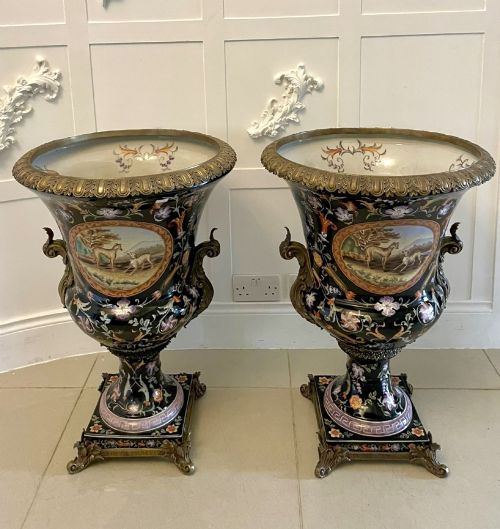
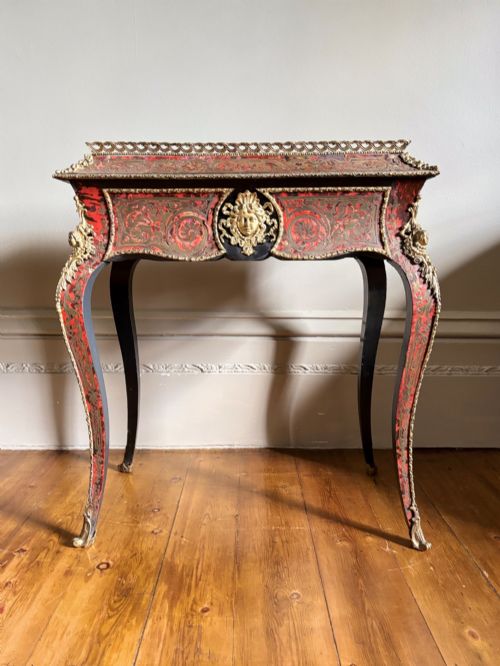
The selections span from Napoleon III boulle stands to Edwardian revival tables and porcelain urn pairs. Many function dually as wine coolers or occasional side tables alongside their primary botanical purpose.
Origin points lean heavily toward French workshops and Victorian English production, utilising rich woods and decorative metalwork. These objects range from standalone vessels to substantial occasional furniture with liners.
How they were made
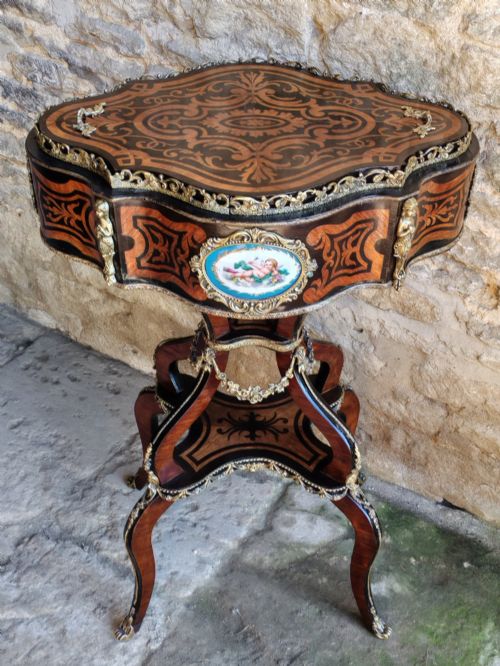
Construction relies on cabinet-making timbers such as walnut, burr walnut, kingwood, mahogany, and rosewood, frequently enhanced with marquetry or brass inlay. Ormolu and brass mountings secure the edges and provide structural detailing.
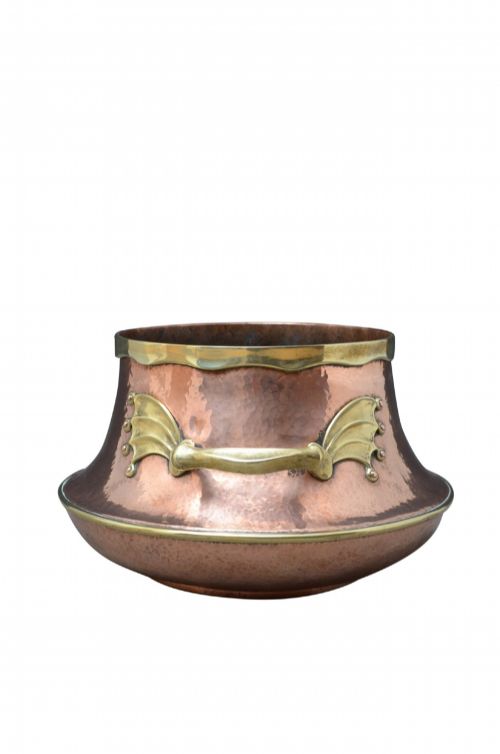
Surface ornamentation incorporates porcelain plaques, enamel, and boullework alongside hammered copper and inlaid veneers. Makers combined joinery with metal casting to produce watertight or liner-fitted plant enclosures.
Several vessels double cheerfully as wine coolers, proving that nineteenth-century plants and bottles enjoyed identical architectural standing.
What varies in quality
Quality rests in the crispness of the brass or ormolu mounts and the precision of the timber veneers. Finer examples display meticulous marquetry and heavy cast metalwork rather than stamped sheet replacements.
The integration of the planter liner and the preservation of the wood grain determine the standing of each piece. Superior execution appears in the harmony between the metal mounts and the underlying wood or porcelain.
The Brass Mounted Jardinieres Glossary
- Ormolu
- Gilt bronze mounted onto furniture and decorative objects. This technique creates a rich golden finish that defines nineteenth-century French pieces.
- Boullework
- Marquetry made from tortoiseshell and brass. It adds intricate metallic patterns to dark wood surfaces.
- Marquetry
- Inlaid wood veneers forming decorative patterns. Craftsmen apply these thin slices to the outer surfaces of tables and stands.
- Jardiniere
- An ornamental pot or stand for plants. These items range from tabletop urns to substantial pedestals.
- Kingwood
- A dense, richly grained Brazilian timber prized in cabinet-making. Its dark tones suit high-status nineteenth-century furniture.
Brass Mounted Jardinieres: Frequently Asked Questions
Were these used for real plants?
These vessels served as indoor plant holders during the nineteenth century, often containing metal or ceramic liners to protect the wood from moisture.
Wealthy households utilised them to display ferns and flowering plants within entertaining rooms.
How do I date a jardiniere?
Dating relies on the timber species, mounting style, and construction methods visible in the frame. Victorian and nineteenth-century pieces frequently display characteristic French revival or Arts and Crafts influences.
Examining the metalwork and inlay helps narrow the decade of manufacture.
Can I use them as tables?
Many surviving examples are constructed as tables with inset plant wells, making them suitable for surface use when covered or utilised carefully.
Such dual-purpose furniture functioned both as functional stands and decorative room accents.
What is the difference between a jardiniere and a planter?
The terms often overlap in nineteenth-century listings, though jardiniere typically denotes a more decorative, ornamental vessel. Planter can refer to larger or simpler utility containers designed for growing greenery.
Both categories encompass floor-standing models and tabletop pieces.