


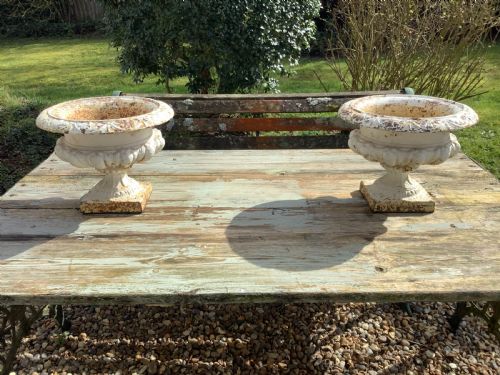


Pair of Jardinieres
When hunting for a pair of jardinieres, you are choosing matching plant vessels designed to hold indoor foliage or garden displays with formal symmetry.
Pair of Jardinieres
A pair of jardinieres comprises two matching vessels created for holding plants, flowers, or small trees within domestic interiors, conservatories, and gardens. The form emerged strongly during the nineteenth century across British, French, Dutch, and Asian workshops, accommodating the Victorian enthusiasm for interior greenery.
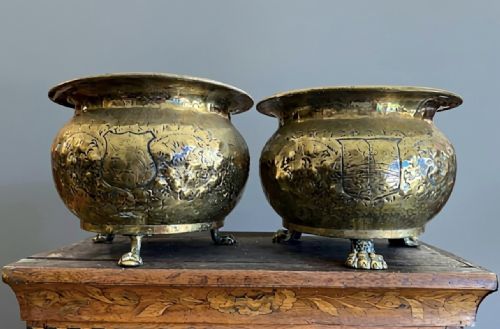
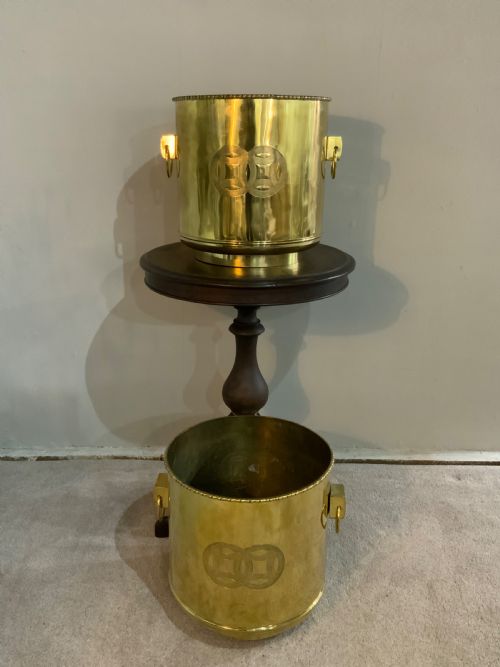
The selection ranges widely in form and origin, encompassing heavy cast iron urns, pierced brass bowls, glazed ceramic pots, and inlaid timber stands. Buyers frequently encounter nineteenth-century European pottery alongside Japanese Imari porcelain and Chinese export bronzes designed to frame architectural spaces in pairs.
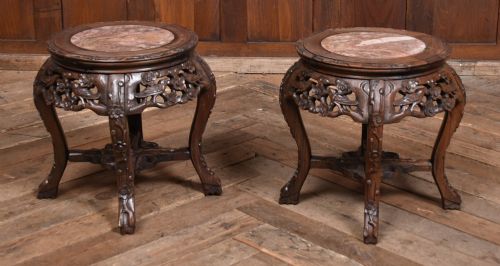
Beyond standard ceramic pots, the category includes specialised cachepots, lead tazza forms, and coopered teak tubs bound in brass. Many survive alongside matching hardwood stands or plant tables intended to elevate the vessels for display.
How they were made
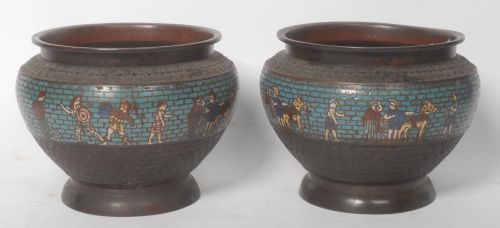
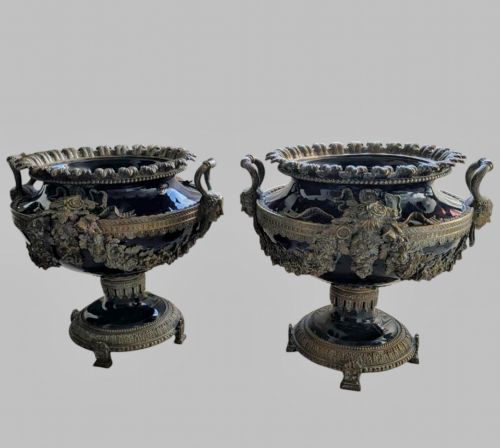
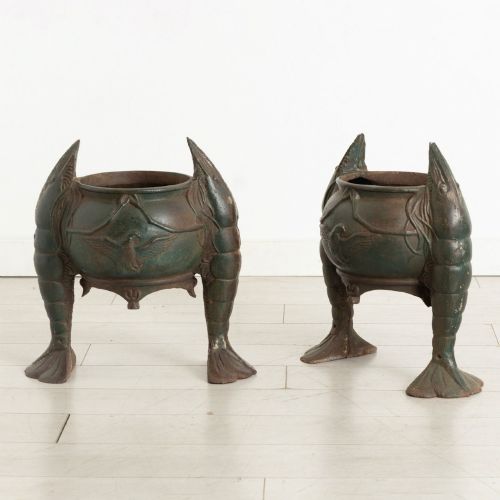
Metal vessels such as brass and bronze jardinieres relied on casting, hand-embossing, and champlevé enamel work, often incorporating dinanderie techniques for surface pattern. Cast iron examples utilised foundry moulds to produce fluted urns, shrimp motifs, and heavy garden planters.
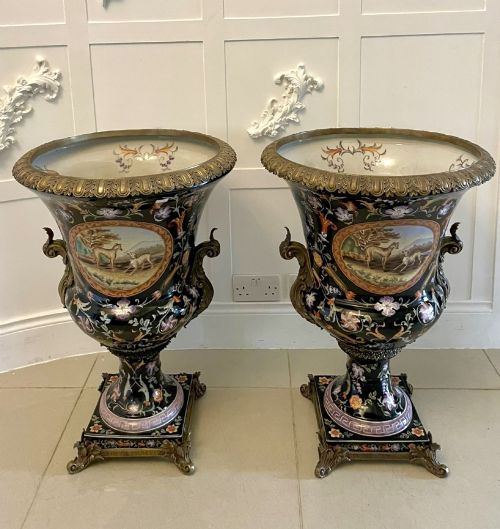
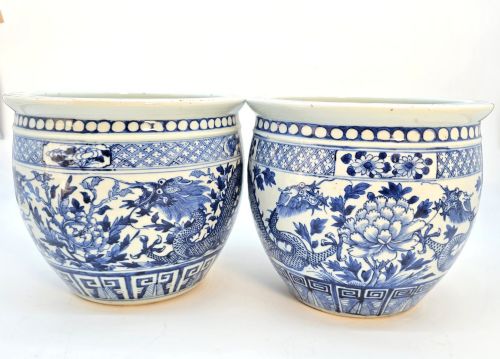
Ceramic and pottery versions utilised porcelain, faience, and majolica clays fired with blue and white glazes, hand-painted polychrome decoration, or moulded mask faces. Wooden variants employed mahogany, rosewood, walnut, and teak, frequently featuring marquetry inlay, ebonisation, or coopered stave construction.
Among the cast iron selections hide crustaceans, including a pair of planters shaped entirely like giant marine shrimp.
What varies in quality
Quality rests upon the crispness of execution in the casting, carving, or ceramic painting, where finer examples display sharp relief and deliberate brushwork. The integrity of the materials, such as heavy gauge brass, dense hardwoods, and unblemished marble or porcelain, dictates the durability and visual weight of the pair.
Coherence between the two vessels determines the success of a pair, as matched ageing, identical dimensions, and unified patination separate true pairs from later assembled matches. Original liners, mounts, and associated stands further elevate the integrity of the surviving ensemble.
The Pair of Jardinieres Glossary
- Jardiniere
- An ornamental pot or stand designed to hold plants or flowers. The term derives from the French word for gardener.
- Cachepot
- A decorative outer pot that conceals a plain flowerpot inside. These vessels traditionally lacked drainage holes to protect interior surfaces.
- Champlevé
- An enamelwork technique where recesses are carved into a metal surface and filled with vitreous paste before firing. This method produced durable coloured patterns on bronze vessels.
- Imari
- A style of Japanese porcelain featuring underglaze blue and iron red with supplementary gold. These export wares gained popularity across European interiors during the nineteenth century.
- Coopered
- Made from curved wooden staves bound together with metal hoops. This method was traditionally utilised for watertight wooden vessels such as teak tubs.
Pair of Jardinieres: Frequently Asked Questions
How were pair of jardinieres used historically?
These vessels were placed in nineteenth-century drawing rooms, halls, and conservatories to house potted ferns, palms, and flowering plants. Their matching format provided formal symmetry when flanking doorways, fireplaces, or windows.
Wealthy households utilised them to bring exterior garden aesthetics inside while protecting fine furniture surfaces from moisture through the use of internal liners or cachepots.
Can these planters be used outdoors?
Cast iron, lead, and certain stoneware or terracotta vessels were engineered to withstand exterior garden climates. They frequently appear as garden urns or terrace planters designed for year-round exposure.
Brass, copper, fine ceramics, and polished wood versions were strictly intended for interior domestic use and remain vulnerable to frost and excessive moisture.
How do I care for antique metal and ceramic vessels?
Metal surfaces in brass or bronze require gentle dusting and occasional dry cleaning to preserve their natural patination without stripping historical finishes. Enamelled and glazed ceramic pieces should be cleaned with soft cloths to avoid scratching delicate glazes.
Using modern plastic or metal liners inside the antique vessels prevents direct contact with damp soil and water, protecting the historic interior walls from active corrosion or staining.
How can I tell a true pair from a matched set?
True pairs share identical casting moulds, exact dimensions, uniform weight, and matching wear patterns developed side by side over centuries. Subtle variations in hand-painted ceramic motifs or hand-beaten metalwork often reveal individual artisan hands.
Assembled matches are created later by dealers pairing two similar single survivors, which can sometimes be identified through minor discrepancies in scale or colour.