



Georgian Style Jardiniere
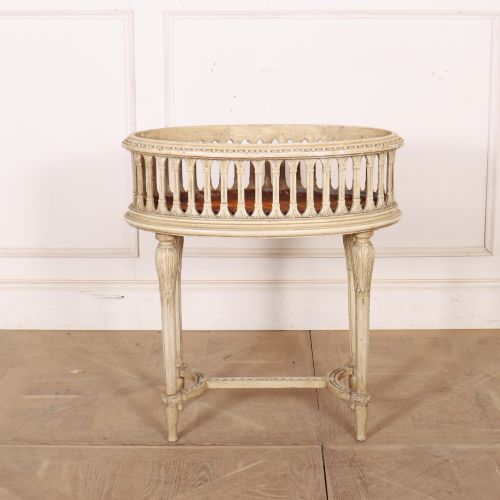
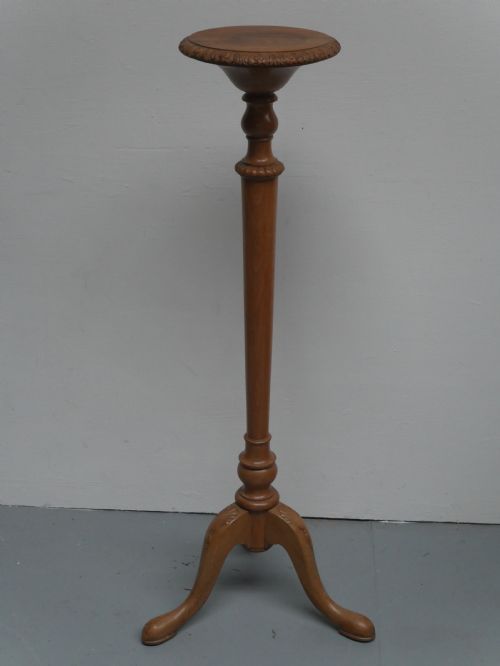
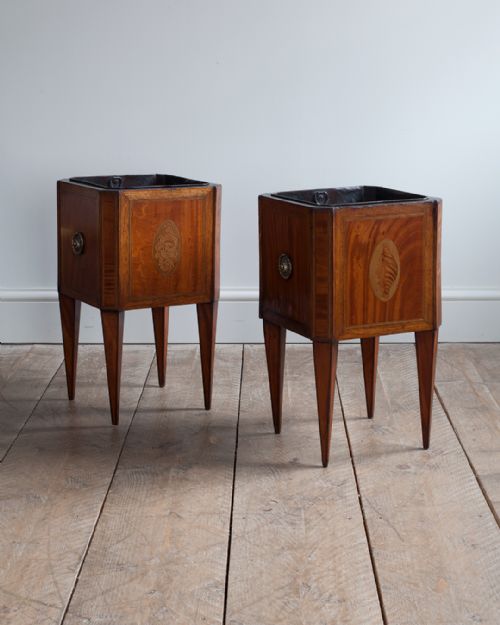
These georgian style jardiniere pieces bring classical proportion and rich timber into a room, offering a distinct way to display plants.
Georgian Style Jardiniere
A georgian style jardiniere stands as a decorative vessel for plants, drawing on the refined lines of eighteenth-century design. When searching for a georgian style jardiniere, buyers encounter forms that echo classic urns, buckets, and plant stands.
The selections span the Victorian, Edwardian, and later periods up to nineteen thirty, showing how later makers reinterpreted earlier aesthetics. These pieces appear as round planters, cellarettes, and tall stands rather than purely functional pots.
Mahogany and walnut form the backbone of these pieces, often enriched with satinwood inlay or brass bands. They serve to elevate greenery indoors, matching the formality of traditional reception rooms.
Materials and construction
Cabinetmakers built these vessels primarily in mahogany and walnut, using timber selected for grain and warmth. Structural elements often involve careful turning and carving, seen in carved stands and pedestals.
Metalwork played a key structural and decorative role, particularly through brass bands that secured wooden staves on bucket-form bodies. Paint and faux marble finishes also appear, mimicking more costly natural stones on grander wine cisterns and planters.
Listings span the nineteenth century through to nineteen thirty, uniting Victorian, Edwardian, and Georgian Revival periods.
Judging quality
Quality rests upon the crispness of the carving and the fidelity of the revival style to its eighteenth-century roots. Pieces showing nuanced mahogany grain and precise satinwood inlay stand apart from simpler utilitarian items.
Scale and ambition dictate distinction, with grander faux marble wine cisterns and heavy brass-bound cellarettes representing a more demanding level of craftsmanship than standard plant stands.
The Georgian Style Jardiniere Glossary
- Cellarette
- A lockable container originally designed for holding wine bottles, frequently adapted as a jardiniere due to its watertight lining and banded wooden construction.
- Satinwood inlay
- A decorative technique using contrasting pale exotic timber inserted into a darker carcase, popular in Edwardian and Georgian revival cabinetmaking.
- Peat bucket
- A traditional vessel with stave construction and metal hoops, used originally for hearth fuel and repurposed in revival periods as a deep plant holder.
- Neoclassical
- A style drawing inspiration from classical antiquity, featuring strict symmetry, restrained ornament, and formal architectural proportions.
Georgian Style Jardiniere: Frequently Asked Questions
What is a georgian style jardiniere used for?
These vessels serve primarily to hold potted plants and floral arrangements within domestic interiors, elevating greenery off the floor.
They function as decorative furniture pieces that combine the utility of a planter with the elegance of classical cabinetry.
How do I date a jardiniere?
Dating relies on examining the timber species, construction methods, and stylistic cues such as inlay patterns or revival motifs.
Many pieces date from the Victorian and Edwardian eras or the early twentieth century, mimicking older Georgian forms.
Are these pieces waterproof?
Many period jardinieres and cellarettes feature original metal liners or lead linings designed to contain moisture from plants.
Buyers should inspect the interior lining to determine if a protective insert is present before placing live plants inside.
What woods were used for these plant stands?
Makers predominantly used dense hardwoods like mahogany and walnut to construct the bodies and supporting stands.
Satinwood often appears as a contrasting veneer or inlay detail on Edwardian examples.