




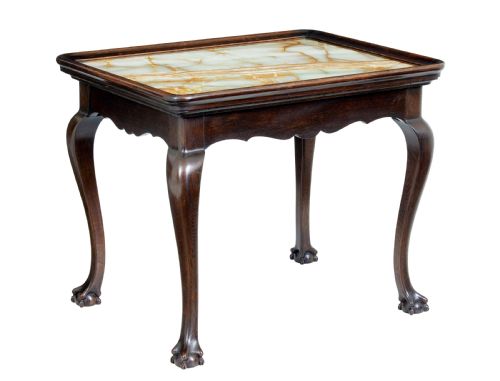

Chippendale Plant Stand
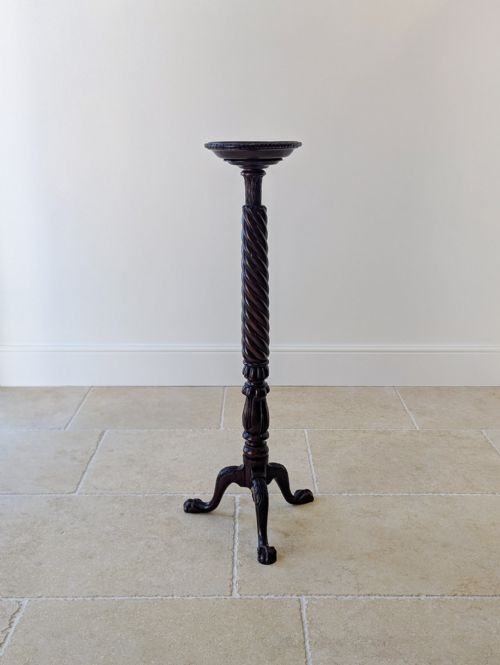
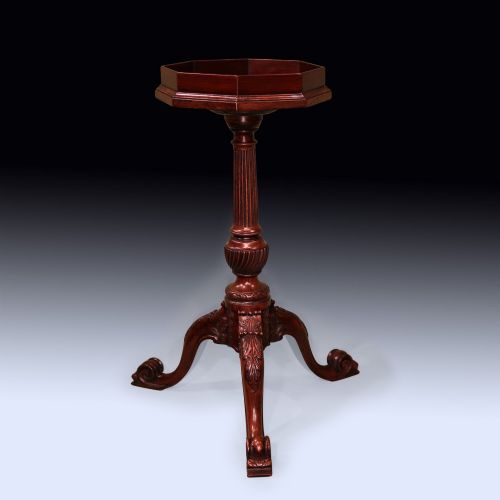
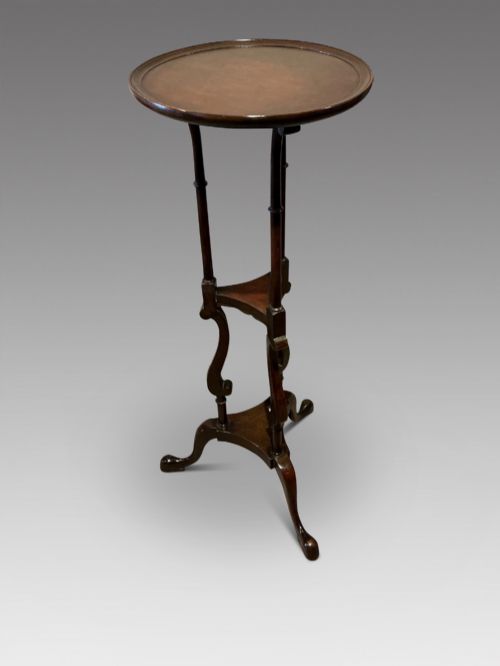
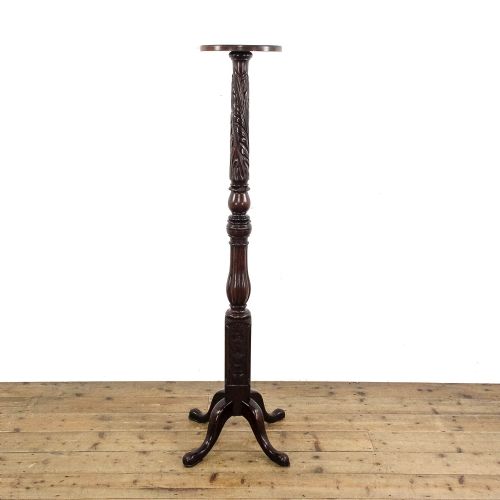
These pieces take the classic eighteenth-century forms of the chippendale plant stand and adapt them across later revivals.
Chippendale Plant Stand
A chippendale plant stand brings traditional height and architectural timberwork to domestic interiors, serving as a display piece for urns, jardinières and lamps. Buyers searching this phrase encounter examples ranging from eighteenth-century originals to nineteenth-century Victorian revivals and early twentieth-century interpretations.
The objects span multiple related forms recorded in the evidence, including torchères, kettlestands, wine tables and pedestals. Mahogany dominates the selection, accompanied by occasional oak and brass highlights.
Origins stretch from the Georgian period through the Regency and Victorian eras into the twentieth century, encompassing Georgian Revival and Chinese Chippendale styles.
Materials and construction
Makers relied principally on mahogany, shaping timber into slender columns and carved supports that define the torchère and plant stand forms. Oak appears in select pieces from the twentieth century and nineteenth century.
Brass fittings and onyx tops integrate into specific variations, adding contrasting textures to the carved wood frames. Joinery and carving techniques mirror the prevailing standards of each respective period, from eighteenth-century craftsmanship to later revival methods.
Chippendale Plant Stand Retail Price Guide 2026
Typical asking prices for chippendale plant stand among the pieces listed under this phrase on Sellingantiques today, from the lower quarter to the upper quarter. They describe what is for sale here now, not the wider market.
Listings span eight distinct periods, stretching from the 18th Century through Georgian, Regency, Victorian, and Edwardian eras up to 1930.
Judging the execution
Quality rests in the crispness of the carved details on the timber and the structural stability of the tall, slender shafts. Pieces spanning the Georgian era and later Chippendale revivals demonstrate varying degrees of sculptural depth in their pedestals and supports.
The choice of materials, such as well-figured mahogany or integrated onyx tops, distinguishes standard utility pieces from more ambitious decorative stands.
The Chippendale Plant Stand Glossary
- Torchère
- A tall, slender stand designed to elevate a lamp, candle or plant. These pieces feature prominent vertical shafts raised on stable feet.
- Kettlestand
- A small occasional table historically used for holding tea kettles near the hearth. They often share proportions with plant stands and lamp tables.
- Chippendale Revival
- A late nineteenth or early twentieth-century design movement recreating eighteenth-century forms. It draws heavily on the pattern books associated with Thomas Chippendale.
- Jardinière
- An ornamental pot or stand for holding plants and flowers. In these listings, the term often pairs with lamp torchiere descriptions.
- Wig stand
- A specialised small-scale table featuring ring tops and tripod bases designed for powdering and storing wigs. Their compact frames resemble miniature plant stands.
Chippendale Plant Stand: Frequently Asked Questions
What is a chippendale plant stand used for?
These tall stands elevate plants, lamps, and decorative vessels to add vertical interest to a room.
They function equally well as standalone sculptural elements or practical display surfaces in corners and hallways.
How do I date a plant stand?
Dating relies on identifying the stylistic markers of periods such as Georgian, Victorian, or Edwardian revivals.
Timber choice, construction methods, and the specific interpretation of Chippendale influence all point toward the era of manufacture.
Are all these stands made of mahogany?
Mahogany is the primary timber found across the vast majority of these listings.
Oak and occasional combinations involving onyx and brass also appear in pieces from the nineteenth and twentieth centuries.
What is the difference between a torchere and a plant stand?
The terms frequently overlap in antique listings to describe tall, elevated display furniture.
Torchères historically emphasised lighting while plant stands focused on displays, though their forms remain largely interchangeable today.