




Napoleon III Urns
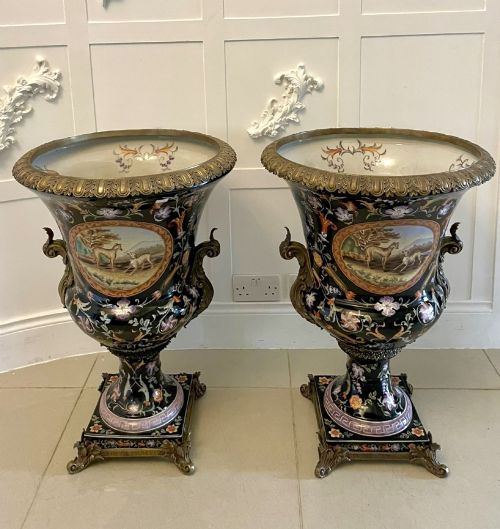
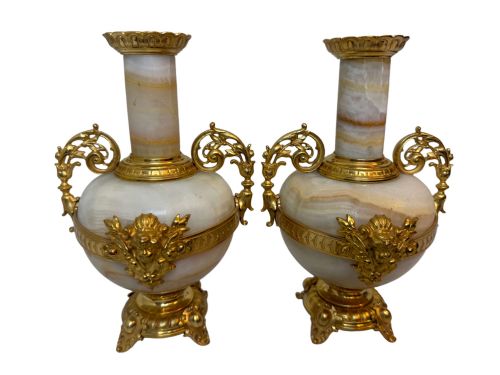
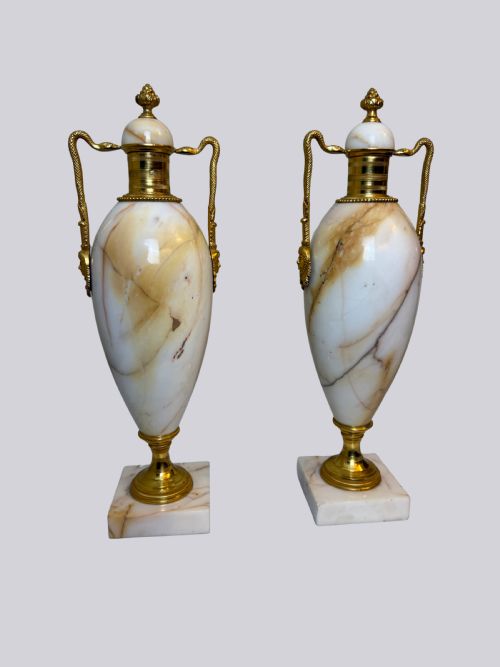
Napoleon iii urns bring a heavy French nineteenth century presence to a room through gilded metal and ceramic forms.
Napoleon III Urns
Napoleon iii urns are decorative objects that capture the ornate aesthetic of nineteenth century France, often appearing as matched pairs designed for display on mantelpieces or console tables. These pieces emerge from periods including the 1860s, 1870s, and 1880s, reflecting revivals of earlier monarchical styles alongside contemporary industrial confidence.
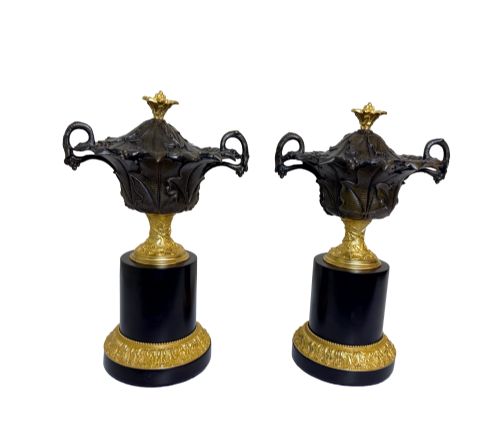
The selections available here extend beyond simple covered urns to encompass related decorative forms such as cassolettes, which double as candle holders or perfume burners, and porcelain and brass mounted jardinieres. Many of these items incorporate marble or onyx bases, anchoring the decorative upper sections with substantial stone weight.
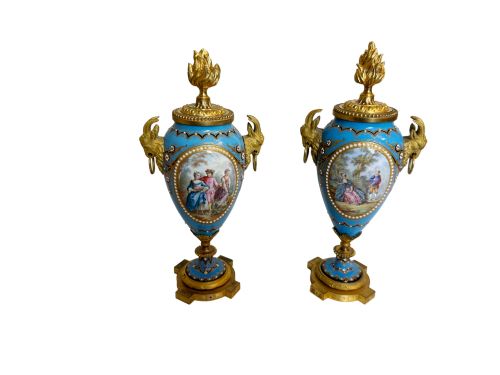
Buyers seeking napoleon iii urns frequently encounter pieces that blend ceramic bodies with metallic mounts, or total bronze and brass constructions influenced by Louis XVI and Rococo aesthetics. The forms range from turquoise and bleu celeste porcelain vessels to monumental quartz marble and gilt bronze creations.
How they were made
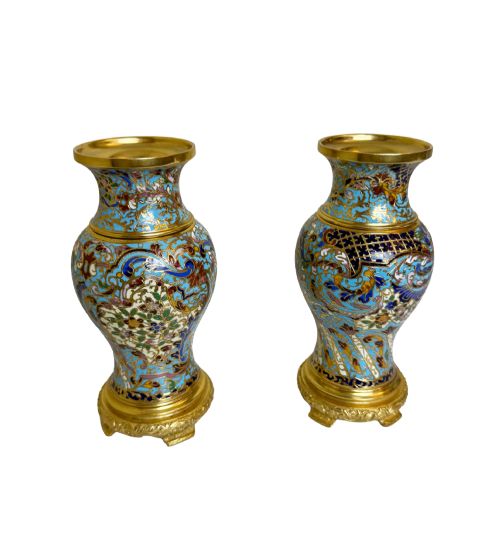
Makers constructed these pieces using a combination of cast metal and fired ceramic, mounting porcelain bodies into frames of gilt bronze or ormolu. Champleve enamel frequently adds colourful detail to the bronze surfaces, applied by cutting troughs into the metal and filling them with vitreous paste before firing.
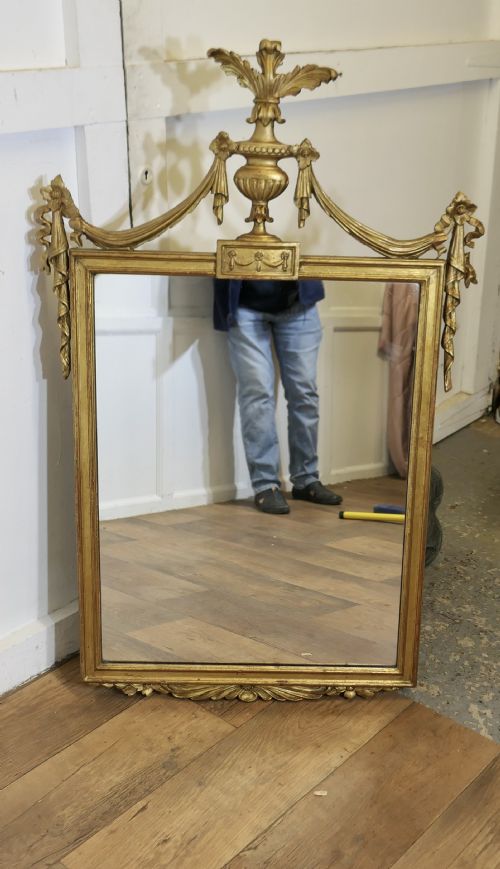
Stonework provides the structural foundation for many designs, utilising white onyx, green onyx, and rouge marble shaped into pedestals, plinths, and body elements. Wood and glass also appear in supporting roles, framing mirrors and protecting clock garnitures under domes.
The material selection spans champleve enamel, glass, onyx, and part ebonised walnut.
What varies in quality
The distinction between standard and exceptional pieces rests upon the crispness of the bronze casting and the depth of the gilding. Finer examples display sharp chisel work on the metal mounts, whereas simpler versions show softer relief and flatter surface finishes.
The integration of materials dictates the overall success of an object, particularly where porcelain meets bronze or stone meets metal. Superior items demonstrate precise alignment and secure mounting without excessive visible fixing pins.
Japy Frers·Lerolle Fres
The Napoleon III Urns Glossary
- Ormolu
- Gilded bronze used extensively for decorative mounts on furniture and ceramics. The technique involves applying a gold amalgam to a bronze base and heating it to drive off the mercury.
- Cassolette
- A decorative vase with a reversible lid that functions either as a closed urn or as a holder for a candle or perfume. These dual purpose items are characteristic of nineteenth century French interiors.
- Champleve
- An enamelling technique where troughs are dug into a metal surface and filled with coloured glass paste. The piece is then fired and polished smooth.
- Jardiniere
- An ornamental receptacle designed to hold plants or floral arrangements. In nineteenth century settings, these often featured porcelain bodies mounted in brass or bronze.
- Garniture
- A set of matching decorative objects, typically consisting of a central clock flanked by two matching vases or candelabra. These sets anchored the decor of formal nineteenth century mantelpieces.
Napoleon III Urns: Frequently Asked Questions
What are napoleon iii urns made of?
These pieces combine cast metals such as gilt bronze and brass with ceramic bodies, porcelain panels, and stone elements like marble and onyx. Enamel work in champleve techniques often adds colourful surface detail to the metal mounts.
Makers selected these durable materials to create imposing decorative objects that would retain their visual impact in formal nineteenth century interiors.
How were cassolettes used?
Cassolettes functioned as versatile decorative items with removable or reversible lids that allowed them to serve as traditional covered urns or as candle holders and perfume burners. They sat upon mantelpieces and console tables as part of matched pairs.
Their dual purpose made them popular accessories in grand French drawing rooms of the nineteenth century.
How do you style them at home?
These urns and vases work best placed symmetrically on mantelpieces, large sideboards, or dedicated pedestals where their gilded surfaces and stone bases catch the light. Pairing them with matching mirrors or clock garnitures creates a balanced display.
Allowing sufficient space around each piece ensures the intricate bronze mounts and coloured porcelain remain visual focal points in the room.
How do I date a piece?
Dating relies on stylistic clues, material combinations, and occasional maker signatures stamped into the bronze or movement components. Pieces from the 1860s to 1890s often mix Neoclassical revival forms with dense champleve enamelling and onyx bases.
Comparing the casting quality and enamel palettes against known nineteenth century production helps narrow the period of manufacture.