


Decorated Porcelain Urn Pair
These decorated porcelain urn pair pieces bring sculptural presence and hand-painted colour to a room.
Decorated Porcelain Urn Pair
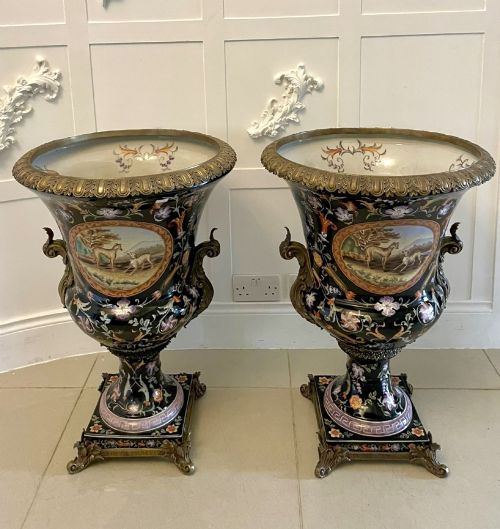
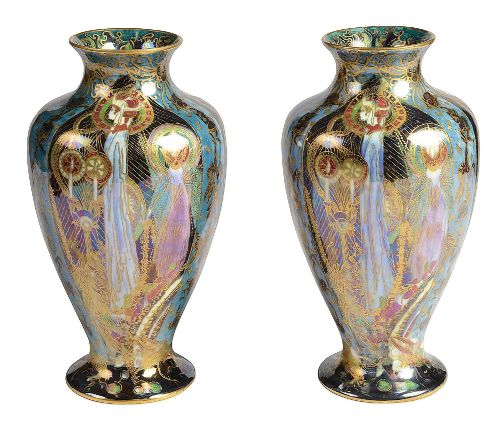
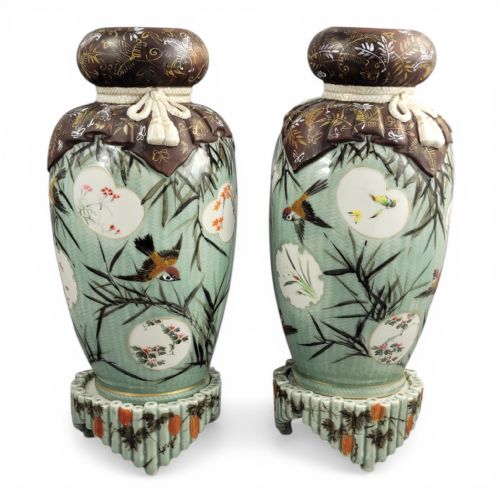
A decorated porcelain urn pair comprises matching ceramic vessels designed primarily for ornamental display rather than holding cut flowers. When you search for a decorated porcelain urn pair, you encounter matched works shaped as baluster vases, lidded vessels, jardinières, and decorative ewers.
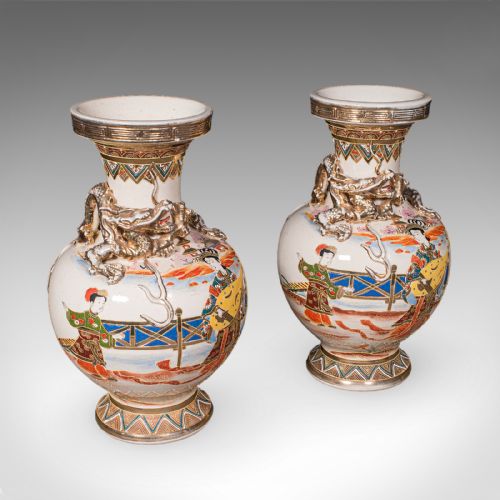
The pieces on this page span the nineteenth century, the Regency era, and the early twentieth century, taking in Victorian, Art Nouveau, and Meiji period aesthetics. French, English, Austrian, German, and Japanese workshops produced these matched sets, utilising porcelain, bone china, and earthenware.
Victorian and Meiji period examples dominate the selections, often featuring classical or botanical ornamentation. Buyers typically find matched pairs that balance symmetrical display on mantels, sideboards, or pedestals.
Materials and construction
Makers shaped fine porcelain, bone china, and earthenware bodies before applying intricate enamel paints, gold leaf, and surface gilding. Many pieces incorporate cast brass mounts, handles, or fitted original stands that complement the ceramic form.
Hand-painting and lustre techniques define the surface decoration, ranging from delicate botanical studies to complex figurative Japanese designs. Artisans fired these pigments multiple times to fuse the enamel and gold leaf securely to the glaze.
Periods represented span the Regency era, the Victorian epoch, and the early twentieth century up to nineteen-twenty.
Assessing craftsmanship and finish
Quality rests upon the crispness of the porcelain moulding, the weight and security of any brass mounts, and the precision of the hand-painted details. Finer examples show meticulous brushwork in the enamel and well-preserved gilding without rubbing.
The survival of original matching stands, lids, and symmetrical counterparts elevates a set. Artisans who maintained strict control over kiln temperatures and pigment layering produced pieces with lasting clarity of colour.
Daisy Makeig Jones·Kato Sanhei·Ernst Wahliss·Flight Barr And Barr
The Decorated Porcelain Urn Pair Glossary
- Baluster
- A tall vase form characterised by a rounded lower body that tapers towards a narrow neck and flares at the rim. This shape provides a stable and balanced profile for display.
- Jardiniere
- An ornamental pot or vessel designed to hold plants or floral arrangements. In matched pairs, they offer a wider opening than traditional urns.
- Lustre
- A metallic or iridescent glaze finish applied to ceramics to create a reflective sheen. It reflects light differently depending on the viewing angle.
- Ewer
- A large jug with a wide spout and a curved handle, traditionally used for pouring water. Decorative versions serve purely aesthetic functions.
- Gilding
- The application of gold leaf or gold powder to the surface of porcelain or metal mounts. It highlights specific decorative motifs.
Decorated Porcelain Urn Pair: Frequently Asked Questions
Where should I display a decorated porcelain urn pair?
These matched vessels suit prominent symmetrical positions such as mantelpieces, entrance hall consoles, or matching pedestals.
Because they function primarily as decorative objects rather than utility items, keep them away from busy household traffic where accidental knocks might occur.
How do I clean decorated porcelain urns safely?
Dust the surfaces gently with a soft, dry brush to remove particles without disturbing delicate enamel or raised gilding.
Avoid using liquid cleaners, abrasive cloths, or immersion in water, as moisture can damage historical glazes and metallic mounts.
How can I tell Victorian pieces from Meiji period pieces?
Victorian examples often draw on European revival styles like Rococo, featuring heavy gilding, brass mounts, and botanical motifs.
Meiji period Japanese pieces typically display distinct Satsuma or Seto ceramic bodies with intricate figurative or natural storytelling scenes.
Why do some urns have matching stands?
Certain monumental or decorative pieces were created with integral or matching original stands to elevate their visual presence.
These stands provide architectural balance to heavy porcelain bodies and ensure the base remains protected from surface friction.