


Louis XV Style Jardiniere
A louis xv style jardiniere brings sculptural planting indoors with unmistakable rococo flair, combining opulent mounts and curved timber for dramatic floral display.
Louis XV Style Jardiniere
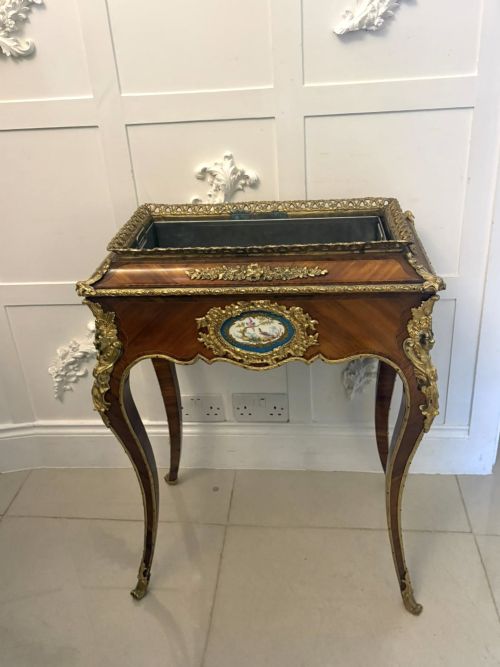
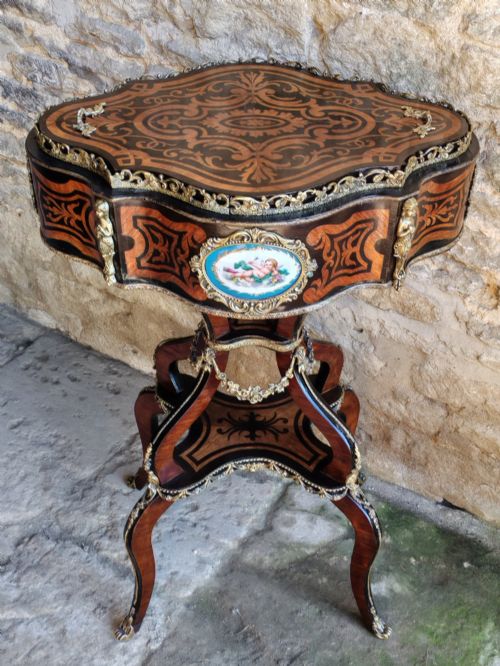
When searching for a louis xv style jardiniere, collectors encounter decorative plant containers and planter tables rooted in nineteenth-century revival periods. These pieces take the form of freestanding stands, table-top planters, and combined wine coolers designed for grand nineteenth-century interiors.
The pieces on this page span the Victorian era and the broader nineteenth century, alongside early twentieth-century examples. Common configurations include porcelain-plaqued planters and tall stands that elevate greenery within a room.
Materials range from rich kingwood and burr walnut to ebonised timber, complemented by substantial metal mounts. Many items reflect French manufacturing traditions from the eighteen-fifties onwards.
Assessing craftsmanship
The quality of a louis xv style jardiniere rests upon the crispness of the gilt metal mounts and the depth of the timber figuring. Finer examples display meticulously hand-chased ormolu with sharp definition, whereas simpler items rely on routine casting.
Construction details such as precise veneer matching, heavy timber carcases, and the original ceramic or metal internal liners elevate certain pieces. The integration of hand-painted porcelain plaques also distinguishes more ambitious workshop production from standard commercial output.
Louis XV Style Jardiniere Retail Price Guide 2026
Typical asking prices for louis xv style jardiniere among the pieces listed under this phrase on Sellingantiques today, from the lower quarter to the upper quarter. They describe what is for sale here now, not the wider market.
Listings feature pieces utilising ormolu, kingwood, walnut, and porcelain across the nineteenth century and Victorian period.
The Louis XV Style Jardiniere Glossary
- Ormolu
- Gilded bronze applied as decorative mounts and feet to furniture and decorative objects. The technique involves mercury gilding on older pieces or electroplating on later revivals.
- Kingwood
- A dense, richly figured Brazilian timber valued for its contrasting dark violet and golden-brown tones. It appeared frequently in high-end nineteenth-century cabinet work.
- Jardiniere
- An ornamental receptacle designed to hold growing plants or flowers indoors. They range from low table centrepieces to tall floor-standing pedestals.
- Marquetry
- The art of applying pieces of veneer to a structure to form decorative patterns and pictures. Craftsmen used contrasting timbers to create floral and geometric designs.
- Rococo Revival
- A nineteenth-century design movement mimicking the asymmetrical scrolls, C-curves, and naturalistic motifs of the mid-eighteenth-century French court.
Louis XV Style Jardiniere: Frequently Asked Questions
How were these planters used historically?
Owners placed them in drawing rooms and conservatories to display ferns and flowering plants during social gatherings.
Some dual-purpose examples also functioned as wine coolers, filled with ice to chill bottles at formal dinners.
Can I plant directly into the jardiniere?
Direct planting is generally discouraged unless a waterproof metal or ceramic liner is present to protect the surrounding timber.
Most pieces rely on removable inserts specifically designed to catch drainage water and safeguard the antique structure.
How do I care for the wood and ormolu?
Maintain the finish by dusting with a dry cloth and avoiding direct sunlight or damp environments that threaten the veneer.
Ormolu mounts require gentle cleaning without abrasive polishes to preserve the original gilt surface.
How can I tell the period of these pieces?
Examination of the internal construction, timber preparation, and the assembly methods of the metal mounts usually reveals the manufacturing era.
Revival pieces from the nineteenth century frequently employ machine-sawn timbers alongside hand-finished mounts.