


Ormolu Jardiniere Table
An ormolu jardiniere table combines display furniture and plant housing, bringing gilded mounts and timber veneer into nineteenth-century rooms.
Ormolu Jardiniere Table
An ormolu jardiniere table functions primarily as a decorative side table or plant stand, merging a display surface with an integrated planter liner. You encounter these most frequently in nineteenth-century French and Victorian forms, often styled after the reigns of Louis XV and Louis XVI.
The evidence shows these pieces operating under multiple descriptions, serving as side tables, wine coolers, cellarettes and occasional tables alongside their plant-holding purpose. Walnut, burr walnut, kingwood and ebonised wood dominate the structural timbers recorded across the listings.
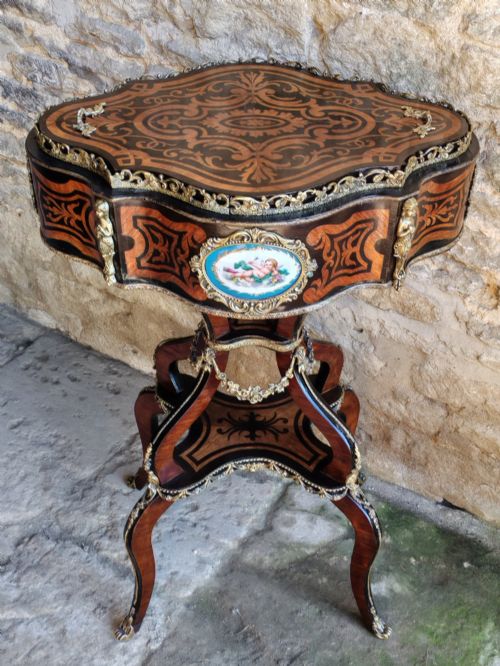
Makers and designers from the nineteenth century favoured elaborate veneer work, incorporating marquetry and parquetry alongside porcelain plaques and Sevres-type decorations. The resulting forms range from free-standing stands to table-top planters equipped with gilt metal mounts.
Materials and Construction Techniques
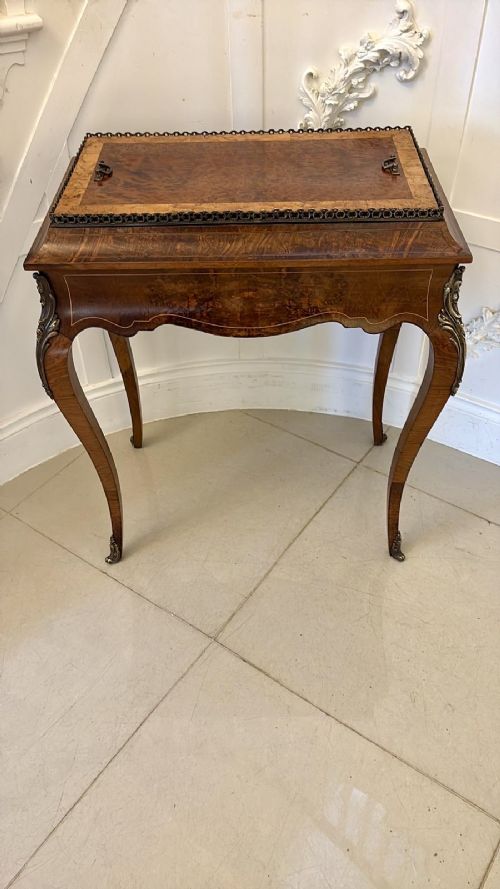
Cabinet makers built the foundational carcases using dense hardwoods like walnut, mahogany and satinwood, then applied decorative veneers including kingwood, burr walnut and aboyna. Marquetry and parquetry patterns frequently adorn the surfaces, creating geometric and floral designs across the tabletops and sides.
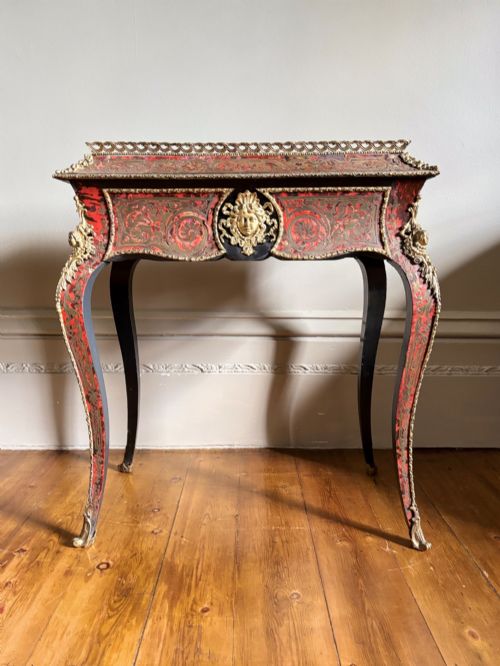
Ormolu and gilt metal mounts provide structural definition and decorative enrichment, outlining panels and framing corners. Craftsmen cast and gilded these bronze or brass elements to catch the light against dark timbers and porcelain plaques.
Many of these elegant plant stands doubled as wine coolers, proving that nineteenth-century hosts took their indoor foliage and their claret equally seriously.
Distinctions in Quality
The precision of the veneer work and the crispness of the cast ormolu mounts set the finest examples apart from standard production. Richly figured timbers like burr walnut and kingwood paired with detailed marquetry indicate higher workshop standards.
The integration of hand-painted porcelain plaques and cut glass elements adds considerable refinement to the piece. Construction depth, such as heavy timber carcases versus lighter framing, dictates the enduring stability of each table.
The Ormolu Jardiniere Table Glossary
- Ormolu
- Gilded bronze or brass mounts applied to furniture. This technique involves mercury gilding on nineteenth-century pieces to achieve a durable golden finish.
- Jardiniere
- An ornamental pot or stand for holding plants or flowers. In these tables, the container forms an integral part of the furniture top.
- Marquetry
- Decorative veneer work forming pictures or patterns using various woods. Craftsmen assemble thin slices of timber to create intricate surface designs.
- Parquetry
- Geometric mosaic woodwork used for floors and furniture surfaces. It creates repeating patterns such as cubes or chequers from contrasting wood veneers.
- Boulle
- Marquetry technique utilising tortoiseshell and brass inlay. Named after French cabinet maker André-Charles Boulle, it appears on nineteenth-century revival pieces.
Ormolu Jardiniere Table: Frequently Asked Questions
What is an ormolu jardiniere table used for?
These pieces hold potted plants or floral arrangements within a waterproof liner integrated into the table top. They also function as decorative side tables or occasional tables in reception rooms.
Historically, similar forms doubled as wine coolers or cellarettes during dining occasions. The dual purpose made them versatile furnishings for nineteenth-century interiors.
How do I identify a Victorian ormolu jardiniere table?
Look for characteristic nineteenth-century timber choices such as walnut, kingwood, mahogany and ebonised wood. The presence of gilt bronze or ormolu mounts often combined with marquetry inlay points directly to this era.
French revival styles, particularly Louis XV and Napoleon III designs, dominate the decorative vocabulary. Many examples also feature porcelain plaques or parquetry panels.
Are these tables free-standing or designed for walls?
Most recorded examples are free-standing furniture pieces finished on all sides for central room placement. Table-top versions also exist, designed to sit upon existing surfaces rather than standing on their own legs.
Planter stands and side table variants are built to support their own weight independently. Their finished backs and detailed mounts allow viewing from any angle in a room.
What woods were used to make these tables?
Cabinet makers utilised a foundation of solid timber, overlaying it with decorative veneers like burr walnut, kingwood, satinwood and aboyna. Ebonised wood also appears frequently in nineteenth-century interpretations.
Contrasting timbers facilitate intricate marquetry and parquetry patterns across the surfaces. These natural grain variations give each piece its distinct visual character.