


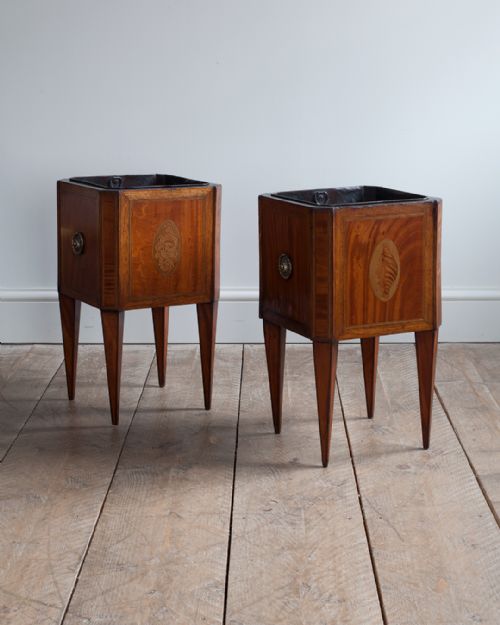


Inlaid Wood Jardiniere
An inlaid wood jardiniere brings natural greenery indoors with refined decorative character.
Inlaid Wood Jardiniere
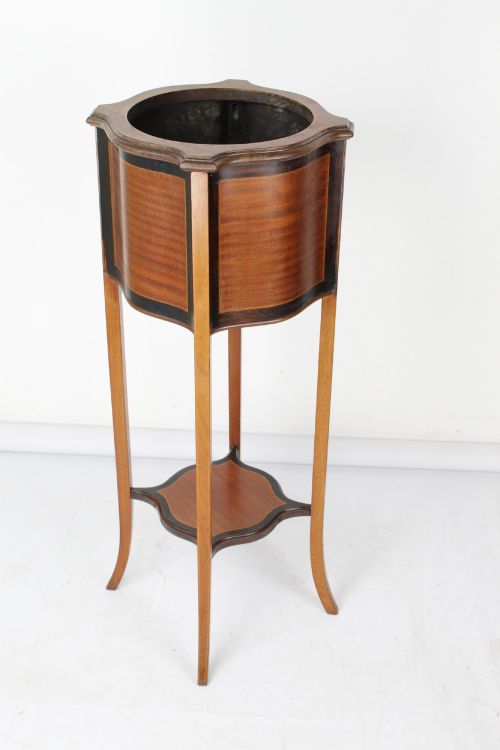
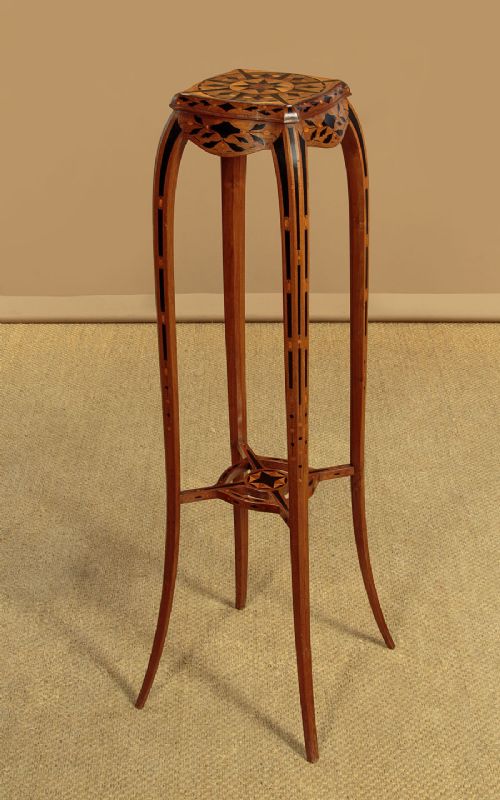
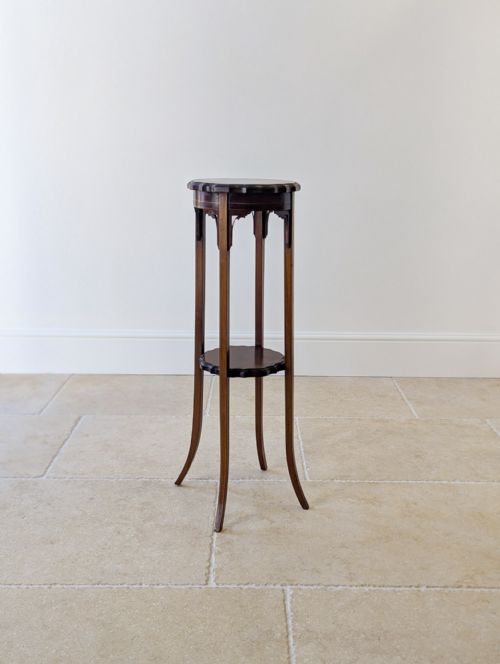
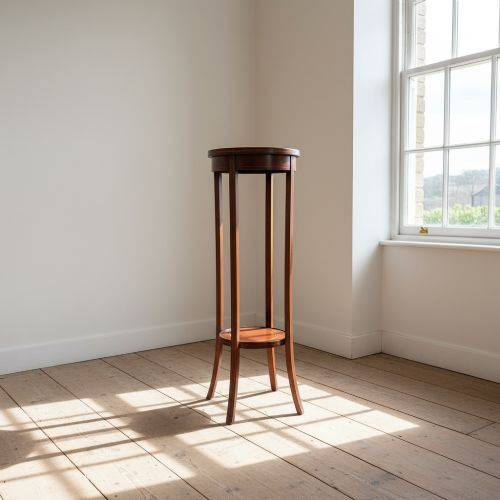
An inlaid wood jardiniere is a decorative stand or vessel designed to hold potted plants within domestic interiors. These pieces appear frequently from the Edwardian period and the nineteenth century, taking forms such as plant stands, torcheres, and pedestal planters.
The most common versions on this page are Edwardian mahogany plant stands featuring delicate contrasting inlay work. Other frequent forms include French planters and occasional specialised vessels like peat buckets or tea stoves adapted for botanical displays.
Makers and designers drew upon various stylistic influences, ranging from straightforward Edwardian and Georgian interpretations to elaborate French Belle Epoque and Louis XVI Revival aesthetics. A small number of examples extend into diverse regional styles, such as Chinese hongmu stands.
How they were made
Craftsmen built the primary structures using timbers like mahogany, walnut, satinwood, and rosewood. These foundational woods provided stable support for both freestanding plant stands and table-style jardiniere vessels.
Decoration relied heavily on precise woodworking techniques, incorporating satinwood, boxwood, and specimen wood inlay. Finer examples integrated elaborate marquetry patterns, mother-of-pearl details, ebonized finishes, and cast ormolu mounts.
Periods represented span from Victorian and nineteenth-century designs through the Edwardian era up to the nineteen-thirties.
What varies in quality
Quality rests significantly on the precision and complexity of the timber selection and inlay work. Pieces featuring intricate marquetry panels, multi-wood banding, or specialised exotic timbers demonstrate superior craftsmanship compared to plain constructions.
Structural complexity also distinguishes the range, with matching pairs, tiered stands, and integrated metal or brass liners representing higher tiers of production. The integration of quality mounts and secondary decorative elements further elevates a piece.
The Inlaid Wood Jardiniere Glossary
- Jardiniere
- An ornamental pot or stand for holding plants or flowers. It typically sits on the floor or a dedicated pedestal.
- Torchere
- A tall, slender stand or candlestick designed to elevate a plant, urn, or light source. These pieces emphasise vertical presence in a room.
- Marquetry
- The art and craft of applying decorative veneer pieces to a structure to form intricate designs. This technique frequently utilises contrasting woods.
- Satinwood
- A durable, lustrous timber native to India and Sri Lanka, prized for its golden yellow sheen. It is commonly used for contrasting stringing and inlay details.
- Ormolu
- Gilded bronze used for decorative mounts on furniture and decorative objects. It provides metallic contrast against dark or ebonized woods.
Inlaid Wood Jardiniere: Frequently Asked Questions
What is an inlaid wood jardiniere used for?
These pieces served primarily to display potted plants and floral arrangements within formal rooms, protecting interior surfaces from water and soil. They lifted greenery into the line of sight as decorative furnishings.
In addition to plant display, some versatile forms functioned as tea stoves, waste paper bins, or specialised holders for peat and knitting.
How do I date an inlaid wood jardiniere?
Dating relies on identifying the prevailing timber choices, construction methods, and decorative styles characteristic of specific eras. Edwardian examples often feature light mahogany and satinwood stringing, whereas nineteenth-century pieces may show heavier proportions or French revival influences.
Secondary materials such as brass liners, ormolu mounts, and specific inlay motifs provide further chronological clues when compared against known period standards.
Where should I place a plant stand?
Plant stands and torcheres suit corners, hallways, and window spaces where they can receive adequate light while remaining stable. Their vertical profile makes them effective for utilising empty floor space.
Pairing matching stands on either side of a fireplace or doorway creates symmetry in larger reception rooms and grand hallways.
How do I care for antique wood furniture?
Maintain antique surfaces by keeping them away from direct sunlight and sudden humidity changes, which can cause timber to split or warp. Regular dusting with a soft, dry cloth preserves the finish without abrasive chemical buildup.
Protect the internal compartments of plant stands by using proper saucers or waterproof liners to prevent moisture damage to the wooden bases.