


Victorian Floral Marquetry Stand
A victorian floral marquetry stand brings together intricate botanical wood veneers and domestic display surfaces from the nineteenth century.
Victorian Floral Marquetry Stand
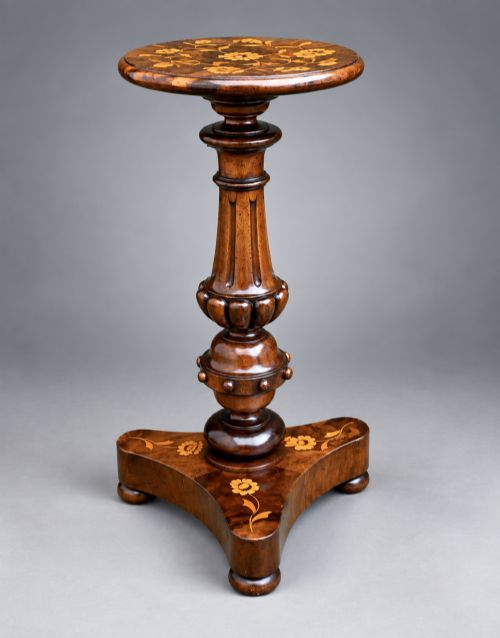
A victorian floral marquetry stand comprises smaller decorative items such as occasional tables, plant stands, lamp tables, and etageres produced during the nineteenth century. These surfaces typically combine utility with elaborate plant and flower patterns formed from contrasting timber veneers.
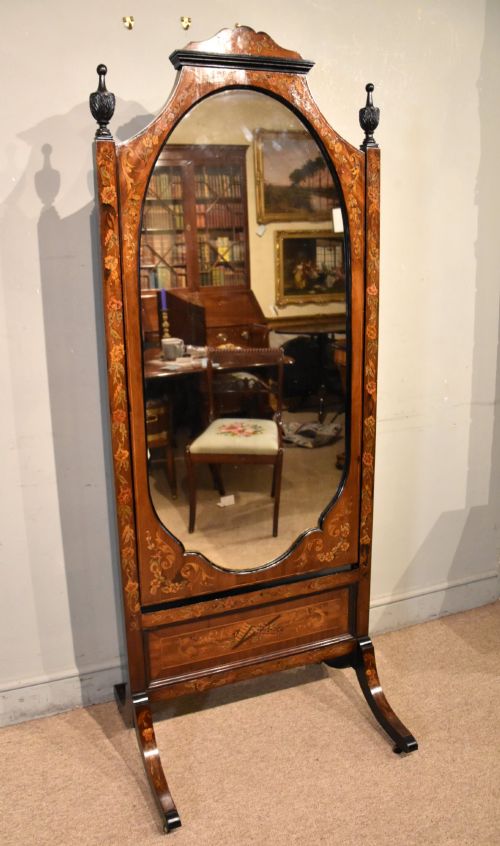
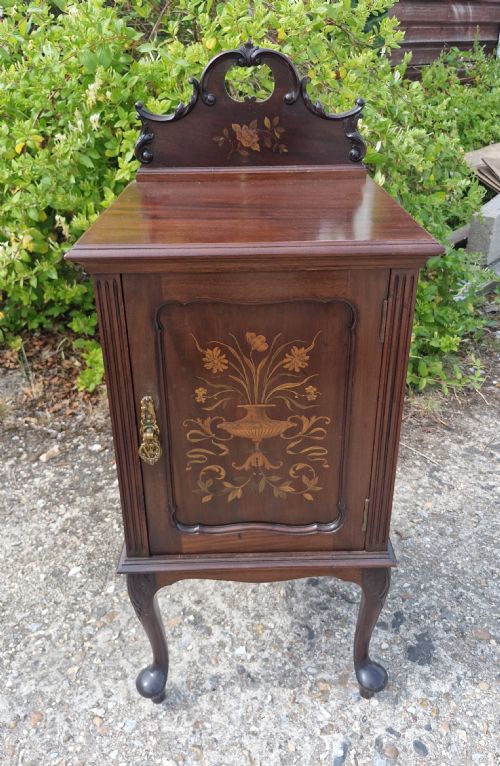
The archive shows that larger case furniture also carried these floral patterns, but smaller stands and display tables dominate current listings. Buyers encounter pieces spanning several decades of the Victorian era, alongside related items from French and Dutch design traditions.
Makers utilised various forms ranging from multi-tiered whatnots and jardiniere tables to tripod lamp tables. Each piece serves primarily as a decorative platform for ornaments or plants while showcasing detailed wood inlay.
Materials and construction
Walnut, rosewood, mahogany, and satinwood form the primary structural and veneer timbers across these pieces, often supported by burr walnut figure. Marquetry veneer requires cutting thin sections of diverse coloured woods to assemble pictorial floral motifs before application to a carcase or table top.
Metal mounts in brass and ormolu frequently accent the woodwork, particularly on pieces influenced by French styles. Bone inlay appears on specific Italian examples, adding tonal contrast to the darker ebonised or walnut grounds.
Even a humble towel rail received the full floral marquetry treatment in the Victorian household.
Assessing quality
The standard of a victorian floral marquetry stand rests upon the precision of the veneer work and the choice of underlying timber. Superior examples exhibit tightly fitted floral motifs with minimal filler in the joints between contrasting woods.
The integration of cast brass or ormolu mounts and the selection of figured burr walnut distinguish more ambitious workshop output from simpler utilitarian tables. Secondary details like multi-tiered construction or gallery rails indicate higher tier production.
Edwards & Roberts
The Victorian Floral Marquetry Stand Glossary
- Marquetry veneer
- The technique of applying thin decorative wood slices to a surface to create pictorial patterns. These floral designs distinguish the category from simpler veneered furniture.
- Ormolu
- Gilded bronze mounts applied to furniture edges and legs. This material provides metallic contrast against dark woods like walnut.
- Etagere
- A set of open shelves for displaying small objects. This form appears frequently among nineteenth-century side stands.
- Jardiniere table
- A stand incorporating a container for holding plants or flowers. These items combine waterproof liners with decorative marquetry tops.
- Whatnot
- A multi-tiered piece of furniture designed for storage and display. Victorian examples often incorporate corner brackets and turned supports.
Victorian Floral Marquetry Stand: Frequently Asked Questions
What is a victorian floral marquetry stand used for?
These pieces function primarily as decorative surfaces for holding lamps, small ornaments, or plants within a room. Their elaborate floral veneers mean they serve as visual focal points as much as functional furniture.
Historically, they occupied parlours and drawing rooms where households displayed prized decorative objects to visitors. Today, collectors utilise them in similar fashion as accent tables in living spaces.
How do I care for wood marquetry?
Preserving these surfaces requires stable indoor humidity and protection from direct sunlight, which fades delicate fruitwood veneers. Gentle dusting with a dry cloth keeps the surface clean without moisture damage.
Avoid placing damp items directly onto the antique timber, particularly on planter tables where liners protect the internal woodwork from water.
How can I tell the period?
Nineteenth-century pieces display characteristic timber selections like burr walnut, rosewood, and mahogany alongside specific revival styles. Construction methods such as hand-cut veneer work and traditional joinery help confirm the era.
Earlier Victorian pieces from the mid-century often feature French or Italian design influences, while late nineteenth-century items may show simpler cabinet construction.
Where were these stands made?
Workshop production centred in British cabinet-making hubs, though many pieces reflect French revival aesthetics or originate from continental makers. Etagere and jardiniere forms frequently follow French design conventions.
Italian and Dutch workshops also exported marquetry and bone-inlaid tables to the British market during the nineteenth century.