


Nineteenth Century Planter Table
A nineteenth century planter table brings structural elegance to botanical displays, combining display surfaces with functional waterproof wells for indoor greenery.
Nineteenth Century Planter Table
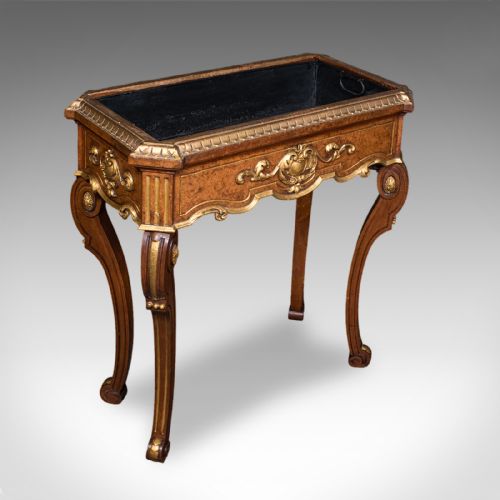
A nineteenth century planter table unites the utility of a jardiniere stand with the domestic refinement of a side or lamp table. These pieces function primarily to support potted plants and floral arrangements within principal reception rooms.
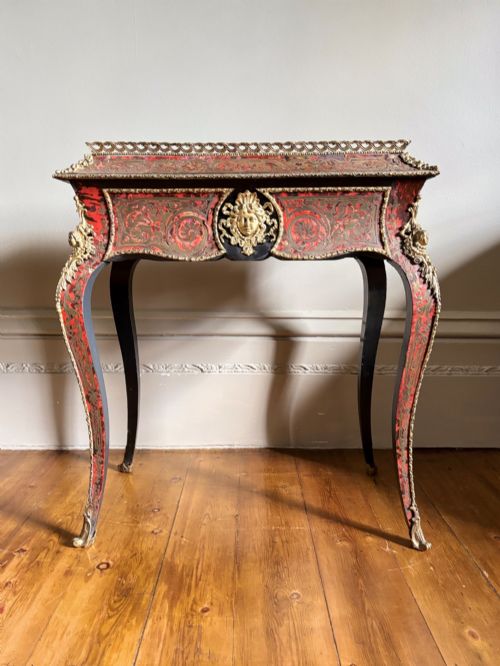
The selection on this page demonstrates varied geographic origins and stylistic influences, encompassing French marquetry, English walnut, and Chinese carved hardwood. Forms range from dedicated jardiniere stands to hybrid side tables incorporating removable liners.
Makers of the period utilised domestic timbers alongside exotic veneers, incorporating metal liners to protect the wooden framework from moisture. The forms bridge the gap between heavy garden furniture and delicate interior occasional tables.
Materials and construction
Construction relies upon cabinet timbers such as walnut, mahogany, burr walnut, and kingwood, frequently enhanced by contrasting marquetry inlay or ebonised wood. French pieces frequently employ elaborate Boulle work or gilt metal mounts alongside burr veneers.
Support frames incorporate turned legs, carved hardwood stands, or ornate ormolu mounts depending on the regional aesthetic. Hardwood and brass components provide the structural integrity required to bear the weight of damp soil and dense ceramic pots.
Some planter tables double as decanter caddies, proving that Victorians expected their flora to socialise.
Evaluating craftsmanship
Quality reveals itself in the precision of the marquetry, the crispness of the wood carving, and the integration of the metal liners within the timber frame. Superior examples demonstrate thoughtful grain matching across burr walnut or kingwood surfaces.
Structural refinement separates standard utilitarian stands from reception-room furniture, visible in the handling of turned legs, Ormolu mounts, and joined corners. The survival of original liners and internal fittings elevates the integrity of the piece.
The Nineteenth Century Planter Table Glossary
- Jardiniere
- An ornamental pot or stand for holding plants or flowers. It forms the primary functional well of the planter table.
- Ormolu
- Gilded bronze or brass applied as decorative mounts on furniture. It accentuates the contours of French revival and Napoleon III pieces.
- Marquetry
- Decorative veneer work using various woods to create pictorial or geometric patterns. It decorates the tops and skirts of many nineteenth century examples.
- Boulle
- A form of marquetry utilising brass and tortoiseshell developed in France. It appears on Napoleon III stands.
- Kingwood
- A dense, heavily figured Brazilian timber utilised for high-end cabinet making. It provides a rich, dark surface for inlaid tables.
Nineteenth Century Planter Table: Frequently Asked Questions
What is a planter table used for?
These tables hold indoor plants and floral displays in domestic interiors, serving as both a decorative centrepiece and a functional stand.
The waterproof well contains moisture while the surrounding surface acts as a traditional side or lamp table.
How do I identify a Victorian piece?
Victorian examples frequently utilise walnut, burr walnut, or inlaid kingwood, often reflecting French revival or Chinese export influences.
Construction details and timber choices align with mid to late nineteenth-century cabinet making standards.
Were these tables made in France?
French workshops produced numerous jardiniere stands and planter tables during the nineteenth century, employing marquetry and gilt metal mounts.
Napoleon III and Rococo revival styles dominate the continental output found within these listings.
How do I care for wood and brass?
Protect wooden surfaces from standing water by ensuring interior liners remain sealed and free from leaks during watering.
Apply gentle maintenance to brass mounts and polished veneers without harsh chemical cleaning agents.