



French Planter Stand
A French planter stand brings architectural elegance and botanical display together, offering a refined focal point for interior spaces.
French Planter Stand
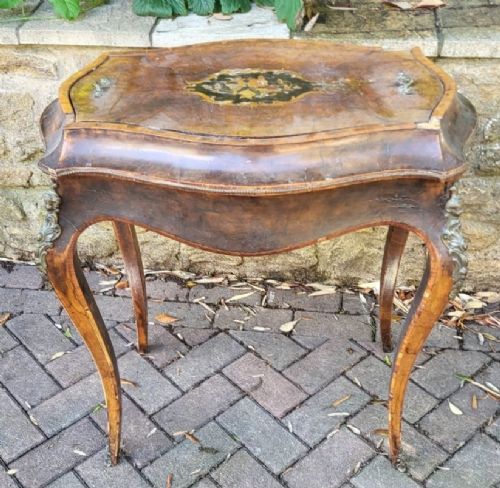
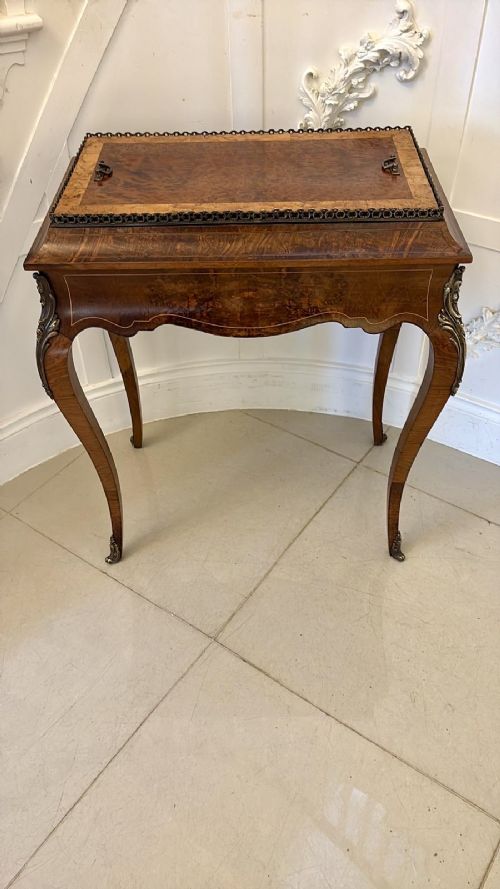
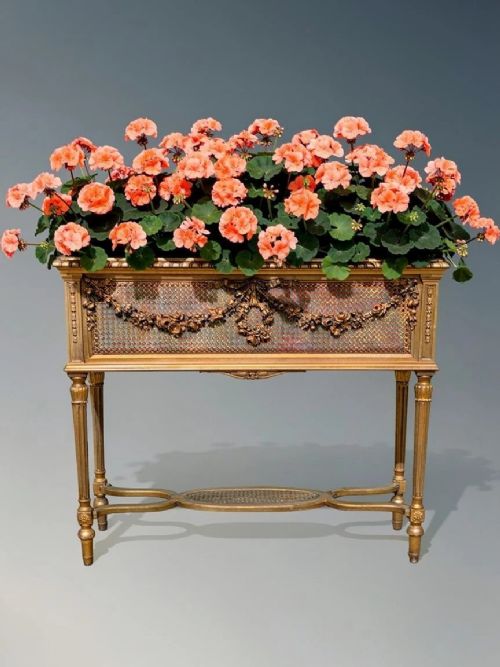
A French planter stand serves as a decorative vessel for plants and flowers, often doubling as a wine cooler or side table. These pieces emerge in various forms from the nineteenth century onward, reflecting periods such as the Regency, Victorian, and Napoleon III eras.
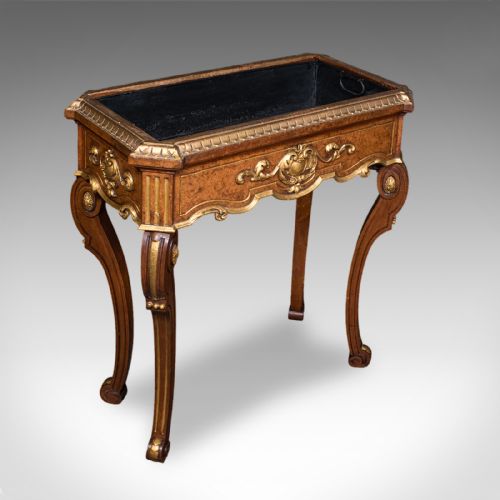
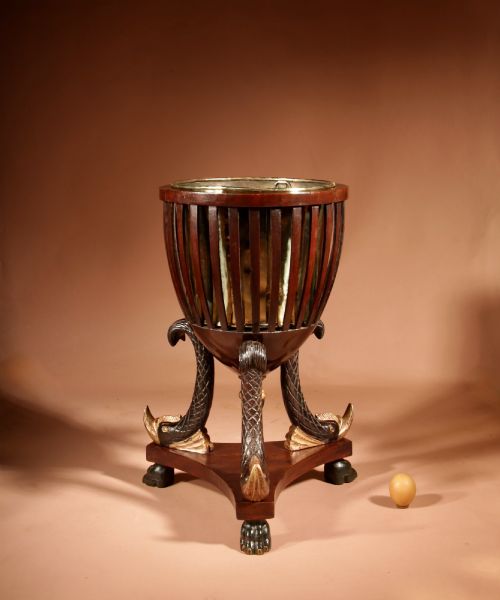
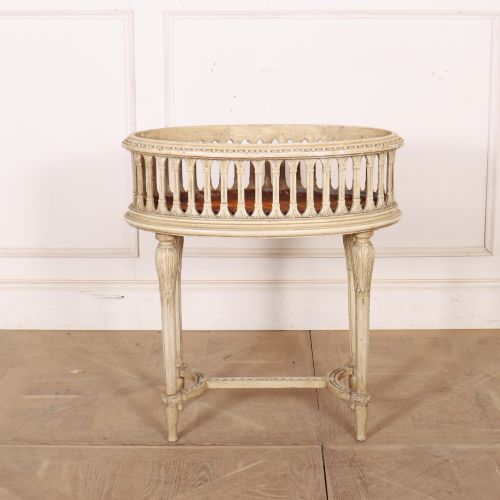
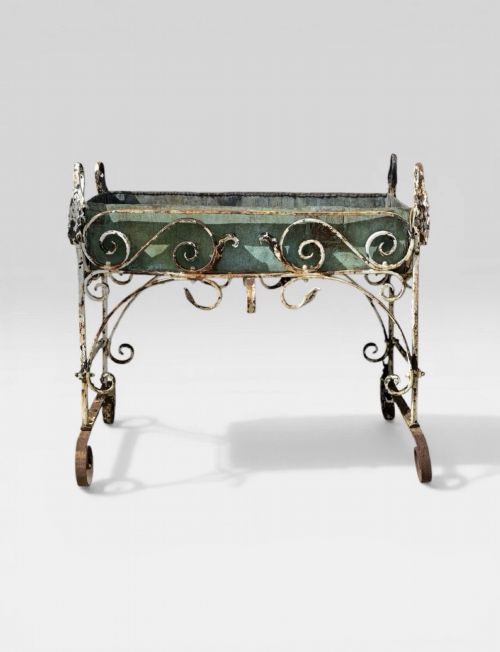
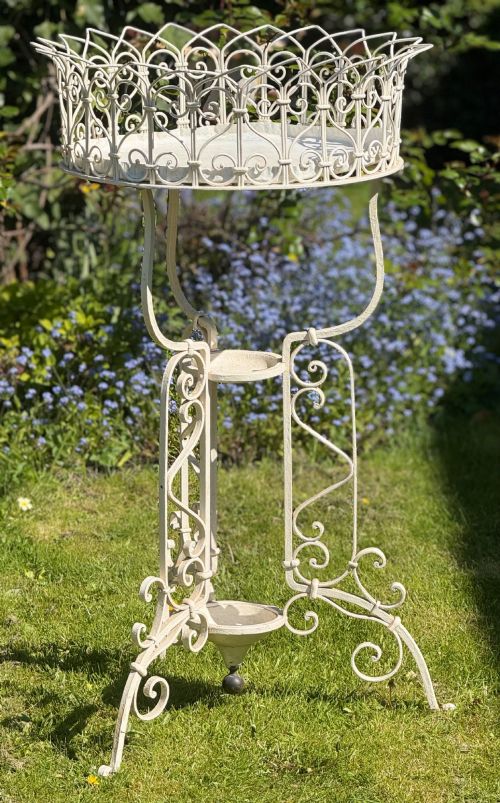
The objects appear as jardinière tables, freestanding stands, and tiered units designed to hold botanical arrangements. Walnut, burr walnut, and wrought iron dominate the selection, frequently accompanied by metal liners and supportive stands.
Originating largely from French workshops and continental influences, the designs span Louis XV and Louis XVI revivals alongside simpler garden ironwork. Buyers encounter everything from inlaid parlor tables to robust conservatory wirework.
How they were made
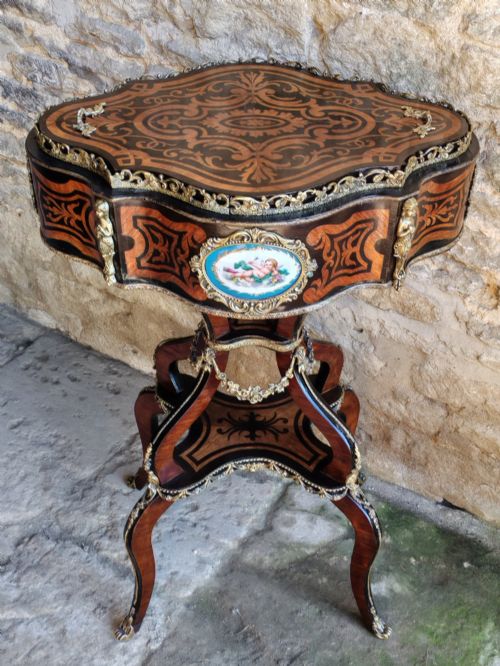
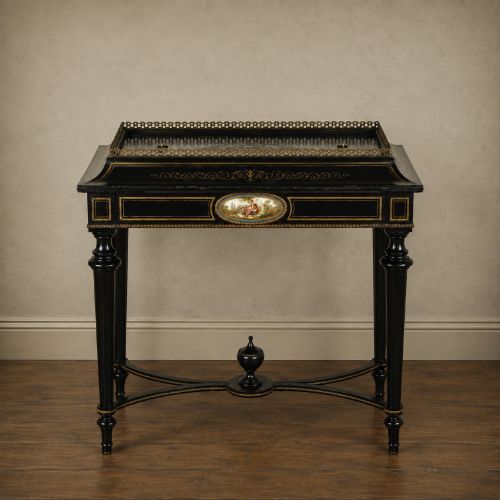
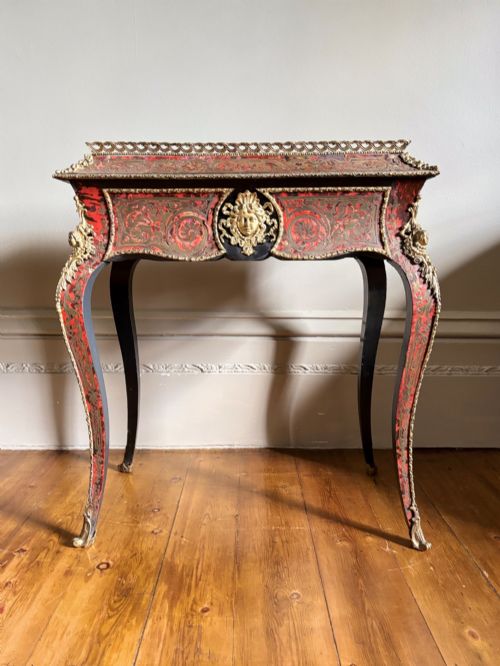
Cabinetmakers utilised timber carcasses of walnut, satinwood, and kingwood, often enhancing surfaces with marquetry inlay, ebonisation, or delicate cane work. Ormolu mounts in gilt bronze and painted porcelain plaques provide decorative contrast to the timber structures.
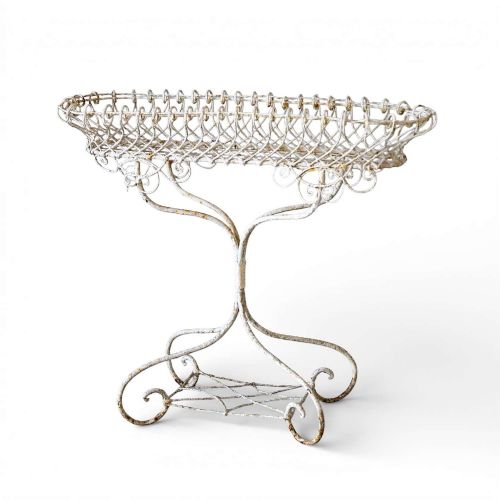
Metalworkers shaped wrought iron and wire into lattice baskets, scrollwork frames, and garden urns designed to withstand moisture. Zinc and copper served as practical, watertight liners inside wooden frames to protect the surrounding structure from damp soil.
Giltwood and terracotta elements appear where decorative impact outweighed simple utility, particularly in salon-style pieces and conservatory furnishings.
What varies in quality
The caliber of a French planter stand rests upon the crispness of its metal mounts and the complexity of its timber veneers. Finely chased ormolu and intricate marquetry indicate higher workshop standards.
Structural integrity depends on the survival of the original interior metal or zinc liner, which often suffers from water contact over decades. Pieces retaining their fitted inserts and stable joints command greater attention from collectors.
The refinement of carved details, such as Louis XV scrollwork or hand-painted porcelain plaques, distinguishes standard domestic items from exhibition-grade examples.
Clement Massier
The French Planter Stand Glossary
- Jardiniere
- An ornamental pot or stand for holding plants or flowers. These items often feature decorative metal liners.
- Ormolu
- Gilt bronze mounts applied to furniture and decorative objects. This technique became prominent in French cabinetmaking during the eighteenth and nineteenth centuries.
- Marquetry
- Decorative veneer patterns formed by small pieces of wood fitted together. Artisans utilise contrasting timbers to create floral or geometric designs.
- Boulle
- A style of marquetry utilising tortoiseshell and brass inlay. This technique gained popularity under Louis XIV and saw revivals during the nineteenth century.
- Cellarette
- A lockable container used for holding bottles of wine or spirits. Many nineteenth-century examples share similar forms with planter stands and wine coolers.
French Planter Stand: Frequently Asked Questions
What is a French planter stand used for?
These pieces function primarily as decorative stands for indoor plants, ferns, or floral arrangements. Many nineteenth-century examples also served double duty as wine coolers or cellarettes during social gatherings.
Today, they integrate well into drawing rooms, conservatories, or hallways as both plant holders and distinctive occasional tables.
How do I identify a Napoleon III planter?
Napoleon III pieces often display ebonised wood finishes paired with gilt bronze mounts and painted porcelain plaques. They lean heavily into ornate revival styles.
Look for contrasting inlay, such as Boulle work or marquetry, which characterises the decorative ambition of this mid-nineteenth-century period.
Are original metal liners common?
Original zinc or copper liners appear frequently in well-preserved walnut and mahogany jardinière tables. Because these liners held wet soil, many did not survive intact.
Finding a piece with its original watertight insert adds significantly to its historical completeness.
Where should I place a wrought iron stand?
Wrought iron and wirework stands suit both interior conservatories and sheltered outdoor garden spaces. Their open lattice construction provides visual lightness.
Protecting antique iron from persistent damp prevents further oxidation while preserving the original painted surfaces.