

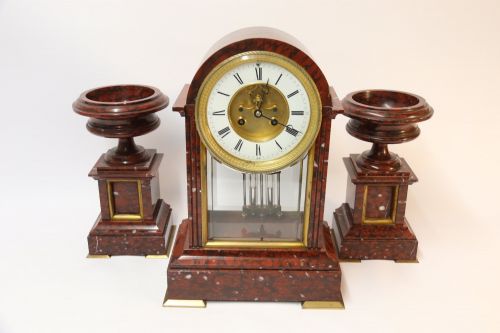


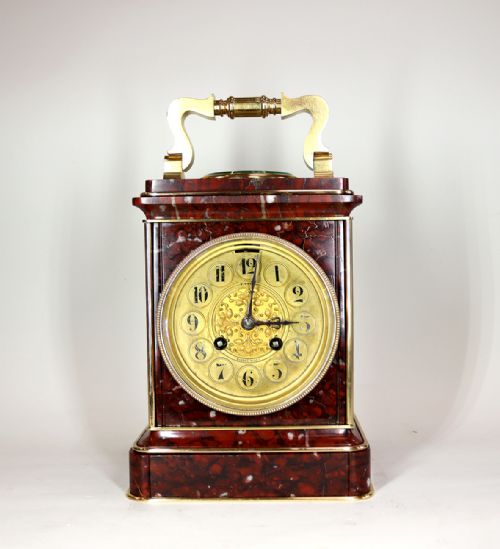


French Rouge Marble Clock
These French rouge marble clocks bring heavy, richly coloured stone and gilt metalwork to the mantelpiece.
French Rouge Marble Clock
A french rouge marble clock combines deep red stone with gilt bronze, brass, and enamel dials in substantial mantel pieces and garniture sets. These items stem from the nineteenth century, including Victorian periods and the Second Empire.
Buyers encounter mantel clocks, large clock sets, four glass designs, and carriage clock formats. The surviving examples showcase French styling, ranging from Louis XVI revivals to ornate Renaissance Revival interpretations.
How they were made
Workshops shaped heavy blocks of red and rouge marble to form the structural body of each mantel clock. Moulders cast bronze and ormolu mounts to wrap and accent the stone.
Enamel dials received delicate painted numerals, protected behind glass bezels. Makers combined these dense materials into drumhead clocks, four glass enclosures, and balanced garniture sets.
Materials recorded across the archive include rouge marble, red marble, ormolu, bronze, brass, enamel, and glass.
What varies in quality
Quality rests upon the weight and depth of the rouge marble alongside the crispness of the bronze or ormolu mounts. Finer pieces display substantial stone cutting paired with intricate, heavy metalwork rather than thin plating.
The integration of matching garniture pieces or complete clock sets distinguishes the more ambitious productions. Better examples maintain clean enamel dials and well-cast mounts that sit firmly against the red stone.
Samuel Marti
The French Rouge Marble Clock Glossary
- Rouge Marble
- A dense red limestone featuring varied veining and white inclusions. This stone forms the solid body of nineteenth-century mantel clocks.
- Ormolu
- Gilded bronze applied as decorative mounts and feet upon the stone. It provides bright contrast against the dark red marble.
- Clock Garniture
- A matching set consisting of a central clock flanked by side ornaments like urns or candelabra. These sets unify mantelpiece displays.
- Four Glass
- A clock design encased in four glass panels allowing views through the movement. Rouge marble often forms the base and top cap of these pieces.
- Drumhead Clock
- A timepiece shaped with a circular clock housing mounted upon a marble plinth. This form highlights the solid stone surround.
French Rouge Marble Clock: Frequently Asked Questions
What is a french rouge marble clock?
These timepieces feature heavy red marble housings decorated with bronze, ormolu, and enamel dials.
Originating in nineteenth-century France, they appear as single mantel clocks or complete garniture sets with matching side pieces.
How do I style a clock garniture?
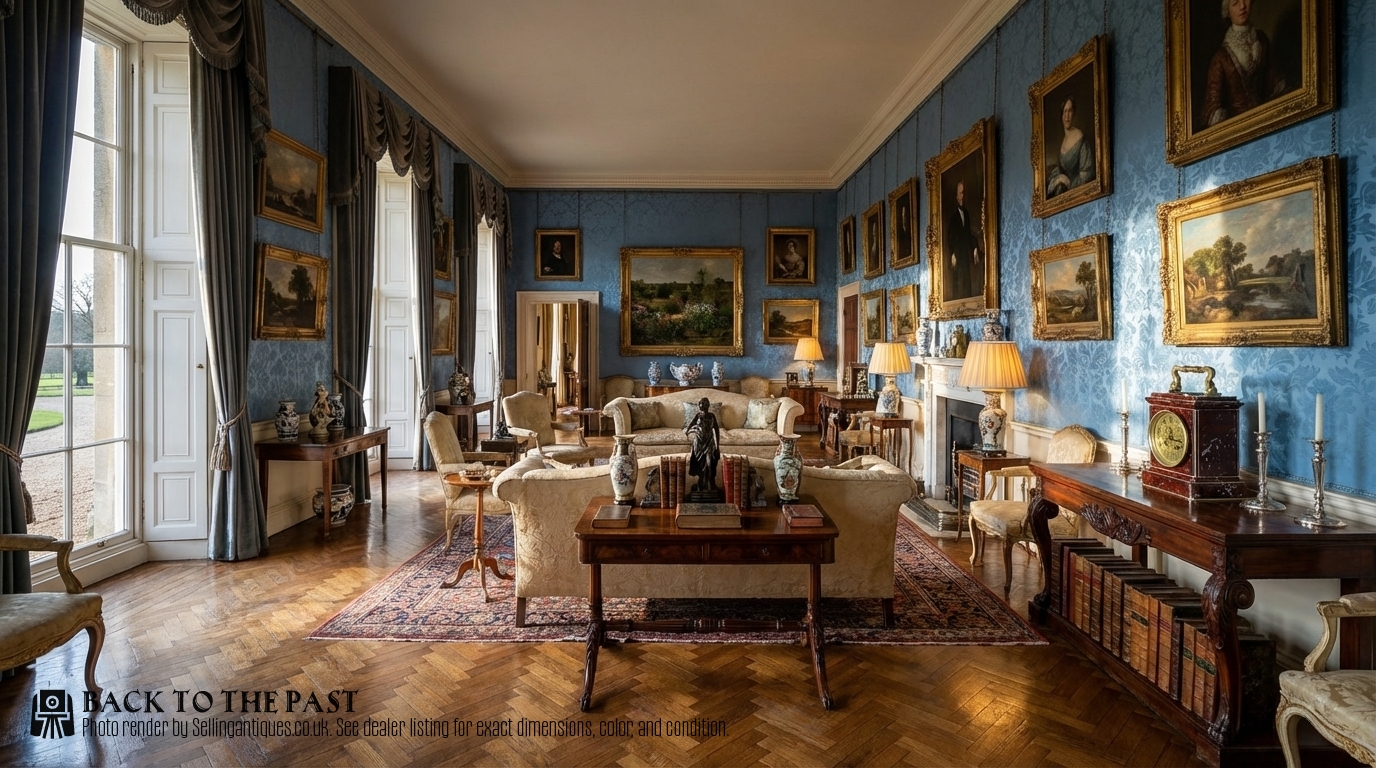
Place the central clock on the mantelpiece centre with the matching side ornaments balanced symmetrically beside it.
The deep red stone and gilt bronze mounts work well against traditional fireplaces or wooden cabinetry.
What periods do these clocks come from?
The available pieces date across the nineteenth century, spanning the Victorian era, Second Empire, and the eighteen-fifties to nineteen-hundreds.
Stylistic details follow French design movements like Louis XVI revival and Renaissance Revival.
What are four glass clocks?
Four glass clocks feature glass panels on all sides to reveal the inner mechanical movement.
Rouge marble typically anchors the top and bottom frames of these transparent enclosures.