

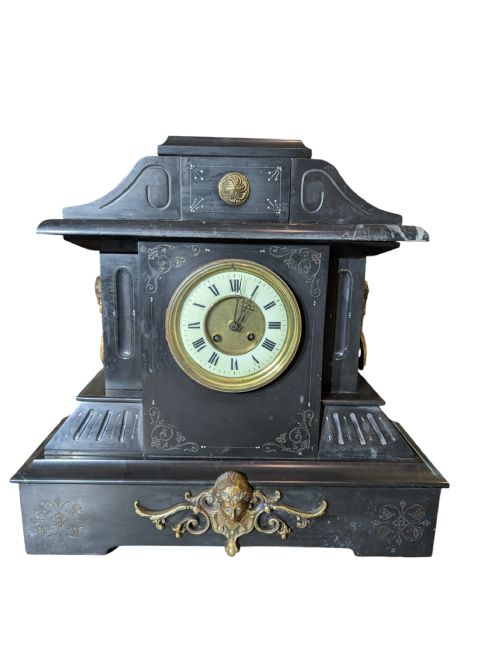


Victorian Marble Table Clock
A victorian marble table clock brings heavy stone presence and precise mechanical weight to a room, offering both reliable timekeeping and architectural dignity.
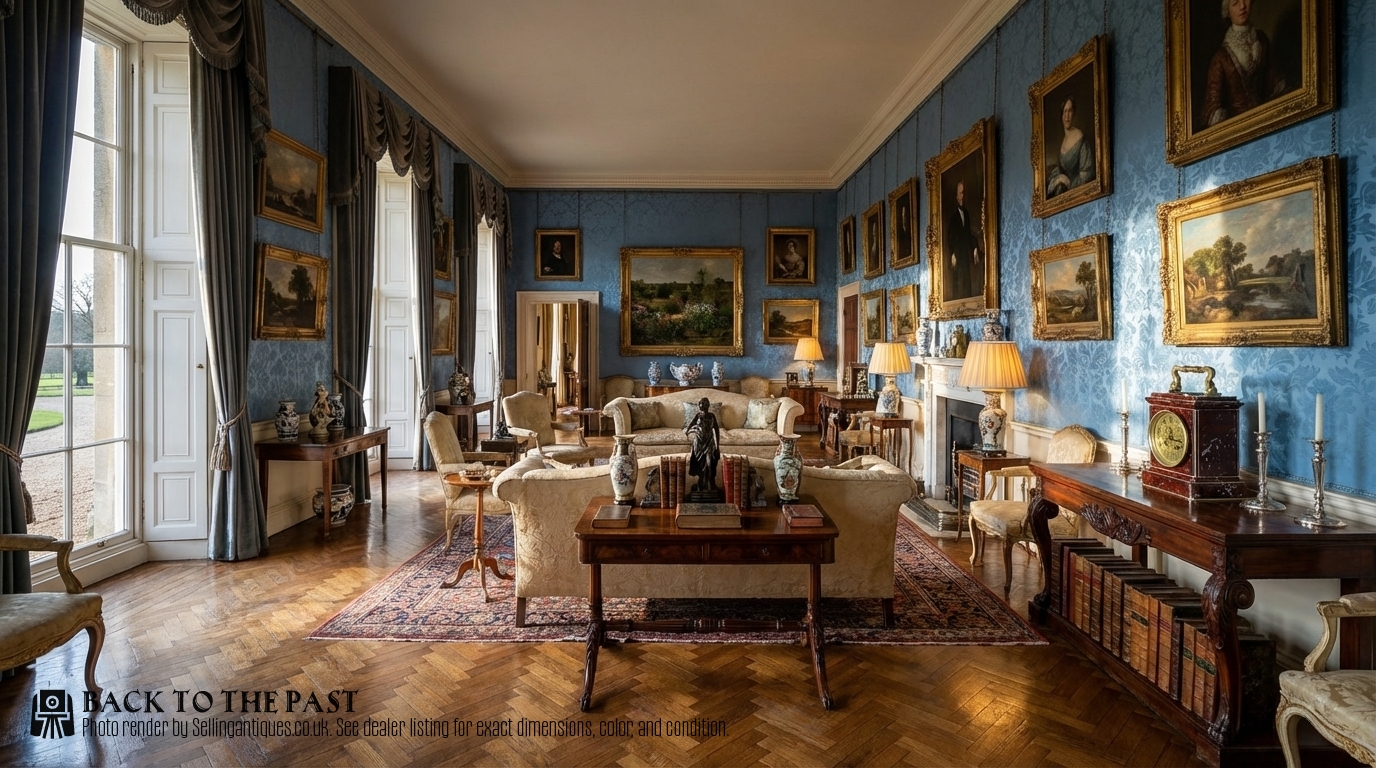
Victorian Marble Table Clock
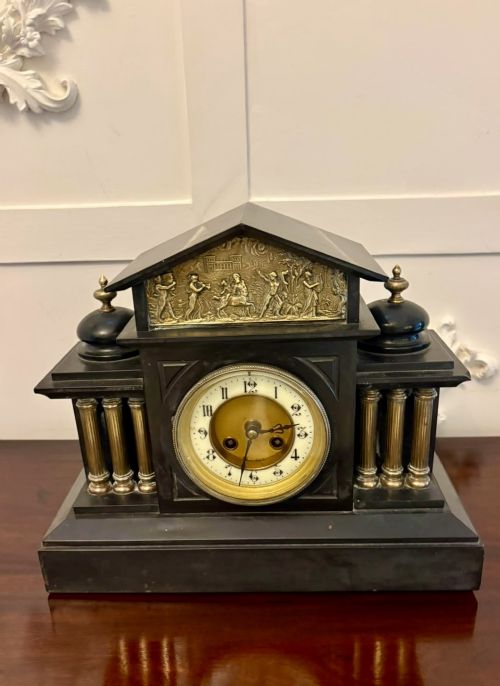
A victorian marble table clock is a substantial timekeeper housed in stone, designed to anchor a mantelpiece, desk, or table. The examples seen here span the mid-to-late nineteenth century, taking the form of architectural mantel clocks, desk timepieces, and larger clock garnitures accompanied by matching side ornaments.
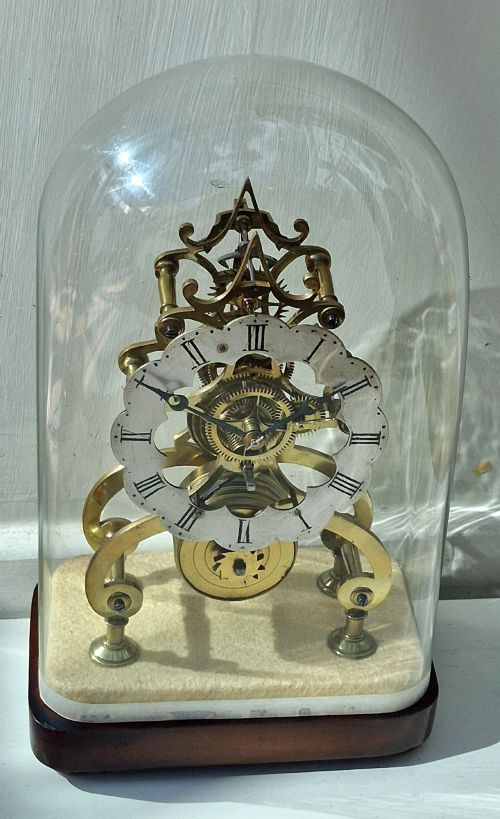
Most pieces meet the eye as dark architectural facades or colourful stone blocks, drawing on French workshops and English makers alike. Alongside traditional mantel clocks, buyers encounter skeleton clocks, carriage clocks, and industrial series pieces driven by varied mechanical movements.
How they were made
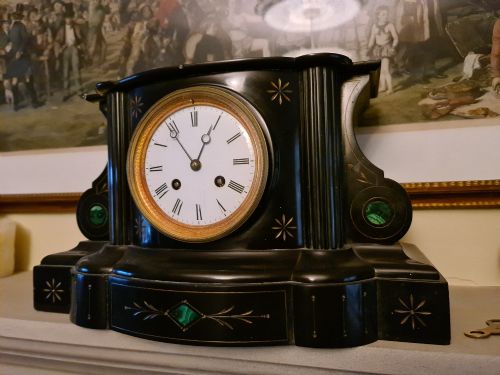
Craftsmen built these pieces using heavy structural blocks of black slate, rouge marble, sienna marble, or onyx, often enhanced with contrasting inlays. The stone housings were then fitted with bronze mounts, gilt brass bezels, and ormolu details to create rich surface texture.
Internal workings relied on mechanical 8-day movements, frequently paired with white enamel dials and protective glass covers. Metal components like brass, bronze, and glass were integrated directly into the heavy stone bodies through careful joinery.
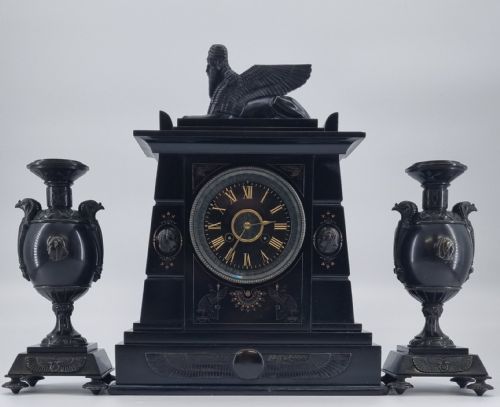
Object types range from standard mantel clocks and desk timepieces to complex clock garniture sets with matching ornaments.
What varies in quality
The distinction between ordinary and exceptional pieces rests on the ambition of the design and the execution of the stone and metalwork. Architectural complexity, such as Egyptian Revival motifs or bronze figural mounts depicting figures like William Shakespeare, separates standard timepieces from ambitious garniture sets.
Material choice and decorative depth dictate the upper tier, where genuine marble blocks with fine inlaid details and named maker movements outrank plain slate models. The harmony between the stone housing and the applied bronze or ormolu defines the visual success of the piece.
Philippes Paris·Thwaites of London·Baby and Jannings·D. Munsey of Cambridge·Guilmet Industrial Series
The Victorian Marble Table Clock Glossary
- Garniture set
- A clock accompanied by matching side ornaments, such as urns or vases, designed to be displayed together on a mantelpiece.
- Black slate
- A dense, dark stone frequently utilised for nineteenth-century architectural clock cases due to its ability to take a sharp edge and a smooth polish.
- Ormolu
- Gilded bronze applied to clock cases and mounts for decorative effect, providing a bright golden contrast against dark marble or slate.
- Skeleton clock
- A timepiece with an open movement where the plates and gear train are exposed to view, often protected beneath a glass dome.
- Dial
- The face of the clock where the hours are indicated, typically constructed from white enamel with painted Roman or Arabic numerals.
Victorian Marble Table Clock: Frequently Asked Questions
How do I wind an 8 day movement?
Insert the winding key into the appropriate arbor on the dial face and turn it gently clockwise until you feel resistance. Take care not to over-wind the spring.
Ensure you support the clock case with one hand while winding, as these marble and slate bodies carry considerable weight.
Where should I place a heavy marble clock?
Position your clock on a sturdy, level surface such as a fireplace mantel, heavy sideboard, or dedicated table. The weight of the stone requires firm support to prevent tipping.
Keep the clock away from direct sunlight and damp environments to protect the marble finish and the delicate enamel dial.
What is an Egyptian Revival clock?
Egyptian Revival pieces incorporate design motifs inspired by ancient Egyptian architecture and iconography, such as obelisks, sphinxes, and hieroglyphic patterns. These styles became particularly popular during the nineteenth century following archaeological discoveries.
On this page, such clocks appear alongside bronze mounts and contrasting marble elements.
How do I tell if a clock is French or English?
French pieces often feature ornate marble and bronze garniture sets, architectural slate facades, or signature maker stamps on the movement backplates. English examples frequently lean towards traditional skeleton clock formats or specific regional signatures on the dial.
Examining the movement and the style of the case usually reveals the origin of the piece.