


Antique Stone Desk Clock
These antique stone desk clock pieces are heavy architectural timepieces built from marble, slate, and onyx, offering sturdy presence and reliable historical mechanics.
Antique Stone Desk Clock
An antique stone desk clock brings solid mineral weight and architectural presence to a room, drawing on Victorian and Art Deco design traditions. When you search for an antique stone desk clock, you encounter heavy mantel and desk pieces fashioned from dense natural materials.
The selection ranges from mid-nineteenth-century Victorian interpretations of classical forms down to streamlined Art Deco models. Most pieces encountered here utilise substantial blocks of marble, black slate, or green onyx.
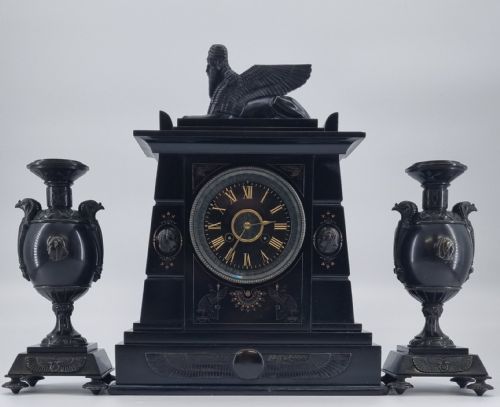
Many examples arrive accompanied by matching garnitures or combined barometers, reflecting the domestic display habits of their original owners. These items served as functional focal points on mantelpieces and large desks alike.
How they were made
Makers shaped heavy blocks of marble, slate, and onyx using stonemasonry techniques adapted for precision horology. Surfaces were sawn, planed, and polished to a smooth finish that highlights natural mineral banding and fossil inclusions.
Movements made of brass and steel were fitted into prepared cavities behind glass-covered enamel dials. Selected Victorian pieces integrate bronze mounts or engraved details influenced by Egyptian revival styles.
Art Deco models from the early twentieth century favour geometric symmetry in green onyx and contrasting marble varieties. The stonework provides a rigid housing that protects the mechanical gear train within.
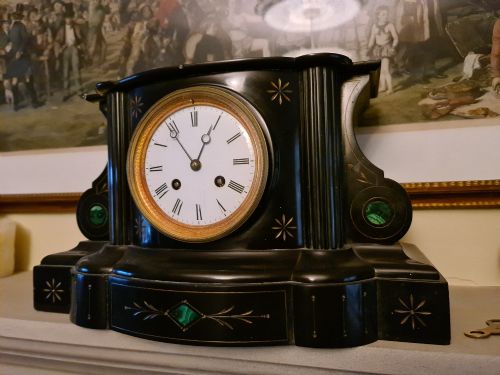
Materials appearing across the current selection include marble, black slate, green onyx, glass, brass, and malachite.
What varies in quality
Quality rests upon the selection of the stone block and the precision of its architectural cutting. Superior pieces display harmonious natural veining across the entire housing without unsightly mending or distracting structural flaws.
The sophistication of the brass dial and the crispness of any applied bronze or enamel ornamentation further separate standard examples from finer works. Integrated sets featuring matching side garnitures or combined barometers demonstrate higher ambition from the maker.
The weight and density of the chosen marble, slate, or onyx dictates the physical presence of the object. Heavier, uncompromised blocks shaped into architectural pediments or drumheads command greater attention.
Elliott
The Antique Stone Desk Clock Glossary
- Garniture
- A matching set of decorative ornaments, usually comprising a central clock flanked by two side pieces such as vases or urns. These matched groupings created a balanced display on nineteenth-century mantelpieces.
- Drumhead clock
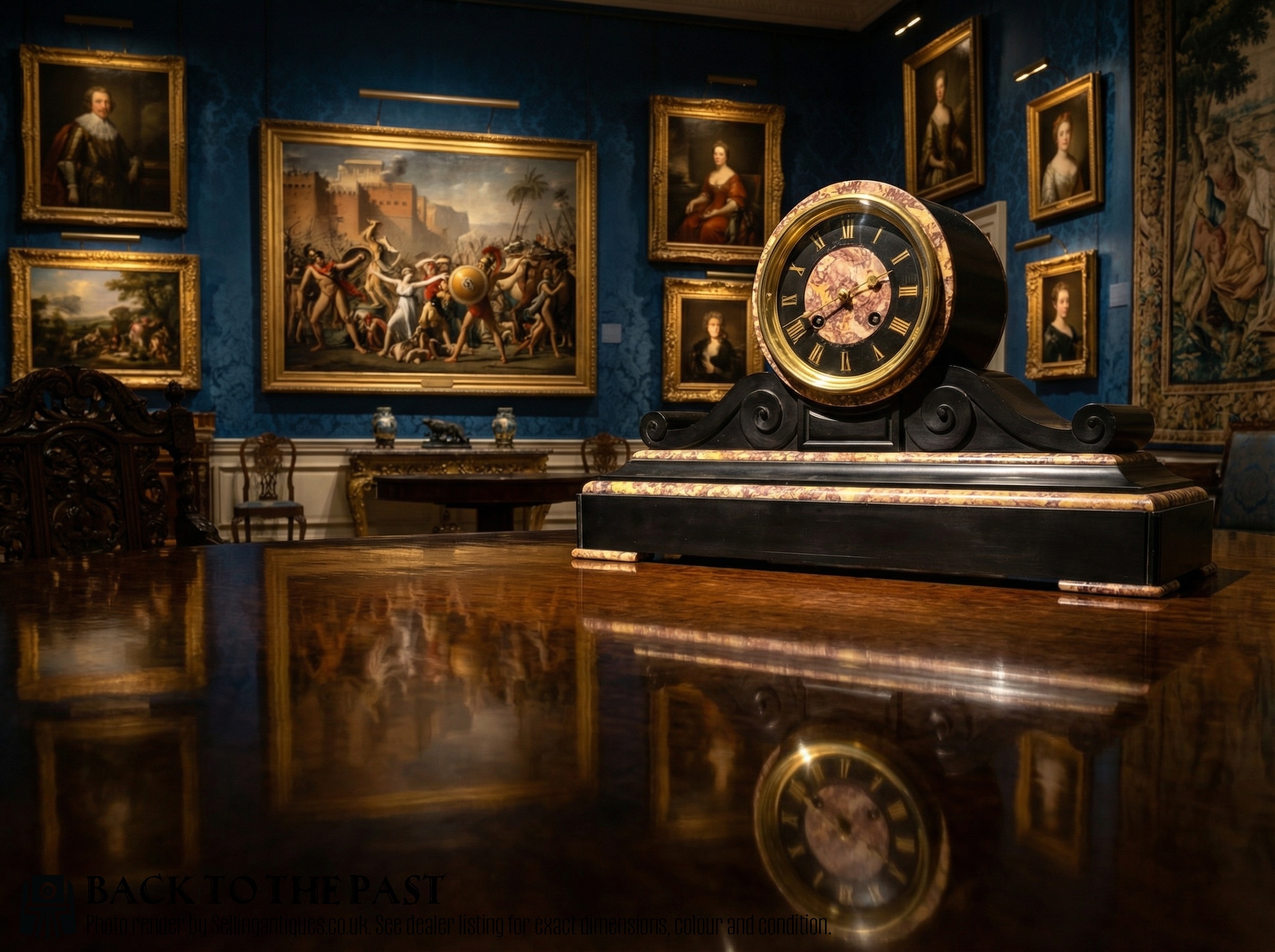
- A timepiece featuring a circular dial housing shaped like a drum, mounted upon a rectangular stone or marble base. This specific silhouette gained popularity during the Victorian era.
- Onyx
- A banded variety of chalcedony quartz utilised extensively for smooth, polished Art Deco clock housings. Its translucent layers display subtle colour shifts.
- Slate
- A fine-grained metamorphic rock used for dark, austere clock bodies, sometimes painted or inlaid with contrasting marbles. It provides a heavy, stable foundation for mechanical movements.
- Egyptian revival
- An architectural and decorative style incorporating pharaonic motifs, obelisk shapes, and hieroglyphic details. It reappeared in Victorian design alongside classical architectural revivals.
Antique Stone Desk Clock: Frequently Asked Questions
How heavy are these stone clocks?
These timepieces possess considerable weight because they are constructed from solid blocks of marble, slate, or onyx. Their mass makes them exceptionally stable when placed on a desk or mantelpiece.
You should ensure your furniture can support the load before positioning one of these heavy pieces in your room.
What materials make up the bodies?
The housings rely on dense natural minerals, predominantly various types of marble, black slate, and green onyx. Brass and glass protect the dial faces, while bronze often appears in decorative mounts.
Some iterations incorporate malachite highlights or contrasting marble inlays to accent the architectural geometry of the case.
How do I distinguish Victorian from Art Deco?
Victorian examples lean toward classical architectural forms, heavy pediments, and Egyptian revival motifs executed in marble and slate. They often present complex surface mouldings and rich colour variations.
Art Deco versions from later decades favour streamlined symmetry, clean geometric lines, and polished green onyx surfaces with minimal ornamentation.
What is a garniture set?
A garniture comprises a central clock accompanied by matching side ornaments, designed to be displayed together on a mantel or large piece of furniture. These matched groupings create a unified decorative scheme.
Many Victorian and later arrangements kept the stone and decorative style identical across every piece in the set.