




Large French Mantel Clock
A large french mantel clock brings heavy architectural presence and precise 19th-century horology to a room, cast in ormolu, marble, and bronze.
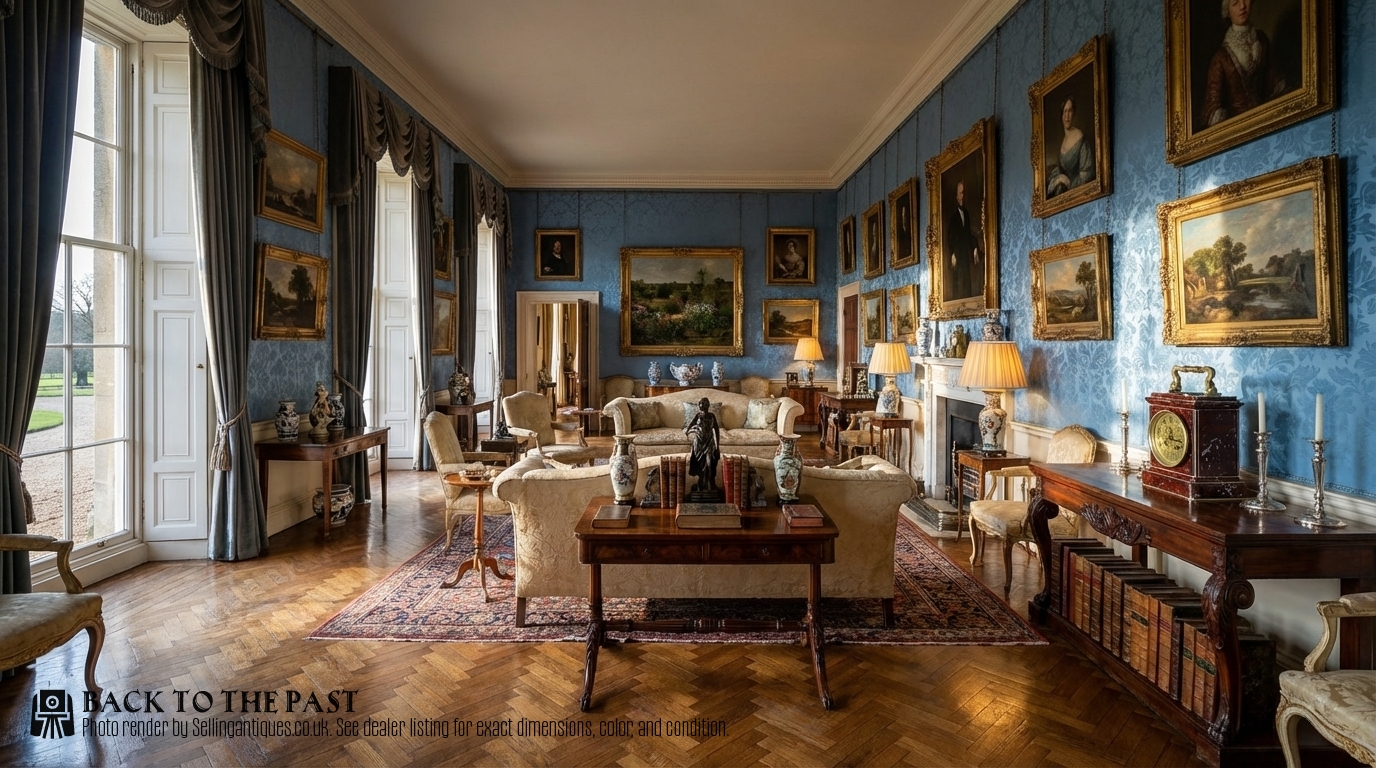
Large French Mantel Clock
A large french mantel clock is a substantial timekeeper designed to anchor the room, frequently accompanied by matched garniture sets or urns. These pieces originate predominantly from the 19th century, spanning periods from Charles X and Napoleon III through the Victorian era.
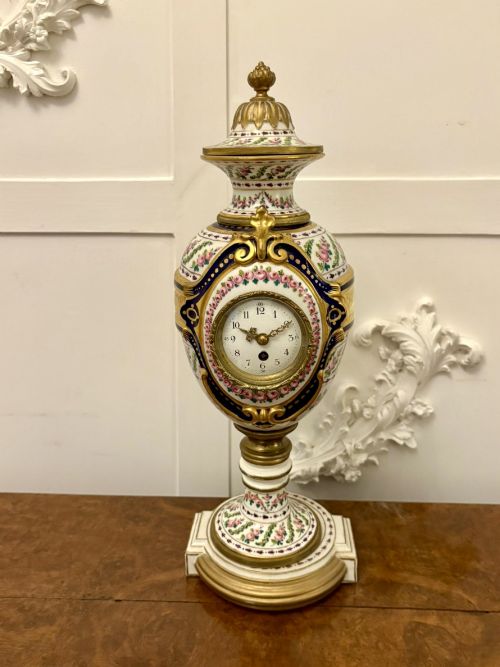
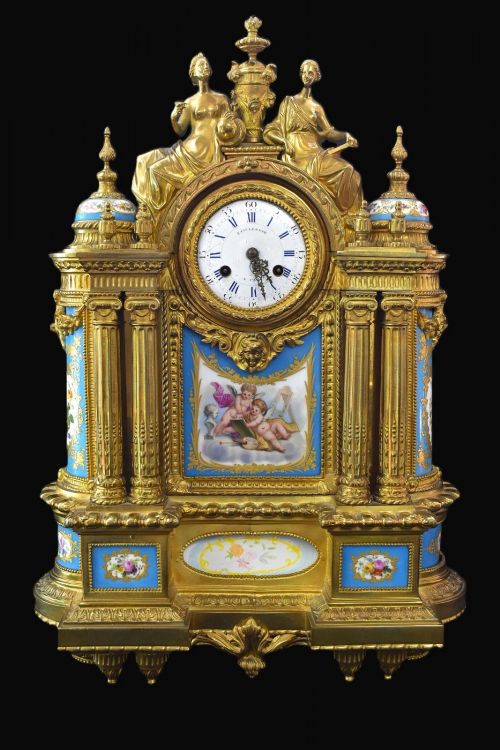
The selection ranges from architectural marble and slate designs to ornate Rococo Revival and Louis XVI style ormolu models. Carriage forms and crystal regulators also appear frequently, often enclosed within glass domes or fitted with elaborate porcelain panels.
How they were made
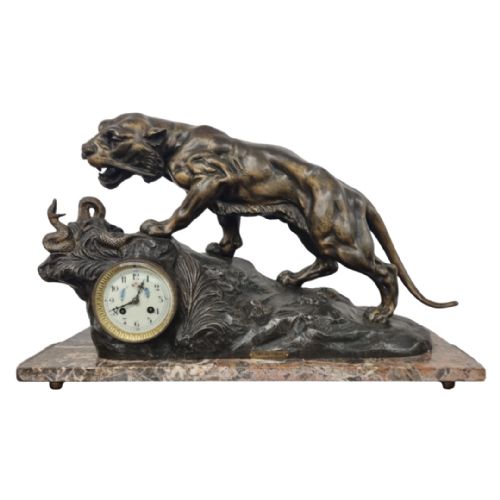
Maker workshops utilised heavy cast metals including ormolu, gilt bronze, and brass to form elaborate architectural cases and scrolling foliage. Natural materials such as rouge marble, slate, and varieties of wood provide solid foundations for the movements.
Dial faces incorporate painted enamel, porcelain, and visible glass mechanisms, whilst specialised components like penny moon phases and repeating mechanisms reveal advanced 19th-century engineering.
What varies in quality
The distinction between tiers rests upon the crispness of the bronze casting and the depth of the gilding. Superior examples exhibit finely chased ornamentation and integrated garniture pieces that share identical casting characteristics.
Movement sophistication also dictates standard, separating standard 8-day movements from complex carriage clock escapements, moon phase dials, and signed Parisian works.
R Varnier·Etienne Lenoir·Breguet·Samuel Marti·L Epee·Philippes Paris·Raingo Fres Paris·Planchon A Paris
The Large French Mantel Clock Glossary
- Ormolu
- Gilt bronze produced by applying a finely ground high-carat gold-mercury amalgam to a bronze object. This technique creates a distinctive golden surface finish on 19th-century clock cases.
- Garniture set
- A decorative grouping consisting of a central clock flanked by matched side ornaments such as urns or candelabra. These sets create a balanced display on a mantelpiece.
- Crystal regulator
- A mantel clock featuring glass panels on all four sides that expose the internal mechanical movement. These clocks often incorporate mercury pendulums and enamel dials.
- Portico clock
- An architectural mantel clock supported by four columns resembling a classical temple facade. They are frequently framed in ormolu and cut crystal.
- Carriage clock
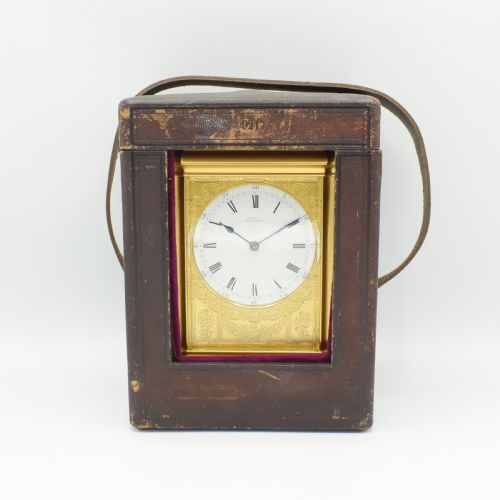
- A small, portable spring-driven clock originally designed for travelling. Larger versions equipped with swing handles frequently appear in this category.
Large French Mantel Clock: Frequently Asked Questions
How do I wind a french mantel clock?
Most mechanical models utilise a specialised key inserted into the dial face to tension the springs for the time and striking trains.
Care must be taken not to over-wind the mechanism, ensuring the clock maintains accurate time over its operational cycle.
What is a clock garniture?
A garniture comprises a central timekeeper accompanied by matching decorative side pieces, such as ornate urns or candelabra.
These coordinated sets were designed to create a symmetrical display across large mantelpieces in 19th-century salons.
How do I identify a Louis XVI style clock?
Louis XVI style timepieces are characterised by classical symmetry, straight architectural lines, and neoclassical motifs like urns and swags.
They frequently employ gilt bronze, marble, and formal geometric proportions rather than asymmetrical Rococo curves.
What is a crystal regulator clock?
A crystal regulator is a mantel clock encased in transparent glass panels that reveal the inner mechanical movement from multiple angles.
These pieces typically feature delicate enamel dials and suspended mercury-filled pendulums.