

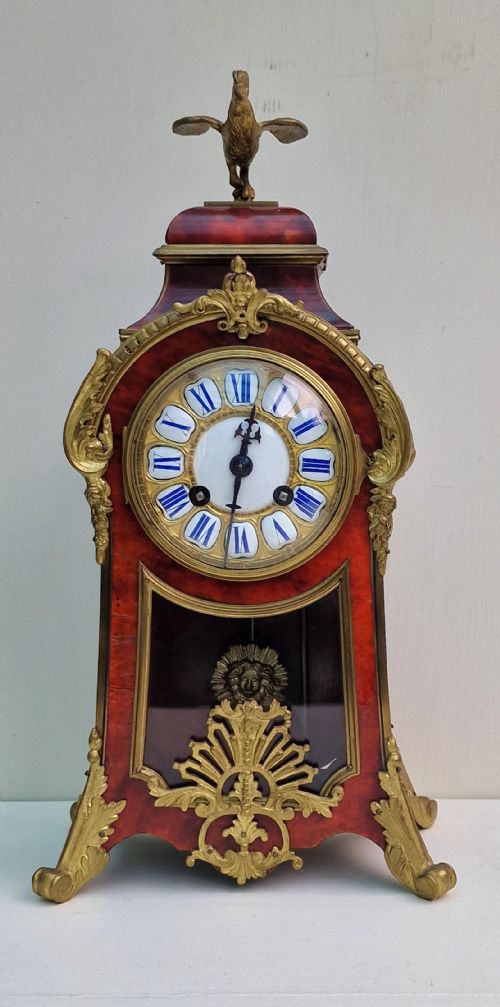


Bronze Mounted Shelf Clock
A bronze mounted shelf clock brings heavy metal mounts and polished stone into domestic interiors with distinct French and Victorian confidence.
Bronze Mounted Shelf Clock
When you search for a bronze mounted shelf clock, you encounter heavy timepieces designed to sit prominently on mantelpieces, brackets, and desks. The examples appearing here span the nineteenth century, including Napoleon III, Victorian, and Louis Philippe periods.
The version most commonly met on this page is the French mantel clock, frequently decorated with ormolu, porcelain panels, and marble or slate bodies. These pieces combine architectural presence with functional timekeeping, originating mainly from French and Victorian workshops.
Forms range from portico clock garnitures and four-glass enclosures to classical porticos and lyre-shaped designs. Makers and houses incorporated materials like tortoiseshell, mahogany, and onyx to suit changing tastes across the decades.
How they were made
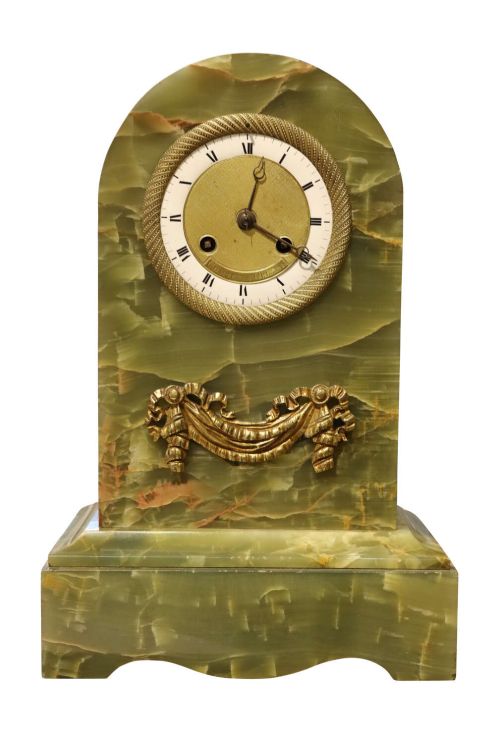
The makers of these timepieces combined cast metal mounts with solid stone, wood, or glass bodies. Ormolu and gilt bronze feature heavily alongside polished marble, slate, onyx, and rouge marble.
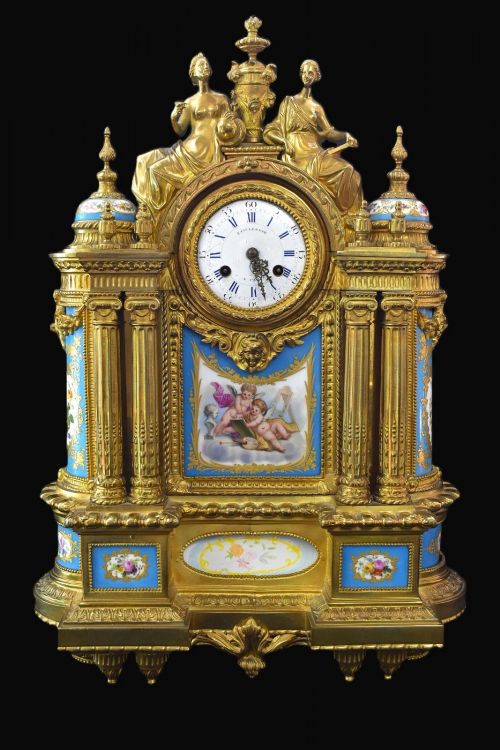
Enamel dials, often paired with hand-painted porcelain panels or Sevres plaques, sit within frames of burr walnut, mahogany, rosewood, and tortoiseshell veneer.
The mechanical movements were housed inside robust stone or wooden cases, decorated with cast bronze finials, mounts, and figural ornaments.
William Shakespeare makes an unexpected appearance cast in bronze alongside nineteenth-century onyx and marble.
What varies in quality
The standard of a bronze mounted shelf clock depends significantly on the crispness of the bronze casting and the depth of its gilding or ormolu finish. Superior pieces show sharp detail in the chased mounts and figures, whereas lesser examples display softer edges and flatter surfaces.
The choice of body material also dictates the grade of the piece, with solid marbles, rich tortoiseshell veneer, and hand-painted porcelain plaques marking out the more ambitious commissions.
Signed movements by known makers or retailers elevate a clock above standard workshop production, demonstrating greater care in both mechanical execution and external decorative harmony.
Charles à Orléans·Etienne Lenoir·Lenzkirch·Achille Brocot·JP Delettrez·Henri Dasson
The Bronze Mounted Shelf Clock Glossary
- Ormolu
- Gilt bronze created by applying a mercury-gilding mixture to bronze objects. This technique produces a rich, durable golden surface seen on many nineteenth-century mounts.
- Portico clock
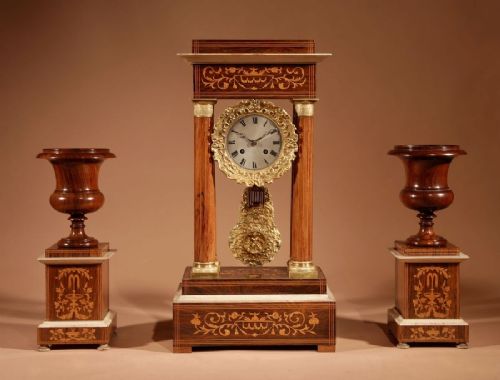
- A mantel clock designed with architectural columns supporting the movement housing. They often include a central pendulum visible between the side pillars.
- Garniture
- A set comprising a central clock matched with side ornaments such as urns or vases. These matched groups were designed to sit together on a mantelpiece.
- Four glass clock
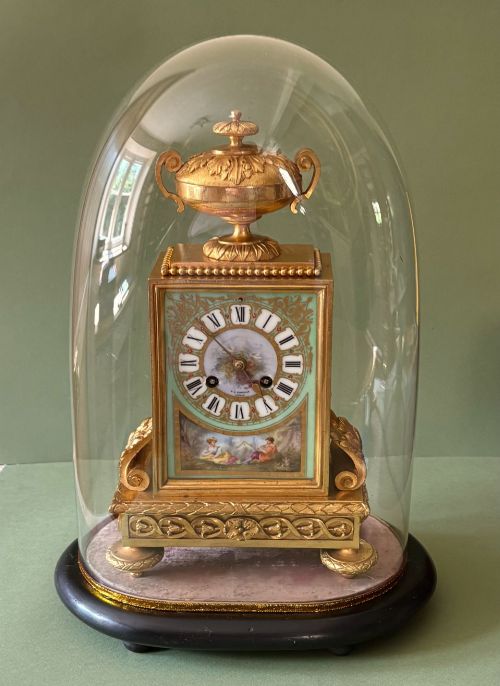
- A timepiece housed in a brass-framed glass case that allows the movement and pendulum to be viewed from all sides. They typically feature enamel dials and mercury pendulums.
- Bracket clock
- A portable clock originally designed to sit on a wall bracket or shelf. Later examples retain the name even when placed directly on furniture surfaces.
Bronze Mounted Shelf Clock: Frequently Asked Questions
Where should I place my clock?
These timepieces require a sturdy, level surface such as a mantelpiece, heavy sideboard, or dedicated wall bracket to support their substantial weight. Keeping them away from direct heat sources and damp walls helps protect the delicate wood veneers and metal finishes.
Because many examples feature exposed pendulums or intricate ormolu mounts, positioning them out of high-traffic pathways prevents accidental knocks. A stable shelf ensures the movement keeps accurate time without interference.
How do I wind a mechanical clock?
Most nineteenth-century movements use a key inserted into winding holes on the enamel dial to tension the springs or lift the weights. Winding should be done steadily until gentle resistance is felt, avoiding any over-tightening that might damage the internal mechanism.
It helps to support the key and turn it smoothly while watching the hands remain undisturbed. Establishing a regular weekly or monthly routine keeps the movement running reliably.
How do I identify the period?
The styling offers the clearest clue, with Napoleon III and Second Empire pieces showing ornate ormolu and porcelain, while earlier Louis Philippe examples favour architectural portico forms. Materials like rouge marble, slate, and tortoiseshell often align with specific mid-to-late nineteenth-century decorative revivals.
Signatures on the dial or movement backplate frequently name the maker or retailer, helping narrow down the decade of production. Examining the construction of the case and the style of the numerals confirms the era.
What is an ormolu mount?
An ormolu mount is a decorative piece of cast bronze finished with a rich gold coating, screwed or pinned onto the wooden or stone body of the clock. These mounts added sculptural depth and luxury, reflecting the candlelight of nineteenth-century drawing rooms.
Craftsmen chased the cast bronze details by hand before gilding to ensure sharp lines and varied textures. They range from simple foliate corners to elaborate figural groups.