





Marble Architectural Mantel Clock
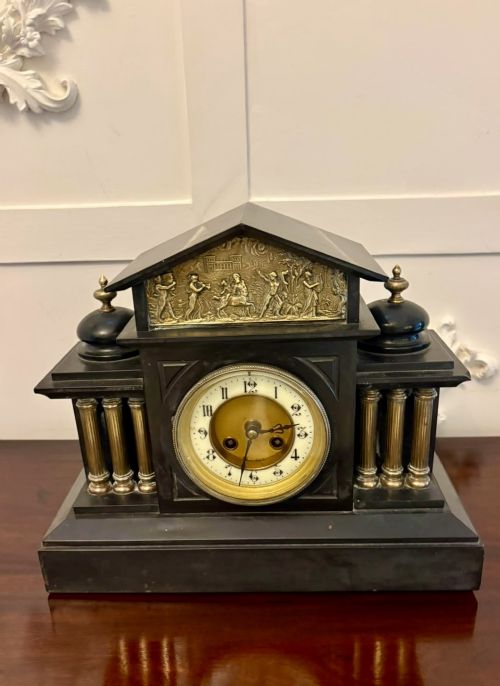
A marble architectural mantel clock brings serious nineteenth-century weight and classical proportions to a room.
Marble Architectural Mantel Clock
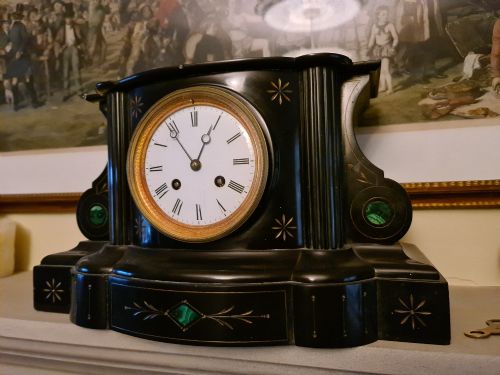
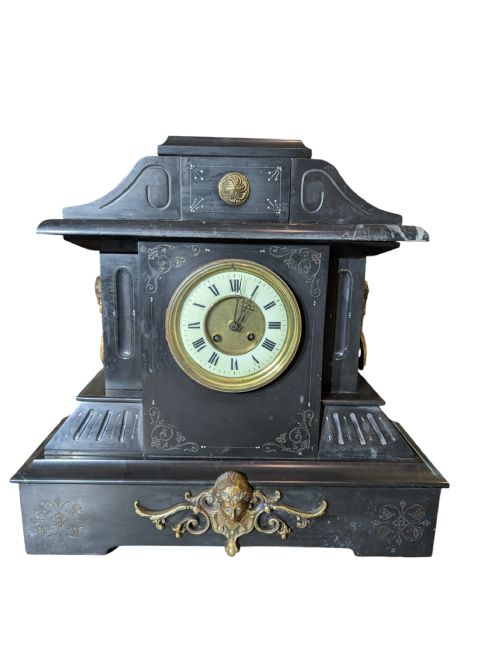
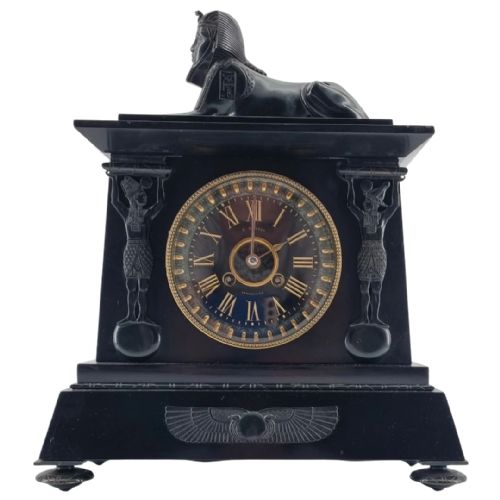
A marble architectural mantel clock represents the heavy, sculptural timepieces that sat on Victorian and continental fire surrounds, taking inspiration from classical buildings.
Most examples found here date from the nineteenth century, spanning the eighteen-sixties to the eighteen-nineties, and draw heavily on Victorian Classical Revival, Neoclassical, and French Second Empire styles.
The form relies on solid stone housing, often featuring columns, pediments, and plinths designed to echo temples and public monuments of the period.
How they were made
Makers cut and polished heavy blocks of black marble, rouge marble, sienna marble, and slate to form the architectural carcasses of these clocks.
Brass, gilt bronze, and enamel components were then integrated to house the eight-day movements and frame the dials.
Listings feature black slate, alabaster, sienna marble, and rouge marble alongside cast bronze and glass components.
What varies in quality
The grade of the stone and the crispness of the architectural mouldings set the standard for these pieces, separating simple stone boxes from finely proportioned facades.
The presence of cast bronze mounts, inlaid stonework, and matching garniture sets elevates certain clocks above standard production models.
Philippes Paris·Baby and Jannings·D. Munsey of Cambridge
The Marble Architectural Mantel Clock Glossary
- Garniture
- A matching set consisting of a central clock flanked by decorative ornaments such as urns or vases. These sets were designed to sit harmoniously on a mantelpiece.
- Portico clock
- A timepiece built with an architectural frame supported by pillars or columns, often housing a suspended pendulum visible through glass. This design draws directly from classical portico architecture.
- Fusee movement
- A clock mechanism incorporating a cone-shaped pulley to equalise the force of the mainspring as it unwinds. It ensures more accurate timekeeping throughout the duration of the wind.
- Rouge marble
- A deep reddish-pink limestone variant containing white or grey veins, frequently imported from French quarries for high-end decorative pieces.
Marble Architectural Mantel Clock: Frequently Asked Questions
How do I wind a marble mantel clock?
Most of these clocks utilise an eight-day movement requiring a key to tension the springs through winding holes on the dial face. Care must be taken not to overwind the mechanism.
Moving the hands should be done slowly and strictly in accordance with the specific movement instructions to avoid damaging the escapement.
Where should I place a heavy marble clock?
Due to the substantial weight of slate and marble cases, a sturdy mantelpiece, sideboard, or dedicated bracket is essential to support the load safely. Levelling the surface ensures the pendulum swings evenly.
Keep the clock away from direct heat sources such as active fireplaces, which can dry out internal oils and affect the stone.
How do I identify the period of a marble clock?
The dating relies on stylistic clues such as the severity of the Neoclassical lines, the presence of specific Victorian revival motifs, and the materials used in the case construction. Nineteenth-century examples frequently combine black slate with contrasting marble inserts.
Inscribed brass plates, dial signatures, and movement stamps often provide further evidence of the workshop or retailer origins.