
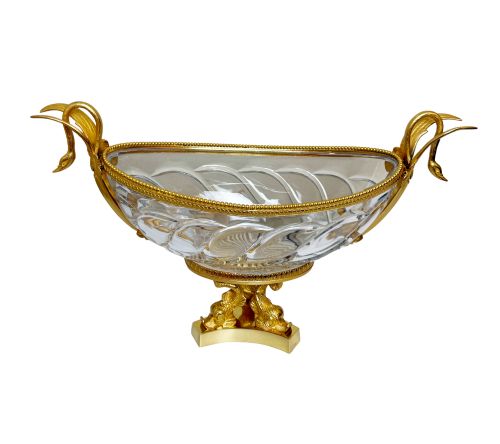
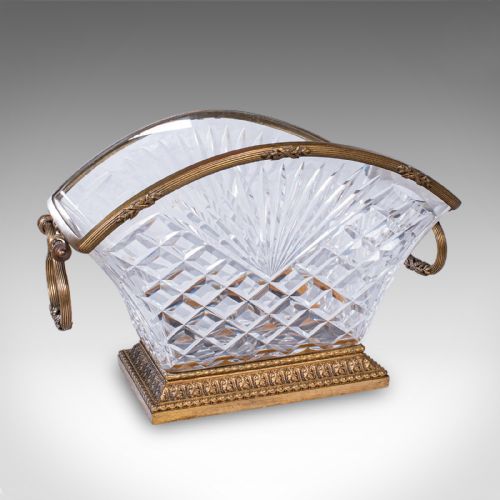
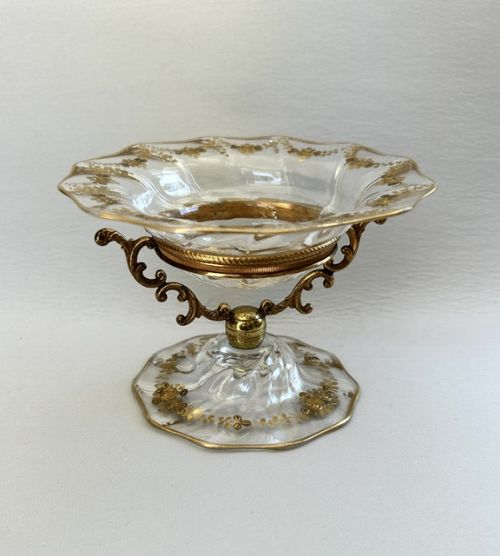
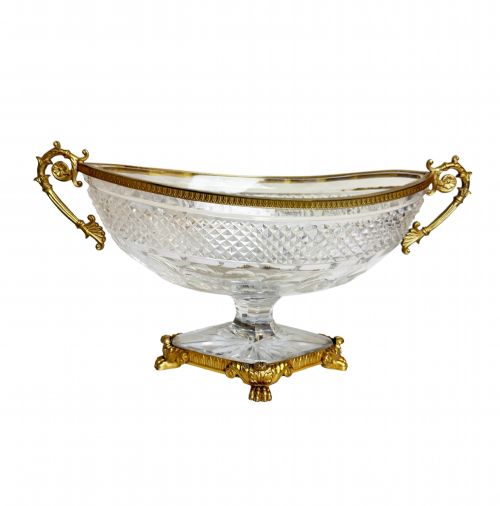



French Ormolu Bowl
A french ormolu bowl brings nineteenth-century salon splendour to a table through heavy gilt metalwork and glass or porcelain.
French Ormolu Bowl
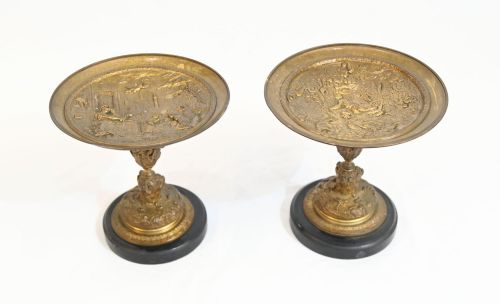
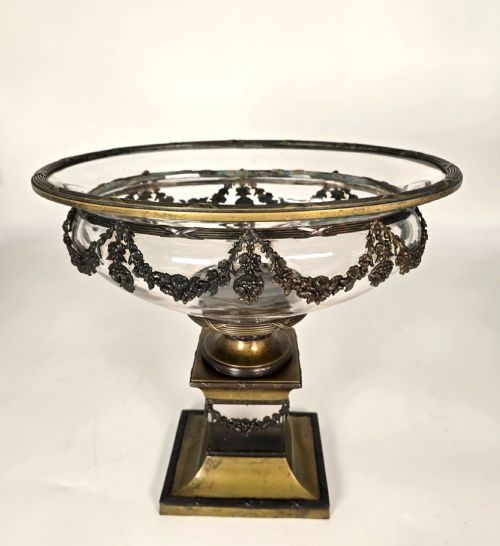
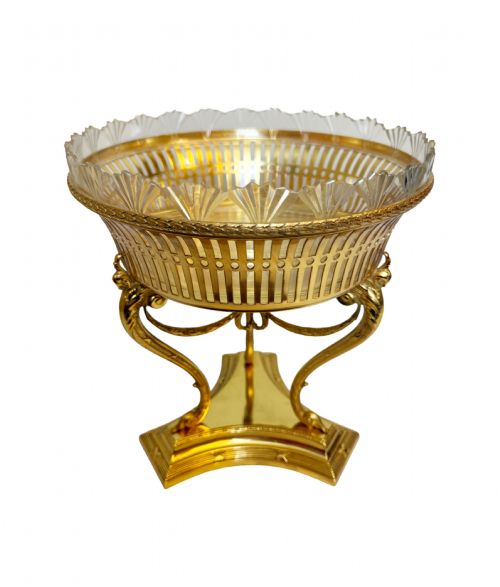
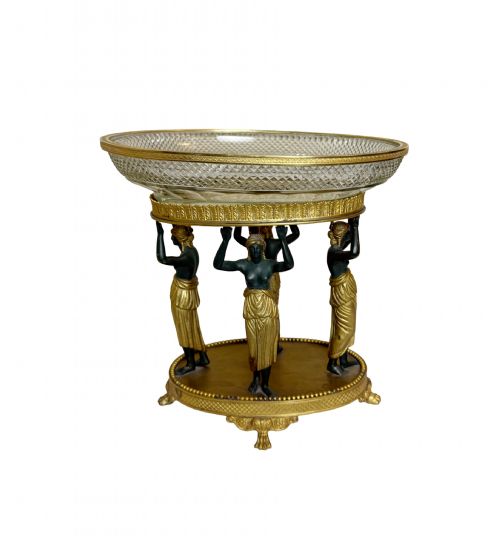
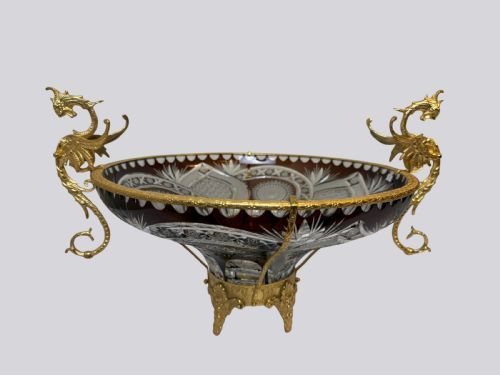
A french ormolu bowl is typically encountered as a centrepiece, tazza, or jardiniere dating from the nineteenth century. These objects combine metal mounts with glass, crystal, or porcelain inserts to create decorative table vessels.
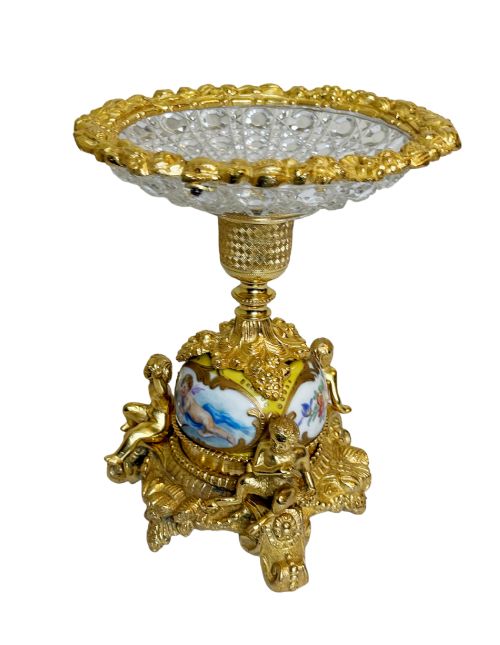
Makers and workshops produced these pieces in styles spanning French Empire, Rococo Revival, and Chinoiserie. The forms range from simple mounted dishes to elaborate footed garnitures supported by cherubs or mermen.
Materials and Technique
Gilt bronze and ormolu form the metal framework, providing the structural mounts, handles, and bases. These gilded elements are cast and chased with fine detail before assembly.
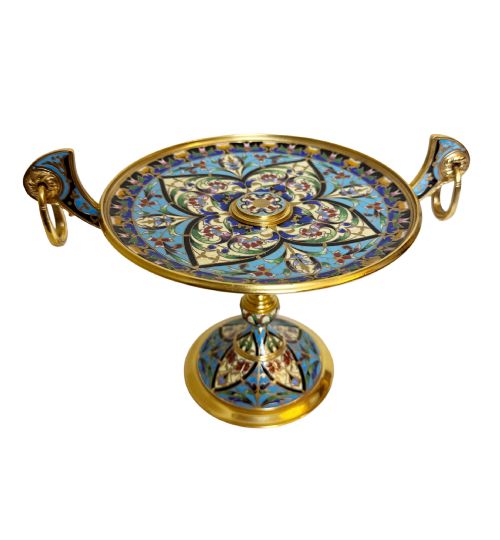
Vessels combine this metalwork with cut glass, cut crystal, Sevres style porcelain, or onyx. Enamel work such as champleve and cloisonne frequently appears on the mounts and enamel plaques.
Mermen and cherubs frequently linger on the bronze mounts, keeping watch over nineteenth-century dining tables.
Quality and Execution
The refinement of the casting and chasing in the ormolu defines the upper tier of objects. Crisp definition in figures like cherubs and mermen distinguishes superior work from softer casting.
The integration of materials dictates the overall success of the piece. Combining cut crystal, porcelain, or hardstones with heavy gilt bronze requires precise mounting and balanced proportions.
Christofle Paris·Louis Pierre Malpass·Samson Porcelain
The French Ormolu Bowl Glossary
- Ormolu
- Gilded bronze produced through mercury amalgamation or electrogilt methods during the nineteenth century. It provides a bright golden surface to metal mounts.
- Tazza
- A shallow bowl raised on a stem and foot, often utilised as a centrepiece or ornamental dish. These pieces frequently feature cast metal mounts.
- Jardiniere
- A decorative container designed to hold plants or floral arrangements, frequently mounted with gilt bronze handles and rims. They appear in porcelain and glass.
- Champleve
- An enamelling technique where troughs are carved into the metal surface and filled with vitreous enamel. This decoration ornaments the bronze frames of bowls.
- Comport
- A pedestal dish used for serving fruit or sweets on a dining table. Nineteenth-century examples often combine porcelain bowls with metal stands.
French Ormolu Bowl: Frequently Asked Questions
What were these bowls used for?
These vessels functioned primarily as decorative centrepieces on dining tables or salon consoles. They held fruit, flowers, or simply served as ornamental display pieces.
Larger versions like jardiniere bowls accommodated plants, while tazzas and comports held sweetmeats during formal nineteenth-century dining.
How do I style a french ormolu bowl?
Place the bowl centrally on a dining table, sideboard, or mantelpiece where the gilt mounts catch the light. Their decorative nature suits traditional or eclectic interiors.
Keep the vessel empty to display the cut crystal, porcelain, or enamel interior, or fill it sparingly with seasonal fruit or foliage.
How do I tell nineteenth century pieces apart?
Examine the stylistic cues, as earlier nineteenth-century pieces lean towards strict French Empire geometry or Grand Tour classical motifs. Later nineteenth-century examples often embrace ornate Rococo Revival curves or Chinoiserie and Japonesque influences.
Material combinations also shift, with champleve enamel and coloured glass appearing more frequently towards the end of the century.
What is the difference between ormolu and gilt bronze?
Ormolu specifically describes the historical French process of applying finely ground gold mercury amalgam to bronze. Gilt bronze is a broader term that also encompasses later nineteenth-century electroplating methods.
Both terms describe the golden metallic mounts found on nineteenth-century glass and porcelain vessels.