

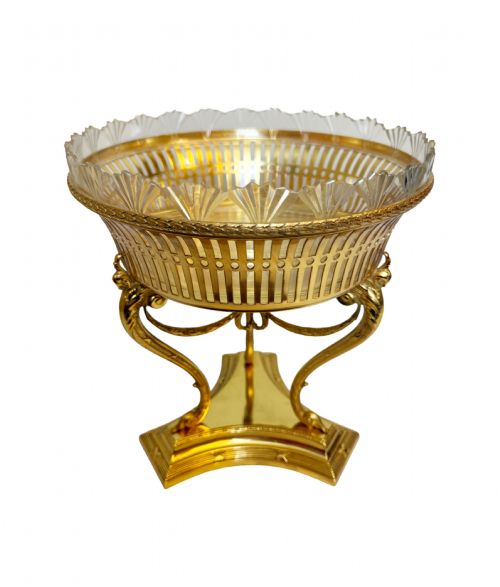


Antique Decorative Bronze Tazzas
These antique decorative bronze tazzas combine classical form with rich metalwork, offering striking centrepieces for a traditional interior.
Antique Decorative Bronze Tazzas
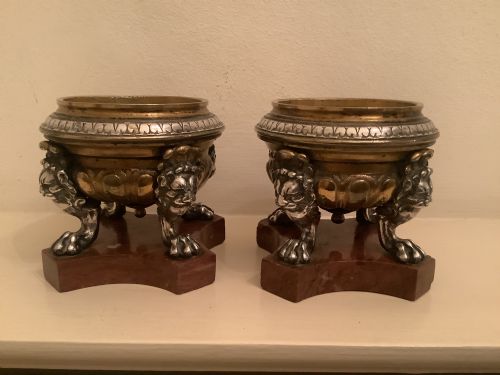
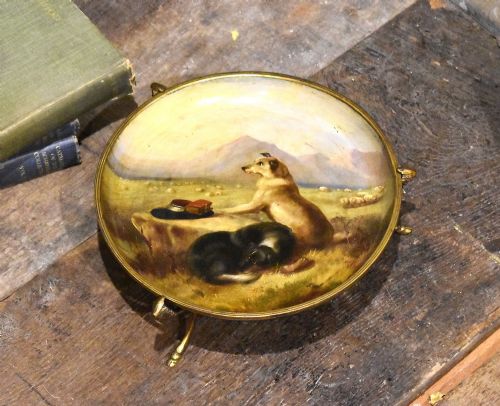
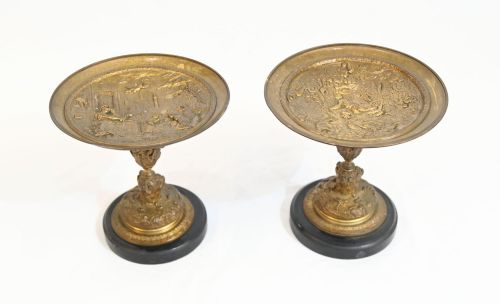
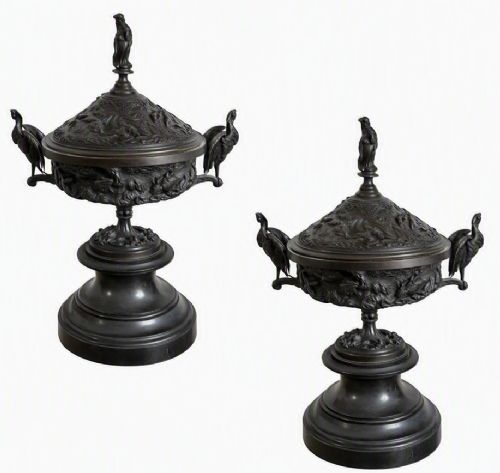
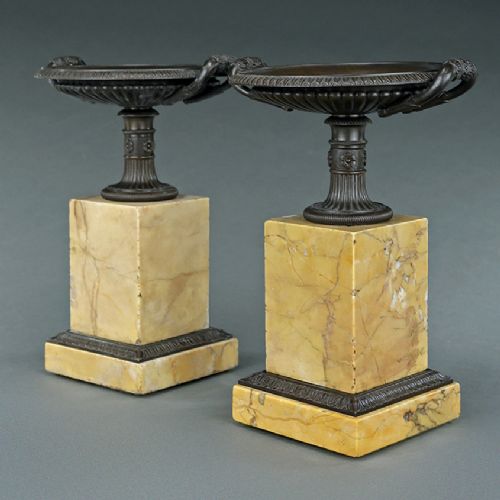
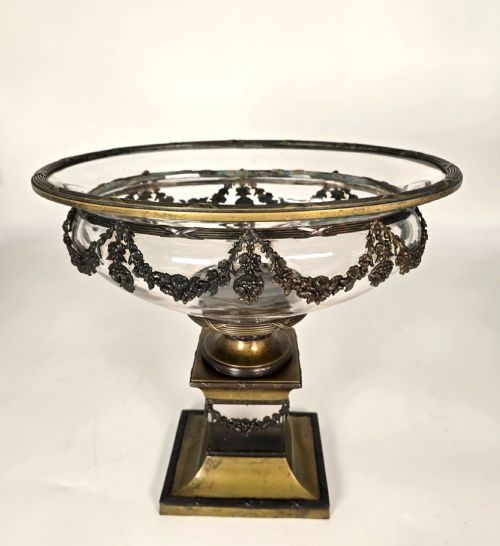
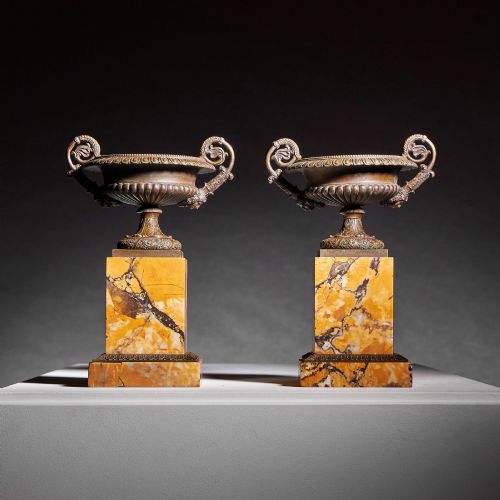
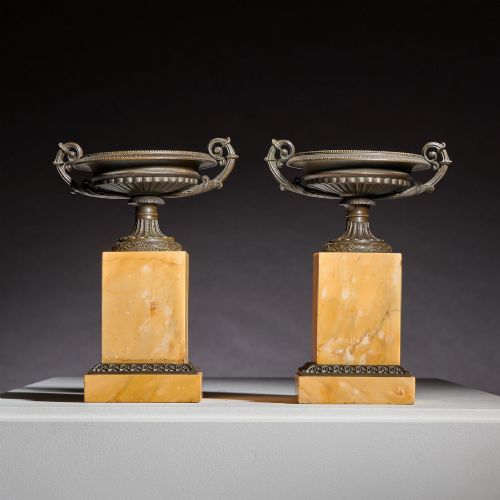
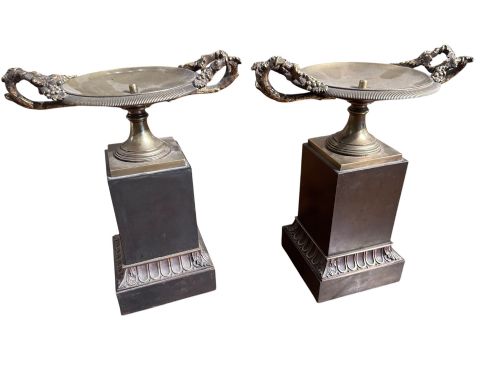
When searching for antique decorative bronze tazzas, collectors encounter shallow pedestal vessels designed primarily for display rather than dining. The examples seen here span the nineteenth century, including Regency, French Empire, and Victorian styles.
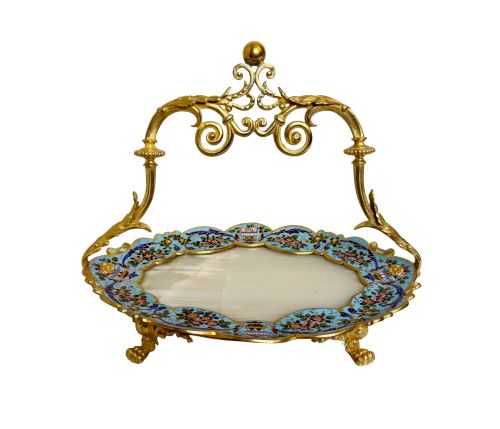
Most items function as centrepiece bowls or decorative dishes mounted on columns and bases. These pieces frequently incorporate materials such as marble, onyx, and porcelain alongside the primary bronze structure.
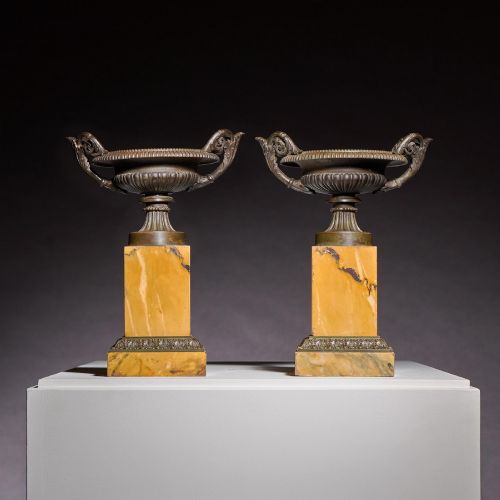
Originating largely from French and Italian workshops, the selection includes both single vessels and balanced pairs. Their shallow forms echo classical archaeological finds brought home by travellers on the Grand Tour.
How they were made
Foundries cast these vessels in bronze, utilising patinated finishes or mercury gilding known as ormolu to achieve contrasting surface textures. Skilled metalworkers combined these metallic elements with carved stone shafts and basins.
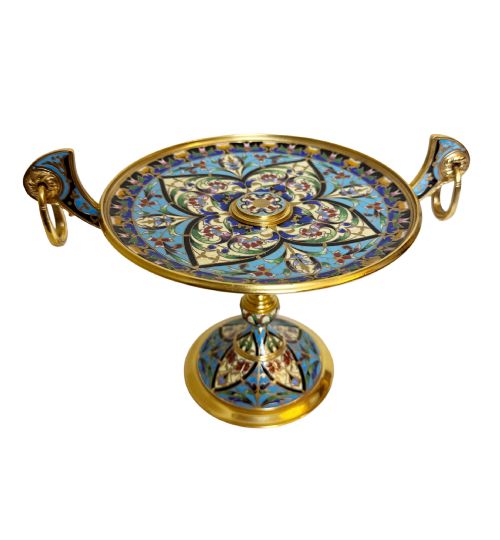
Many items incorporate decorative glass, agate, or champlevé enamel panels set directly into the metal frame. Enamelling involves fusing coloured glass powders within recessed metal partitions before polishing the surface flat.
Mounts and figures were cast separately and fixed with pins or screws to the main body of the tazza. This modular construction allowed artisans to mix patinated dark bronze with bright gilt details on a single piece.
Winged cherubs, mermen, and abolitionist figures frequently perch beneath these heavy stone and bronze bowls.
What varies in quality
The crispness of the cast decoration dictates the distinction between standard production and superior work. Sharp chisel marks and detailed chasing on the bronze surface indicate skilled hand-finishing after the casting process.
The choice of secondary materials marks another division in standard. Natural hardstones like malachite, marble, and banded agate elevate a piece above standard glass or ceramic inserts.
Compositional balance and the architectural harmony of the base dictate visual success. Strong proportions in the stem and balanced weight in the foot separate masterworks from simpler decorative objects.
Louis Pierre Malpass
The Antique Decorative Bronze Tazzas Glossary
- Tazza
- A shallow saucer-shaped vessel raised on a stem and foot, used historically for display or serving. This form derives from ancient drinking vessels.
- Ormolu
- Gilded bronze produced by applying a mercury and gold amalgam to the metal surface and heating it. The technique creates a durable golden finish.
- Champlevé
- An enamel technique where troughs are dug into the metal surface and filled with vitreous paste before firing. The process produces colourful geometric or floral patterns.
- Grand Tour
- A cultural journey undertaken by wealthy young Europeans to study classical antiquities. Souvenirs included miniature bronzes and architectural models.
- Patination
- The natural or induced ageing of a metal surface through oxidation and handling. This process creates deep brown or green tones on bronze.
Antique Decorative Bronze Tazzas: Frequently Asked Questions
What were antique tazzas used for?
These elevated vessels served as decorative centrepieces on dining tables and sideboards during the nineteenth century. They held fruit, flowers, or simply displayed the skill of the metalworker.
Over time, their function shifted from dining accessories to purely ornamental objects displayed on mantelpieces and pedestals.
How do I clean bronze and ormolu?
Dusting gently with a soft, dry brush preserves the historic surface without wearing away the gilding or patination. Moisture and commercial chemical cleaners damage vulnerable metal finishes.
Professional conservation advice is recommended for pieces with delicate enamel or stone inserts that require deeper cleaning.
How do I date a nineteenth-century tazza?
Dating relies on stylistic clues, such as the heavy classical geometry of Regency pieces or the ornate polychrome enamel of later Victorian items. Material combinations also shift across the decades.
Construction marks, casting seams, and the type of fixings used underneath the base offer further chronological indicators.