



Empire Style Centrepieces
Empire style centrepieces command attention on any dining table, bringing heavy gilt bronze and cut glass drama to the room.
Empire Style Centrepieces
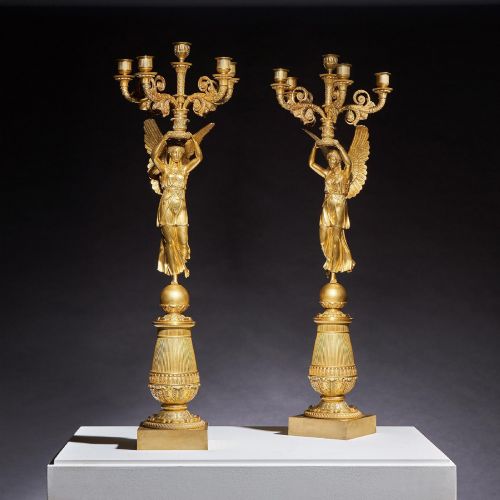
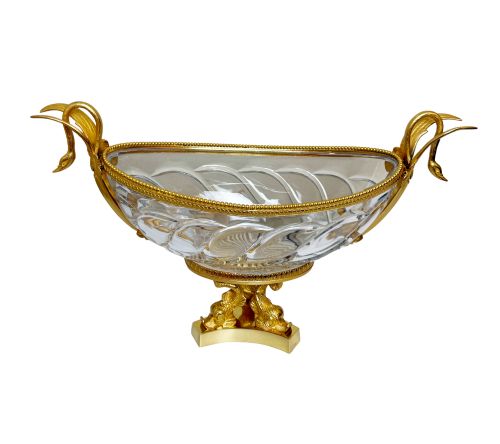
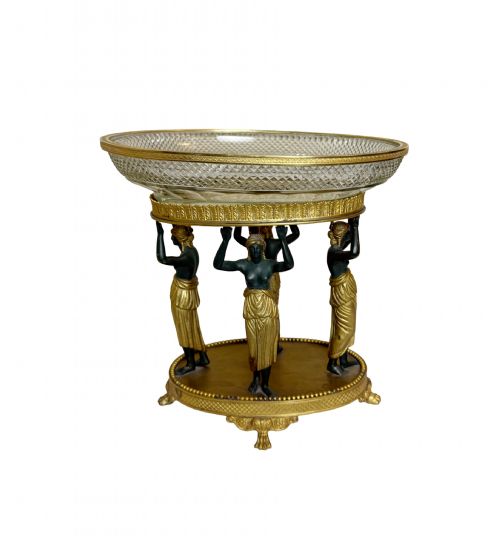
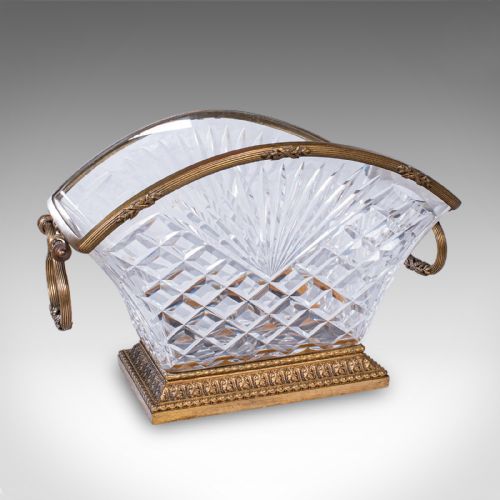
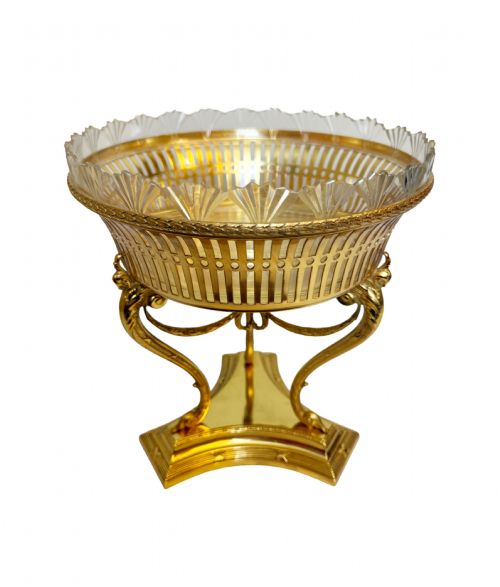
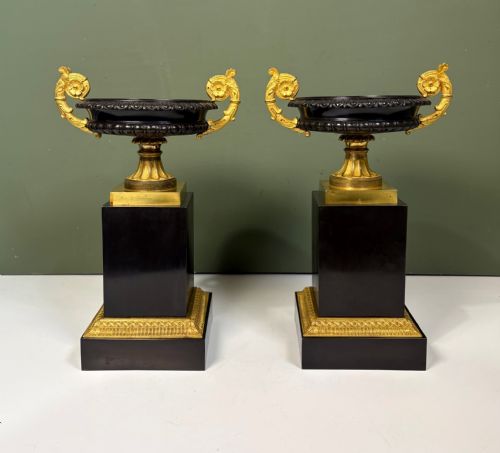
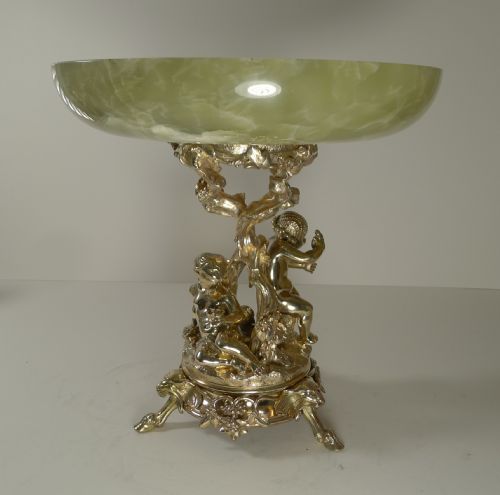
Empire style centrepieces take the form of heavy bronze and ormolu bowls, tazzas, urns, and multi-light candelabra. The selection relies heavily on nineteenth-century French and Regency designs, often pairing patinated or silvered bronze with crystal inserts and marble bases.
Buyers meet pieces ranging from grand tour crystal dishes with gilt detailing to monumental pairs of candelabra and decorative serving bowls. Neoclassical motifs dominate the category, incorporating classical figures, classical drapery, and formal architectural proportions.
How they were made
Maker workshops built these objects using cast bronze finished with fire gilding or ormolu, combined with heavy cut glass and crystal inserts. Rouge marble and white marble frequently form the weighted bases and structural columns of the larger table pieces.
Foundries employed skilled chasers to refine the cast bronze details by hand before assembling the components with threaded pins and screws. Glass bowls and tazzas were heavy-blown and wheel-cut to fit precisely within the metal mounts.
What varies in quality
Quality depends upon the crispness of the bronze chasing and the depth of the original fire gilding. Weaker examples show soft surface details and flat, uniform plating, whereas superior pieces retain sharp relief work and contrasting matte and polished metal finishes.
The weight and clarity of the crystal or cut glass insert also dictate the tier of the piece. Thickly poured or heavily faceted glass denotes a higher standard of production than thin, pressed alternatives.
Pierre Philippe Thomire·Christofle Paris·Lerolle Fres
The Empire Style Centrepieces Glossary
- Ormolu
- Gilt bronze produced by applying a mercury and gold amalgam to a bronze base and heating it. This historic technique creates a rich, durable golden surface.
- Tazza
- A shallow bowl or cup mounted on a stem and foot, designed for display on a table. These pieces often feature classical motifs and elaborate handles.
- Patinated bronze
- Bronze that has been chemically treated to alter its surface colour to brown, black, or dark green. It provides a visual contrast against bright ormolu mounts.
- Grand tour
- Souvenirs and decorative objects acquired by wealthy travellers visiting continental Europe during the nineteenth century. They often utilised classical materials like bronze and marble.
Empire Style Centrepieces: Frequently Asked Questions
What is an empire style centrepiece?
An empire style centrepiece is a decorative table object, typically constructed from gilt bronze, ormolu, and cut glass, reflecting nineteenth-century neoclassical design.
These pieces were originally used to anchor formal dining tables or sideboards, often holding fruit, flowers, or serving as standalone decorative art.
How do I clean gilt bronze?
Gilt bronze requires gentle dusting with a soft, dry brush to prevent the accumulation of dirt in the recesses of the casting. Avoid chemical cleaners and polishes, which strip the thin layer of gold or ormolu from the metal surface.
Are glass inserts original?
Many nineteenth-century centrepieces survive with period replacement glass inserts due to the fragile nature of blown and cut crystal over generations of use. Inspecting the rim fit and glass wear patterns helps determine if the bowl matches the age of the metal frame.
How do I date a nineteenth-century centrepiece?
Dating relies on examining the casting methods, the composition of the bronze alloy, and the style of the assembly screws. Pieces marked with specific foundry stamps or attributed to known Parisian makers offer clearer chronological markers.