

French Louis XVI Mirror
When you search for a french louis xvi mirror, you enter a world of neoclassical symmetry, gilded ribbon crests, and antique mercury glass plates.
French Louis XVI Mirror
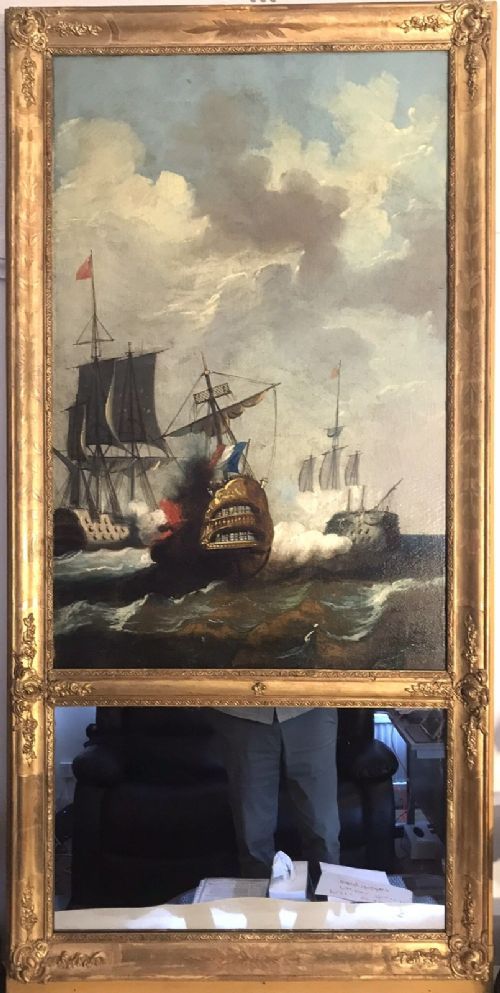
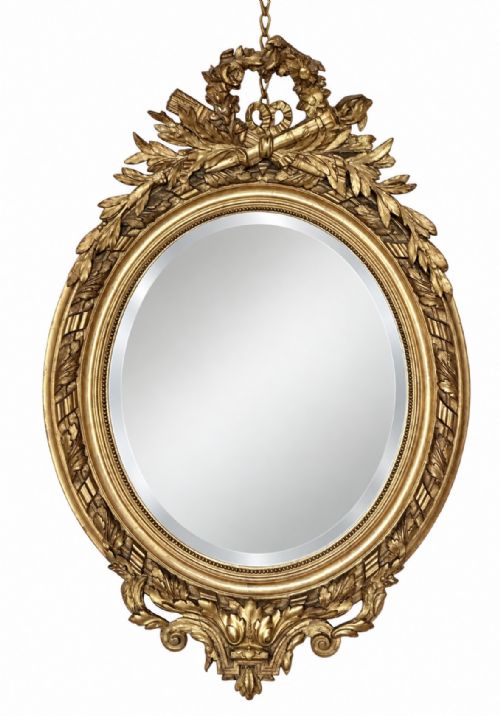
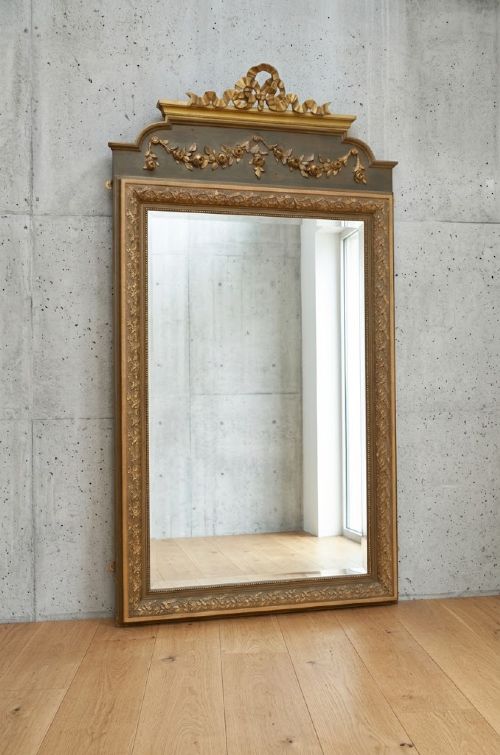
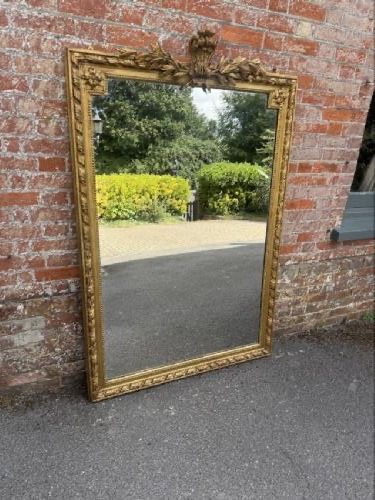
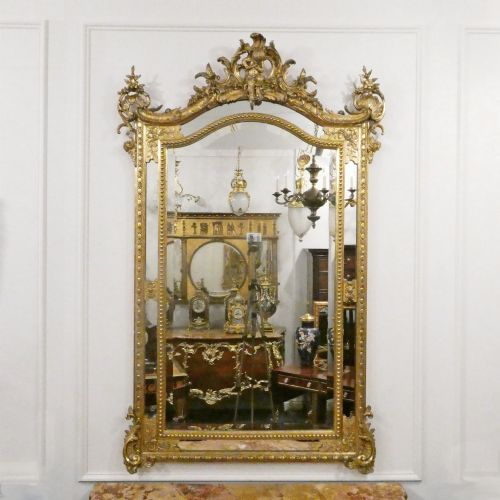
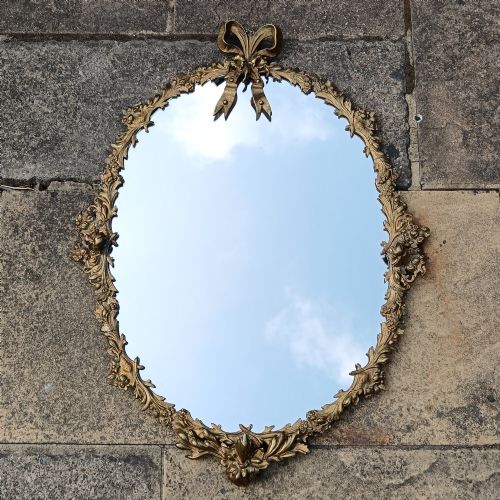
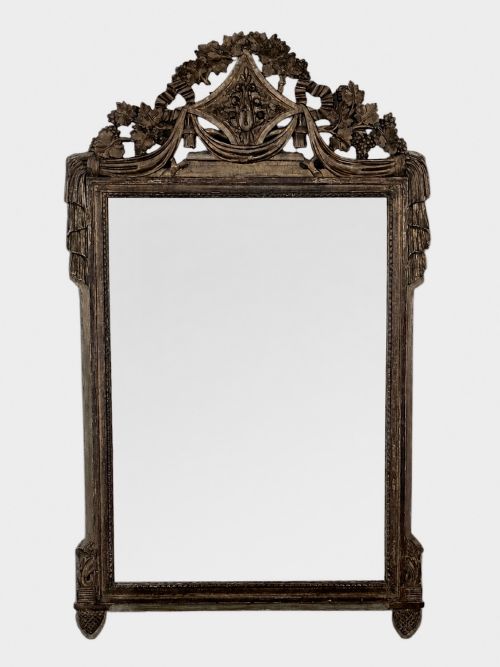
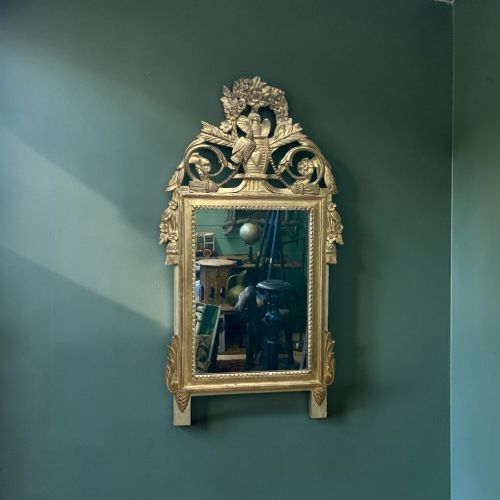
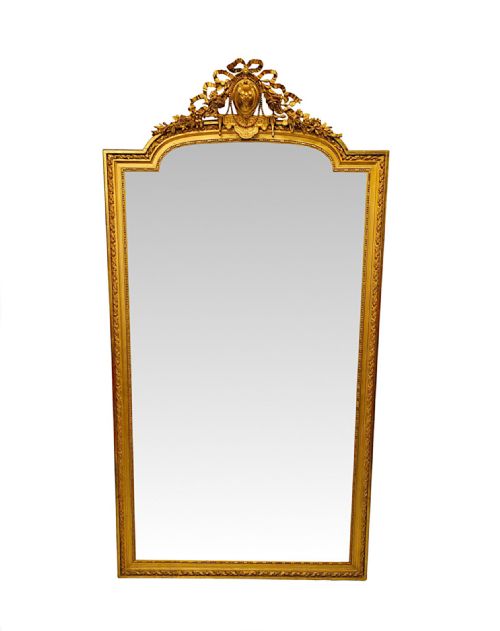
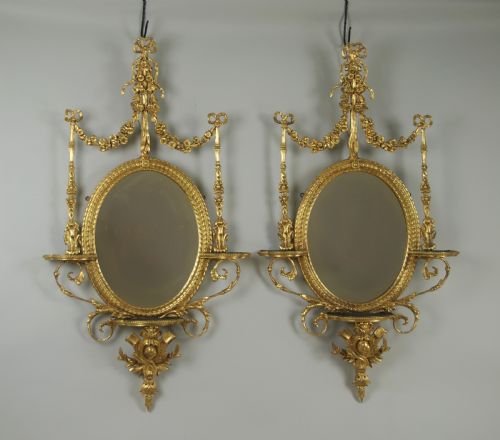
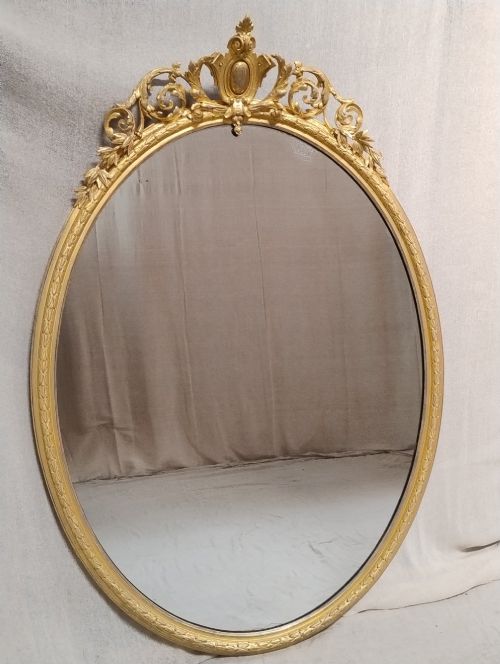
A french louis xvi mirror typically displays the straight lines, urns, swags, and ribbon crests characteristic of neoclassical design rather than the exuberant curves of earlier periods. These items range from grand pier and overmantel looking glasses to smaller marriage mirrors and trumeau panels incorporating oil paintings.
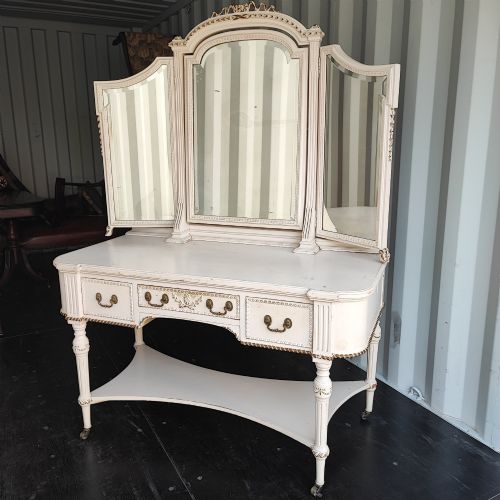
Most examples encountered on this page date from the nineteenth century, spanning revivals such as the Louis XVI style and Belle Époque, alongside genuine eighteenth-century pieces. Alongside wall mirrors, related forms such as cheval mirrors, girandoles, and dressing tables appear across the selection.
How they were made
Makers shaped frames from carved wood, gesso, and composition, applying gold leaf or paint to the surfaces to achieve a gilded or decorated finish. Giltwood and painted wood form the primary structure for many wall and pier mirrors.
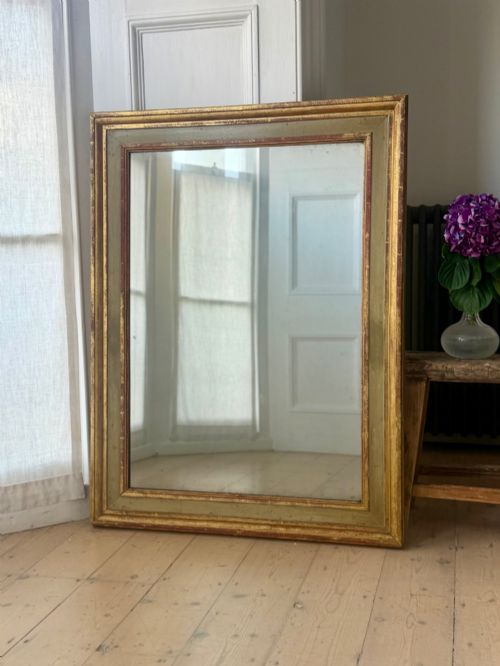
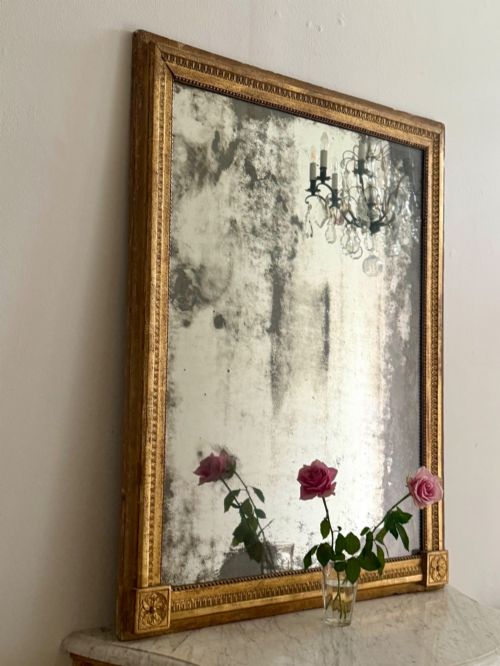
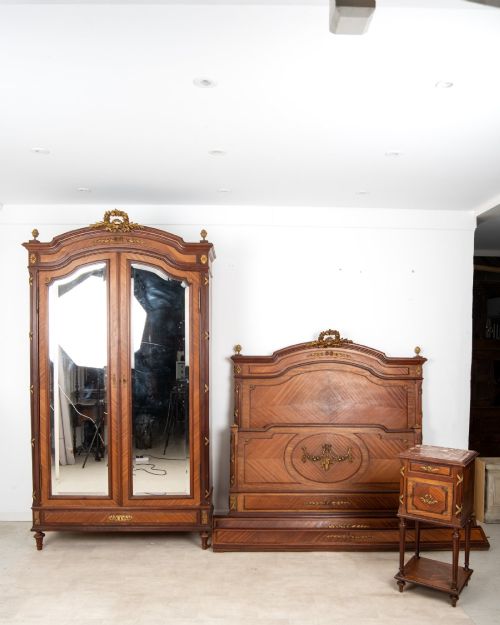
Original glazing often consists of mercury glass or early bevelled glass plates, sometimes exhibiting foxing and age spots that denote long history. Ormolu mounts and gilt bronze details further embellish select mahogany or giltwood frames.
Listings feature items from the eighteenth century, the nineteenth century, and the early twentieth century, utilising materials such as mercury glass, giltwood, and gesso.
What varies in quality
Depth and crispness of hand-carving distinguish finer frames from simpler moulded versions, particularly in repetitive motifs like rope twists, ribbon crests, and floral garlands. The integrity of the original gilding or paint surface, free from clumsy modern overpainting, sets the better examples apart.
The survival of original mercury glass or early bevelled plates with natural foxing contributes significantly to authenticity and visual depth. Construction details, such as the joinery of the wooden carcass and the weight of the cast gesso ornament, reflect the workshop standards of the period.
Maples of London and Paris
The French Louis XVI Mirror Glossary
- Trumeau mirror
- A decorative mirror panel combined with an oil painting or carved wooden motif, designed to fit wall spaces between windows or above mantelpieces.
- Mercury glass
- A silvered glass type produced by pouring a liquid mercury amalgam between double-walled blown glass, known for a deep, mottled reflection.
- Gesso
- A plaster-like mixture applied to wooden frame bases and carved or moulded to receive gold leaf or paint finishes.
- Girandole
- A branched wall sconce holding candles, frequently attached below a looking glass to amplify room lighting.
- Pier mirror
- A tall looking glass designed specifically to hang on the narrow wall space, or pier, situated between two windows.
French Louis XVI Mirror: Frequently Asked Questions
What is a french louis xvi mirror?
A french louis xvi mirror is a neoclassical looking glass defined by geometric symmetry, straight framing lines, and decorative elements such as ribbons, urns, and acanthus leaves. These pieces reflect the shift away from rococo extravagance toward classical restraint.
Originating in the eighteenth century and revived frequently during the nineteenth century, these mirrors serve as decorative wall centerpieces and functional dressing items.
How do I identify mercury glass?
Mercury glass typically displays a cloudy, uneven reflective backing with characteristic dark spots known as foxing. This appearance comes from the historic manufacturing process involving liquid metal amalgams sealed between glass layers.
Modern replacements lack this mottled depth, presenting a uniform silver reflection instead of the historic aged patina.
What is a trumeau mirror?
A trumeau mirror integrates a looking glass plate with an upper panel containing an oil painting, carving, or silk insert. These architectural pieces were designed for eighteenth and nineteenth-century domestic interiors.
Placed above fireplaces or between windows, they combine painted artwork with functional reflection in a single wall hanging.
How should I hang a heavy antique mirror?
Heavy antique giltwood and gesso mirrors require secure wall fixings distributed across the main structural frame rather than relying on decorative crests. Professional wall anchors suited to plaster or masonry prevent accidental displacement.
Weight distribution matters because older wooden frames and glass plates add considerable load to hanging wires or brackets.