


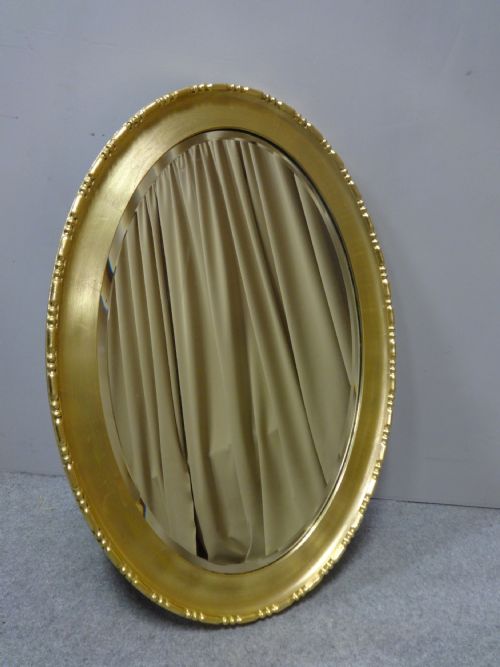


Brass Frame Oval Mirror
A brass frame oval mirror brings warmth and reflective depth to a room, offering the clean curves of Victorian, Edwardian, and Arts and Crafts design.
Brass Frame Oval Mirror
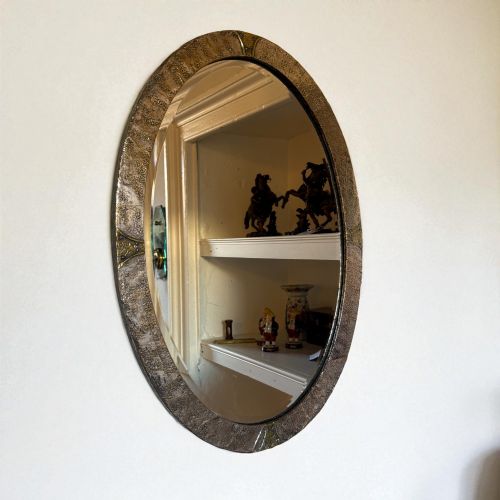
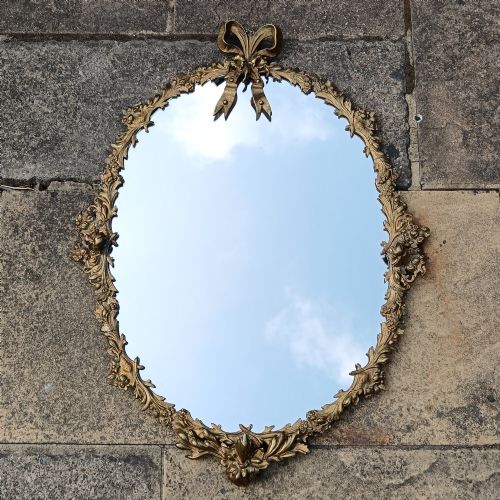
A brass frame oval mirror is a wall-hung looking glass defined by its curved metal border, appearing across periods from the Regency era through to the early twentieth century.
You will most commonly encounter nineteenth-century pieces alongside Arts and Crafts examples, ranging from simple Victorian brass frames to elaborate Glasgow School designs with decorative metalwork.
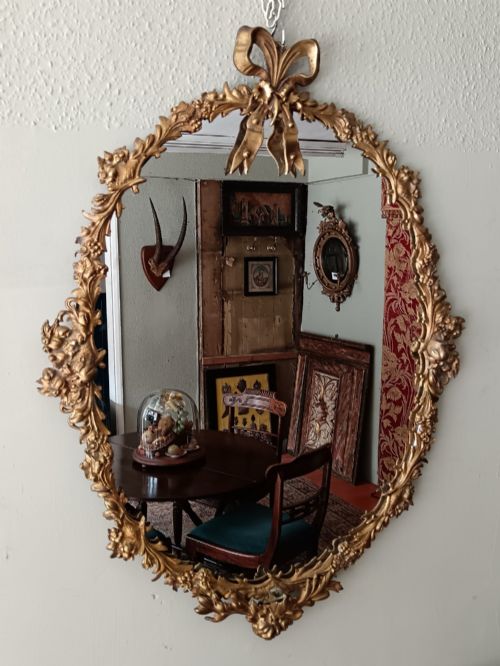
These mirrors take various forms, from plain domestic hangings to French Louis XVI revival gilt bronze pieces and ebonised Napoleon III variants.
How they were made
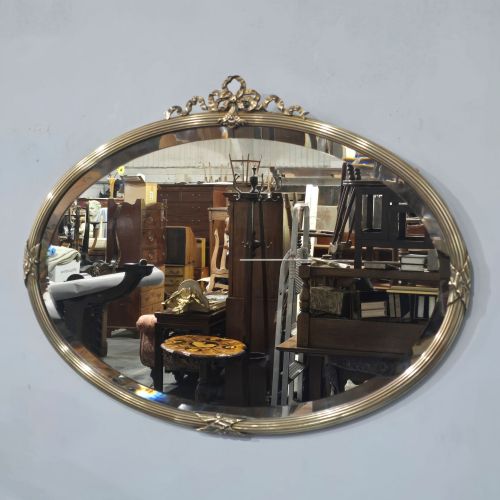
Frames combine brass, gilt bronze, and gilt metal, frequently housing bevelled glass or standard mirror glass set within wooden or ebonised backings.
Arts and Crafts examples display characteristic hammered brass techniques, sometimes incorporating enamel details and flanking motifs such as peacocks.
Earlier pieces utilise giltwood and cast bronze work, demonstrating the period methods of joining and finishing metal and glass.
Peacocks occasionally stand guard on either side of the glass, watching over your reflections with hammered brass indifference.
What varies in quality
Quality rests in the weight and thickness of the brass frame, the crispness of any cast or hammered decoration, and the depth of the bevel on the glass.
Finer examples show considered proportion between the oval glass plate and the surrounding metalwork, whereas simpler pieces rely on plain domestic construction without stylistic ornamentation.
The Brass Frame Oval Mirror Glossary
- Bevelled glass
- Glass with an angled edge ground and polished to a specific width. This catches the light and adds a decorative border to the reflection.
- Gilt bronze
- Bronze coated with a thin layer of gold or gold-coloured alloy. It provides a rich surface finish seen on French revival pieces.
- Arts and Crafts
- A design movement valuing handcraftsmanship and simple forms. It produced hammered brass frames with distinct surface textures.
- Napoleon III
- A French stylistic period spanning the mid to late nineteenth century. Pieces often feature ebonised wood and dark, ornate finishes.
Brass Frame Oval Mirror: Frequently Asked Questions
Where should I hang an oval mirror?
An oval mirror suits narrow wall spaces, hallways, or above a mantelpiece where the curved frame softens the linear geometry of a room.
They work well hung singly or paired with traditional furniture to draw light into darker corners.
How do I date a brass frame mirror?
Dating relies on examining the construction of the backing, the composition of the brass or gilt bronze, and stylistic motifs like Arts and Crafts hammering.
Twentieth-century pieces often display lighter metal gauges compared to substantial nineteenth-century examples.
Are these mirrors heavy?
Weight varies considerably depending on the materials used in the frame and the thickness of the glass and backing board.
Cast bronze and larger Victorian pieces require secure wall fixings, while lighter Edwardian metal frames need simpler support.
What is the Glasgow Style?
The Glasgow Style is a Scottish variant of the Arts and Crafts movement known for distinctive decorative elements like stylised birds and floral motifs.
Mirrors from this tradition feature hand-worked brass frames with figurative panels flanking the glass.