



Ribbon Bow Crest Mirror
A ribbon bow crest mirror is a decorative wall hanging topped with a carved or cast ribbon knot, prized for bringing French eighteenth-century elegance into a room.
Ribbon Bow Crest Mirror
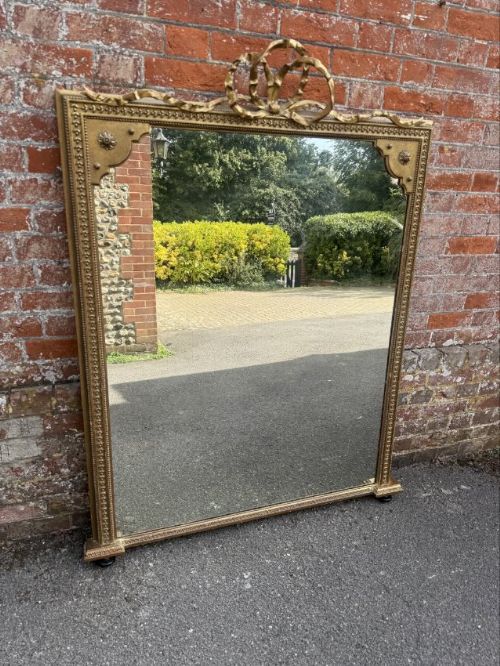
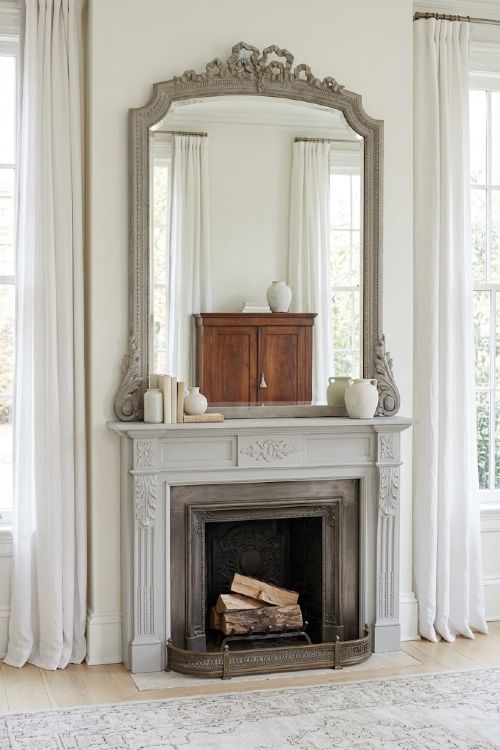
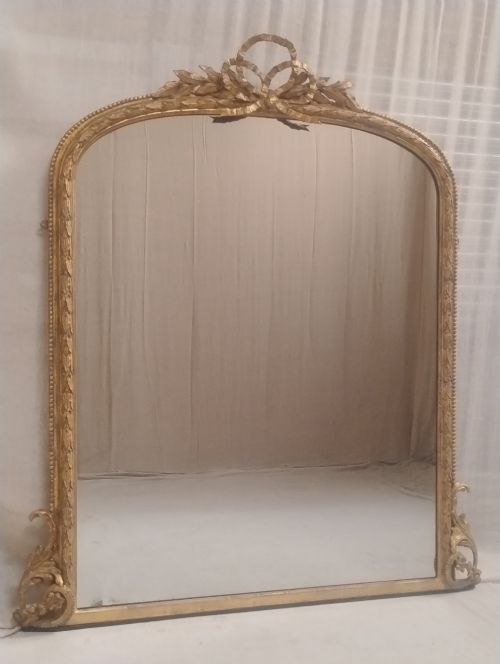
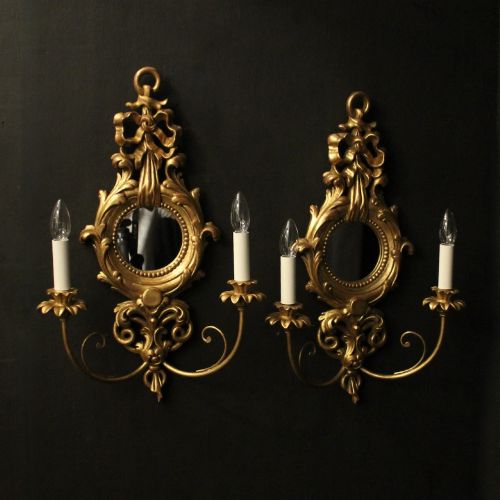
A ribbon bow crest mirror takes several forms across the nineteenth and early twentieth centuries, appearing as large giltwood overmantels, smaller oval wall pieces, and twin-arm girandoles. These objects derive their character from neoclassical revivals, particularly Louis XVI and Adam styles, which favour symmetry, crisp plasterwork, and delicate crestings above the glass plate.
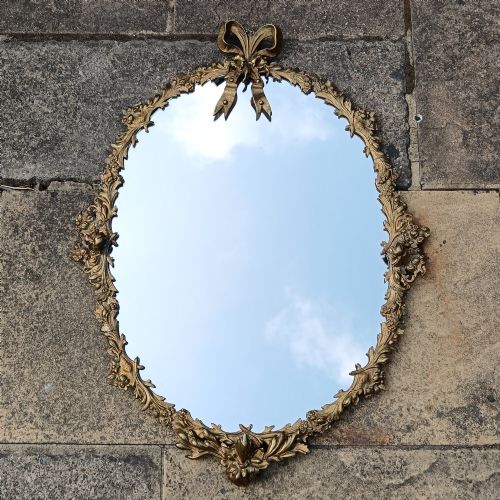
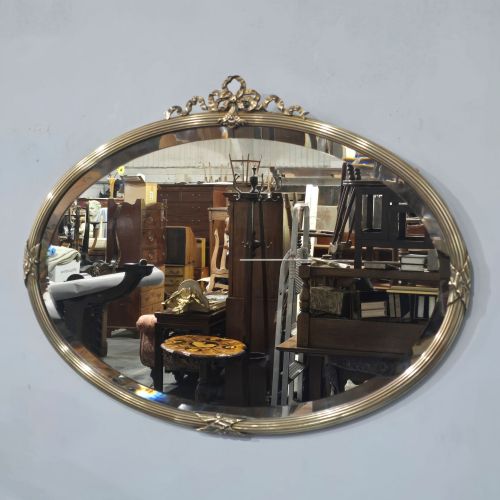
The version most commonly encountered on this page is the oval wall mirror featuring a gilt frame topped by a distinct carved or cast bow. Pieces span the Victorian, Edwardian, and later periods, utilising both English and French design vocabularies while maintaining the characteristic floral or ribbon motifs at the summit.
How they were made
Makers constructed these frames using timber carved directly or built up with moulded gesso to create crisp neoclassical relief ornaments. Giltwood surfaces combine gold leaf laid over a prepared bole ground, catching the light across the flutings and carved ribbon details.
Alternative constructions employ cast gilt bronze or brass, particularly in French oval wall pieces and girandoles where metal allows for sharper botanical and ribbon casting than wood alone. Mirror plates include bevelled glass variants, often held within heavy frames designed to withstand decades of wall hanging.
Materials recorded across these items range from traditional carved giltwood and gesso to solid brass and cast gilt bronze.
What varies in quality
The refinement of the cresting separates standard examples from superior ones, as a crisply undercut carved ribbon or a finely chased bronze bow reveals the hand of a skilled artisan. Inferior pieces rely on thick, unarticulated plaster moulding that softens the delicate contours of the bow and surrounding swags.
The integrity of the gilding and the weight of the underlying timber or metal frame dictate overall excellence. Deeper, more complex frames with original gilding over gesso display greater depth than later surface applications or lightweight substitute materials.
The Ribbon Bow Crest Mirror Glossary
- Giltwood
- Wood carved and coated with gold leaf. This finish provides the characteristic bright metallic sheen seen on nineteenth-century revival frames.
- Gesso
- A plaster mixture applied to wood frames and carved into relief ornament before gilding. It allows for intricate surface detail around the cresting.
- Girandole
- A wall mirror featuring attached candle sconces. These fixtures combine reflective glass with functional arms for lighting.
- Overmantel mirror
- A large horizontal or vertical glass designed to hang specifically above a fireplace mantel. These pieces anchor nineteenth-century drawing room schemes.
- Bevelled glass
- A mirror plate with angled edges cut and polished back. This technique creates a prismatic border that catches light distinctively.
Ribbon Bow Crest Mirror: Frequently Asked Questions
Where should I hang a ribbon bow crest mirror?
These mirrors suit principal reception rooms, hallways, or above bedroom mantelpieces where their decorative cresting can act as a focal point. Their vertical or oval proportions help draw the eye upward in rooms with high ceilings.
Ensure the wall construction supports the weight, particularly for larger giltwood overmantels and metal-framed pieces that require secure fixings.
How do I date a ribbon bow crest mirror?
Dating relies on examining the construction of the frame, the backing boards, and the characteristics of the mirror plate itself. Victorian and Edwardian revival pieces often adapt earlier Louis XVI or Adam vocabulary using nineteenth-century manufacturing methods.
Clues appear in the type of gesso preparation, the fasteners used at the back, and whether the glass shows subtle distortions or modern uniformity.
Are these mirrors English or French?
The selection includes both English interpretations, such as Adam style designs, and French productions, including Louis XVI gilt bronze and carved giltwood variants. English makers often adapted neoclassical motifs for domestic Victorian interiors.
French pieces frequently display finer metal casting or distinctively carved timber work associated with continental workshops of the nineteenth century.
How do I clean a antique gilt frame?
Dusting requires a very soft, dry brush to prevent disturbing delicate gesso or gold leaf layers on carved wooden surfaces. Moisture and modern chemical cleaners must be avoided entirely to protect the historic finish.
Glass plates can be wiped carefully with a cloth dampened lightly with water or glass cleaner, ensuring no liquid seeps behind the frame rebate.