



Antique Ormolu Wall Glass
These antique ormolu wall glass pieces bring glittering brass, bronze and crystal panels into dark corners with genuine period weight.
Antique Ormolu Wall Glass
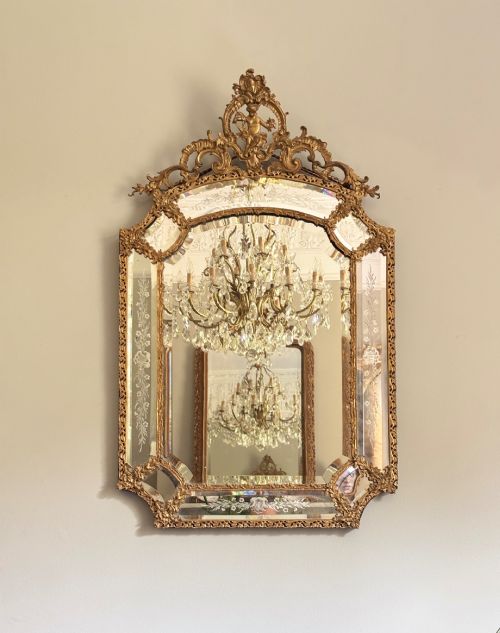
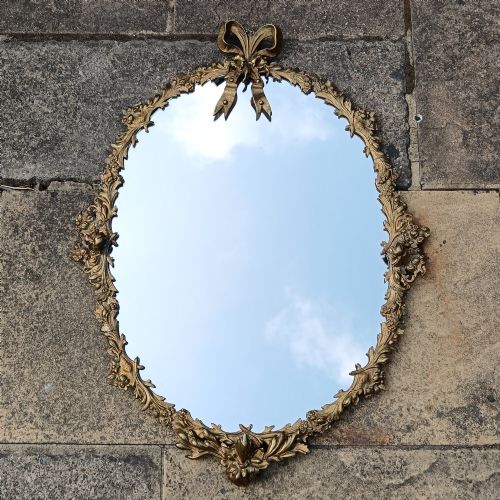
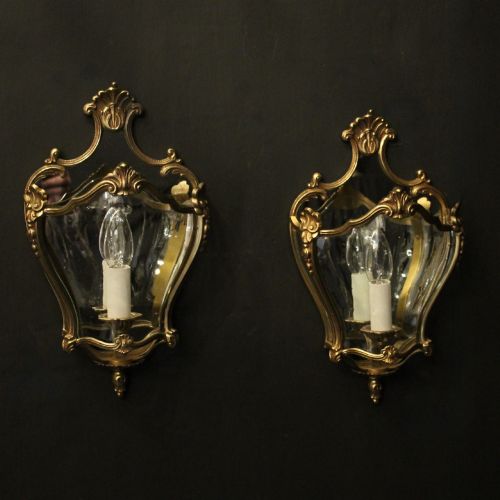
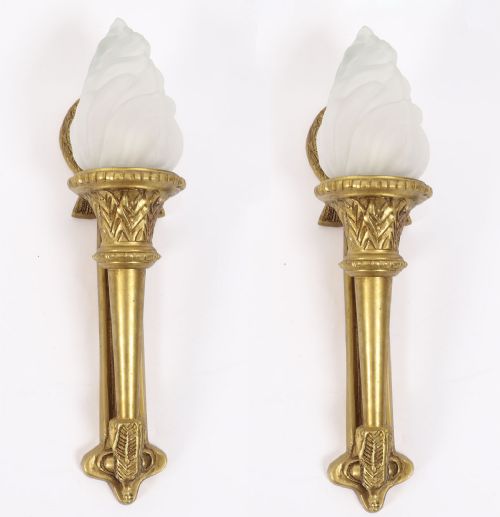
When you search for antique ormolu wall glass, you encounter a distinct group of decorative wall fixtures and mirrors framed or mounted in gilded metal. The items listed here span from the nineteenth century into the early twentieth century, taking the form of wall lights, sconces, half lanterns, barometers and overmantel mirrors.
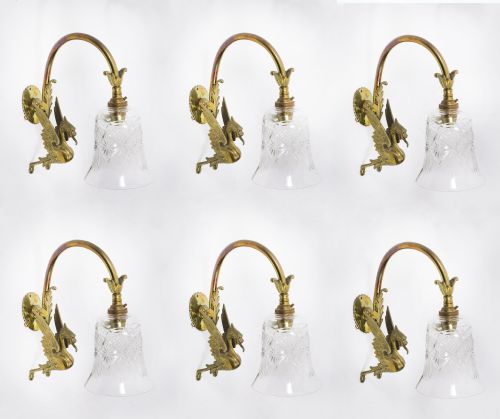
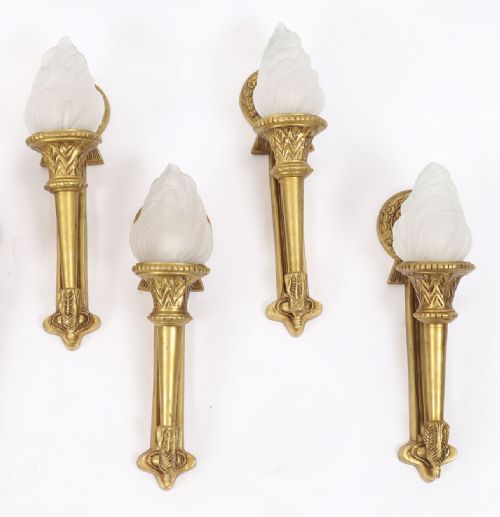
You are most likely to meet French Neo-Classical, Louis XVI Revival and Rococo styles among these selections. Many feature cast bronze or brass paired with cut or frosted glass panels, often arranged as flaming torch designs or griffin wall lights.
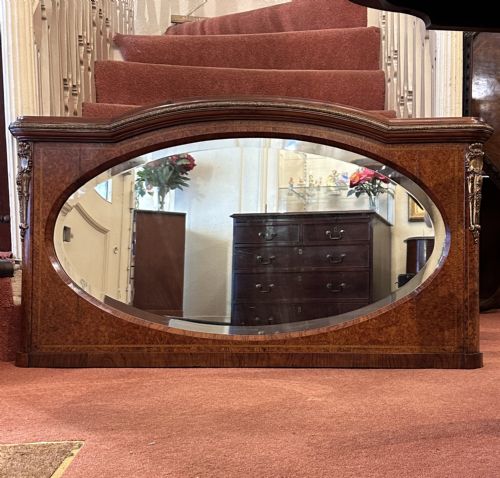
The objects also include mahogany, burr yew-wood and classical oval wall mirrors framed with gilded bronze or ormolu mounts. These pieces served both functional lighting and decorative display roles in domestic interiors across different European eras.
How they were made
The manufacture of these pieces relies heavily on bronze, brass and mercury-gilded or chemically gilt bronze known as ormolu. Artisans cast these metals into intricate decorative frames, sconces and mounts featuring classical motifs, foliate scrolls and figural elements.
Glass components include cut glass, frosted glass and flat mirror plates integrated directly into the metal armature. Wood elements such as mahogany and burr yew-wood provide supportive backings or frames for selected wall mirrors and barometers.
Listings in this category span the nineteenth century and the early decades of the twentieth century, focusing on French Neo-Classical, Rococo and Empire styles.
What varies in quality
The standard of the casting work dictates much of the visual distinction in these pieces. Finer examples display crisp, deep chasing on the ormolu and gilt bronze mounts where minor details remain sharp rather than softened by worn moulds.
The integration between the glass elements and the metal framework also signals grade. Superior items utilise heavier gauge brass or bronze and properly bevelled or hand-cut glass panels that sit securely within the structural mounts.
The Antique Ormolu Wall Glass Glossary
- Ormolu
- A gilded bronze technique utilising a mercury amalgam to apply gold to a bronze base. This process creates a warm, durable golden finish characteristic of fine antique metalwork.
- Gilt Bronze
- Bronze metal that has been coated with a thin layer of gold or gold leaf. It offers a similar decorative appearance to ormolu and appears frequently in nineteenth-century French lighting.
- Sconce
- A wall-mounted light fixture designed to hold candles or electric lamps. In this selection, sconces often incorporate ormolu mounts and glass elements.
- Overmantel Mirror
- A large mirror designed to hang directly above a fireplace mantel. These pieces often feature decorative wooden frames accented with ormolu mounts and domed tops.
- Aneroid Barometer
- A device for measuring atmospheric pressure without using liquid. Nineteenth-century versions frequently utilised decorative brass or gilt frames for domestic display.
Antique Ormolu Wall Glass: Frequently Asked Questions
How do I hang heavy ormolu wall lights safely?
These pieces require direct fixing into masonry or substantial timber studs within the wall. Due to the weight of cast bronze and glass components, standard plasterboard fixings remain unsuitable.
Consult a professional electrician or installer to assess the wall structure before mounting any fixture that combines heavy metal and glass panels.
Can I convert antique wall sconces for electricity?
Many nineteenth-century lighting pieces have already undergone conversion for modern electrical wiring over their long lifespan. Check the existing internal channels and bulb holders to determine their current status.
A qualified restorer can adapt older ormolu and glass fittings safely while preserving the external period appearance and original metalwork.
How do I clean ormolu and gilt bronze safely?
Dust the metal surfaces gently with a soft, dry brush to remove settled particles without disturbing the gilt layer. Avoid abrasive polishes, harsh chemical cleaners or water on ormolu, as these substances can strip the historic finish.
Professional conservation methods are recommended for removing stubborn grime from intricate cast bronze details.
What distinguishes Louis XVI style from Rococo?
Louis XVI style pieces emphasise straight lines, symmetry, classical urns, swags and neoclassical geometry. They reflect a disciplined return to classical proportions during the late eighteenth century and its later revivals.
Rococo items favour asymmetrical curves, C-scrolls, naturalistic plant forms and exuberant ornamentation that feels much more fluid and playful.