


French Furniture Storage
French furniture storage brings together centuries of timber work, marble tops and brass mounts built to hold clothes, books and wine.
French Furniture Storage
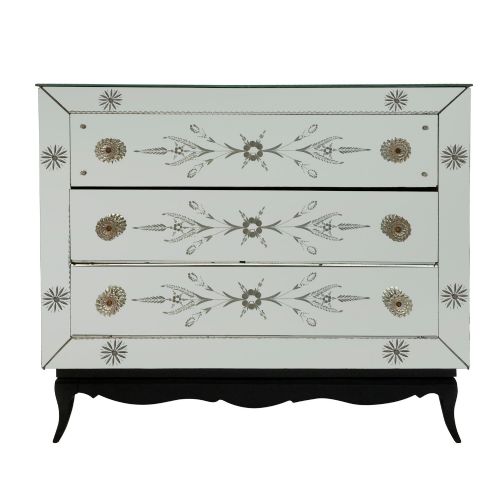
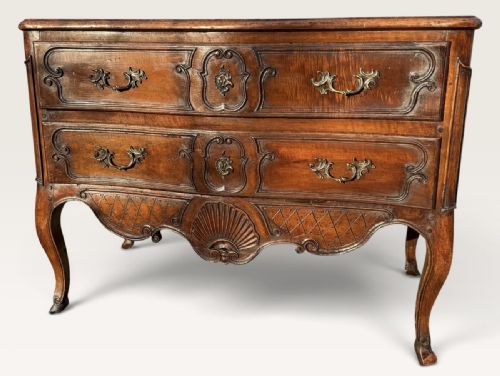
French furniture storage spans centuries of domestic utility, taking the form of commodes, chests of drawers, cabinets, bookcases and cupboards. You encounter pieces originating from provincial workshops as well as urban centres, dating from the eighteenth century through to the art deco period of the nineteen thirties.
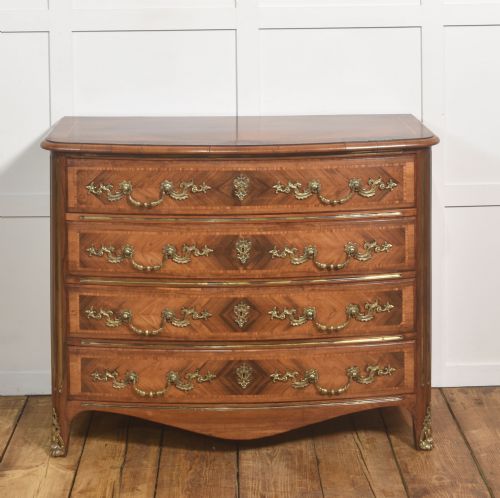
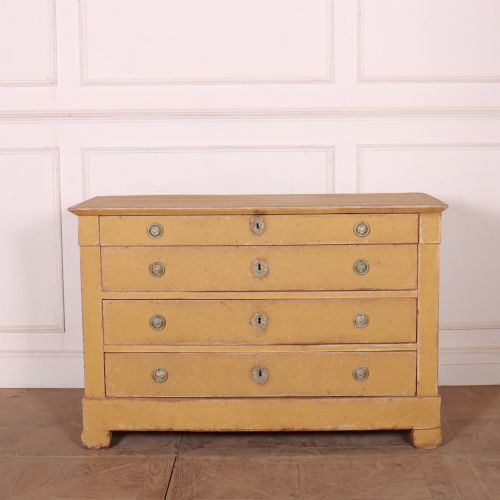
The most common pieces on this page are commodes and chests of drawers, alongside side cabinets, bookcases and armoires. These items reflect distinct regional and stylistic traditions, ranging from the serpentine lines of louis xv models to the geometric forms of later twentieth century design.
Materials and Technique
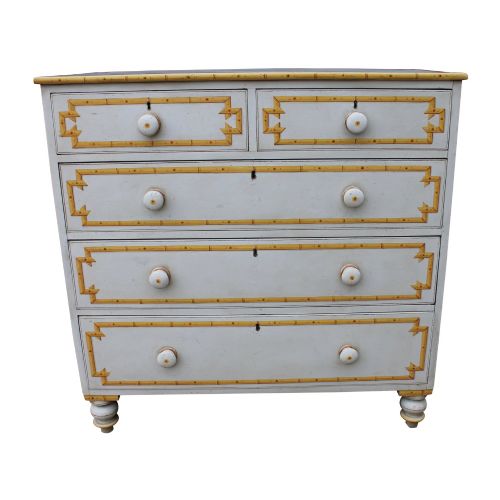
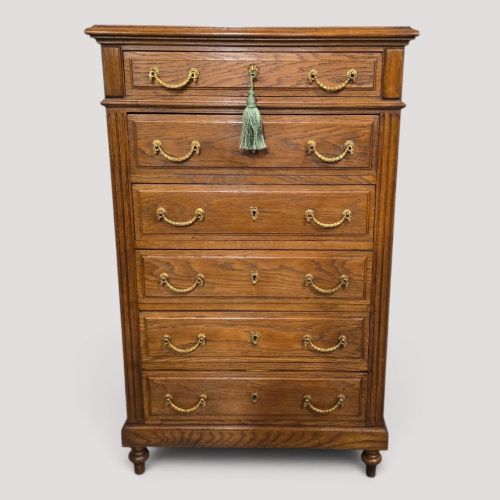
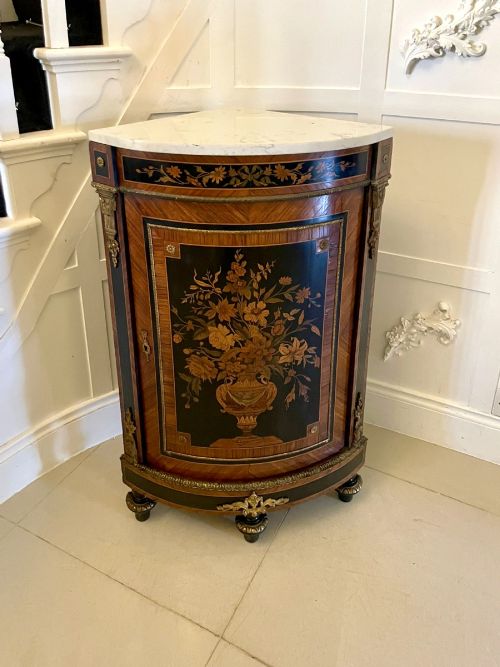
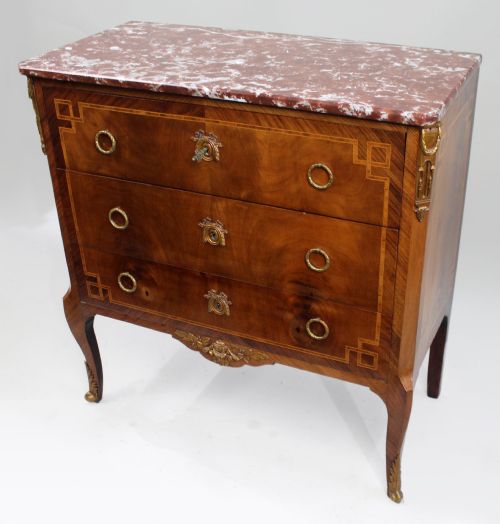
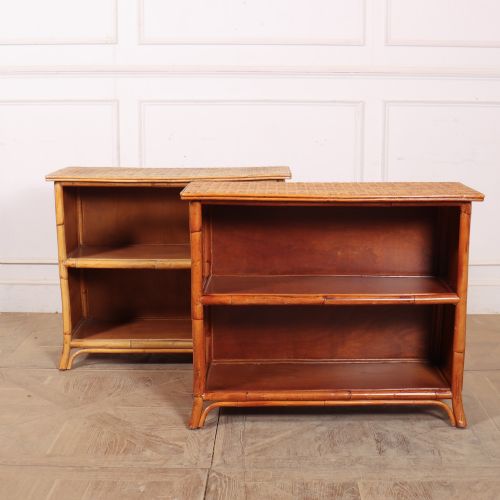
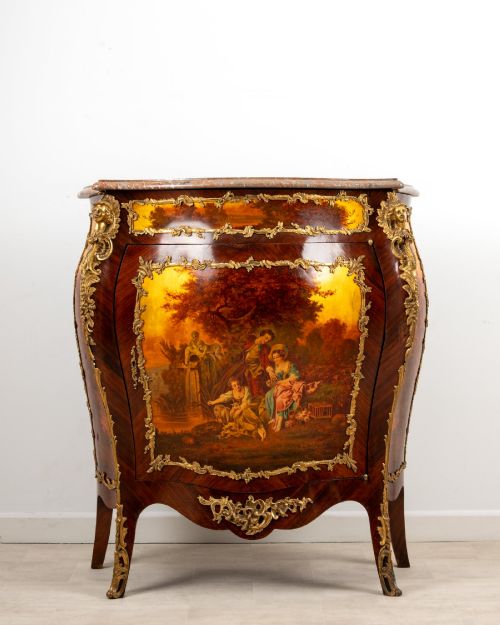
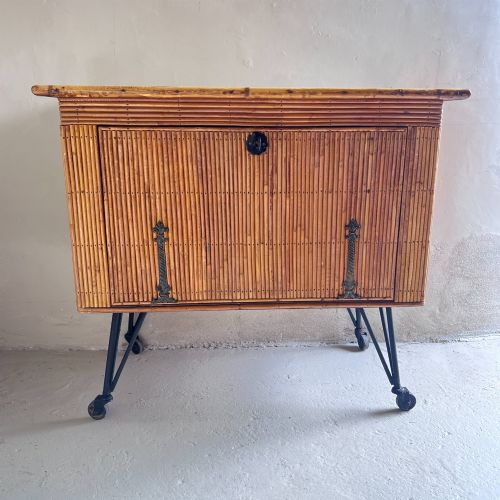
Cabinet makers utilised a rich palette of timbers including walnut, oak, mahogany, kingwood, rosewood, burr ash, chestnut and fruit wood. Many surfaces feature elaborate marquetry or parquetry inlay patterns, while others display painted finishes, faux bamboo turnings or dark ebonised treatments.
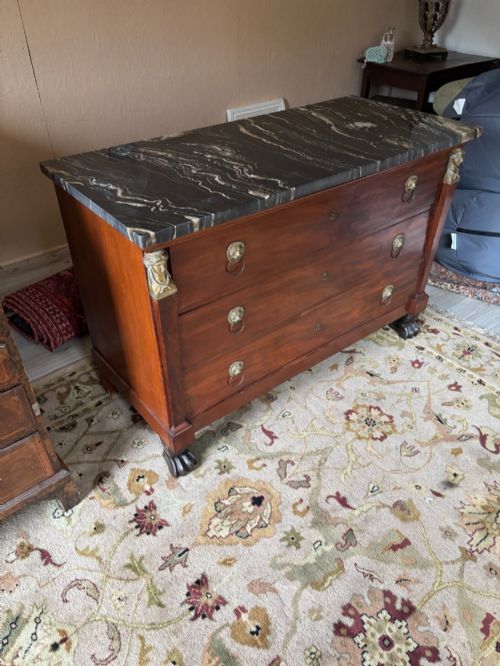
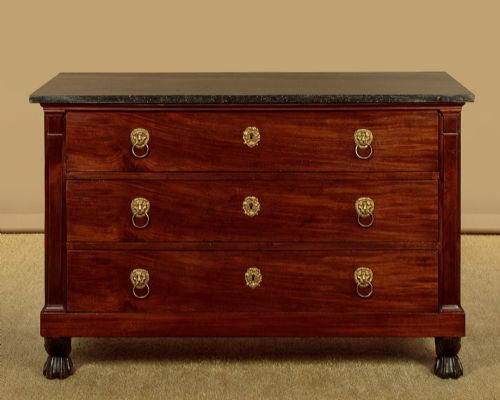
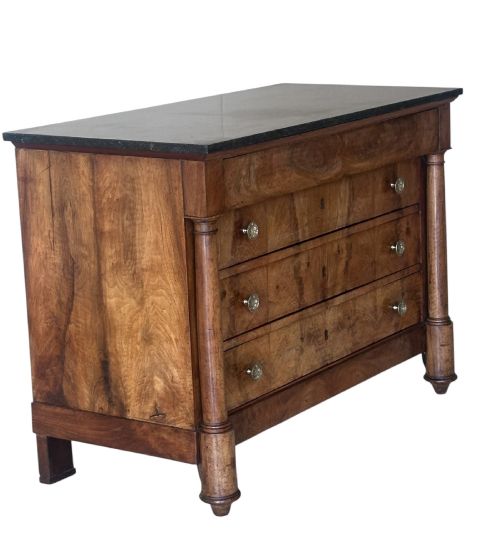
Structural heft often comes from dense hardwoods combined with applied ormolu mounts made from gilded bronze, alongside fitted tops of white, rouge or dark marble. Specialised touches include tambour fronts, parchment covered drawer panels and detailed vernis martin lacquer work.
A house maid cupboard stands ready for vintage linens, while a bamboo drinks cabinet waits on cast iron legs for modern hospitality.
Judging Quality
Quality rests in the precision of the timber selection and the integration of decorative elements. Grain alignment across drawer fronts, the crispness of ormolu casting and the correct weight of fitted marble indicate the standard of production.
Provincial pieces reveal their merit through honest joinery and regional timber choices, whereas high style urban items depend on sophisticated veneer work, complex serpentine shaping and intact historical surface finishes.
The French Furniture Storage Glossary
- Commode
- A low chest of drawers or cabinet originating in France during the seventeenth century. It typically stands on relatively short legs and serves as a principal storage unit for the bedroom or salon.
- Ormolu
- Gilded brass or bronze mounts applied to furniture for decorative effect. The metal is cast and chased to produce crisp foliage, scrollwork or figural details.
- Marquetry
- Decorative veneer work arranged in pictorial or geometric patterns using various coloured woods. Craftsmen cut thin slices of timber and fit them together precisely before gluing them to the carcase.
- Vernis Martin
- A type of simulated Japanese lacquer developed in eighteenth century France by the Martin brothers. It provides a glossy, durable finish often decorated with oriental scenes.
- Tambour
- A flexible sliding door made from narrow strips of wood glued to a canvas or leather backing. It runs in tracks to cover storage compartments without swinging outwards.
French Furniture Storage: Frequently Asked Questions
What is a French commode?
A French commode is a low chest of drawers designed for domestic storage, often featuring decorative veneer work and a stone top.
These pieces served functional purposes in bedrooms and living spaces while displaying the prevailing decorative style of their period.
How do I identify a marble top cabinet?
Marble top cabinets feature thick stone slabs fitted directly to the wooden carcase, providing a durable and decorative upper surface.
These tops vary in colour from white to rouge and sit loose or fixed depending on the construction date and style of the piece.
What is the difference between provincial and urban pieces?
Provincial storage furniture uses locally available timbers like oak, fruit wood or chestnut with simpler construction methods suited to regional workshops.
Urban pieces often incorporate exotic imported woods, complex marquetry, and sophisticated ormolu mounts produced by city guild craftsmen.
How do I care for antique French storage?
Maintain these wooden and marble pieces by keeping them away from direct heat sources and sudden changes in humidity.
Clean surfaces with a dry cloth and occasionally feed polished timber with an appropriate wax to preserve the finish.