
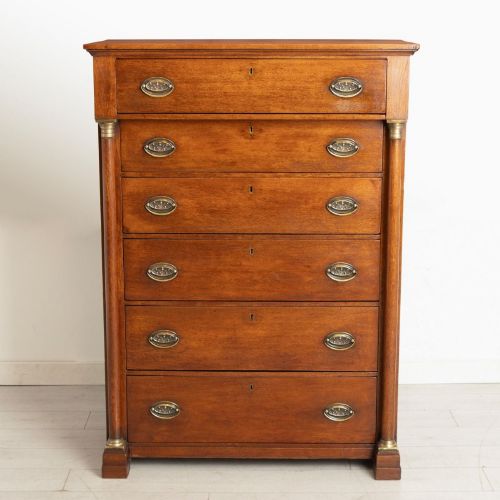
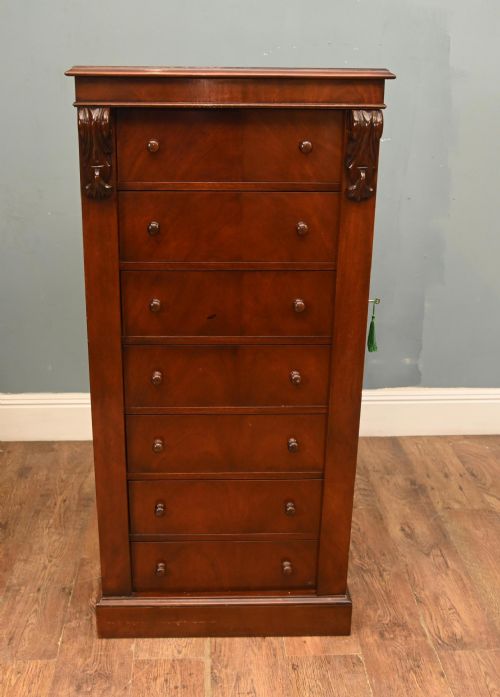
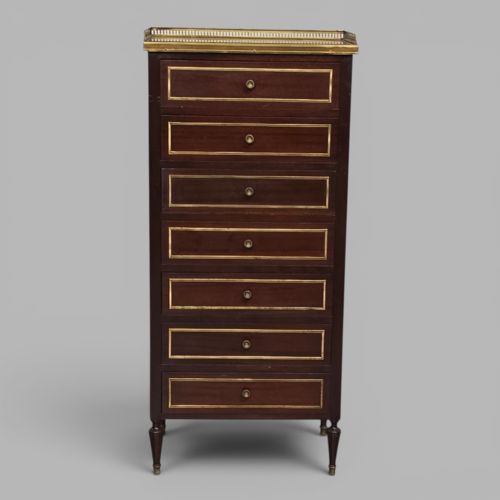


19th Century Semainier
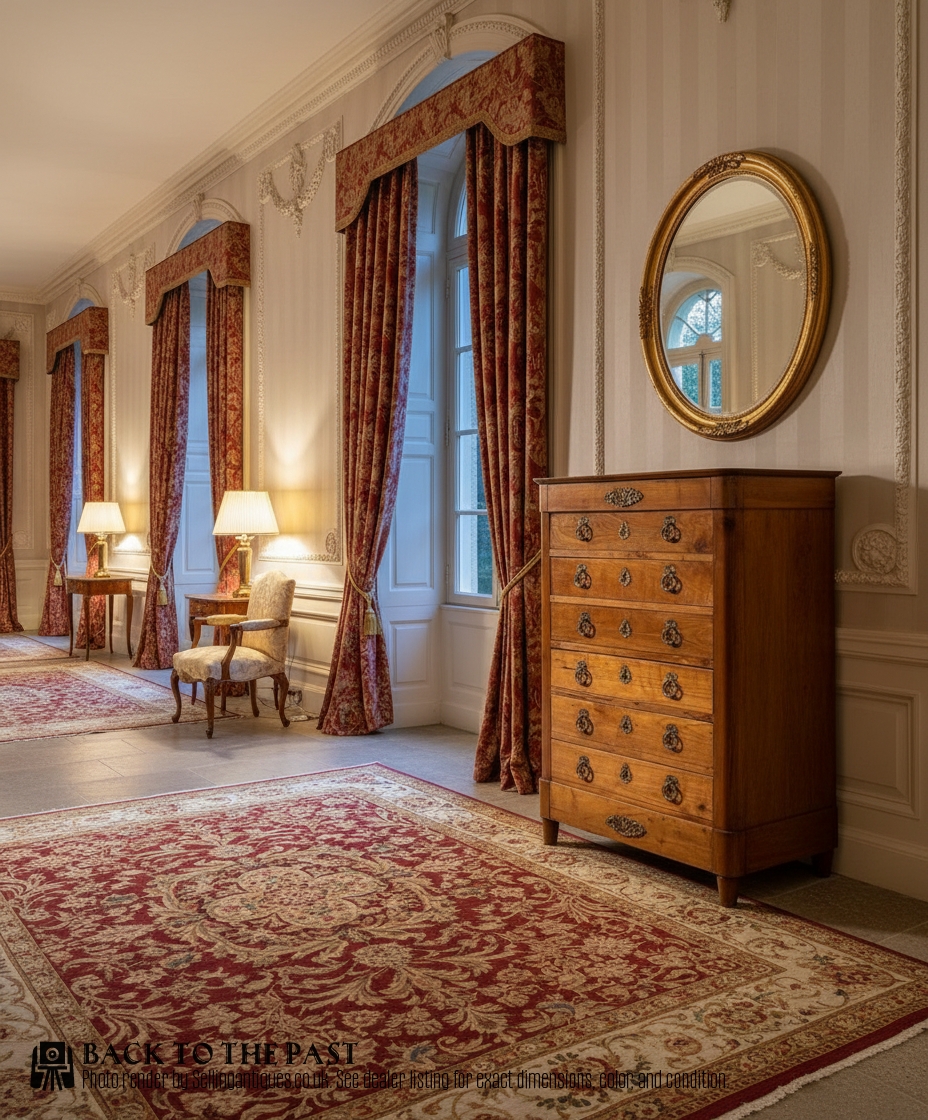
A 19th century semainier is a slender tall chest designed for the bedroom, offering seven drawers for weekly organisation.
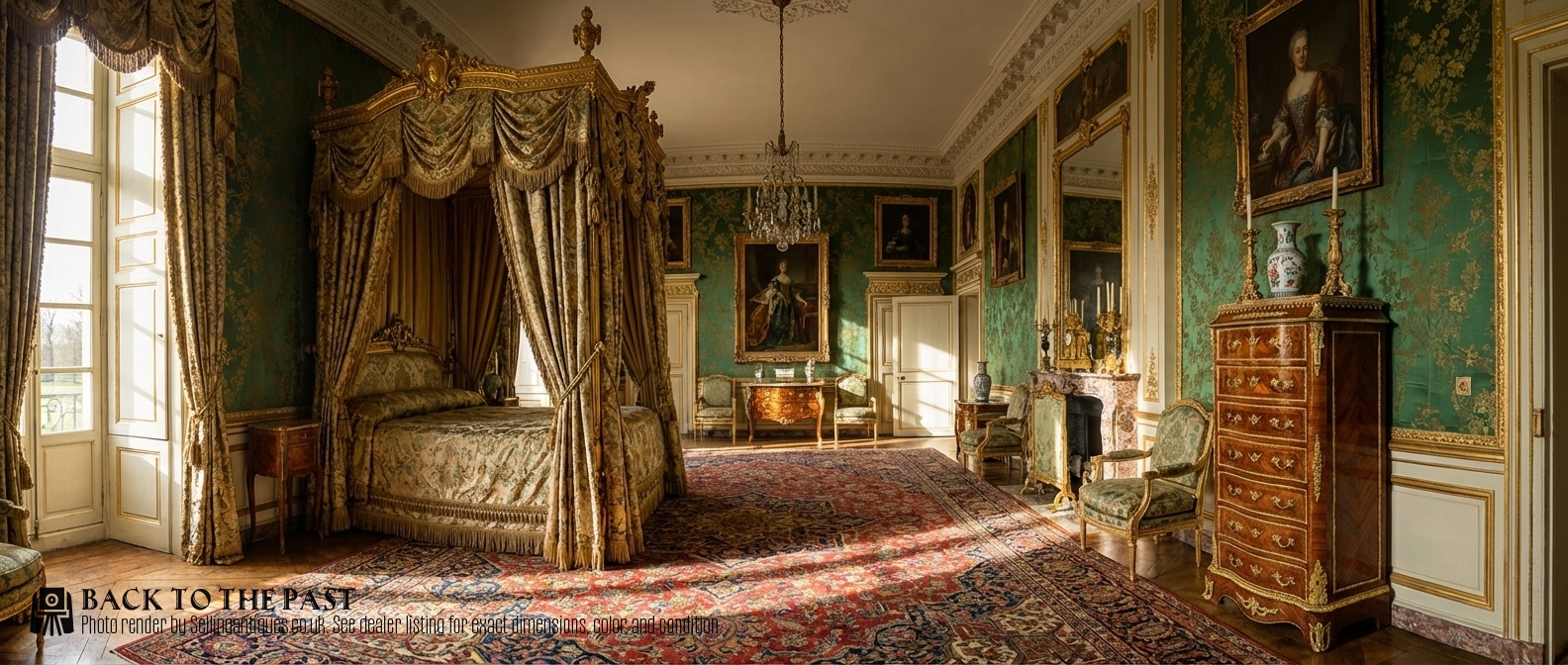
19th Century Semainier
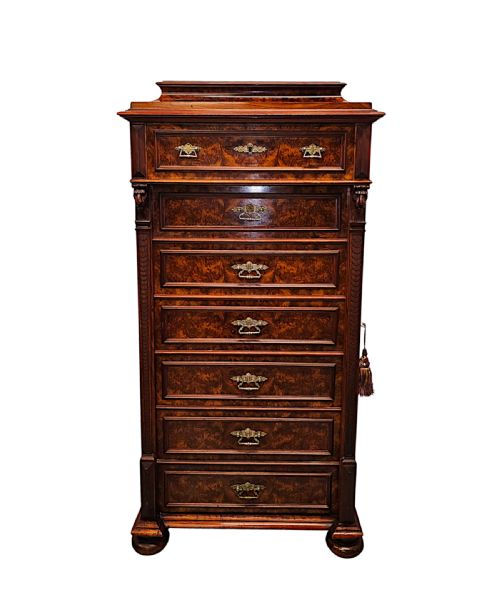
A 19th century semainier presents a tall, narrow profile designed originally to hold a week's supply of linen or personal items. You are most likely to encounter French walnut, mahogany, or cherry examples, often topped with marble.
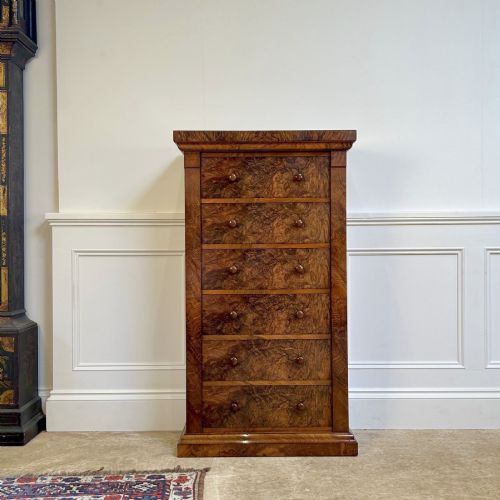
The form frequently overlaps with Wellington chests and tall pedestal drawers across Victorian and French styles. Makers constructed these pieces to maximise vertical storage while occupying a minimal floor footprint.
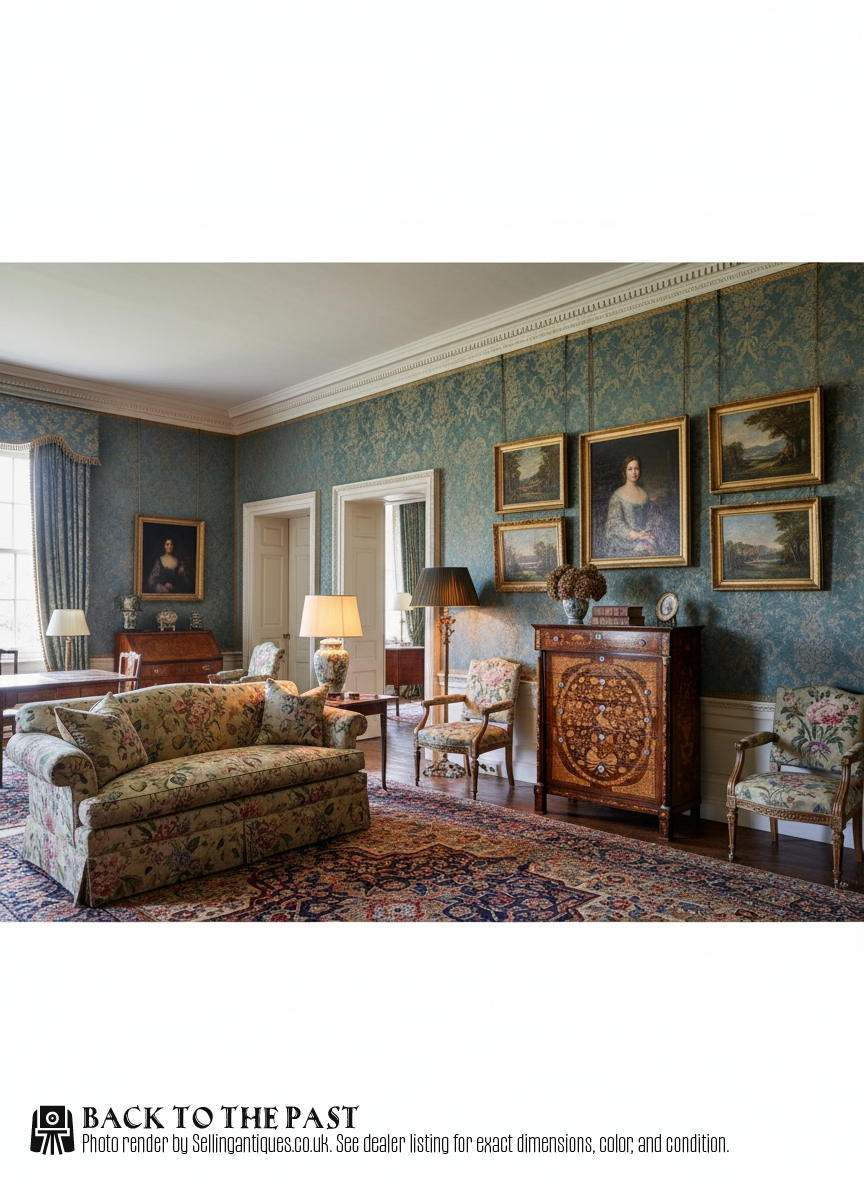
Materials and Techniques
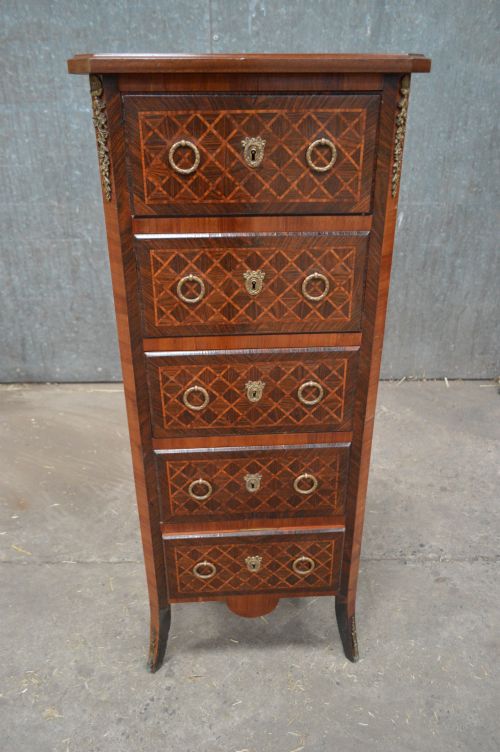
Cabinetmakers utilised dense hardwoods such as mahogany, walnut, and burr walnut, frequently applying intricate marquetry, parquetry, or bookmatched veneers to the drawer fronts. Oak and other secondary timbers served for drawer linings and internal carcases.
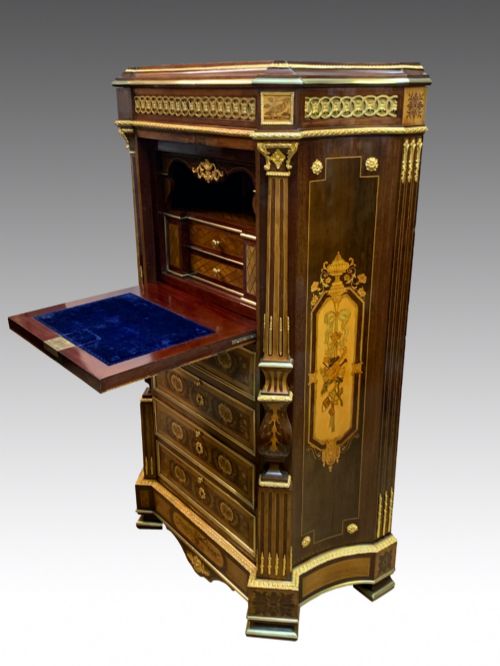
Many French examples incorporate gilt bronze, brass, or ormolu mounts to accent the corners and keyholes. Marble tops provide a durable, finished surface on numerous continental pieces.
19th Century Semainier Retail Price Guide 2026
Typical asking prices for 19th century semainier among the pieces listed under this phrase on Sellingantiques today, from the lower quarter to the upper quarter. They describe what is for sale here now, not the wider market.
Pharmacy origins occasionally surface, turning linen storage into apothecary utility.
Craftsmanship and Proportion
The refinement of the timber veneers and the crispness of the parquetry or marquetry separate standard pieces from exceptional examples. Figured grain selection across all seven drawer fronts demands precise matching by the cabinetmaker.
Integration of mounts, locking mechanisms for the side stile bars on Wellington styles, and the integrity of the marble top dictate the overall standard. Subtle details in the drawer dovetailing and internal secondary woods indicate superior workshop execution.
Gillows·Maison Krieger
The 19th Century Semainier Glossary
- Semainier
- A tall seven-drawer chest originating in France, traditionally intended to hold one garment or item for each day of the week.
- Wellington chest
- A tall, narrow chest of drawers secured by a hinged locking side stile that fastens over the drawer edges.
- Marquetry
- Decorative veneer work forming pictures or geometric patterns using various coloured woods, shells, or ivory.
- Ormolu
- Gilt bronze mounts applied to furniture for decorative enrichment.
- Secretaire
- A desk feature incorporating a fold-down writing flap within the chest structure.
19th Century Semainier: Frequently Asked Questions
What is a 19th century semainier used for?
These tall chests serve primarily as vertical storage units for clothing, linen, or personal accessories in bedrooms and dressing rooms. Their narrow footprint allows them to fit into compact spaces while offering substantial drawer capacity.
Historically, the seven drawers corresponded to the days of the week, helping individuals organise their daily wear. Today, they function effectively as standalone storage or bedside tallboys.
Where were these chests made?
The pieces originate largely from France and Britain, spanning various regional workshops and prominent cabinet makers. French examples frequently showcase walnut, cherry, and marble tops with gilt bronze mounts.
British pieces tend to utilise mahogany, satin birch, or burr walnut. Stylistic influences range from French Empire and Louis XVI style to Victorian and William IV designs.
How do I care for a veneer surface?
Protect antique wood veneers by keeping the chest away from direct sunlight and strong heat sources, which cause timber to dry and crack. Maintain a stable room humidity to preserve the underlying carcase and glue.
Clean surfaces gently with a dry or barely damp soft cloth, avoiding commercial silicone polishes. Wax occasionally with a quality beeswax to nourish the timber grain.