





French Empire Tallboy
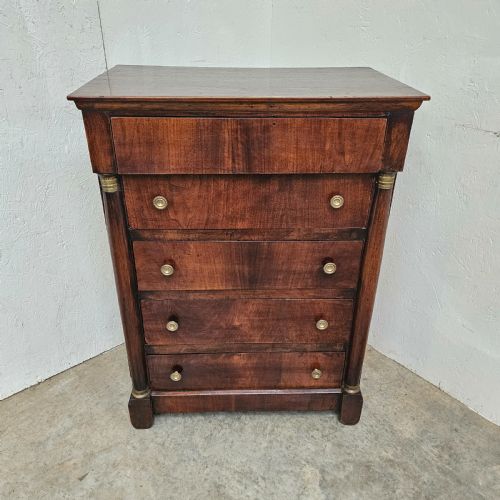
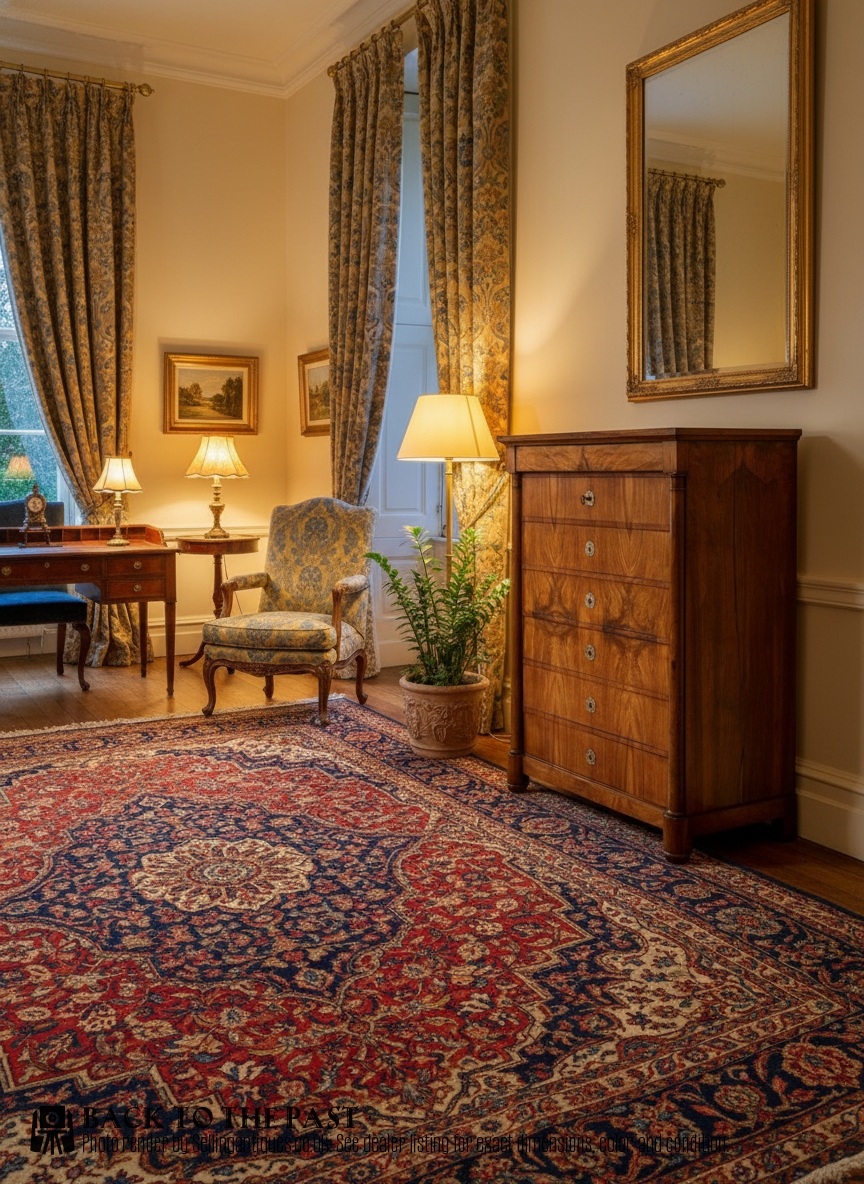
A french empire tallboy brings architectural dignity and vertical presence to a room, offering substantial storage without claiming excessive floor space.
French Empire Tallboy
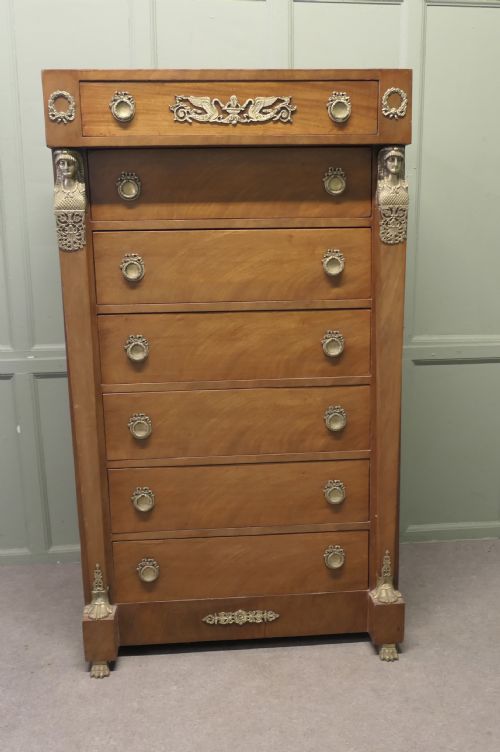
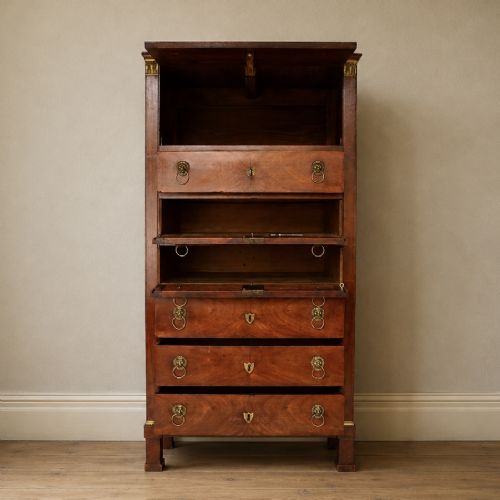
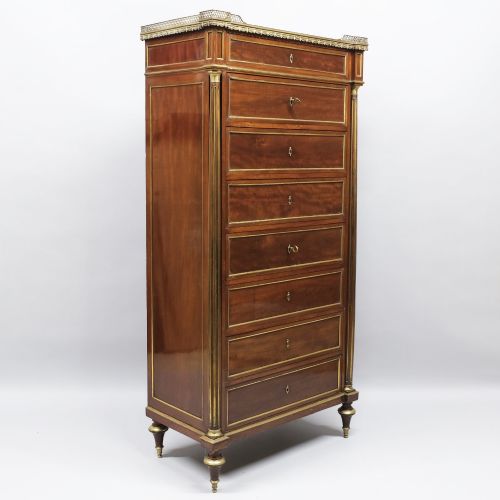
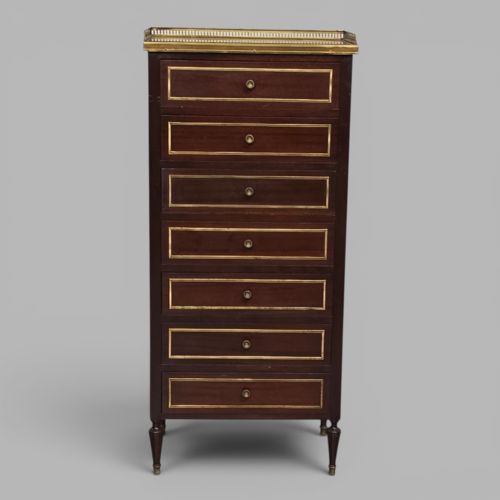
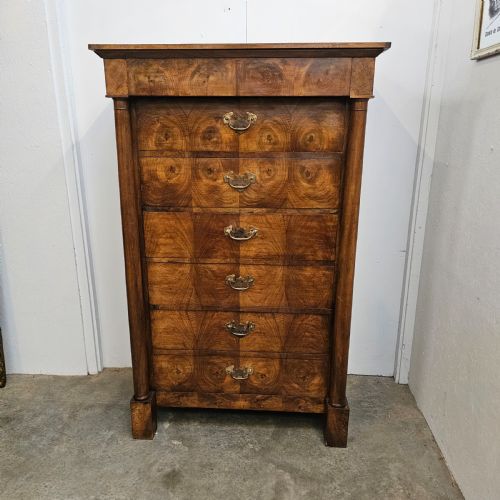
A french empire tallboy takes several forms across the inventory, appearing as multi-drawer chests, secretary cabinets, semainiers, and cartonnier chests. These pieces span the nineteenth century, including examples dated around 1800, 1850, 1880, and 1920, alongside pieces attributed to the Regency and Louis Philippe periods.
The vertical chest format dominates the selection, frequently constructed with five, six, or seven drawers to maximise capacity. Variations include drop-front writing surfaces in secretary formats and specialised configurations derived from pharmacy or archival use.
Materials and construction methods
Cabinetmakers utilised rich timbers such as mahogany, walnut, burr walnut, and cherry, frequently applying bookmatched veneers to create symmetrical grain patterns across the primary facades. Structural elements and secondary interiors incorporate oak alongside the principal hardwoods.
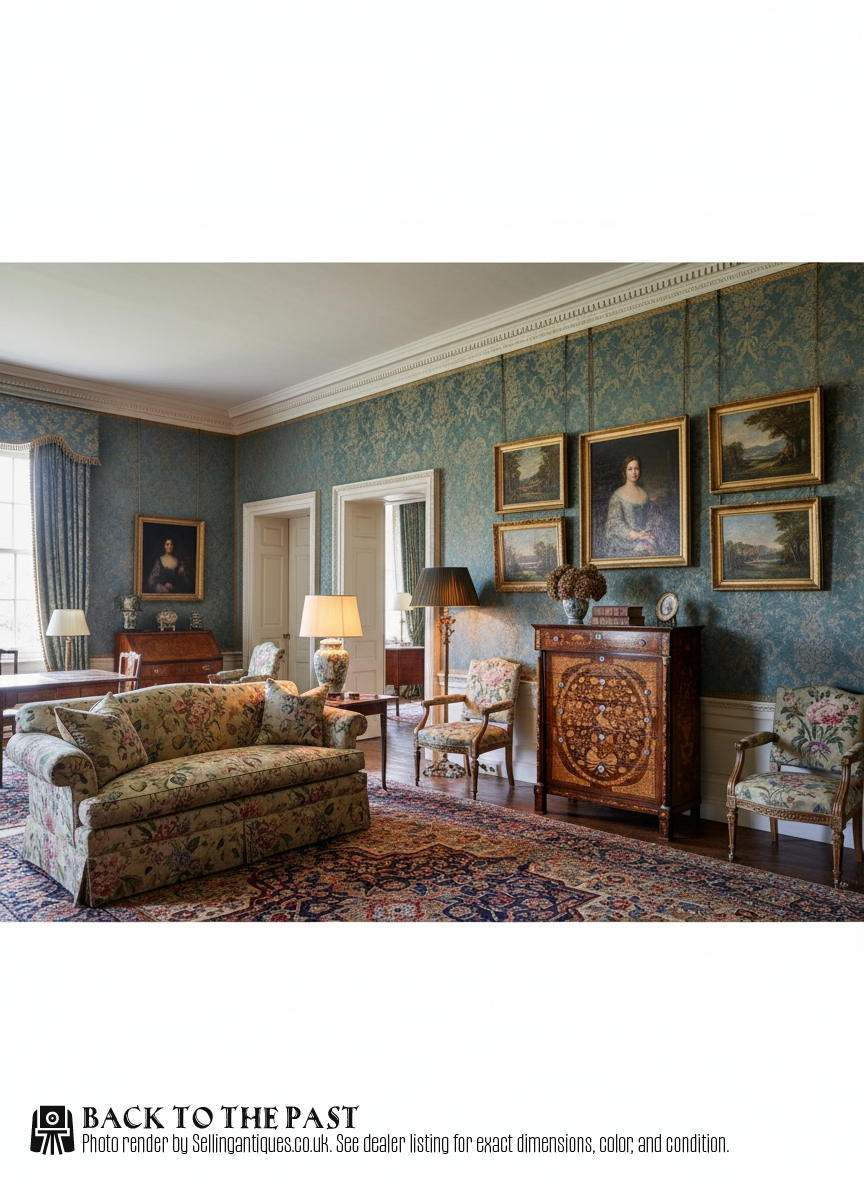
Ornamentation relies heavily on cast metal mounts in brass, gilt bronze, and ormolu, applied to frame drawer edges and accentuate architectural corners. Occasional marble tops and inlaid details complete the execution of these tall case pieces.
French Empire Tallboy Retail Price Guide 2026
Typical asking prices for french empire tallboy among the pieces listed under this phrase on Sellingantiques today, from the lower quarter to the upper quarter. They describe what is for sale here now, not the wider market.
The listings span the nineteenth century, featuring oak, mahogany, walnut, and cherry alongside brass and ormolu mounts.
Distinctions in quality
The refinement of the cast metal mounts and the precision of the timber matching establish the visual hierarchy among these pieces. Finer examples display crisp detail in the gilt bronze or ormolu mounts and careful selection of walnut or mahogany veneers.
Structural integrity depends on the original joinery of the tall carcass and the smooth operation of multiple stacked drawers. Pieces retaining their original marble tops and integrated writing compartments generally command greater interest.
The French Empire Tallboy Glossary
- Semainier
- A tall, slender chest traditionally featuring seven drawers, one for each day of the week. This form emerged in France during the eighteenth century and remained popular through the nineteenth.
- Secrétaire
- A desk or cabinet featuring a hinged writing flap that drops down to reveal a fitted interior of small drawers and pigeonholes. It combines vertical storage with a dedicated writing surface.
- Ormolu
- Gilded bronze applied as a decorative mount to furniture surfaces. The technique involves treating bronze with a gold amalgam and heating to leave a rich metallic finish.
- Cartonnier
- A piece of furniture designed for holding papers, documents, or cartons, often built as a tall stack of shallow drawers or compartments. They appear in select nineteenth-century French interiors.
- Bookmatched
- A technique where two adjacent veneer surfaces are mirrored to create a symmetrical pattern. Cabinetmakers utilised this method on walnut and mahogany drawer fronts.
French Empire Tallboy: Frequently Asked Questions
How do I use a tallboy in a modern bedroom?
A french empire tallboy provides high-capacity storage for clothing or linens while utilising minimal floor space.
Position the vertical chest against a solid wall to anchor the room's proportions and balance lower furniture pieces.
What is the difference between a tallboy and a semainier?
A semainier specifically designates a tall, narrow French chest traditionally built with seven distinct drawers.
General tallboys may feature five or six drawers and incorporate secretary drops or cabinet doors alongside the drawer tiers.
How do I care for antique walnut and mahogany surfaces?
Protect the timber surfaces from direct sunlight and excessive humidity changes to prevent veneer splitting.
Apply traditional wax sparingly and buff gently with a soft cloth to maintain the natural sheen of the wood.
Are ormolu mounts original to these pieces?
Original ormolu and gilt bronze mounts exhibit casting crispness and wear patterns consistent with the nineteenth century.
Examine the fixing pins and the alignment of the metal against the wood grain to verify authenticity.