
Mahogany Marble Top Cabinet
When you set out to acquire a mahogany marble top cabinet, you seek a functional piece that joins timber warmth with stone coldness.
Mahogany Marble Top Cabinet
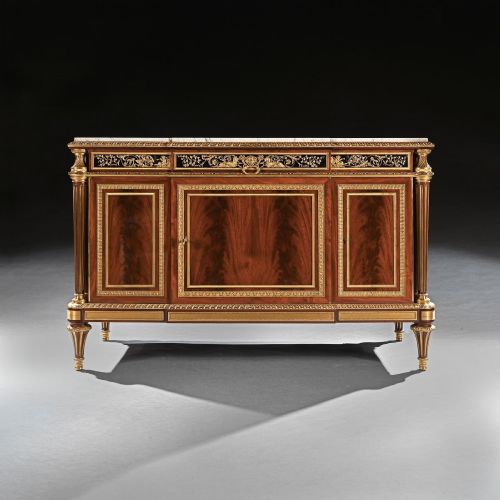
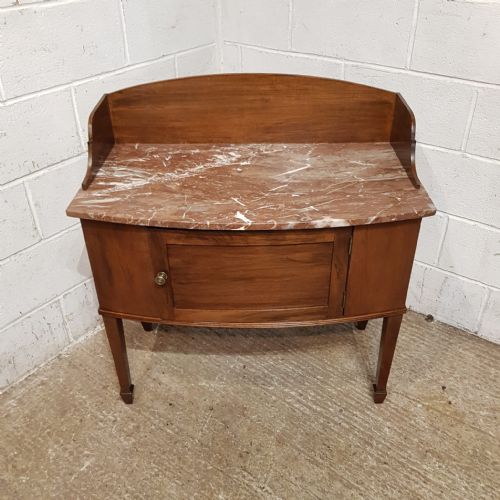
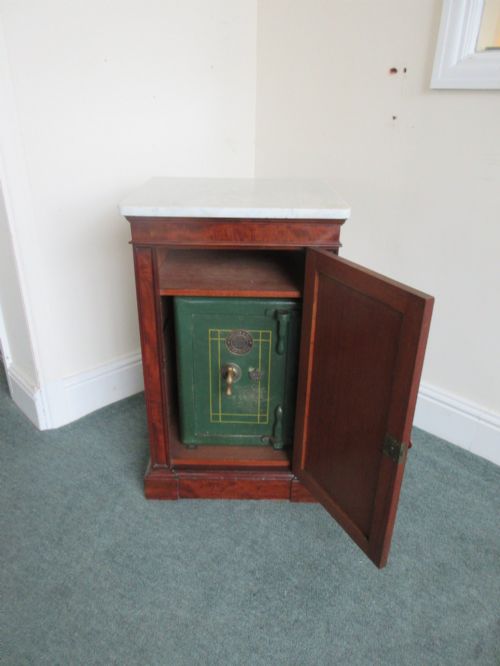
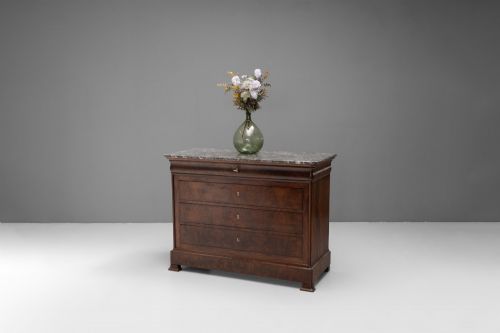
A mahogany marble top cabinet combines dense tropical timber with a polished stone slab, appearing in formats ranging from bedside tables and commodes to washstands and tall vitrines. These items span the nineteenth century and the early twentieth century, originating from British workshops and French centres.
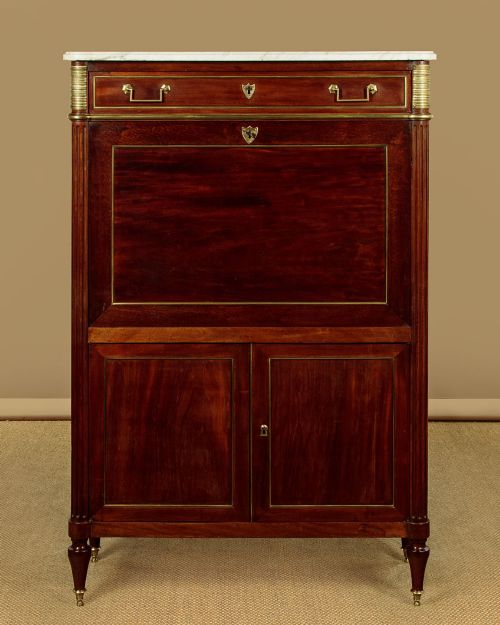
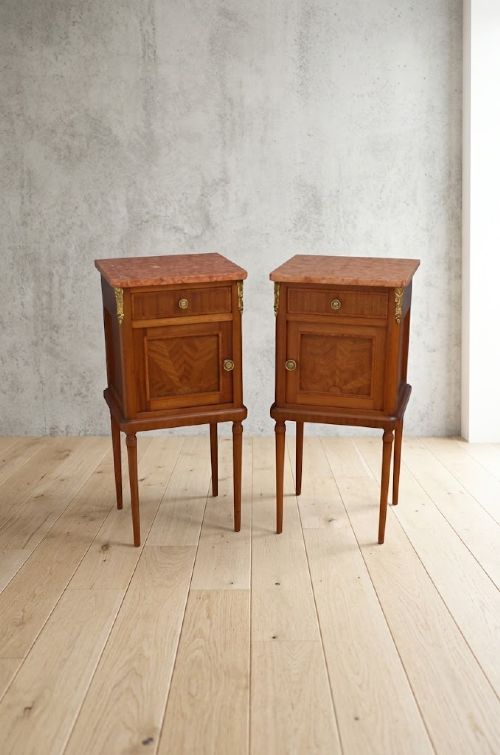
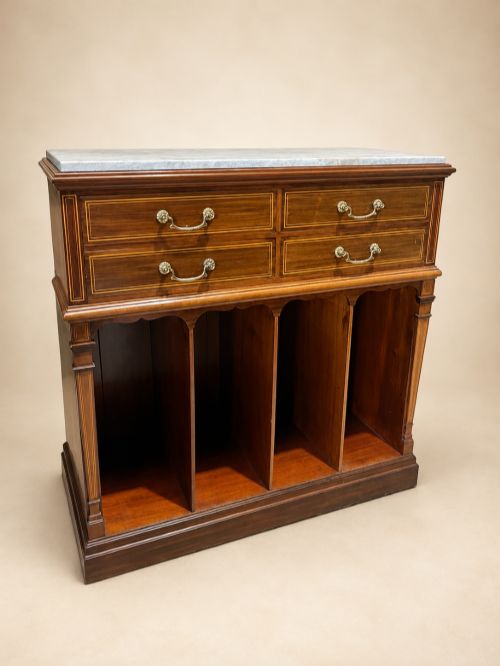
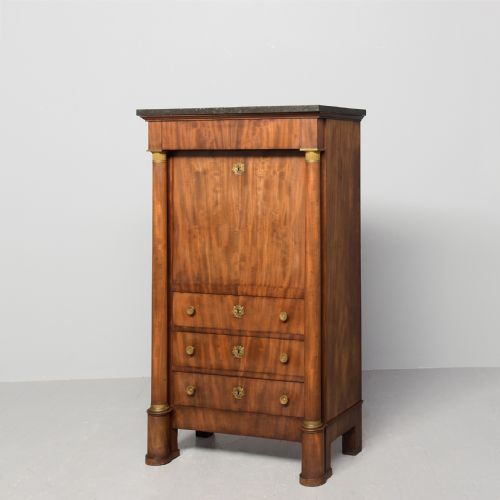
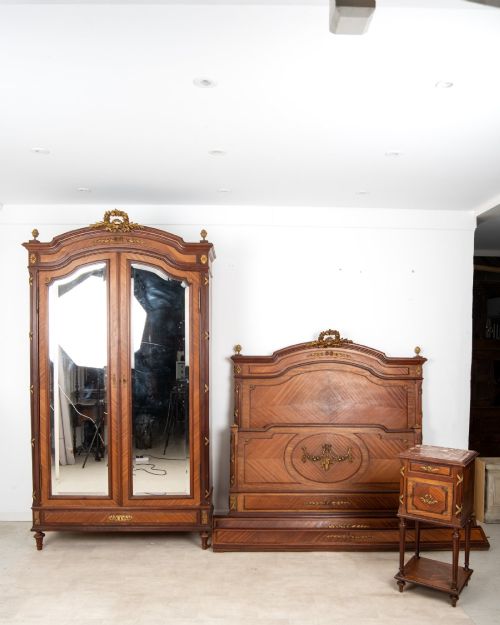
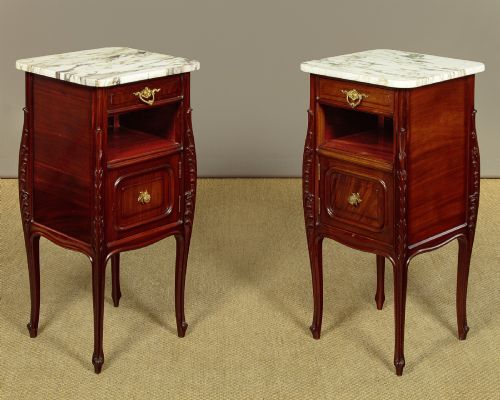
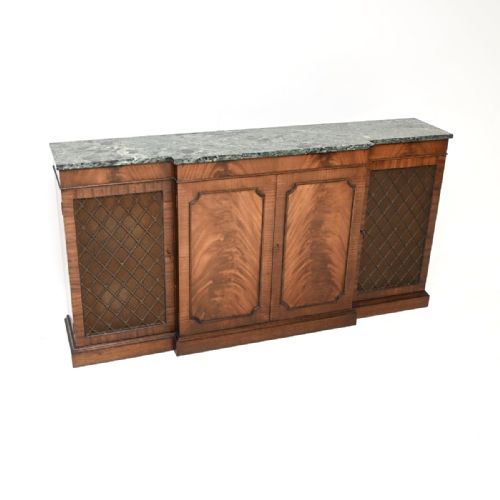
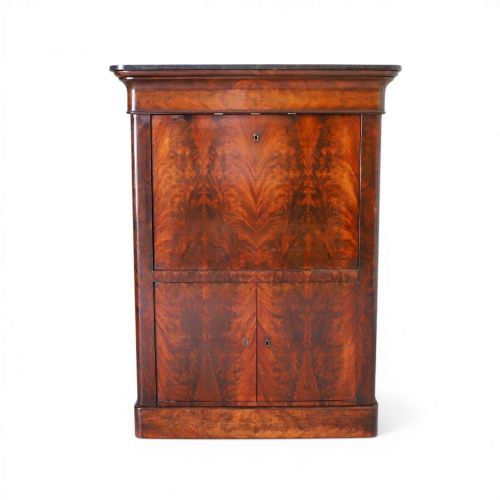
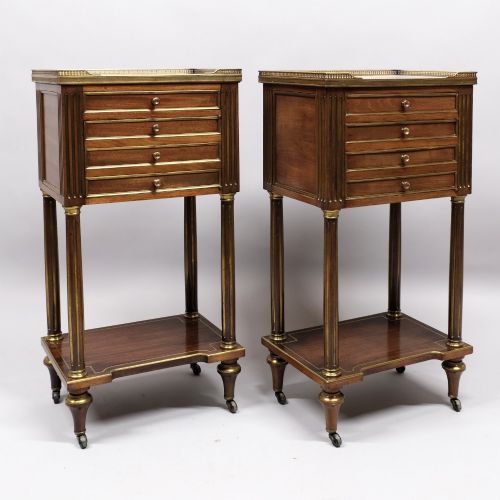
The most common examples on this page are bedside cabinets and nightstands, frequently found in pairs alongside larger freestanding side cabinets, chiffoniers, and secretaire abattants.
Continental pieces often lean towards French Empire, Louis Philippe, and Louis XVI revivals, whilst British variations include Regency, Victorian, and Edwardian interpretations.
Materials and Techniques
Cabinet makers utilised solid mahogany and applied flame mahogany veneers over secondary timbers, occasionally pairing the dark wood with kingwood or brass line inlay.
The stone slabs employ various marbles, including fossil marble, rose marble, and variated specimens, fitted precisely to the top surface to provide a durable finish.
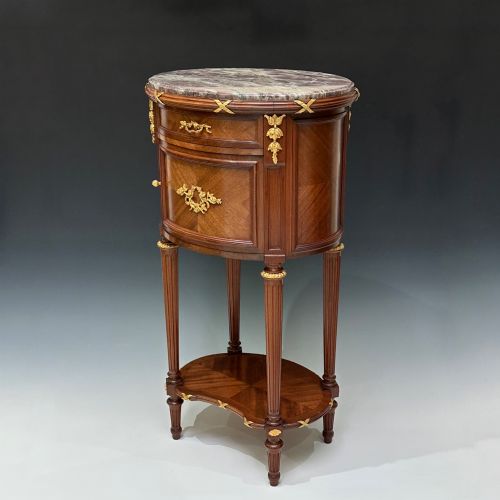
Mounts and hardware in gilt bronze, brass, and ormolu accent the structural lines, while interior elements incorporate secret drawers, grill fronts, and glazed doors.
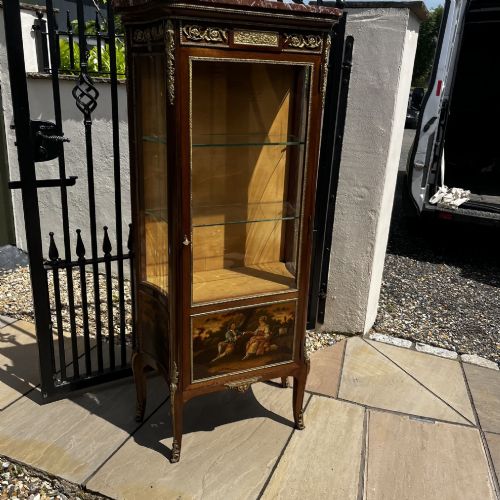
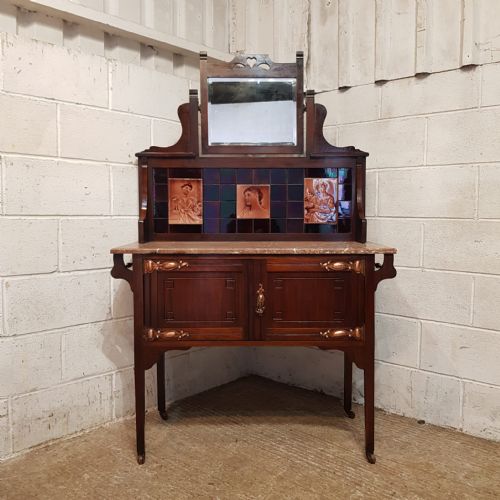
Object types recorded across the archive include bedside tables, chiffoniers, washstands, and glazed display cabinets.
Markers of Distinction
Quality rests on the depth of the timber grain, where highly figured flame mahogany and precise parquetry elevate a piece above plain stock.
The integration of the stone slab matters greatly; a heavy marble top with a moulded edge that fits the carcase precisely demonstrates superior execution.
Chiselled ormolu mounts, well-fitted internal drawers, and original hardware separate standard workshop production from signed items by notable makers.
François Linke·Henry Dasson·Collinson & Lock London
The Mahogany Marble Top Cabinet Glossary
- Secretaire abattant
- A tall cabinet featuring a drop-down writing flap that conceals a fitted interior of small drawers and pigeonholes. This vertical format keeps paperwork hidden behind a uniform front.
- Ormolu
- Gilt bronze mounts applied to furniture for decorative contrast against dark wood. The technique involves treating bronze with an amalgam of gold.
- Parquetry
- Geometric wood veneer patterns arranged in repetitive motifs such as cubes or chevrons. Craftsmen utilise different timber tones to create optical depth.
- Vitrine
- A glass-fronted display cabinet designed to exhibit porcelain, glassware, or small collectibles. These pieces rely on slender frames to maximise light exposure inside.
- Chiffonier
- A low cabinet equipped with drawers and cupboards, originating in the nineteenth century as a multi-purpose storage unit for the parlour or dining room.
Mahogany Marble Top Cabinet: Frequently Asked Questions
How were these cabinets originally used?
Bedside versions held chamber pots, water jugs, and night necessities behind enclosed doors, while larger side cabinets stored linens, china, or documents in drawing rooms and bedrooms.
Washstands provided a dedicated surface for morning ablutions, protecting surrounding walls with their stone backs and tops.
Can I place these in a modern bathroom?
The stone surfaces handle moisture well, making them practical for holding toiletries in contemporary spaces.
However, the polished timber carcases require protection from direct steam and pooling water to preserve the finish.
How do I distinguish French styles from British ones?
French examples often display heavier ormolu mounts, cast bronze details, and distinctive revival styles like Louis Philippe or Empire.
British equivalents tend to focus on the grain of the mahogany, relying on subtle brass inlay or simpler architectural proportions.
What does a secretaire abattant contain?
Lower doors conceal standard shelving or drawers, while the drop-front section opens to reveal miniature compartments and writing surfaces.
This dual function allowed homeowners to write letters without needing a separate freestanding desk.