

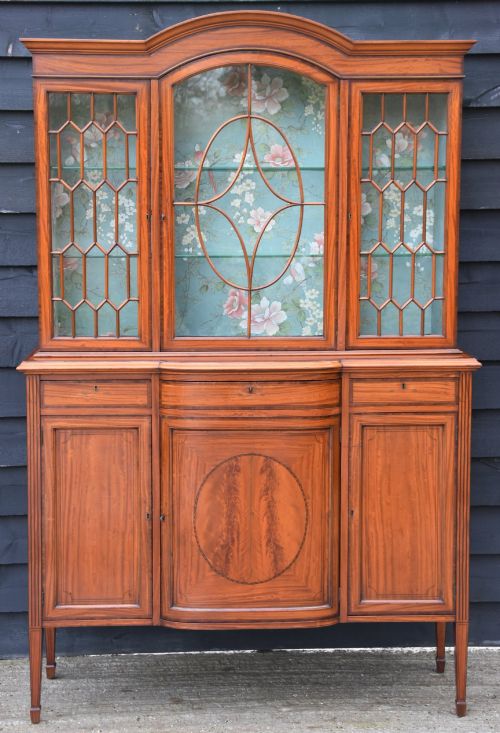
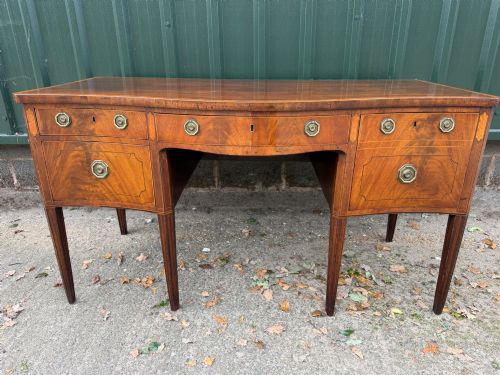
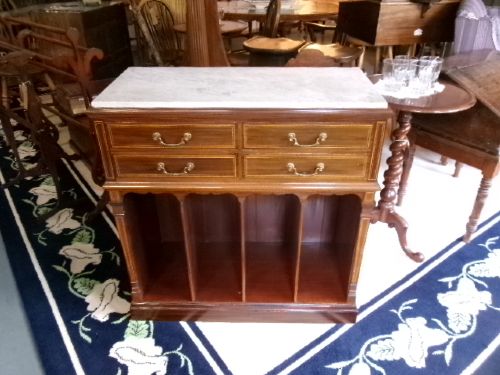
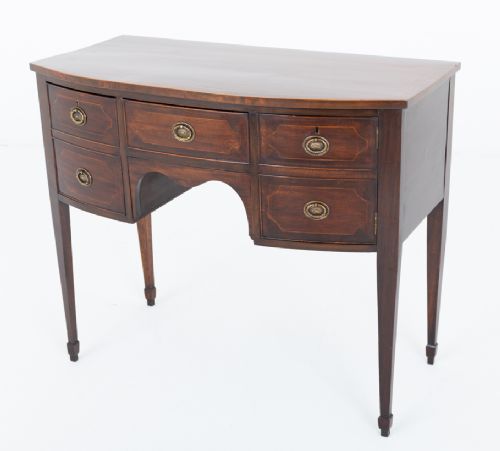
Brown Inlaid Mahogany Sideboard
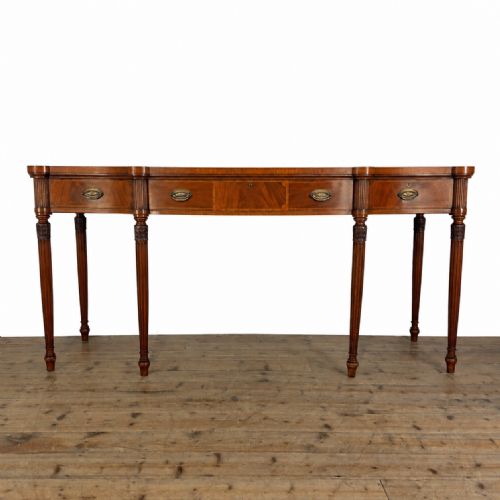
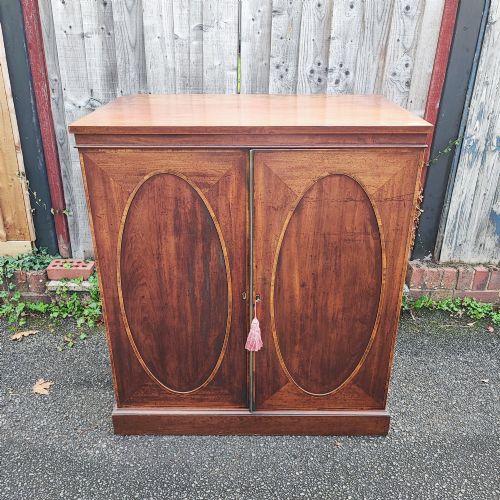
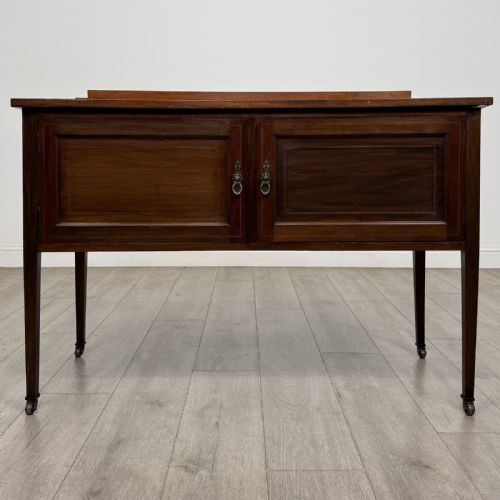
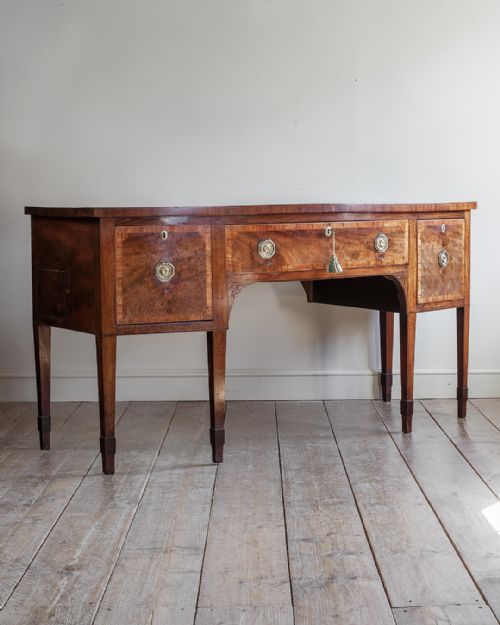
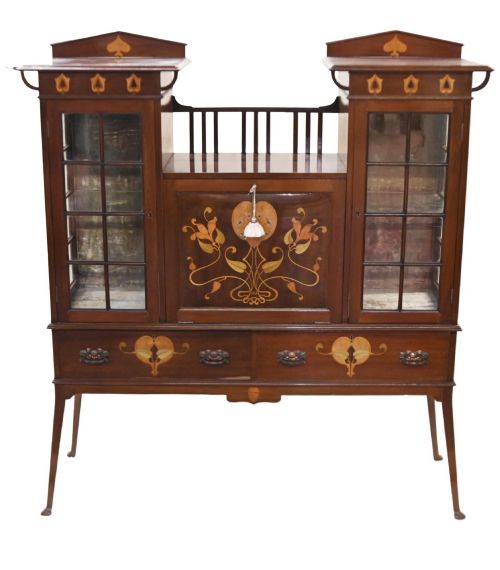
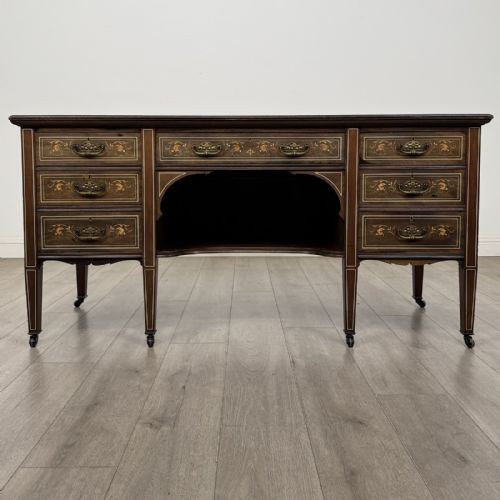
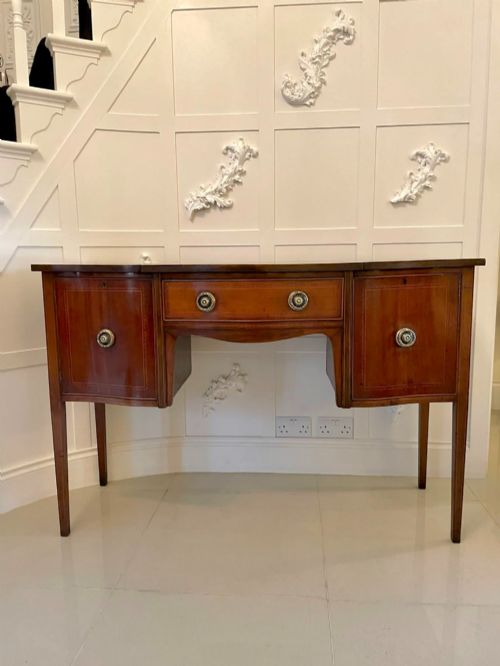
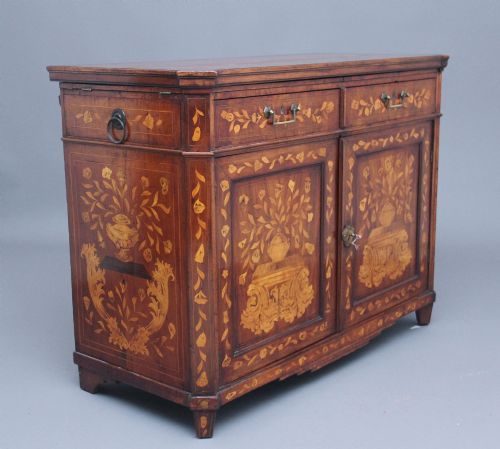
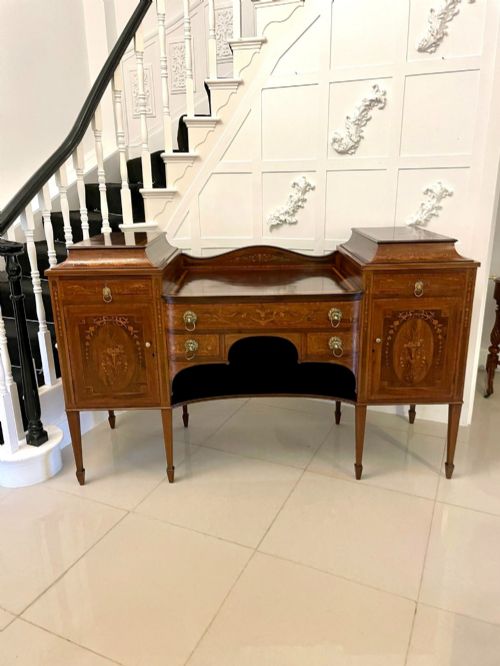
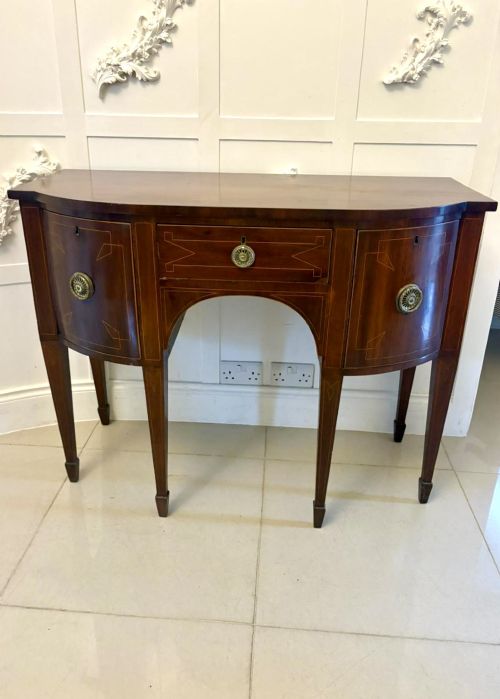
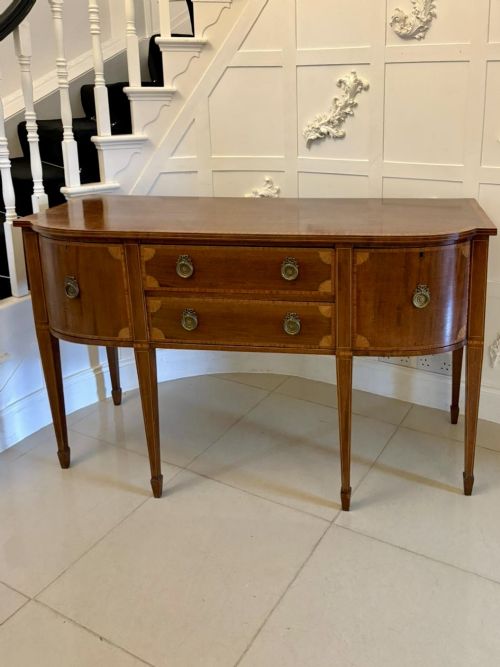
A brown inlaid mahogany sideboard anchors a dining room with rich timber, crisp boxwood or satinwood lines, and a sturdy sense of period proportion.
Brown Inlaid Mahogany Sideboard
A brown inlaid mahogany sideboard brings together deep timber tones and precise lighter wood details across several distinct eras. When looking for a brown inlaid mahogany sideboard, buyers frequently encounter Georgian and Edwardian examples featuring bow-front or serpentine shapes designed to hold dining room essentials. These pieces range from eighteenth-century Georgian server designs to later Edwardian revival cabinets, each offering substantial surface area and internal storage.
The form developed to serve the formal dining room, evolving from simple serving tables into robust cupboards and storage units with fitted drawers. Alongside standard sideboards, the selections span related serving furniture including side cabinets, console tables, and specialised display chests. Construction spans the eighteenth, nineteenth, and early twentieth centuries, capturing shifts in domestic utility and aesthetic taste.
Materials and construction methods
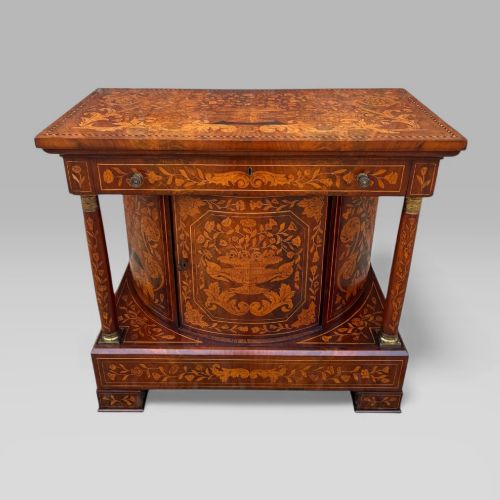
Cabinet makers relied primarily on solid and figured mahogany, selected for rich grain patterns and durability. Surfaces often receive decorative highlights through contrasting boxwood, satinwood, and delicate marquetry inlays that trace the outlines of drawers and doors.
Structural integrity relies on traditional joinery paired with fine timber preparation, sometimes enhanced by brass hardware, glass panels, or marble tops. Workshops shaped these materials into curved bow-fronts and serpentine outlines using steam and careful hand-sawing techniques.
Brown Inlaid Mahogany Sideboard Retail Price Guide 2026
Typical asking prices for brown inlaid mahogany sideboard among the pieces listed under this phrase on Sellingantiques today, from the lower quarter to the upper quarter. They describe what is for sale here now, not the wider market.
Some Edwardian dining rooms required drinks cabinets designed specifically to keep fine spirits locked away from thirsty household staff.
Evaluating craftsmanship and execution
The distinction between standard utility furniture and superior examples lies in the handling of the mahogany timber and the crispness of the inlay work. Finer pieces display carefully matched flame or figured veneers across the drawer fronts, ensuring the grain flows logically across the piece.
Detailing in the marquetry, the neatness of the boxwood or satinwood stringing, and the weight of the brass fittings indicate the level of care invested by the maker. Proportions that balance the depth of the bow-front or serpentine curve with tapered or straight legs separate the finest items from more utilitarian production.
Hewetsons London
The Brown Inlaid Mahogany Sideboard Glossary
- Bow-front
- A convex curved cabinet front that projects outward in the centre, common in Georgian and nineteenth-century dining furniture.
- Serpentine
- A shaped front featuring a convex central section flanked by concave curves, demanding high skill in timber manipulation.
- Marquetry
- Decorative patterns formed by fitting together thin pieces of veneer into timber surfaces, often depicting foliate motifs.
- Crossbanding
- A border strip of veneer laid around the perimeter of a surface with the grain running perpendicular to the central panel.
- Stringing
- Thin lines of contrasting lighter wood, such as boxwood or satinwood, inlaid into channels to define drawer edges and panels.
Brown Inlaid Mahogany Sideboard: Frequently Asked Questions
What is a brown inlaid mahogany sideboard used for?
These pieces function primarily as serving surfaces and storage cabinets within dining rooms, holding table linen, cutlery, and glassware.
Their substantial tabletops also provide space for serving food or displaying decorative tableware during formal meals.
How do I identify a Georgian sideboard?
Georgian pieces typically exhibit robust proportions, hand-cut mahogany construction, and subtle stringing or brass handles appropriate for eighteenth-century dining.
They often feature simpler, functional layouts compared to the elaborate revival styles produced later in the Victorian and Edwardian periods.
Where do satinwood and boxwood appear?
Makers utilised satinwood and boxwood as contrasting inlay materials to create fine lines, geometric borders, and delicate marquetry panels.
These lighter woods stand out sharply against the deep brown tone of the polished mahogany body.
How should I care for mahogany furniture?
Keep the timber away from direct heat sources and strong sunlight to prevent the polished mahogany surface from drying out or fading over time.
Routine dusting with a dry, soft cloth maintains the natural sheen without requiring heavy chemical polishes.