




Victorian Inlaid Mahogany Commode
A victorian inlaid mahogany commode brings warmth and practicality to a room, offering deep storage within finely patterned wood.
Victorian Inlaid Mahogany Commode
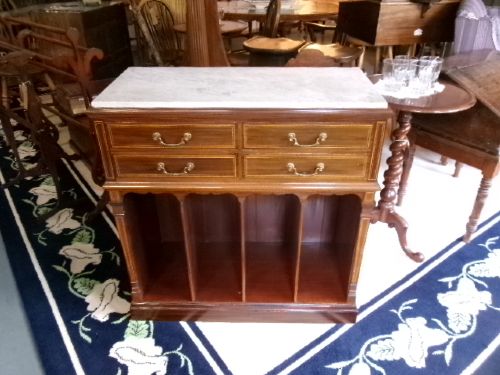
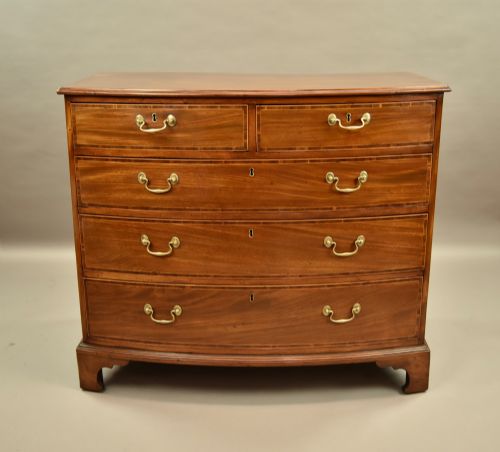
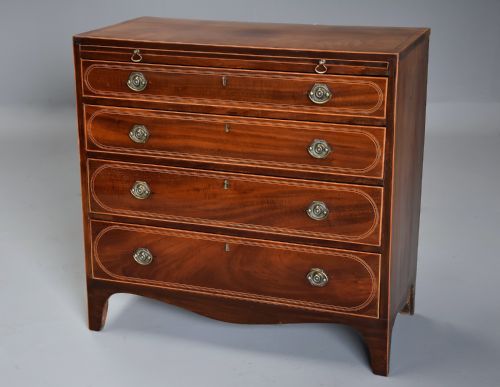
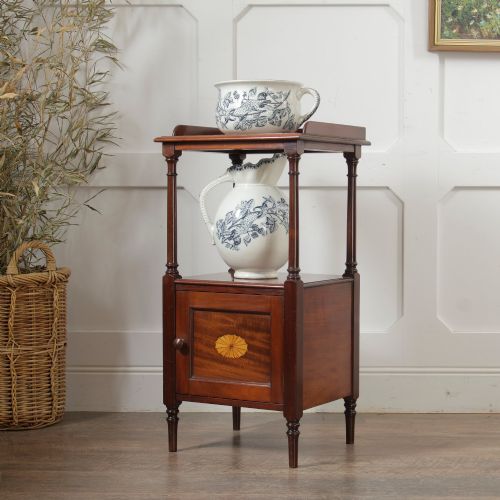
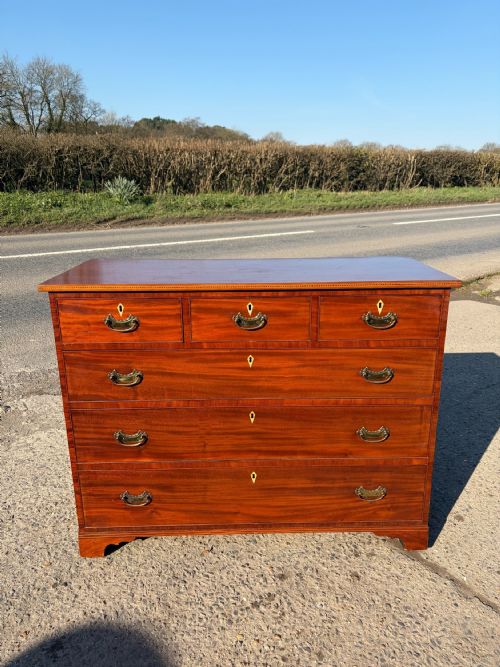
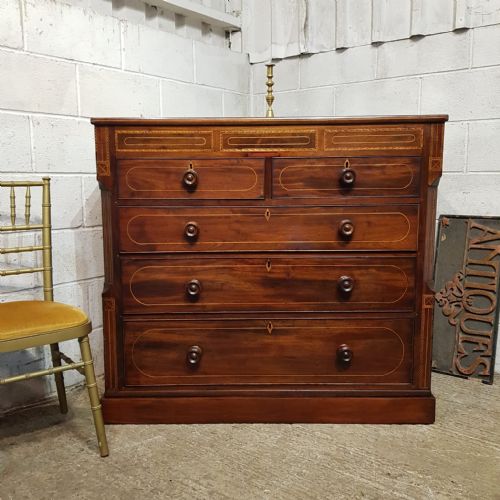
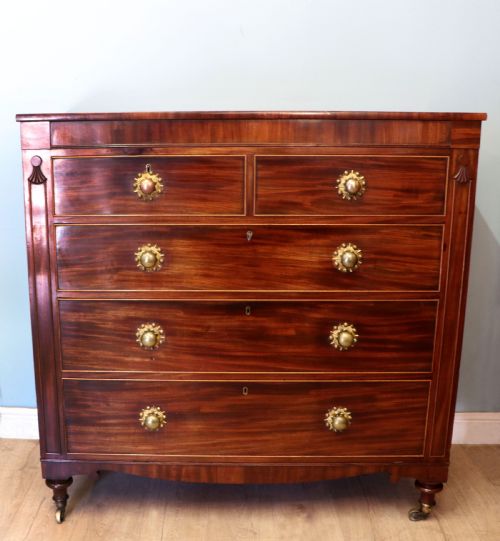
Buyers seeking a victorian inlaid mahogany commode will encounter various forms of chests of drawers, storage units, bedside tables, side cabinets, and pot cupboards. These pieces originate primarily from the Victorian period, the nineteenth century, and around nineteen hundred.
The version most commonly met on this page is the traditional chest of drawers, often featuring contrasting timber details. Alongside these standard chests, side cabinets and nightstands appear in domestic settings.
How they were made
Constructed principally from mahogany and flame mahogany, these items employ wood inlay, boxwood inlay, and satinwood inlay to create geometric and floral patterns. Timber is selected for grain movement and rich colour.
Hardware includes brass elements for handles and fittings, while certain storage units incorporate marble tops for durable surfaces. Construction techniques join solid timbers and veneered surfaces across drawers and cabinetry.
Victorian Inlaid Mahogany Commode Retail Price Guide 2026
Typical asking prices for victorian inlaid mahogany commode among the pieces listed under this phrase on Sellingantiques today, from the lower quarter to the upper quarter. They describe what is for sale here now, not the wider market.
Listings feature items from the Victorian period, the nineteenth century, and around nineteen hundred, spanning several cabinet forms.
What varies in quality
The refinement of the inlay work separates standard examples from finer pieces, particularly where boxwood and satinwood create crisp, detailed borders. Cabinetmakers balanced structural timber selection with decorative veneering.
Makers such as Druce and Co and Mawer and Stephenson demonstrate distinct standards of workshop execution. Furthermore, the inclusion of marble tops and matched flame mahogany veneers elevates the overall character of an individual cabinet.
Druce & Co·Mawer & Stephenson
The Victorian Inlaid Mahogany Commode Glossary
- Mahogany
- A durable tropical hardwood known for its deep reddish-brown tone and stable grain. It serves as the primary structural and visual timber for these cabinets.
- Inlay
- A decorative technique where contrasting woods like boxwood or satinwood are inserted into recesses within the mahogany surface. This creates borders and geometric patterns.
- Crossbanding
- A decorative border veneer placed around the perimeter of a drawer front or top, running perpendicular to the central grain. It frames the primary wood visually.
- Bowfront
- A convex, outwardly curved cabinet or chest front shape. This curved profile requires specialised carpentry to shape drawers and frames accurately.
- Pot cupboard
- A small bedside cabinet or nightstand designed originally to house a chamber pot. They frequently feature a single door and a small interior shelf.
Victorian Inlaid Mahogany Commode: Frequently Asked Questions
How were these pieces used originally?
These cabinets served practical storage functions in bedrooms and living spaces across nineteenth-century homes. Chests held garments, while bedside tables and pot cupboards kept personal items close at hand.
Marble-topped variants offered durable surfaces resistant to water and daily wear in dressing rooms.
How do I identify a Sheraton revival piece?
Sheraton revival items borrow design elements from the late eighteenth century but were manufactured during the Victorian era. They often feature balanced proportions and precise inlay.
Look for refined bowed fronts and delicate contrasting wood borders that emulate earlier neoclassical furniture styles.
How should I care for mahogany furniture?
Keep wooden furniture away from direct sunlight and strong heat sources to prevent the mahogany and its veneers from drying out. Dust regularly with a soft, dry cloth.
Avoid commercial silicone sprays and excess moisture to preserve the polished timber and delicate inlay work.