
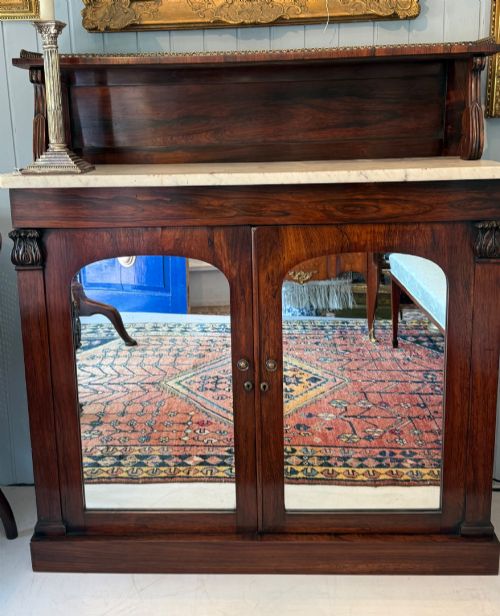

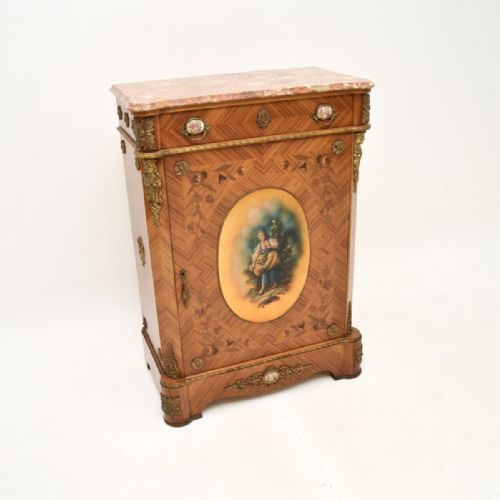


Marble Top Chiffonier
A marble top chiffonier provides solid stone utility atop timber storage, bringing nineteenth-century utility and display into a modern room.
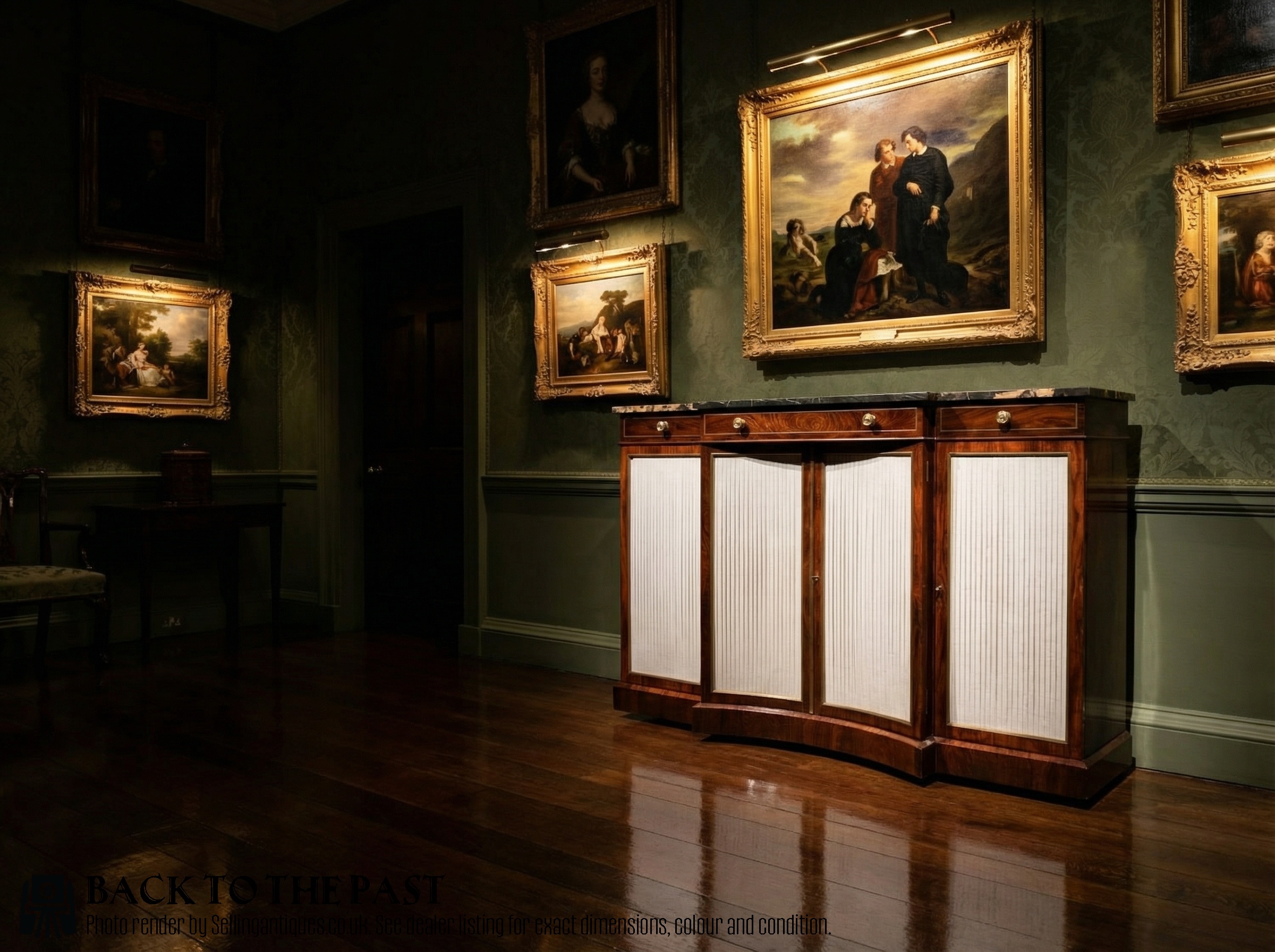
Marble Top Chiffonier
When you search for a marble top chiffonier, you encounter low timber storage cabinets designed for living spaces and parlours. These pieces combine a heavy stone slab surface with enclosed cupboards, drawers or open shelving beneath.
The versions most commonly met on this page span the Regency, Victorian and nineteenth-century periods, often framed in rosewood or walnut. Alongside traditional chiffoniers, the selection includes related side cabinets, credenzas and low chests sharing the characteristic stone surface.
Origins vary between English cabinetmakers and continental workshops, particularly from France. Many adopt classical styles such as French Empire, Louis XVI Revival and George IV design idioms.
Materials and Construction
Cabinetmakers built the carcases of these pieces using dense hardwoods like rosewood, walnut and mahogany, frequently applying veneers or marquetry details. Selected items incorporate kingwood, ebony and brass or ormolu mounts to accent the timber structures.
The defining feature rests heavily on top: a slab of polished marble, sometimes shaped with serpentine edges. Interior construction relies on traditional joinery, housing shelves, drawers or mirrored backs in Victorian and continental iterations.
The listings span from the Regency period through the Victorian era and into twentieth-century French production, using rosewood, walnut, mahogany and kingwood.
Judging Quality and Execution
Quality reveals itself in the selection of timber veneers and the precision of inlaid marquetry or brass work. Finer pieces display dense grain patterns in the rosewood or walnut, matched carefully across doors and drawers.
The execution of the stone surface and its fit to the timber carcase distinguishes workshop standards. Heavier, well-figured marble slabs integrated smoothly with secondary woods indicate higher-tier cabinetmaking.
Gillow·Leonard Boudin
The Marble Top Chiffonier Glossary
- Chiffonier
- A low cabinet with doors, originating in the nineteenth century for the dining room or parlour. It frequently includes a shelf structure or a heavy stone top.
- Credenza
- A grand sideboard or cabinet used for display and storage, often associated with Victorian and continental revival styles. These pieces occasionally feature glass doors or mirrored backs.
- Marquetry
- The art of applying pieces of veneer to a structure to form decorative patterns and pictures. It appears frequently on French and Victorian cabinets.
- Ormolu
- Gilt bronze mounts used as decorative feet, handles or gallery rails on furniture. This technique is common in French Empire and Louis XVI style pieces.
- Serpentine
- A furniture front or marble top curving gently outward and inward in a continuous wave. This shape requires advanced skill in stone cutting and woodworking.
Marble Top Chiffonier: Frequently Asked Questions
What is a marble top chiffonier used for?
These cabinets served historically in dining rooms and sitting rooms for storing glassware, linens or serving accessories. The flat stone surface provided a durable counter for displaying decorative objects or serving food.
Today, they function as sideboards in modern living spaces or hallways. The stone top offers a practical, heat-resistant surface for lamps and everyday items while concealing storage underneath.
How do I date a marble top chiffonier?
Dating relies on identifying timber choices, stylistic details and construction methods typical of specific eras. Regency and early nineteenth-century examples often favour rosewood with brass inlay, while Victorian versions frequently employ walnut with richer carving.
French pieces from the later nineteenth century often display Empire or Louis XVI revival characteristics, such as ormolu mounts and marquetry. Comparing secondary woods and hardware inside the cabinet helps narrow down the decade of production.
Are marble top chiffoniers English or French?
You find both English and French examples within these listings, each carrying distinct regional traits. English pieces from the Regency and Victorian periods tend to focus on rich rosewood or mahogany grains with restrained classical lines.
French cabinets often incorporate more elaborate marquetry, kingwood veneers and gilt bronze mounts. Continental pieces also lean heavily into Louis XVI revival and Empire aesthetic traditions.
How do I care for the marble top?
Cleaning requires only a soft cloth dampened with warm water and mild, neutral soap. Avoid abrasive cleaners or acidic substances like citrus and vinegar, which can etch and dull the polished stone surface.
Using coasters and placemats protects the marble from liquid rings and staining. Applying a specialised stone sealer periodically helps preserve the original polish against daily wear.